Health & Fitness
Native Plants: Coming Soon to a Garden Near You!
Native plants aren't invasive or weedy- and you should definitely include some in your garden if you haven't already! Here's why, and some sources of where to find them (not in the wild!).


Those of us who prefer to garden with native plants absolutely LOVE this time of year: The native plant sales are coming! If you haven't been part of the native plant craze, it's time for you to jump on the bandwagon!
"Native plants? Is that, like, a weed?" you may be wondering.
And the answer is... kind of.
Find out what's happening in West End Alexandriafor free with the latest updates from Patch.
What's a native?
The National Arboretum's website defines a native plant as, "...one that occurs naturally in a particular region, ecosystem, or habitat without direct or indirect human intervention. We consider the flora present at the time Europeans arrived in North America as the species native to the eastern United States." Without human intervention translates to some as "It wasn't put there on purpose. Therefore: IT'S A WEED. Get it out! Get it out now!!!"
Find out what's happening in West End Alexandriafor free with the latest updates from Patch.
And now I'm going to make a case for you to put those weeds in your yard.
On purpose.
Why go native?
I'll give you my three most-universally-appealing reasons to add some native plants to your garden this year (if you haven't already):
1. You'll save money. Oh yeah, you read that right. Since native plants have evolved over time along with their respective environments, they're well adapted to the soils and conditions of their homeland.
- That means you won't have to water them as much (once they're established); many natives are drought tolerant.
- They require very minimal fertilization- if any. It's best to figure out what kind of soil you already have, then ask the salespeople at native plant sales what kinds of plants would work best in your yard. Any necessary amendments can be done with natural sources such as compost or a layer of mulched fallen leaves.
- You won't have to waste money on pesticides, since native plants have grown to adapt to the local insect populations. Sure, you may find caterpillars chowing down on your spicebush or tulip poplar, but the insects won't do enough damage to actually kill the plant. So watch and enjoy the beautiful butterflies they become.
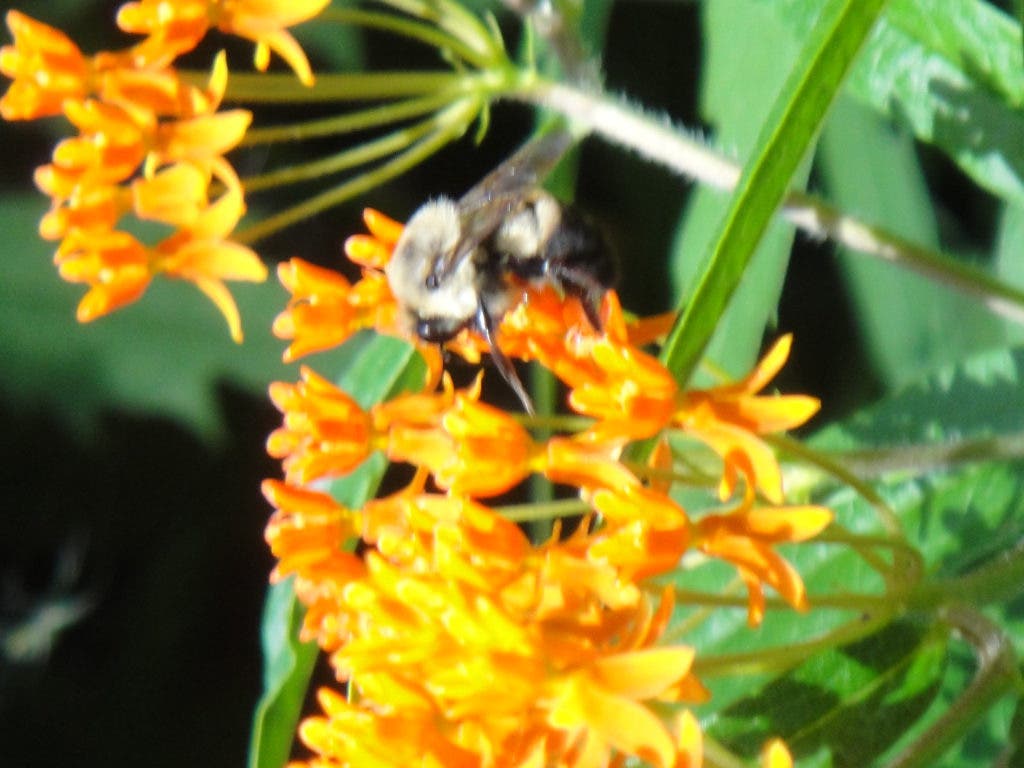
2. The birds and the bees. No... not "that." Actual birds and bees! Many native flowers and shrubs (and trees) provide food sources to animals and insects that are native to the region. If you'd like to see more goldfinches around your yard, plant coneflowers. If you love monarch butterflies, plant milkweed. If you love hummingbirds, plant cardinal flower. I found out first-hand last year: "If you plant it, they will come." You'll also attract some wonderful native bees, but the majority of native bees are solitary and non-aggressive, therefore, won't sting you.
3. Keeping invasive plants in check. Many non-native invasive plants have been imported to this country, whether accidentally or on purpose. We've all seen the way English Ivy climbs up a tree and covers it completely. Since those plants did not evolve here, they have no natural predators and can quickly take over parks and other natural areas. To plant a non-native perennial in your own yard may not seem like a threat to natural areas, but keep in mind that birds could eat the seeds from those invasive plants and disperse them many miles from your own garden (in their excrement). If you plant native plants and birds disperse those seeds, you'll be helping the native plant populations make a come-back and have a better chance of thriving amongst the non-natives that have taken over so many natural areas.
How do I start?
Chances are, you might already have some native plants in your garden. If you've got pink coneflower, coral honeysuckle, or black eyed susan, you're off to a great start! Consider adding some other beauties like our native purple passionflower vine (a climbing vine that would love a trellis, but won't damage structures to which it attaches), Virginia bluebells (you've probably seen them growing in the woods- why not your yard, too?), an obedient plant, or some nice, tall, red cardinal flowers?
While some natives can be slightly weedy (some even have the word 'weed' in their common name, like Butterfly Weed, or Asclepias tuberosa), from my experience, most of them are quite easy to control. Some do spread around my yard by seed, but you can simply mow over them if they're small and invading your lawn. Or better yet, I've also found that you can go on a website like Craigslist or Freecycle and list the plants you have (or post pictures if you don't know) to give away for free. Native plant enthusiasts may take the unwanted seedlings off your hands and most of us are willing to come and dig them up. You could even arrange to do a plant trade with other native gardeners in your area. I end up with many asters all over my yard, for example, but I know they're a great nectar source for fall butterflies and bees, so I leave most of them to grow where they please. Since natives are so hardy, when I find one in an area where I'd rather not have it, I can generally transplant it with no problem- or offer it to a friend or neighbor.
For more information, check out the Virginia Native Plant Society (VPNS). And if you're still not convinced, come to one of these upcoming local native plant sales to learn more and see some of the plants in person:
Saturday, April 6
Loudoun Wildlife Conservancy's plant sale in Leesburg
http://www.loudounwildlife.org/Calendar_April.htm#nativeplantsale
Saturday, April 20
Long Branch Nature Center in Arlington
https://www.facebook.com/events/119036138199778/
Saturday, April 27
ParkFairfax in Alexandria
http://home.earthlink.net/~sknudsen/
Sunday, May 5
Earth Sangha in Springfield
earthsangha.org
Saturday, May 11
Prince William Wildflower Society, VNPS Chapter
Bethel Evangelical Luther Church
8712 Plantation Lane
Manassas
Saturday, May 18
Potowmack Chapter, VNPS at Greenspring Gardens Sale in Alexandria
http://www.fairfaxcounty.gov/parks/greenspring/downloads/quarterlyprogramguide.pdf
Full listing of Virginia's Spring native plant sales:
http://vnps.org/wp/events-2/spring-plant-sales/
Please note:
While native plants can often be found growing wild, please don't remove them from wild locations. A lot of native plants are being out-competed by invasive plant species and even with good intentions, if we all went out into the woods and dug them up, that would be devastating to their populations. Instead, attend one of the fantastic plant sales mentioned above, look into local seed/plant exchange groups for discounts and freebies, or find a reputable plant nursery from which to buy your natives. Check out Nature by Design in Alexandria (www.nature-by-design.com), and ask for the native plants section at other nurseries, too.