Sports
Increase in Concussions Could Result in Good News
Woodbridge and Gar-Field athletic trainers speak to Woodbridge Patch about new concussion regulations.
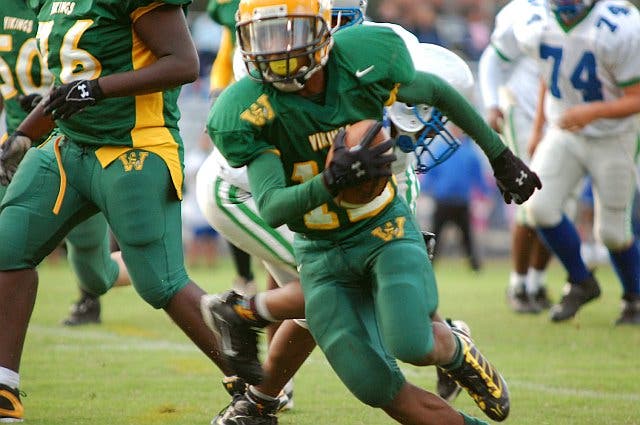

A medical report published last week by the American Academy of Pediatrics regarding the number of high school age kids who are seen in the emergency room for concussions temporarily shocked the non-medical community.
Not surprisingly, considering the number of 14-19-year-old youths treated in the ER more than tripled in 10 years from about 7,000 in 1997 to 23,000 in 2007.
But, parents of athletes in the Woodbridge community can rest easy since neither Gar-Field Senior High School athletic trainer Brandon Holland nor Woodbridge Senior High School trainer Toby McCullough have seen significant increases in the number of head injuries in recent years.
Find out what's happening in Woodbridgefor free with the latest updates from Patch.
"I have seen a decent number of head injuries in my 10 years as the Woodbridge trainer, but I wouldn't say the number has increased," said McCullough.
Holland has only treated 38 concussions in his four years with Gar-Field.
Find out what's happening in Woodbridgefor free with the latest updates from Patch.
"I wouldn't say concussions are happening more frequently, rather that they are being reported more often," said Holland. "Concussions are not a new phenomenon. They are just getting more attention now that they have been discussed in professional athletics. We are seeing these athletes have their careers ended by the long-term effects of concussions and it is waking everyone up to the true danger."
Holland and McCullough agreed that concussions are being taken much more seriously now, whereas in the past complaining of head injury symptoms was viewed as a sign of weakness. Now, more stringent precautions are in place to ensure that athletes aren't endangering themselves.
"In the past if your head hurt you were sent right back into the game and told to suck it up because that was normal, but now we know it is not normal and we aren't taking it so lightly," said McCullough. "In a weird way this report could be seen as a good thing because it means more concussions are being caught early, and reported."
As part of a new concussion law that mandates each county to have a set policy on how they will handle concussions, Prince William County has invested in ImPACT testing that measures the baseline cognitive skills of all athletes participating in sports where there is a potential for collisions or falls.
If an athlete sustains an injury suspected to be a concussion they must retake the ImPACT test to see if their results are abnormal compared to their baseline test. The athlete will not be allowed to return to play until their results are back to the baseline level, and they must also have the same number of days of cognitive rest as the number of days that their symptoms persisted.
Holland said he feels this is the most objective way to test for concussions, because it doesn't give athletes who are eager to get back in the game the opportunity to fib about their symptoms.
"We care deeply about the fate of our kids, which is why we are happy to invest this kind of money and effort into preventive testing," said Gar-Field's director of student activities Rudy Zimmerman. "Awareness on the part of the coaches, parents, athletes, everyone has been raised and that is truly a good sign."
Yet, the test isn't received well by everyone. Senior football player at Woodbridge, Mason Wallin, said he would like to see some revisions made.
"The concept of the testing is understandable, particularly when you think about the dangers to players who have suffered concussions," Wallin said. "But from everything I have heard from guys who have taken the test, it is hard to follow even when you don't have a concussion. I think the conditions of return play would be better based on the discretion of your personal doctor, and not on a machine test."
Holland advises parents who believe their kid may have suffered a head injury to take a proactive role in the recovery.
"If you feel your child has received a severe injury don't hesitate to visit the ER and get it checked," said Holland. "Then make sure you stay involved in whether your kid is communicating with their coaches and trainers at school. We can't help if we don't know there has been a problem and they don't always tell us."