Neighbor News
Eastside Homeowners: Stop Spraying Ants - You're Making It Worse
Construction displacement and early warm weather creating "perfect storm" for ant invasions across Bellevue, Redmond, and Kirkland

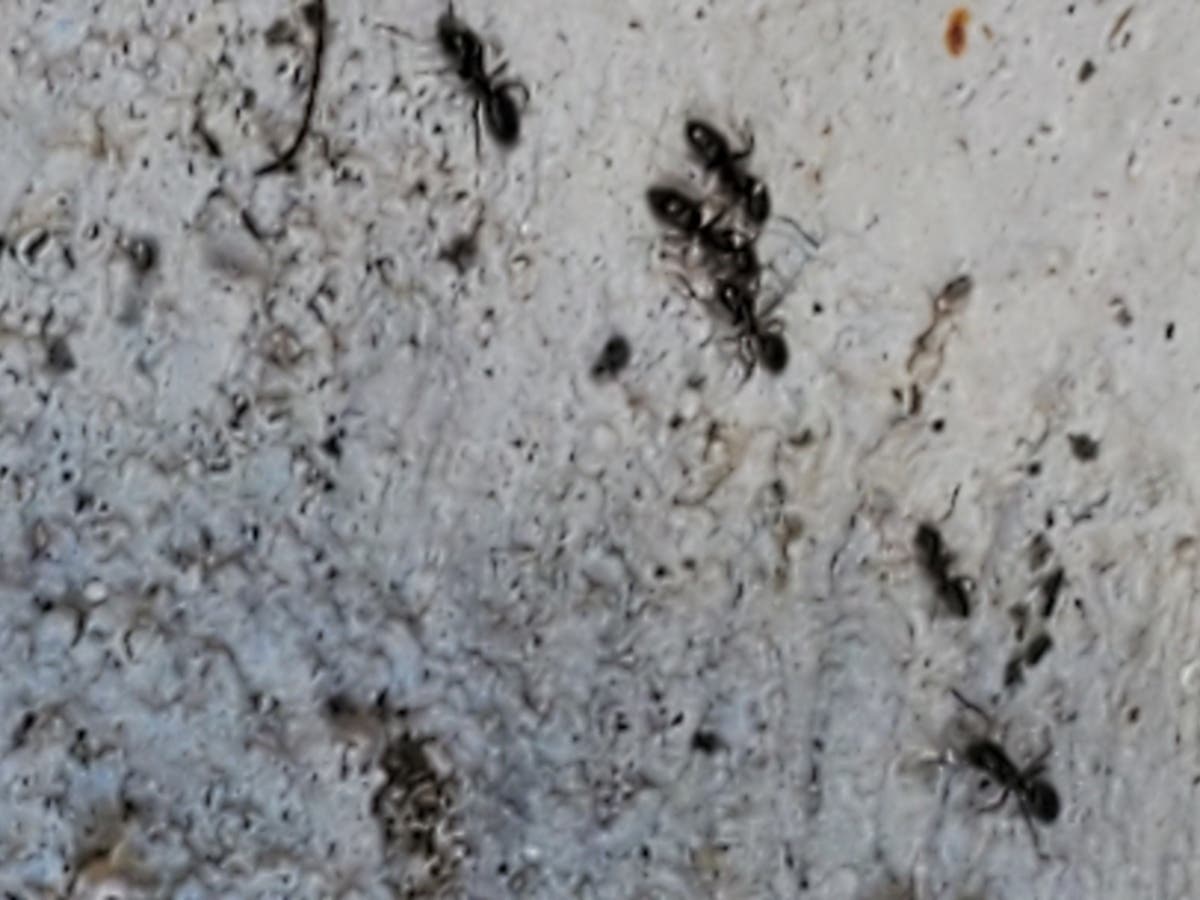
BELLEVUE, WA - If you're one of thousands of Eastside homeowners currently battling tiny black ants in your kitchen, experts have an urgent message: put down that can of Raid. You might be making the problem exponentially worse.
According to local pest control professionals handling record numbers of ant-related service calls this spring, approximately 90% of homeowners are inadvertently multiplying their ant infestations by using store bought repellent sprays on the region's most common ant species.
"We're seeing a phenomenon called 'colony budding' where ant colonies respond to repellent chemicals by fragmenting into multiple satellite colonies," explains Mike Chen, a licensed pest control technician serving King County for 15 years. "That single colony in your kitchen wall becomes three or four colonies scattered throughout your house. The spray literally multiplies the problem."
Find out what's happening in Bellevuefor free with the latest updates from Patch.
The Science Behind Colony Budding
Odorous house ants - responsible for approximately 75% of residential ant problems across Bellevue, Redmond, Kirkland, and Sammamish - have evolved a remarkable survival mechanism that turns conventional pest control wisdom on its head.
When exposed to repellent insecticides found in products like Raid, Ortho Home Defense, and similar store-bought sprays, colonies don't simply die off. Instead, queens take portions of workers and larvae and establish new nesting sites throughout the structure.
Find out what's happening in Bellevuefor free with the latest updates from Patch.
"One homeowner called us after three weeks of spraying ants," Chen recalls. "Started with ants in the kitchen. After spraying, they appeared in the bathroom. Then the bedroom. Then upstairs. She was confused why the problem kept spreading. The spray was causing the colony to split and relocate repeatedly."
According to Washington State University extension research on ant behavior: "Repellent insecticides can cause colony fragmentation in species with multiple queens. What appears to be effective treatment can result in increased ant activity as satellite colonies establish in new locations."
Why This Spring Is Particularly Bad on the Eastside
Local pest control companies report handling 40% more ant-related service calls compared to spring 2025, with the heaviest concentration in areas experiencing significant construction activity.
Three factors are converging to create what professionals call a "perfect storm" for ant invasions:
1. Construction Displacement
Downtown Bellevue's massive redevelopment projects, Redmond's ongoing tech campus expansion, and continued light rail construction are displacing thousands of established outdoor ant colonies.
"Every excavation destroys ant nests that have existed for years," explains Dr. Laura Mitchell, a University of Washington entomologist. "Those displaced colonies need somewhere to relocate. Nearby residential structures become convenient targets."
The impact is particularly noticeable in neighborhoods within a quarter-mile of major construction projects, according to service call data analyzed by local exterminators.
2. Early Spring Activation
Late February 2026 saw consistently warmer temperatures than typical Pacific Northwest winters, causing ant colonies to activate 3-4 weeks earlier than normal spring emergence.
"Ant colonies become active when soil temperatures consistently reach 50 degrees," Mitchell notes. "This year, that happened in late February instead of mid-March. It gave colonies an extended season for foraging and reproduction before homeowners even realized they had a problem."
3. Aging Housing Stock
Many Eastside homes were built between 1960-1990, and decades of foundation settling, weathering, and minor seismic activity have created countless entry points for ants.
"An average home built before 1990 typically has 15 to 30 potential entry points," says Chen. "Odorous house ants only need a gap the width of a credit card to access a structure. That's incredibly common in older Eastside homes."
The 5-Second Identification Test
Before attempting any treatment, homeowners should identify which ant species they're dealing with, as different species require entirely different approaches.
The simplest method: catch one ant, crush it between your fingers, and smell it.
If it smells like rotten coconut, blue cheese, or fermenting fruit, you have odorous house ants - the species most susceptible to colony budding when sprayed.
If there's no smell, you likely have little black ants or pavement ants, which respond differently to treatment.
If ants are noticeably larger (quarter-inch or more), you may have carpenter ants, which require immediate professional attention as they can cause structural damage.
"Species identification is critical," emphasizes Dr. Mitchell. "Using the wrong treatment method isn't just ineffective - it can actively make the problem worse, as we're seeing with colony budding."
What Actually Works: Professional Treatment Timeline
Instead of repellent sprays, professional treatments use non-repellent gel baits containing active ingredients ants cannot detect as poison.
"The ants consume the bait thinking it's premium food, return to the colony, and through mouth-to-mouth feeding, spread it to other workers, larvae, and queens," explains Chen. "Because it's undetectable, they enthusiastically recruit additional workers to the food source."
Homeowners should understand the realistic timeline for elimination:
- Week 1: Increased ant activity (don't panic - ants recruiting to bait)
- Week 2: Noticeable decline (40-60% reduction)
- Week 3: Occasional stragglers (80-90% reduction)
- Week 4-6: Complete elimination
"Homeowners often expect instant results," Chen notes. "But eliminating a colony of 50,000 to 200,000 ants takes time. The poison needs to cycle through the entire population."
The Critical Component Most Homeowners Miss
Beyond eliminating current infestations, permanent solutions require comprehensive exclusion work - sealing all entry points to prevent new colonies from invading.
"You can kill every ant in a house, but if the 15 to 30 entry points remain open, new colonies will invade within weeks or months," warns Chen. "This is why homeowners report: 'The treatment worked great for two months, then the ants came back.' Nothing prevented them from coming back."
Professional exclusion typically involves:
- Caulking foundation cracks
- Sealing gaps around utility penetrations
- Installing or replacing door sweeps
- Weatherstripping doors and windows
- Screening vents with hardware cloth
Cost Comparison: DIY vs. Professional
Local homeowners who attempt DIY methods before calling professionals typically spend $100-150 on various products over 4-8 weeks, often making the problem worse in the process.
Professional treatment including both elimination and exclusion work typically costs $285-450, with results lasting years when entry points are properly sealed.
"We see this pattern constantly," says Chen. "Homeowners try multiple DIY approaches for weeks, waste money on products that don't work or make things worse, then eventually call us anyway. Starting with professional treatment would have saved both time and money."
When to Call Immediately
Experts recommend calling professionals immediately if:
- Ants appear in multiple rooms simultaneously
- Activity increases after using spray products
- Ants are quarter-inch or larger (potential carpenter ants)
- Problems persist through multiple DIY attempts
- Ants appear near food preparation areas
"Early intervention prevents small problems from becoming major infestations," advises Dr. Mitchell. "What starts as 20 visible ants can become 200 within two weeks during peak season."
Prevention for Eastside Homeowners
Beyond professional treatment, long-term ant prevention requires:
Moisture control:
- Fix all plumbing leaks immediately
- Improve drainage around foundations
- Use dehumidifiers in basements and crawl spaces
Food source elimination:
- Store all food in sealed containers
- Clean up spills and crumbs immediately
- Don't leave dirty dishes overnight
- Take garbage out daily
Landscape management:
- Maintain 12-inch mulch-free zone around foundation
- Trim vegetation away from structures
- Store firewood at least 20 feet from house
Resources for Eastside Residents
Residents experiencing ant problems can contact licensed pest control companies serving King County. Most offer free inspections and species identification.
The Washington State University Extension office in Renton (919 SW Grady Way) also provides free insect identification services - residents can bring specimens or clear photos for identification.
"Understanding which species you have is the first critical step," emphasizes Dr. Mitchell. "From there, you can pursue species-appropriate treatment methods that actually work instead of making problems worse."
As construction continues throughout the Eastside and spring weather provides ideal conditions for ant activity, local experts expect the invasion to continue through June before declining in summer months.
"This is going to be a challenging spring for Eastside homeowners," concludes Chen. "But armed with the right information about colony budding and species-appropriate treatments, residents can address problems effectively instead of inadvertently making them worse.