Health & Fitness
New Possible Hantavirus Infection Appears In Issaquah
Health officials are warning residents of woodland-suburban areas to


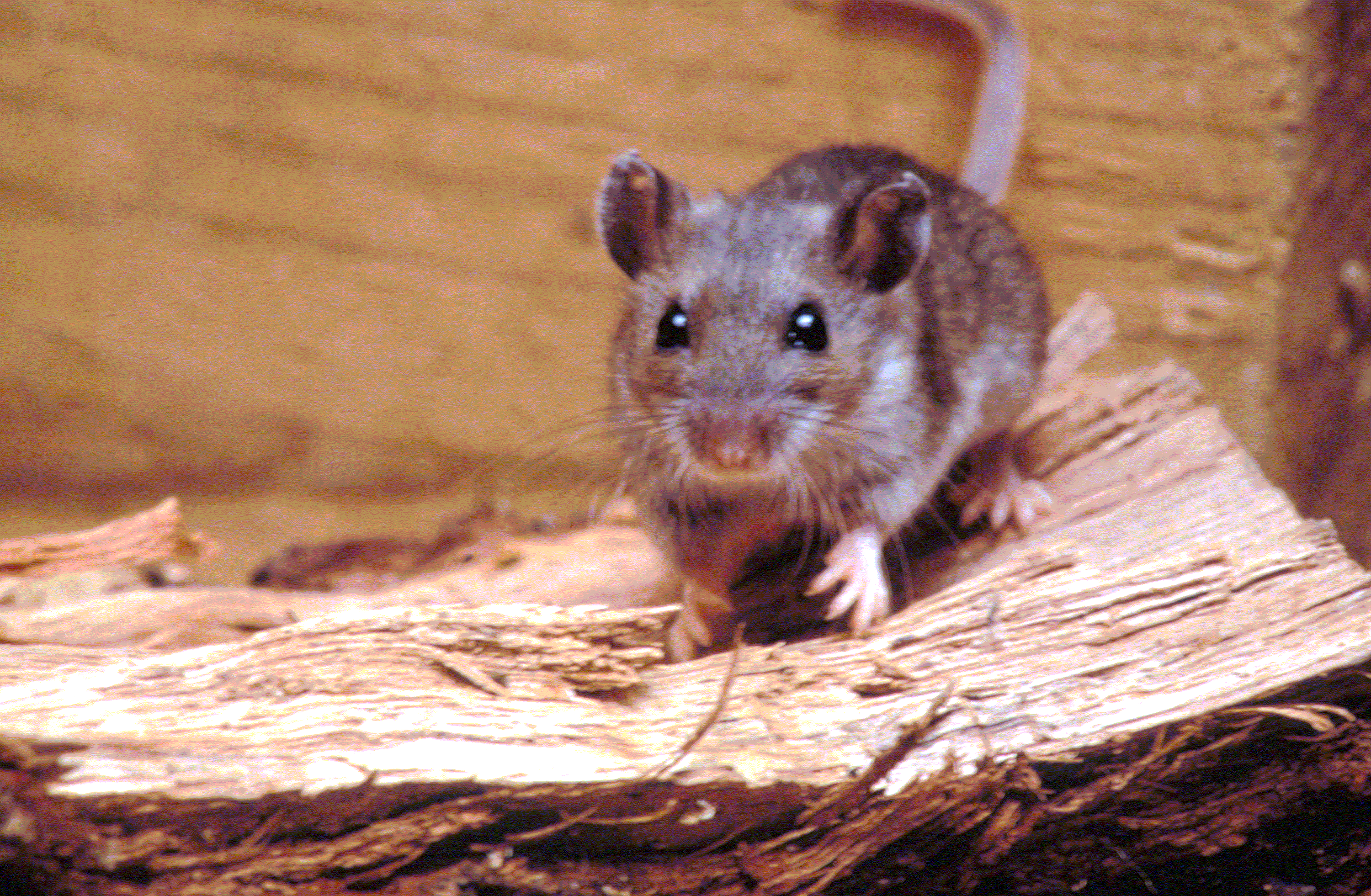
ISSAQUAH, WA - King County health officials are reporting that a possible third case of hantavirus - a rare deadly virus transmitted by rodents - has appeared in the area.
Health officials are waiting on test results, but believe that a woman from Issaquah may have come down with hantavirus pulmonary syndrome. The woman is in her 50s and is being treated at a local hospital.
Two other people in King County have had confirmed hantavirus. One, an Issaquah man in his 30s, sought treatment at an emergency room on Feb. 23, but died the next day. Health officials say there was a rodent infestation around the man's home, but do not know how the man might've come into contact with the rodents. A woman from Redmond survived hantavirus and may have come into contact with the virus in December through a rodent nest in her car.
Find out what's happening in Sammamish-Issaquahfor free with the latest updates from Patch.
Health officials do not believe the Issaquah cases are related, although both the deceased man and the woman being treated now live in neighborhoods near Squak Mountain.
“If this third case of HPS is confirmed it suggests that certain areas of the county are at increased risk compared to past years.” Dr. Jeff Duchin, the county's health officer, said in a statement. “People who live near wooded areas where deer mice are common should take steps to keep rodents out of the home and other structures, and take precautions when cleaning up rodent nests and potentially contaminated spaces. Anyone who has had exposure to rodent nests or areas where rodents are living and who develops symptoms should see a health care provider promptly.”
Find out what's happening in Sammamish-Issaquahfor free with the latest updates from Patch.
Hantavirus is rare in Western Washington, and health officials believe the two confirmed cases are the first to have originated here since 2003. In our area, hantavirus is only carried by the deer mouse, a species that to lives wooded areas. Rats and indoor mice seen in urban areas do not carry hantavirus. Humans usually contract the virus by inhaling bits of rodent feces or urine.
Hantavirus has a mortality rate of about 36 percent, according to the Centers for Disease Control. By comparison, seasonal flu has a mortality rate of up to 2.5 percent, while the average mortality rate for Ebola is around 50 percent, according to the World Health Organization.
Hantavirus was first identified in the U.S. after an outbreak near New Mexico in 1993. Investigators theorized that a wetter than usual winter had contributed to a rise in the deer mice population, which put more humans into contact with the mice.
It's unclear if our wet winter has caused an increase in the local deer mice population. King County is working with state wildlife officials to figure out if there has been a change in the ecology of local deer mice.
Image via Centers for Disease Control
Get more local news delivered straight to your inbox. Sign up for free Patch newsletters and alerts.