Politics & Government
New Vote Totals On Washington 2018 Ballot Initiatives
See the results for the 2018 ballot initiatives I-1631, I-1634, I-1639, I-940, and Seattle's families and education levy.


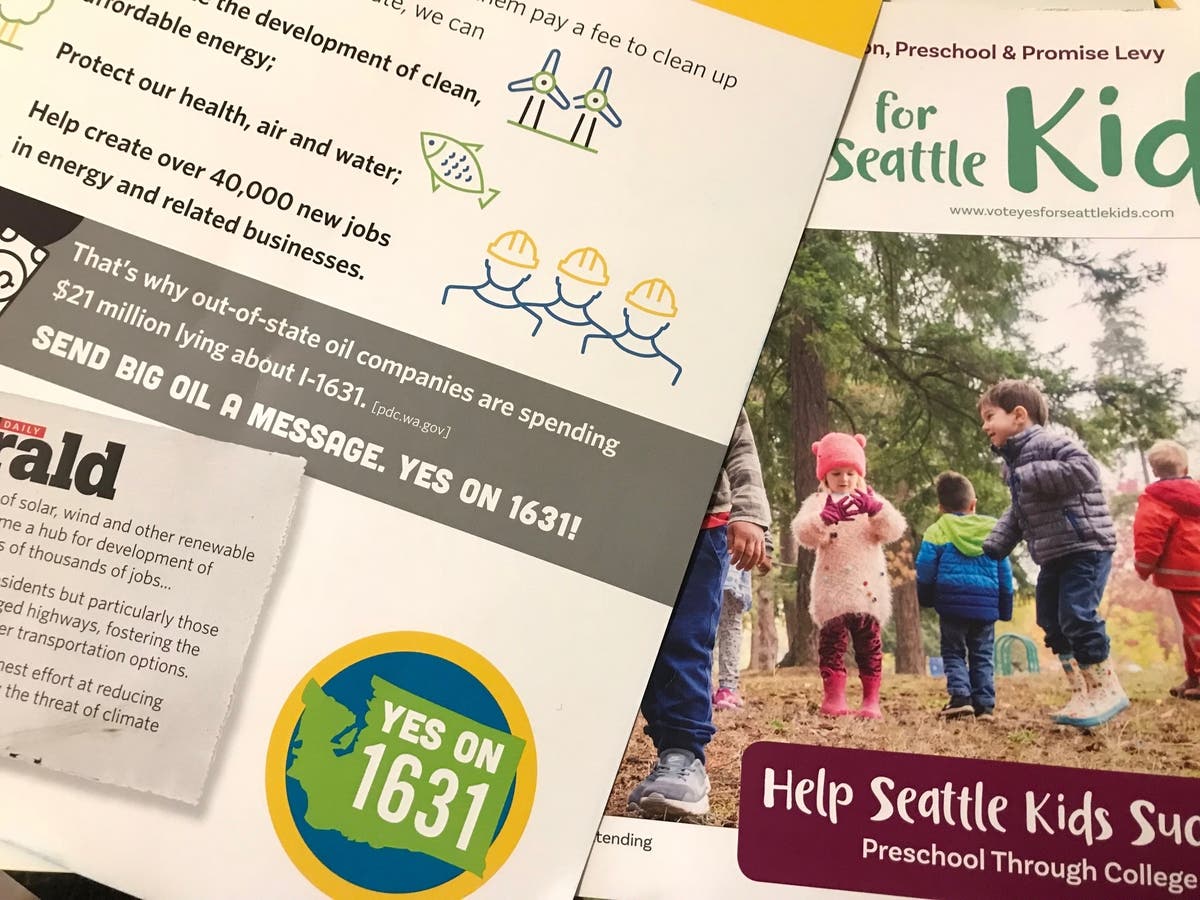
OLYMPIA, WA - Voters were split over an ambitous set of statewide initiatives dealing with issues like taxing carbon, reforming gun laws, and banning taxes on soda. In new vote totals releasd Wednesday, the results of the initiatives were holding.
Two of the initiatives before voters in 2018 — I-1631 and I-1634 — were among the most expensive ever in the state. Oil companies and petroleum lobbying groups poured millions into I-1634, which would create a carbon tax in Washington. Meanwhile, soda corporations like Pepsi and Coca-Cola poured over $20 million into I-1634, which would prevent local governments from taxing soda and other items.
I-1639 would change gun laws in the state, including raising the age to purchase semiautomatic assault rifles to 21. The National Rifle Association fought against the initiative. I-940 would create new training programs for police, and change how deadly force is viewed under state law.
Find out what's happening in Seattlefor free with the latest updates from Patch.
Here's where each initiative stood as of Tuesday night (check back after 8 p.m. for the latest results):
- I-1634, banning taxes on soda: 1,108,708 FOR, 922,117 AGAINST
- I-1631, creating a carbon tax: 896,830 FOR, 1,143,604 AGAINST
- I-1639, new gun regulations: 1,243,574 FOR, 806,472 AGAINST
- I-940, police safety measure: 1,212,289 FOR, 825,075 AGAINST
- Families & Education Levy (Seattle only): 183,741 FOR, 84,151 AGAINST
“I am so grateful to the people of Seattle for making this investment in our young people and opening doors to opportunity. And I cannot thank the volunteers, supporters, and advocates enough for their hard work to build opportunity in Seattle," Seattle Mayor Jenny Durkan said of the expected passage of the families and education levy.
Find out what's happening in Seattlefor free with the latest updates from Patch.
If passed, I-1631 would mean a major shift in environmental policy in the U.S. A carbon tax has been proposed at the federal level, but failed to gain traction. Starting in 2020, Washington's carbon tax would charge polluters $15 per metric ton, with increases each year.
"The fee increases by two dollars per metric ton each year and is also adjusted for inflation each year. The two-dollar annual increases continue until the state’s existing greenhouse gas reduction goal for 2035 is met and the state is on pace and likely to meet the 2050 greenhouse gas reduction goal. At that time, the pollution fee will be fixed, except for the annual inflation adjustments," the explanatory statement reads.
I-1631 has received local and national support and has been endorsed by state tribal leaders, Gov. Jay Inslee, Bill Gates, the American Lung Association and Washington Conservation Voters.
Opposing the measure: the Seattle Times and large oil companies like BP, Phillips, and Andeavor, which contributed more than $30 million to defeating the initiative as of Oct. 31. Ads flooded airwaves across the state before Election Day calling I-1631 an "energy tax." According to the Seattle Times, the impact on households would vary across the state.
Former attorney general Rob McKenna was one of the most prominent voices against I-1631. But after McKenna appeared in a political ad speaking out against I-1631, it was revealed he, as a private attorney, represented Chevron, which donated $500,000 to the opposition.
Perhaps even more controversial is I-1634, an initiative funded by large soda companies like Pepsi and Red Bull that would prevent local cities from taxing sugary drinks. The campaign largely downplayed the soda-tax angle, emphasizing that a 'yes' vote on I-1634 would prevent a tax on "groceries" in general. The campaign's main slogan was, "Yes! To Affordable Groceries."
But, there are not proposals anywhere in the state to tax regular grocers. So far, only Seattle has passed a tax on sugary drinks. I-1634 would allow Seattle's tax to stay in place.
“This is a victory for all Washingtonians who came forward to put a stop to regressive taxes that place a larger share of the burden on residents least capable of paying it,"the Yes! To Affordable Groceries coalition wrote in a statement Tuesday night.
In a story about the initiative, the Tacoma News-Tribune, quoting a University of Washington professor, wrote that the initiative is nothing more than an effort to stop the spread of soda taxes.
The soda companies backing the campaign spent over $21 million on the campaign, breaking state initiative records - along with the anti-I-1631 campaign.
I-1639 would enact some of the most sweeping gun laws in the nation, but the opposition to the initiative was relatively muted. The National Rifle Association, backing the anti-I-1639 campaign, only raised about $610,000. The pro-I-1639 campaign - Safe Schools, Safe Communities - raised close to $5.5 million, including $1.2 million from the late Paul Allen. Everytown for Gun Safety, Michael Bloomberg's gun control nonprofit, gave $450,000 to the campaign.
"If passed, I-1639 would give Washington some of the strictest gun laws in the country. The time to act is NOW!" Big Top Promotions, which puts on gun shows around the state, wrote in its newsletter days before the election.
On election night, voter Brandon (he didn't want to give his last name), 25, decided after lots of research to vote against I-1634. He experienced a shooting on his college campus, but he still thinks the measure before voters is "too general."
"It needs refinement," Brandon said.
Rich Quigley, who was dropping off his ballot at the Bellevue Library, said the opposite.
"Big on the list for me is gun control," Quigley said. He voted for I-1639.
If passed, the law would require semiautomatic rifle owners to go through training every five years, raise the age to purchase a semiautomatic rifle to 21, and prevent sales of semiautomatic rifle to out-of-state residents, among other new rules.
The initiative had a lot of support going into the election, even before the shooting at the Tree of Life synagogue in Pittsburgh. A Crosscut/Elway poll found 59 percent of voters were definitely going to vote yes, and just 24 percent planned to vote no.
Finally, I-940 would, among other things, amend state law to hold police officers more responsible for using deadly force. The initiative has actually been backed by some police groups, like the Law Enforcement Action Partnership, former Seattle police Chief Norm Stamper, and King County Sheriff Mitzi Johanknecht.
The initiative would mandate more de-escalation training for officers.
"No matter our differences, all of us want to ensure our families, communities, and law enforcement are safe. But today, more Washingtonians are killed in encounters with law enforcement than in 45 other states. No family should have to live through losing a loved one unnecessarily. Voting Yes on Initiative 940 would provide every law enforcement officer in our state with enhanced training in de-escalating tough situations, recognizing mental health crises, and providing first aid response," the group De-Escalate Washington wrote of the initiative.
We will be updating vote totals on these initiatives all week. Check back each day for the latest updates.
File photo by Neal McNamara/Patch
Get more local news delivered straight to your inbox. Sign up for free Patch newsletters and alerts.