Seattle, WA|Local Classified|Gigs & Services|
What Pacific Northwest Spring Rain Means for Your Seattle Deck
Anyone who has lived in Seattle through a full year knows that spring rain looks different here than it does almost anywhere else in the country. We get steady, persistent moisture from late fall through early summer, with around eight months of meaningful rainfall when you average it out. That rainfall pattern affects more than your morning commute. It also shapes what works and what doesn't on an outdoor deck.
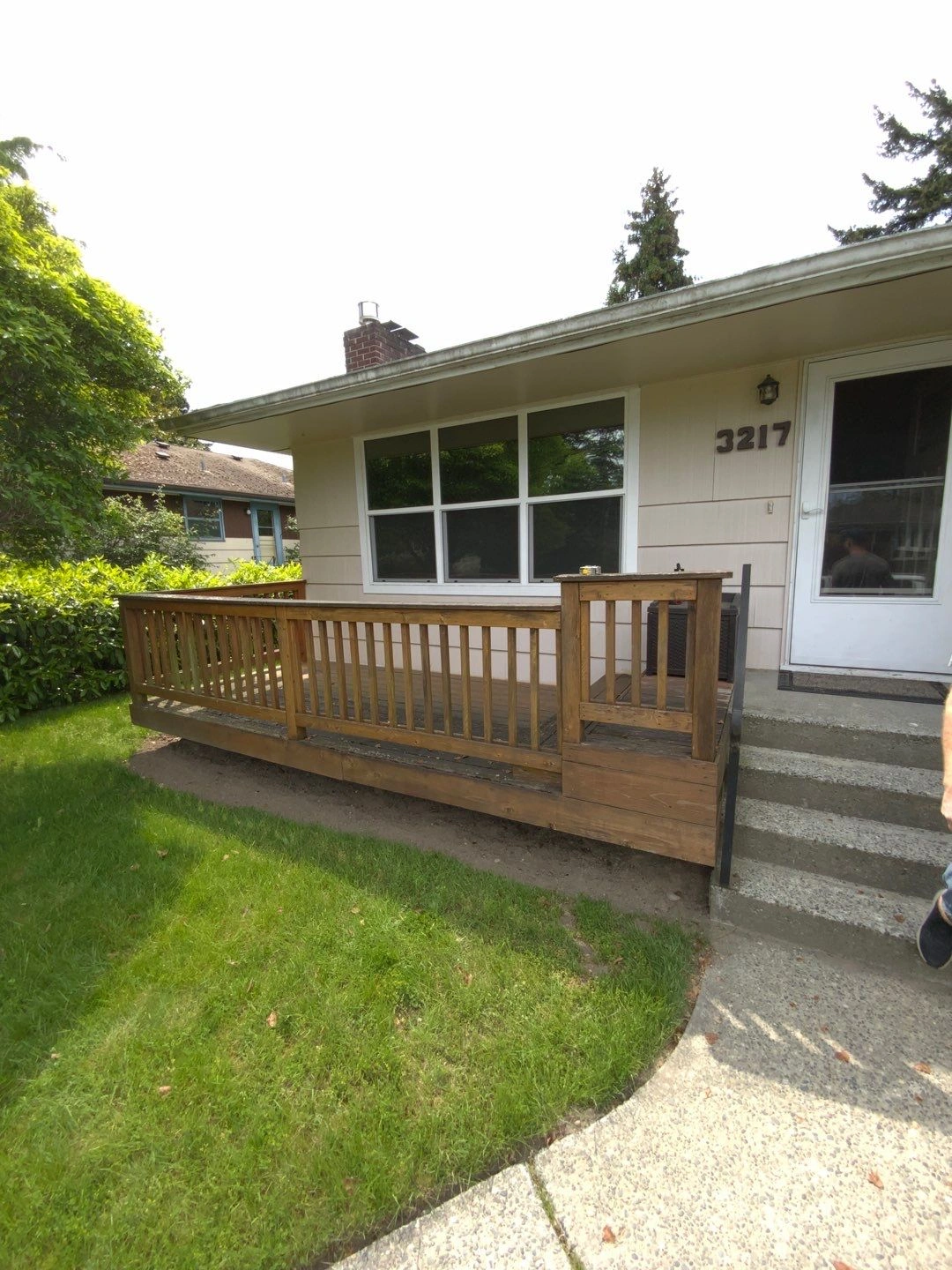
If you've owned a wood deck in Seattle for any length of time, you've watched what happens. Boards that absorbed water all winter dry unevenly through May and June. Fasteners corrode faster than they would in drier climates. Mold and mildew show up in the shaded corners. The substructure underneath, where you can't see it, takes the hardest beating because moisture sits there longest.
Three things worth understanding as a Seattle homeowner thinking about a deck:
First, material absorption matters more here than in dry climates. Traditional pressure-treated wood absorbs moisture across the seasons, expanding and contracting in ways that loosen fasteners and stress connections. Composite decking and PVC don't absorb water the same way, which means they hold their shape through the wet months. Tropical hardwoods like Ipe, Tigerwood, and Cumaru are dense enough to resist water absorption naturally, which is part of why they remain popular for Pacific Northwest waterfront properties.
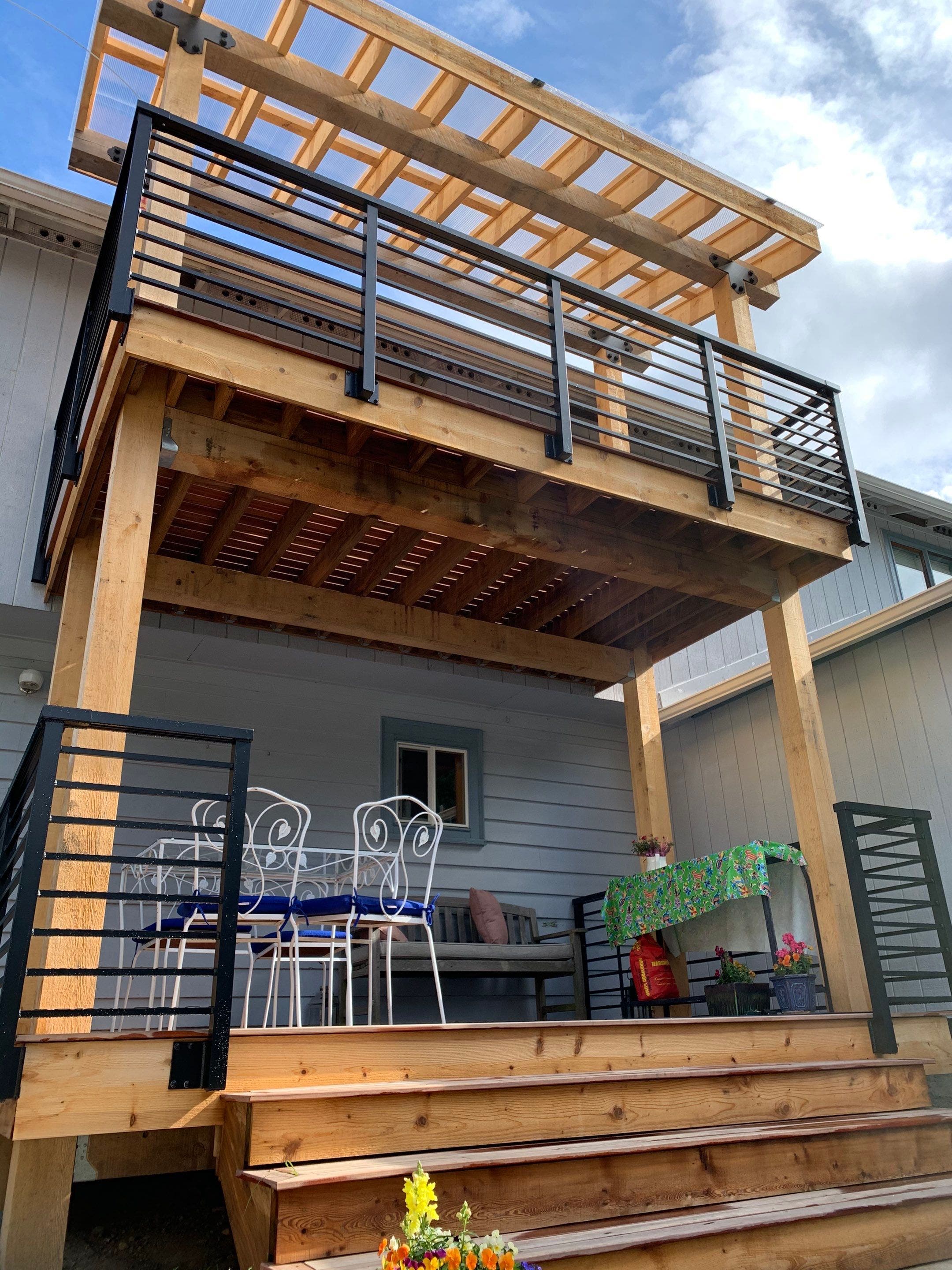
Second, water management beneath the deck matters as much as the surface. An elevated deck with no underdecking lets every drop of rain fall through the gaps in the boards and accumulate underneath. That moisture damages anything stored down there, encourages mold growth on the underside of the framing, and gradually wears the lumber itself. Underdecking systems intercept that water and channel it away.
Third, drainage planning prevents long-term damage. Where rainwater goes after it leaves the deck affects siding, foundation, and landscape grade. A deck designed without thinking about runoff often creates new problems somewhere else within a few seasons.
Seattle's rain pattern is what makes the Pacific Northwest beautiful — those green, mossy, fog-softened mornings are not free. They come with a moisture load that every outdoor structure has to handle. Understanding how that moisture interacts with materials before you build is the difference between a deck that lasts twenty years and one that doesn't.