Crime & Safety
Study: Coronavirus Transmissions Down In Western WA, Up In East
A study has found that, while transmissions of the coronavirus are down in the west, they're up in eastern Washington.


WASHINGTON — A new study from the Institute of Disease Modeling has found that coronavirus transmissions are increasing in eastern Washington, just as they have begun to significantly decrease in the western half of the state.
The study works by tracking the virus's "effective reproductive number" which shows how many new people the average coronavirus patient will infect while they're contagious. An effective reproductive number below one means that, on average, a coronavirus patient will give the disease to one person or less, meaning the virus is decreasing over time. A number above one means the opposite: a patient will infect at least one other patient and maybe a second, increasing the number of coronavirus infections over time.
As the study shows, the effective reproductive numbers for both halves of the state started similarly, with each coronavirus patient infecting around 3 others, and both declined along the same lines, but near the end of last month they began to diverge significantly.
Find out what's happening in Seattlefor free with the latest updates from Patch.
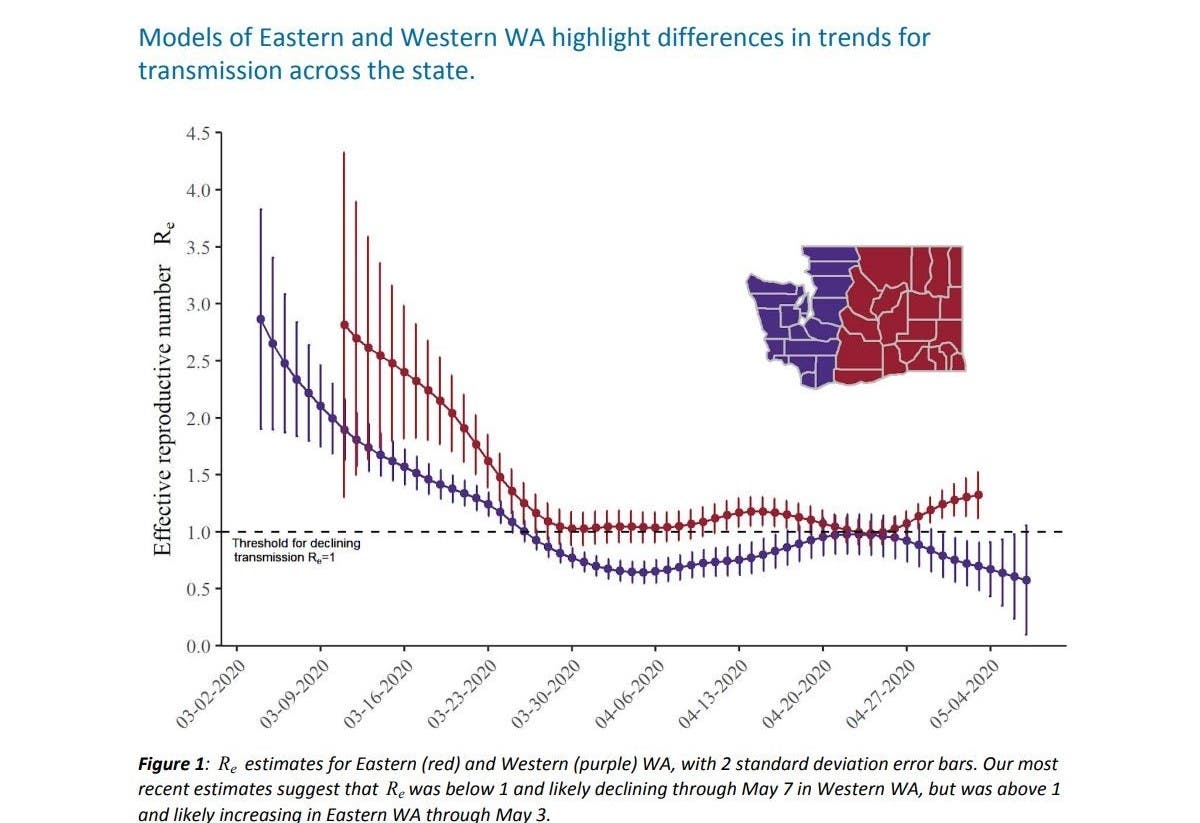
Researchers say, as of the latest data, they estimate western Washington's effective reproductive rate is around .57, while eastern Washington's is estimated to be 1.32. As a result, each week western Washington sees fewer cases than the week before, where cases continue to grow in the east.
The study does note however, that the number of new cases varies wildly by county even in the east. Yakima and Chelan Counties are both in eastern Washington, and both have some of the highest infection rates per capita in the whole state, while other eastern counties have had so few recent infections they've been allowed to move on to Phase 2 of Gov. Inslee's Safe Start plan.
Find out what's happening in Seattlefor free with the latest updates from Patch.
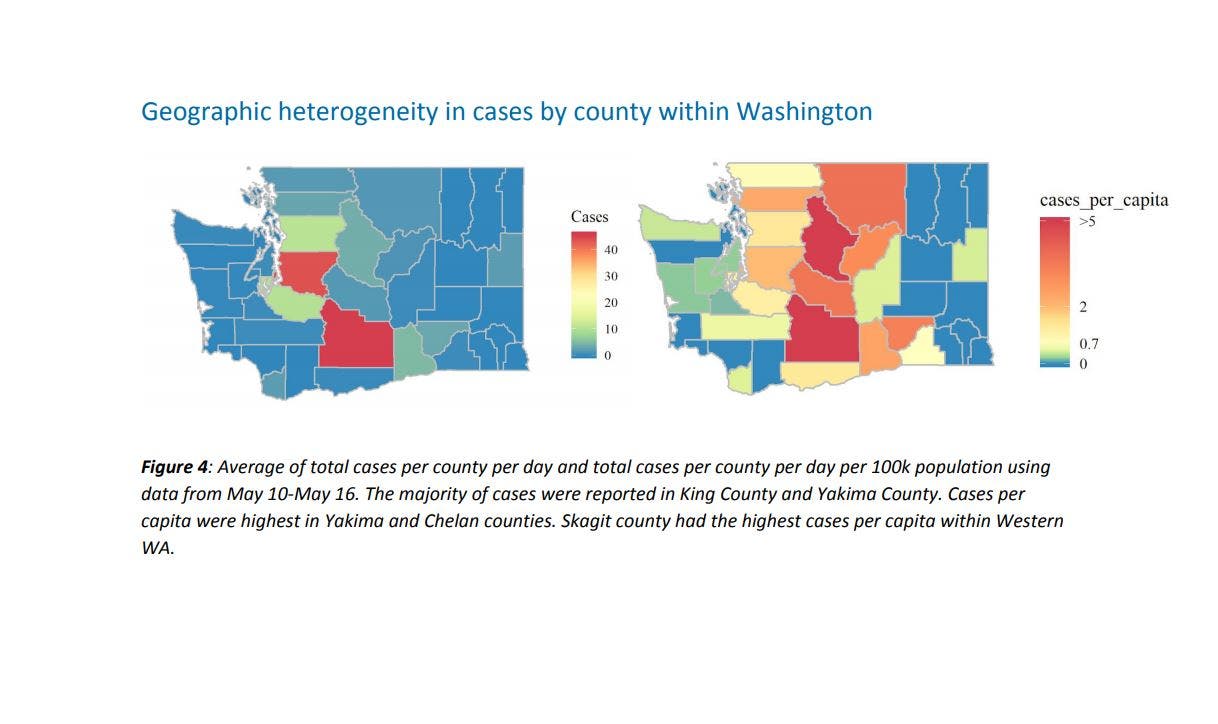
The study does not speculate on why infections vary so wildly, but does say it's a matter of ongoing research and must be addressed to reduce the spread of the coronavirus.
Read the full study from the Institute of Disease Modeling here.
Get more local news delivered straight to your inbox. Sign up for free Patch newsletters and alerts.