
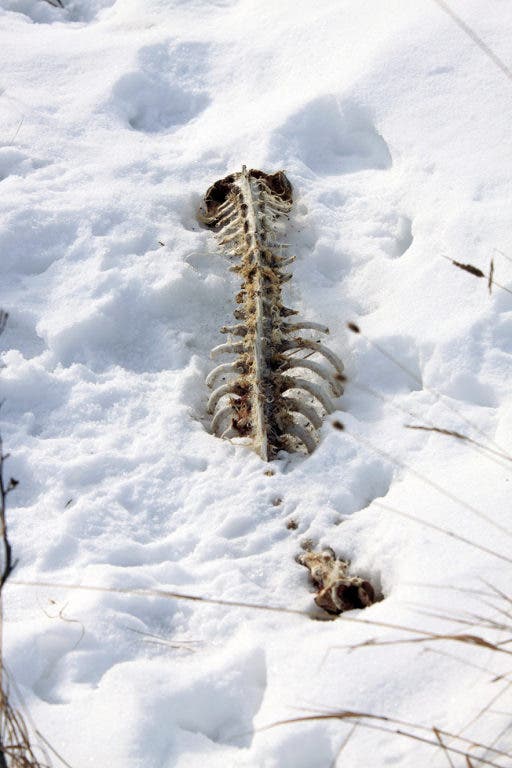


March is a schizophrenic month. On one hand, there is a light at the end of the long winter tunnel. On the other, March is usually our snowiest month, and this year we began the month with sub-zero temperatures. In March we can revel in warm, sunny days, or suffer through full-on blizzards.
What this unpredictable weather means for you and I is, at most, a general inconvenience, and maybe more frequent interactions with unusually crabby people. In March we are, all of us, anxiously awaiting spring’s arrival.
For the wildlife in our area, it’s a much grimmer matter altogether. Frankly, this is the time of year that kills already stressed critters. This is true for some species more than others, and it's worth pointing out which critters are which.
Find out what's happening in Hudsonfor free with the latest updates from Patch.
We’ll start with everybody’s favorite animal, the white-tailed deer. Of course, if you’re an orchard owner, or a gardener, you may dispute that "favorite" label and prefer to insert "nemesis" or "sworn enemy." Regardless of your particular level of affection for deer, most years March is the month that makes or breaks them.
Most of the mature does are carrying fawns right now. Some are carrying twins or even triplets. Whether those fawns are born this May and June depends substantively on how much snow we get this month, and how cold the temperatures remain.
Find out what's happening in Hudsonfor free with the latest updates from Patch.
Kris Belling is the wildlife manager for the Wisconsin Department of Natural Resources (DNR) in the West Central district. She will tell you that, while March snows and cold usually won’t affect the adult doe numbers directly, those does will not be able to support the fetal fawns if March is too harsh. If the does lose the fawns, then, in demonstration of my considerable math skills, I believe there will be fewer deer this year and next. Hooray, or boo, depending on your perspective. Personally, I like deer.
Belling was quick to point out that besides the weather, "dogs running loose are also a big threat to deer at this time of year." With the frequent freeze/thaw cycles in March, many dogs are able to run on top of the crusted snow, while the deer struggle as they break through the crust. Even dogs that run the deer without any hope of ever catching one, stress the critters to the point that they lose their fawns, or even their own lives.
Pheasants also take a beating at this time of year. Unlike turkeys, which are tree roosting birds, pheasants need good ground cover to survive winters like this one.
Mike Soergel, a wildlife technician at the DNR’s Baldwin office says, “The freezing rain we had last November knocked down a lot of the tall grasses that pheasants depend on for thermal and predator protection." Even the cattail marshes are snow choked right now, leaving pheasants with few options for loafing and roosting cover.
Finding food sources is particularly tough if we get our usual heavy, wet March snows. The brief thaw we had in February allowed pheasants, (and a lot of other species) a respite from winter at just the right time. They were able to access corn and other grains as some farm fields lost much of their snow cover. That good fortune for the pheasants, however, can easily be undone if March weather doesn’t cooperate.
Speaking of wild turkeys, they have proven amazingly resilient to all winter can throw at them. The DNR’s Belling says with some level of bemusement, “We believed that the severity of winters would be the limiting factor for turkey populations in Wisconsin, but they have survived very well though some tough winters.” Anyone who lives in Troy, Hudson or St. Joseph towns can attest to that. The turkey’s ability to scratch through deep snow gives them a distinct advantage over smaller birds such as pheasants.
Songbirds definitely rate a column all their own, and I’ll get to that eventually, but wildlife tech Soergel wants to make sure you know now that those colorful little birds come to “rely on feeding stations” provided by area residents. In other words, if you start feeding them, don’t stop until spring finally and truly arrives. According to Soergel, “This is especially important in rural areas where the birds might have to travel long distances, and burn lots of energy, to find another food source.”
All is not doom and gloom for our area wildlife, however. For some species—carrion eaters such crows, bald eagles and coyotes leap to mind—harsh winters are a positive boon. Not to be too macabre, but there are plenty of mostly-frozen foods emerging from the melting snow banks, and life is good at this time of year for scavengers.
Other animals barely take notice of the snow or the cold. River otters in the St. Croix backwaters fish unimpeded under the ice, and actually seem to enjoy the cold. Ermine (short-tailed weasels wearing their winter white coats,) find all the mice they need in outbuildings and woodpiles. Ducks, geese, and swans will stay here quite happily through the coldest weather, as long as the water remains open. Hawks, eagles and owls might have a bit tougher time finding prey, but they, too, seem not to mind the coldest of temperatures.
Ruffed grouse, (there are a few in this area,) love deep snow. Given the insulating value of snow, grouse will gladly roost in snow burrows until it crusts over too thickly for them to get through. And, since they primarily feed on tree buds at this time of year, their food supply remains more constant than the pheasants.
It should be pointed out that March is also a great time for wildlife watchers. The animals become more active because the sun, when it’s out, is very potent. The approaching breeding seasons for many animals, birds in particular, also has them out and active when the March weather permits.
And with snow still on the ground the critters are easier to spot. At least most are. I know this ermine, and at least one snowy owl, that would disagree.
