Politics & Government
How Wisconsin Voters Shifted In 2026, By Age, Gender And Education
New estimates show nearly every group of Wisconsin voters moved toward Democrats, and one swung 35 points.


WISCONSIN — Nearly every major group of Wisconsin voters moved toward Democrats in this year's congressional races, with some of the biggest swings coming from men, young voters and Hispanic voters, according to new estimates from The New York Times.
The Times Voter Trends project estimates how different groups voted in every state, broken down by age, race, education and gender. Its Wisconsin figures, last updated Nov. 7, are based on the combined statewide vote for U.S. House and compare it with the 2024 and 2020 presidential elections.
Democratic House candidates won about 54% of that vote to 45% for Republicans, a margin of 8 percentage points, according to the estimates. Republicans carried Wisconsin by 1 point in the 2024 presidential race.
Find out what's happening in Milwaukeefor free with the latest updates from Patch.
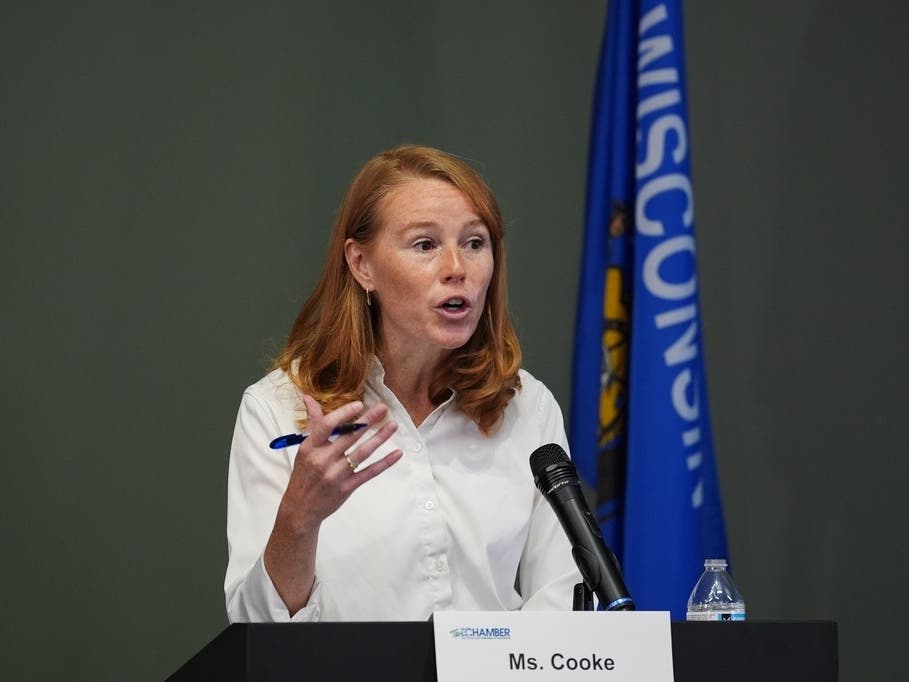
The shift came in an election in which Democrat David Crowley won the open governor's seat over Republican Tom Tiffany, and Democrat Rebecca Cooke unseated Republican Rep. Derrick Van Orden in the 3rd Congressional District.
Here's a look at how Wisconsin voters shifted, according to the estimates.
Find out what's happening in Milwaukeefor free with the latest updates from Patch.
Gender
Men moved 13 points toward Democrats, the larger shift of the two genders. Republicans won men by 3 points this year, down from 16 points in 2024.
Women backed Democrats 59% to 40%, an 18-point margin and a 5-point shift toward the party.
Age
Voters ages 18 to 29 supported Democrats 71% to 28%, a 43-point margin. That's a 28-point swing from 2024, when the group favored the Democratic presidential ticket by 15 points.
Voters ages 30 to 44 swung 19 points, going from a 2-point Democratic edge in 2024 to a 21-point margin this year.
Voters ages 45 to 64 still favored Republicans, but by 4 points, down from 10 points two years ago.
Voters 65 and older backed Democrats 52% to 47%, a 3-point shift toward the party. That's a different story from neighboring Minnesota, where seniors moved toward Republicans in this year's U.S. Senate race.
Young voters made up a small slice of the Wisconsin electorate. Voters under 30 cast an estimated 9% of ballots, though they account for 20% of the state's voting-eligible population. Voters 65 and older cast 36% of ballots, compared with 25% of eligible voters.
Race
Hispanic voters had the biggest swing of any group, backing Democrats 75% to 24%, a 35-point shift toward the party since 2024.
White voters, an estimated 89% of the electorate, narrowly favored Democrats 51% to 48% after backing Republicans by 6 points in 2024. Black voters supported Democrats 90% to 8%. The Times did not have enough data to estimate how Asian voters in Wisconsin cast their ballots.
Education
Wisconsinites without a college degree swung 12 points toward Democrats, going from a 12-point Republican margin in 2024 to an even split this year.
White voters without a degree still favored Republicans, 53% to 46%, but the margin shrank to 7 points from 19 points in 2024.
College graduates backed Democrats by 22 points, a 2-point shift toward the party.
How the estimates were made
According to the Times, the Wisconsin estimates draw on results from 6,607 precincts, voter files, validated turnout records covering 29% of the state's voters and interviews with 106 Wisconsin voters through The Times/Siena Poll. The figures are preliminary, and the Times plans to revise them in the coming weeks as more data arrives.
Get more local news delivered straight to your inbox. Sign up for free Patch newsletters and alerts.