Politics & Government
Supreme Court Candidates Get Political in Waukesha Forum
Wisconsin voters will elect incumbent Justice David Prosser Jr. or challenger JoAnne Kloppenburg to the Supreme Court on April 5.
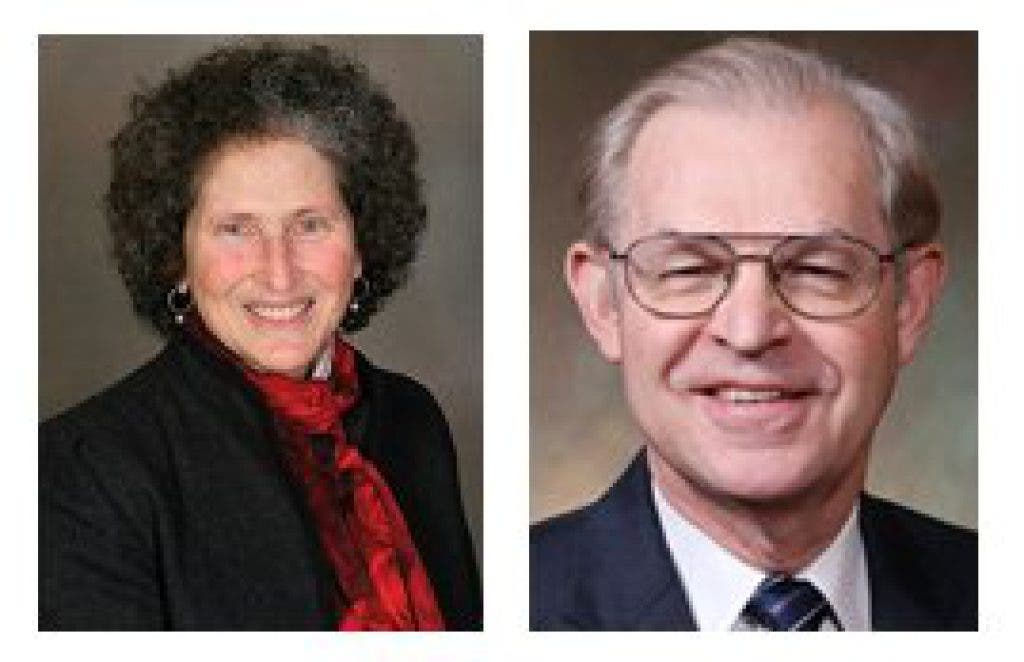

While judicial races in Wisconsin are supposed to be above politics, the political leanings of Wisconsin Supreme Court Justice David Prosser Jr. emerged as a key issue in his bid for a second 10-year term on the high court.
Officially, all state judicial races are non-partisan – candidates cannot run as representatives of political parties.
Challenger JoAnne Kloppenburg came out swinging at a forum in the Waukesha County Courthouse Thursday night, accusing Prosser of being anything but non-partisan.
Find out what's happening in Muskegofor free with the latest updates from Patch.
“Justice Prosser has sent a clear message that he will favor the agenda of Gov. (Scott) Walker and the Republican Legislature,” Kloppenburg said. “I will apply the law to the facts of the cases before me and decide them without prejudice.”
Prosser, a former Republican leader who served 18 years in the state Assembly, defended his record and his reputation. He shot back that Kloppenburg is being supported by those with another political agenda:
Find out what's happening in Muskegofor free with the latest updates from Patch.
“There are some people who support my opponent who want the court involved in legislative reapportionment,” Prosser said.
He was referring to the upcoming redrawing of the legislative districts based on new census data. It's a critical issue because one party – the Republicans – control both houses of the state Legislature and the governor’s office. Democrats fear that redistricting will be done in a way that will swing districts safer for Republicans. Whatever plan the Republicans develop likely will face a legal challenge that will end up in the Wisconsin Supreme Court.
There is often a 4-3 split on the high court, widely viewed as a conservative-liberal division. Prosser proudly touts his conservative credentials.
With 14 state senators facing recall elections – eight Republicans and six Democrats – the redistricting could be political critical.
Redistricting is not the only political issue that will come before the court: the recent action by the Legislature that strips public employees of many of their collective-bargaining rights appears headed in that direction. Several other issues surrounding Walker’s budget repair bill also seem likely to be the subject of court challenges.
Kloppenburg’s emphasis at the Waukesha forum was that those sitting on the high court need to be fair and impartial. Prosser countered that he has the experience and has been credited with doing a good job.
Indeed, it is a rarity for a Supreme Court incumbent to lose an election.
One notable exception was the defeat of Louis Butler in 2008 by Michael Gableman. Gableman came under attack for television ads that were widely seen as misleading. The high court evenly split on the issue with half saying that their colleague, Gableman had violated court rules in running the ad. Prosser was one of the judges that voted that he had only exercised his right to free speech.
At the forum Thursday, Kloppenburg said the ad was widely “perceived to be a lie” and that the court's decision was made along partisan lines rather than the law applied to facts.
Prosser responded he was correct and if the other side had prevailed, “it would have gone to the U.S. Supreme Court and have been overturned.”
Prosser, 68, was appointed to the high court in 1998 by Republican Gov. Tommy Thompson. In addition to serving 18 years in the Assembly, he was the Outagamie County District Attorney and worked for the U.S. Justice Department for two years.
He graduated from DePauw University and the University of Wisconsin Law School.
Kloppenburg has been an assistant attorney general since 1989, working for three Democrats and a Republican, most recently handling environmental cases. She also lists expertise in constitutional law, appellate law, civil litigation and administrative law.
A graduate of the University of Wisconsin Law School, Kloppenburg received her undergraduate degree with honors from Yale and a master’s in public affairs from Princeton University. She was an intern for Wisconsin Supreme Court Chief Justice Shirley Abrahamson and was a law clerk for Chief Judge Barbara Crabb of the federal court based in Madison. She has taught at the law school since 1990.
The election is April 5.