Schools
With Laramie Project, SHS Brings Bullying to Main Stage
Director Barbara Gensler said the play is the most controversial she has ever done in the main theater.
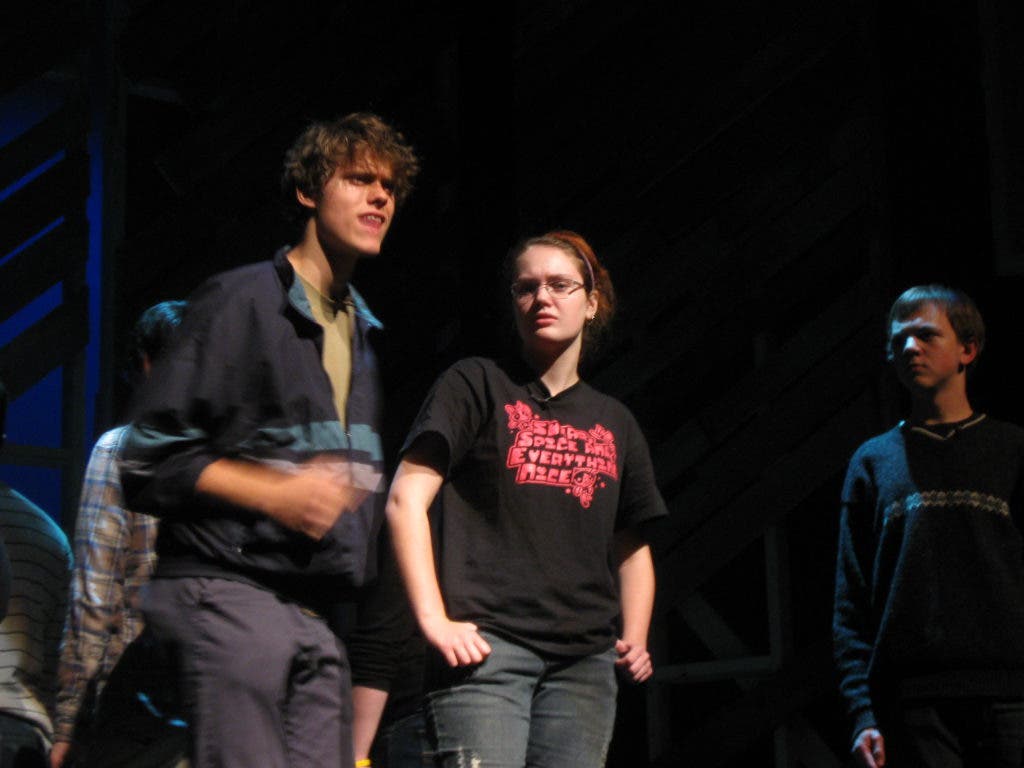


Gathered in the Shorewood High School studio on Monday, chatting and tossing around blueberries and Arizona Iced Tea after four hours of rehearsing, the cast of The Laramie Project quieted to hear their director's opinion on their performances.
"It was lackluster," Director Barbara Gensler said. "That doesn't mean it's going to be lackluster; it means you weren't ready to go out there and tell a story.
"When it comes right down to it, do you care about Matthew Shepard? If you don't, we don't have a show."
Find out what's happening in Shorewoodfor free with the latest updates from Patch.
The criticism highlighted a unique challenge of the play, running Thursday, Friday and Saturday. Written by Moisés Kaufman and members of Tectonic Theater Project, the lines are all direct quotes from their journal entries and interviews with than 50 people in Laramie, Wyoming after the 1998 murder of Matthew Shepard, a gay University of Wyoming student.
This rawness of the dialogue brings the actors and students unusually close to the plays characters — murderers, priests and farmers alike — and asks piercing questions about the role of homophobia and the community's passive acceptance of it.
Find out what's happening in Shorewoodfor free with the latest updates from Patch.
Gensler said she edited the script to include only four of the most necessary swear words, but that the content itself could upset some viewers. At other high schools, parents and administrators have occasionally tried to cancel productions of the Laramie Project.
"I always want the audience to like the shows we do, but sometimes you do it because it's important," Gensler said. "This is the most controversial show I've ever put on the main stage. It is controversial in a healthy sense because people will talk about it."
Gensler said she hopes the play forges a dialogue about bullying.
"I believe bullying is the seed of something like that," she said. "The culture created in Laramie could have caused the crime, and it could happen anywhere."
Meeting Matthew Shepard
While in most plays the actors have the liberty to create their own characters from the lines, with The Laramie Project, cast members said they feel an obligation to portray the characters as they really were.
"It almost feels like if you don’t play the characters right, you’re not doing it justice," cast member Connor Hopkins said.
Hopkins plays Aaron McKinney, one of two men who beat Shepard and left him tied to a fence until he was found 18 hours later and brought to a hospital where he died. With only 10 actors, each student plays several people in the community.
Gensler said the cast spent the first two weeks of rehearsals mostly reading, researching, and talking about the play.
"You’re trying to channel what these people actually thought when they said these words," Cast Member Glenn Helme said.
This process has brought the students especially close the subject matter. During one rehearsal, Gensler asked the students to think of experiences in which they have felt bullied or ostracized.
"I was thinking about why I care about Matthew Shepard, and I remembered growing up as an Italian kid, a long time ago, I had friends with parents who didn't like me and didn't want me coming to their houses because I was Italian. For that moment, I can understand that feeling when people start to get called bad for being part of a group."
Hopkins said anyone should be able to relate to the feeling of being excluded for being weird, no matter whether it escalated to the beating Shepard experienced.
"I’ve never been beaten like that but I’ve been bullied because the way I acted or the way I was," Hopkins said. "I think this play can speak to the hearts of anybody who comes and sees it."
In an effort to bring the audience as close as they have come to the story, Gensler asked the students to make eye contact with the audience during the show, breaking the "fourth wall" between the viewers and the actors.
She said it could make the audience uncomfortable, but in fact that's the goal.
"You're saying, 'This is for you,'" Gensler said.
It's a struggle for some of the students, who are used to theater as more of a one-way form of communication.
"I’ve always been more comfortable speaking in front of a lot of people rather than a smaller group of people, so I usually look over their heads," Helme said. "I think it’s going to be hard but it’s very necessary because the point is that it happened in Laramie, but it could have happened in Shorewood, just like any other town."
Could it happen in Shorewood?
Helme said he thinks Shorewood is a more welcoming school than most, but bullying is still prevalent.
"Being different is something that’s not always accepted," Helme said. "People make fun of you."
Hopkins said he often hears verbal bullying at the high school.
"I see kids who are ostracized, whether they're gay, or weird, or because of their skin tone," Hopkins said. "There's bullying toward straight guys acting effeminate, or girls acting masculine, I guess.
"The word 'gay' has such a negative connotation now, and people just accept it. It's a really widely accepted form of bullying.
"I don’t like it, any more than the next guy. I think it’s part of human society as far as we are right now. I hope we can evolve past it and I hope messages like this help us develop as a people."
Gensler said she has also witnessed bullying in school.
"I see kids in drama get called gay," she said. "It's time to say, 'I don't think it's right.' The last thing this world needs is more hatred."
Hopkins said he took from the play a message that with love, people can create positive outcomes from a tragedy.
"It really struck me how much somebody can influence the lives of so many people," he said. "My dad died recently. It’s a process to realize the way someone even in death can change the way someone looks at the world.
"There’s a line that says, 'Thank you, Matthew.' That’s what I really take from this play, is how much somebody can influence people. Positive things can come out of such horrible times."
The script and the cast employ a "Brechtian technique" of performance. Rather than fully emerging the viewer in the emotions of the events, the actors seem to be watching and reflecting on the events along with the audience. As the students break into different characters, they jolt the audience out of emotional moments with the hope that they will think more critically about what they are seeing.
Helme said he hopes that when people look back on the play, they remember not only Shepard's story, but the thoughts that played through their own heads as they listened to the characters dissect the events.
"What happened to him was not only a horrible thing but it shed light on the mentality of so many people," Helme said. "So many other people have gone through this and what happened to them wasn’t national news. We still need to fight for them."
The Laramie Project will run Thursday, Friday and Saturday at 7:30 p.m. You can buy tickets here for $7, or $5 with a student ID.