Neighbor News
Fire Safety For Seniors, The Complete Guide Here
Did you know that seniors aged 85 and older are 3 times more likely to perish in a fire. Our article shares some ways seniors can stay safe.

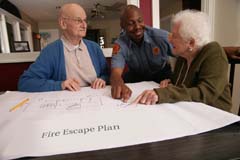
Did you know that according to the U.S. Fire Administration, seniors ages 80-84 have the highest fire death rate in the country? Seniors over 85 have the highest fire injury rate. What that means in hard numbers is the fact that people in their 80’s are four times as likely to die in a fire as members of other age groups.
As we age, we know there are changes that are associated with the aging process, from vision loss to arthritis to osteoporosis. Our physical reaction times slow down, as do some of our 5 senses. We don’t see, hear or smell as well as we use to. Additionally it can take a bit longer to orient ourselves to a fire danger because of some of the medication we may be taking, and many of us may need assistance to move about, be it with the aid of a walker or another individual.
In this post we are going to share some fire safety tips and topics that can apply to anyone, but will have a special emphasis on the senior population.
Find out what's happening in Waukeshafor free with the latest updates from Patch.
Smoke Alarms/ Smoke Detectors
We thought we would start out with this topic because having a proper working smoke alarm is for most of us, our first warning as well as our first defense against a fire.
Find out what's happening in Waukeshafor free with the latest updates from Patch.

Many of us use the terms smoke alarm/smoke detector interchangeably, however there is a difference between the two.
- Smoke alarms are self-contained, single or multiple-station smoke-sensing devices typically found in homes.
- Smoke detectors are smoke-sensing devices that are not self-contained. They operate as an interconnected system and are sometimes monitored remotely. Smoke detectors are commonly found in hotels, hospitals and in other commercial or industrial applications.
When it comes to smoke alarms, here are some of the considerations that our seniors must be aware of:
Can you hear the alarm? Smoke alarms must be tested to make certain that EVERYONE in the home can hear them, even when they are asleep.
If you or anyone in the home is deaf or has a hearing problem, consider installing a smoke alarm that uses a flashing light or vibration to alert you to the possibility of a fire.
You can purchase smoke alarms with built in or separate strobes by doing a search for “strobe light smoke alarms.”

If you have a senior that lives with you, assign a member of the family to look after them in the event of a fire. This should be done during your fire safety drill practices, so that this person knows their role prior to an emergency. Additionally assign a backup person, in the event the assigned person is out of the home in the event of a fire.
Make certain that you maintain your smoke alarms. If you have a parent that lives alone, don’t assume they are maintaining their smoke alarm. Set a reminder for yourself and check the smoke alarm for them monthly, by hitting the “TEST” button.
If the smoke alarms seem a bit dusty, it wouldn’t hurt to dust or vacuum them from time to time.
Batteries should be replaced at minimum once a year in smoke alarms, or when you start hearing it “chirp”. I have found from personal experience that it is just easier to replace all the batteries once I hear the first one start to chirp. If I don’t, within a week the second one starts to chirp, then the third one, etc., so to put an end to that annoying sound, simply replace ALL batteries in ALL of the smoke alarms.

Under no circumstances, should you pull out that battery because you need a battery for the TV remote or because it keeps going off when you are cooking. Your smoke alarm can truly mean the difference between life and death. If the alarm goes off repeatedly while cooking, you may simply need to move the smoke alarm or look for a different type of smoke alarm.
Smoke alarms need to be installed in every bedroom, outside each sleeping area, and on EVERY level of the home. Ideally smoke alarms should be mounted in the center of the ceiling.
If possible, all of the smoke alarms should be interconnected, so that if one sounds, they all sound.
It goes without saying that the smoke alarms need to have the approval label from a nationally recognized testing laboratory.
10 years is the limit you want to keep your smoke alarm before you replace it. Check your manufacturer’s instructions for the proper amount of years they suggest for the smoke alarm before it needs to be replaced.

IF you live in a building where management is responsible for smoke alarms/detectors, you can call them and ask them when they were last tested, cleaned or replaced. If your building management isn’t cooperative with you, you need to call your local Fire Department or your local agency on Aging. That may seem a bit radical, but fire safety is your ultimate goal, and if that means stepping on a few toes to make sure you are safe, so be it.
Home Heating Safety
We know that winter is a busy time for us, because as it gets colder many folks don’t always practice fire safety when it comes to heating their homes. We have done several blog posts on this topic and we will share the links, but additionally we will post a few quick tips here when it comes to seniors and fire safety.
Use appliances as they were intended. This means please don’t use your stove to heat your home.

Make sure all your intake and output vents are working properly.
Install carbon monoxide detectors.
If you are using a space heater to help keep you warm, please read our blog post on space heater safety by clicking here. However if you don’t read that post, please at least remember these two tips when it comes to space heater safety. NEVER go to sleep with the space heater on, and keep the space heater at least 3 feet away from combustibles. Those combustibles include cords, rugs, clothing, papers and more.

If you are using a fireplace to supplement your home heating, remember to make sure your chimney has been inspected before lighting a fire for the season, never leave the fire unattended and use a fireplace screen to keep an ember from flying out and sparking a fire in the room.
Kitchen Fire Safety
According to the NFPA, cooking is the #1 cause of home fires. The same kitchen fire safety rules that apply to the rest of us, certainly apply to seniors even more so. The reason for the “even more so”, is that many seniors (though not all) are on one form of medication or another, and many times that medication can make us drowsy.
You may think “I am just going to close my eyes for a quick minute, while I heat up dinner, but all it can take is a minute for a grease fire to happen.

For more information on avoiding kitchen fires, see our blog post here.
Electrical Fire Safety
Electrical fires result in more than 500 deaths and billions of dollars in damage per year. Here are just a few tips to make you aware of electrical fire safety.
Never overload your outlets with too many appliances or devices.

Extension cords should NEVER be run under rugs or carpets.
Also, never use extension cords as a permanent basis for lack of outlets, AND never plug a major appliance into an extension cord.
One more quick note on extension cords, unplug them when you are not using them.
When using light bulbs, make sure that you only use the recommended wattage for the lamp or fixture.
For more tips on electrical fire, click here for our infographic.
Smoking in the Home
If you are a smoker, or have a senior family member who smokes, the following tips should always be practiced.
Never leave cigarettes, cigars, or pipes unattended, if you have to leave the area and can’t take it with you, put it out.
Please don’t ever put ashtrays on the arms of chairs or sofas. The risk for the ashtray to tip over is great, spreading hot ashes or burning cigarettes onto the carpet or furniture.

Empty all ashtrays into the toilet or a metal container, so that ashes don’t smolder and ignite a flame hours later.
Never smoke in bed. In fact make it a standing rule, that you never even bring cigarettes into the bedroom.

If you are watching TV or reading and start to feel sleepy, put out your cigarette (or cigar).
If you smoke, or have a senior family member who does, make it a rule to smoke outside only.
Don’t smoke after taking medication that can make you drowsy.
Last….NEVER smoke around medical oxygen. Medical oxygen can explode if a flame or spark is nearby. If you figure “it’s ok, the oxygen is turned off”, it can still catch on fire. By the way, the same would hold true if you don’t smoke, but have lit candles in close proximity to an oxygen tank.

Home Escape Plan
Creating a fire escape plan as the smoke alarm is sounding can be done, and that quick thinking may save your life. However as we age, coming up with and executing a rapid fire emergency plan on the fly is not going to work for many seniors; especially since there are only minutes to get to safety once a smoke alarm has gone off.
A better idea would be to create a family fire escape plan in advance. Once the plan is figured out, we then need to practice and update it as our needs change in the areas of decreased mobility, hearing or our eyesight. We suggest conducting a family fire drill at least twice a year.

When creating your home escape plan, please take the following suggestions into account.
Identify all exits from the home or apartment building. If you use a wheel chair or walker, make certain that these items will fit through the doorways. If they don’t fit through a door that could be an emergency exit during a fire, you must come up with a different plan. (See why doing this in advance is critical to your safety?)
Be sure that all doors and windows open easily. Emergency exit doors that are blocked by a bookcase, boxes or furniture are not emergency exit doors. You will not have time to move the items if there is a fire. If you have bars on the lower floor windows, be certain that the bars have a quick release on them, so that you can pop the bars off in a matter of seconds.

If you are older or have a family member that is older, perhaps a bedroom on the first floor of the home would be more practical and safer when it comes to fire safety.
Keep all hallways and pathways free of clutter, especially if you are a senior using a walker or a wheelchair. Clutter will only slow your escape down, and we know we keep saying it, but it is so true, YOU HAVE ONLY MINUTES to escape a burning home or building. Every second counts which is why you can’t have anything blocking your path to safety.
Every senior should keep a telephone, a whistle and their eyeglasses on their nightstand. They will need their glasses to see their escape path. The whistle can alert other family members of a fire, and it can serve to let rescuers know where to find them in the event they didn’t get out right away. The phone will allow you to call the fire department….however that call should be made once you are OUT of the house. If by some chance you can’t make it outside, the phone will allow you to call for help and let rescuers know exactly where you are.

If you are a senior with special needs, make your fire department aware of those needs and ask them to keep that information on file.
Be certain that your house number is easy to see from the street, so that emergency personnel can find you quickly.

Practice, practice, practice your home escape plan. Again, our suggestion is at least twice a year and make changes and updates as necessary.
When it comes to seniors and fire safety, we know we have barely scratched the surface with this rather lengthy post, but our intent is that you will find information in this post that you can begin to immediately implement that can keep you, or the senior in your life same from a home fire.
Our thanks to the following for their information that went into compiling this blog post:
United States Fire Administration
From beginning to end, we can handle 100% of the restoration process so you don’t have to. This can include content pack-outs, cleaning & storage of personal property, structural drying & mitigation, mold remediation, lead & asbestos abatement, and full re-construction services. We are licensed, bonded, and fully insured. We abide by all state and federal laws, and are certified as a “Lead Safe Renovator” with the Environmental Protection Agency (EPA), and accredited with the IICRC.

For more information on Emergency Fire & Water Restoration, or the services we provide, give us a call at 414-810-3522, or visit our website at www.emergencyrest.com. We are available 24/7, 365 days a year.