Schools
Number of School District of New Berlin Grads Leaving High School with Industry Credentials Continues to Rise
Forty-four students, or 12 percent of the district's 2017 graduating class, graduated high school with an industry credential.
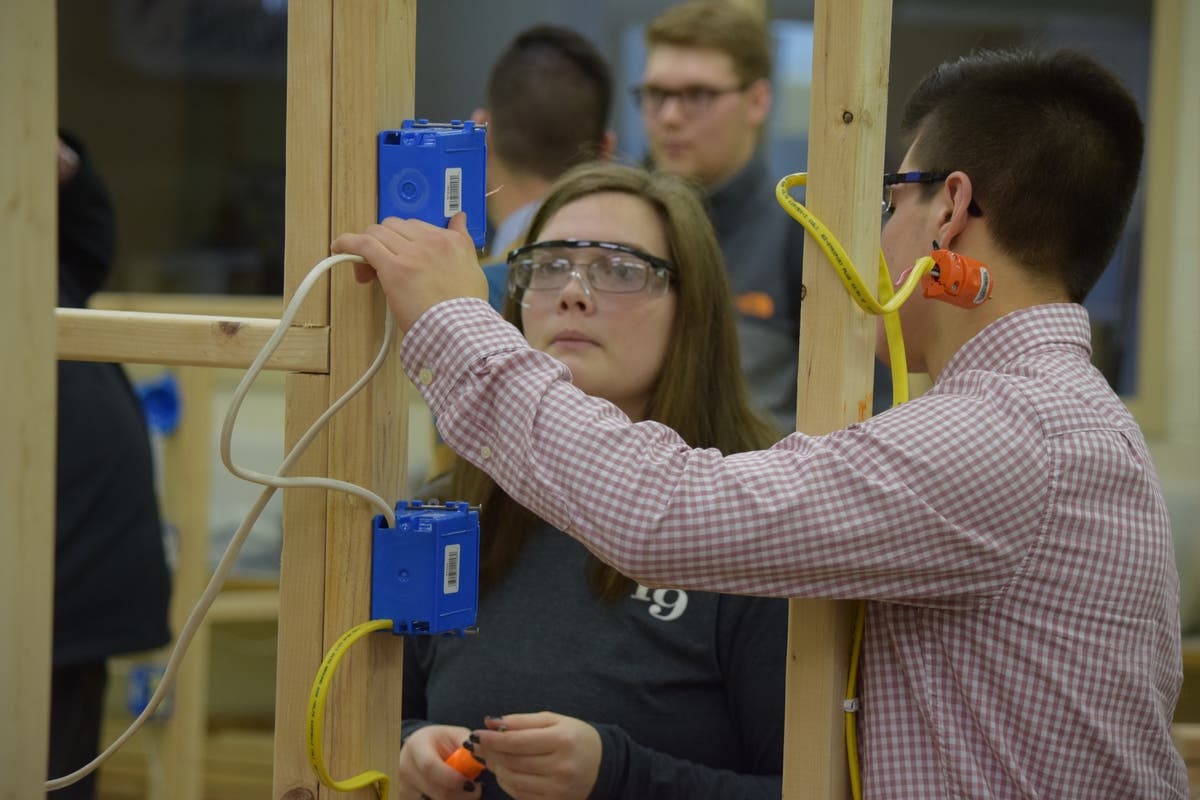


Forty-four students, or 12 percent of the School District of New Berlin’s Class of 2017, graduated high school with an industry credential in manufacturing, health sciences, information technology, hospitality and/or STEM disciplines, giving them a competitive advantage as they transition to postsecondary education or work.
Attainment of an industry credential is one of many benchmarks monitored by the SDNB as part of its district level ‘College and Career Readiness’ dashboard.
“Industry credentials indicate a level of a commitment to a future career interest and allow students to demonstrate not only what they know, but what they can do with what they know,” Superintendent Joe Garza said. “In 2013, we didn’t have any students on record achieving an industry credential. The Wisconsin Fast Forward Pupil Grant program provided the impetus to relook at our programming to determine which credentials would support students as they explore options that might impact their postsecondary plans.”
Find out what's happening in Waukeshafor free with the latest updates from Patch.
During the 2014-15 school year, the district implemented an onsite certified nursing assistant (CNA) program in partnership with LindenGrove of New Berlin and Waukesha County Technical College. This program now certifies approximately 50 CNAs annually. The certification allows students to seek employment at area hospitals and senior care centers and gives them a competitive edge when applying for postsecondary education. One Eisenhower graduates took a CNA job immediately out of high school. Her employer has since offered to pay for her tuition at the University of Wisconsin-Milwaukee to become a registered nurse.
During the 2015-16 school year, the district developed a Manufacturing Foundations course which included the opportunity to earn the MSSC Safety Certification. This course is being revised for 2017-18 to provide additional hands-on activities and an introduction to Industry 4.0 and automation processes. Students will be able to earn a MSSC Maintenance Awareness certification in addition to MSSC certifications in Safety and Quality which completes most of their MSSC Certified Production Technician (CPT) designation. While most employers don’t require the MSSC certifications, they are viewed as a portable asset for students interested in securing employment while they continue their education and/or training.
Find out what's happening in Waukeshafor free with the latest updates from Patch.
That same year, the district initiated the “Tech Know” program, which allows students to provide enterprise technology support and earn IT industry credentials (such as Microsoft Certified Professional, PCPro, NetworkPro, etc.). Students have the opportunity to apply for a paid IT internship within the SDNB or at area businesses. The common perception is that high school students do not have the technical skills to qualify for entry level IT jobs. The certification exams are challenging and truly demonstrate what they can do.
In addition to the new programs initiated with support from Fast Forward grant, students have earned technical diplomas and certifications through WCTC’s Dual Enrollment program and/or Wisconsin’s Youth Apprenticeship program in manufacturing processes, information technology, therapeutic services, health informatics, finance, hospitality and more. Starting with the 2018-19 school year, students in the SDNB’s graphics production (formerly printing and publishing) pathway will have the opportunity to earn an Adobe certification.
The opportunity to earn industry credentials is not specifically required by Wisconsin’s Education for Employment legislation. According to the Association for Career and Technical Education, however, participation in skills-training programs increases the likelihood of higher earnings and raises the probability and consistency of employment. Providing the opportunity to earn credentials as part of student coursework increases the number of students that can participate.
While the Fast Forward grant acted as a catalyst for change in the SDNB, the program was difficult and costly to administer. The Wisconsin Fast Forward program no longer provides funding to support high school programs. The State of Wisconsin provides limited funding for Career and Technical Education.
Career and Technical Education Incentive Grants were made available when Wisconsin Act 59 was passed at the end of 2013. However, this funding is limited to approved certifications, is only awarded to a district once the student graduates (they forfeit the funds if a student transfers), and the funding is reduced based on how many students qualify in a given year.
For example, in 2013, the grant award was set at $1,000 per student, but in 2016, the amount was reduced by nearly 40 percent. Consequently, schools are encouraged to develop programs without any guarantee of future funding. This is challenging for districts given that the cost of these programs exceed that of a traditional course. In 2017, the SDNB received less than $30,000 in ACT 59 funding to help subsidize all of the program costs that would help students achieve an industry credential.
The school district also offers certifications in lifeguarding, OSHA 10 (construction trades - safety), PC Pro Certification, and CPR/first aid which are not eligible for any incentive funding.
Gov. Scott Walker’s budget added attainment of industry credentials to the state report cards administered by the Department of Instruction.
“We are already in a good position to be able to provide the data needed by the state once requirements have been finalized,” Garza added. “We continue to rely on our industry partners to tell us which certifications are truly valued to help prioritize our resources and benefit students willing to invest their time to attain them.”