Neighbor News
Sustainability in Waukesha County
New Berlin science teacher inspired by Waukesha County's commitment to preserve resources for future generations
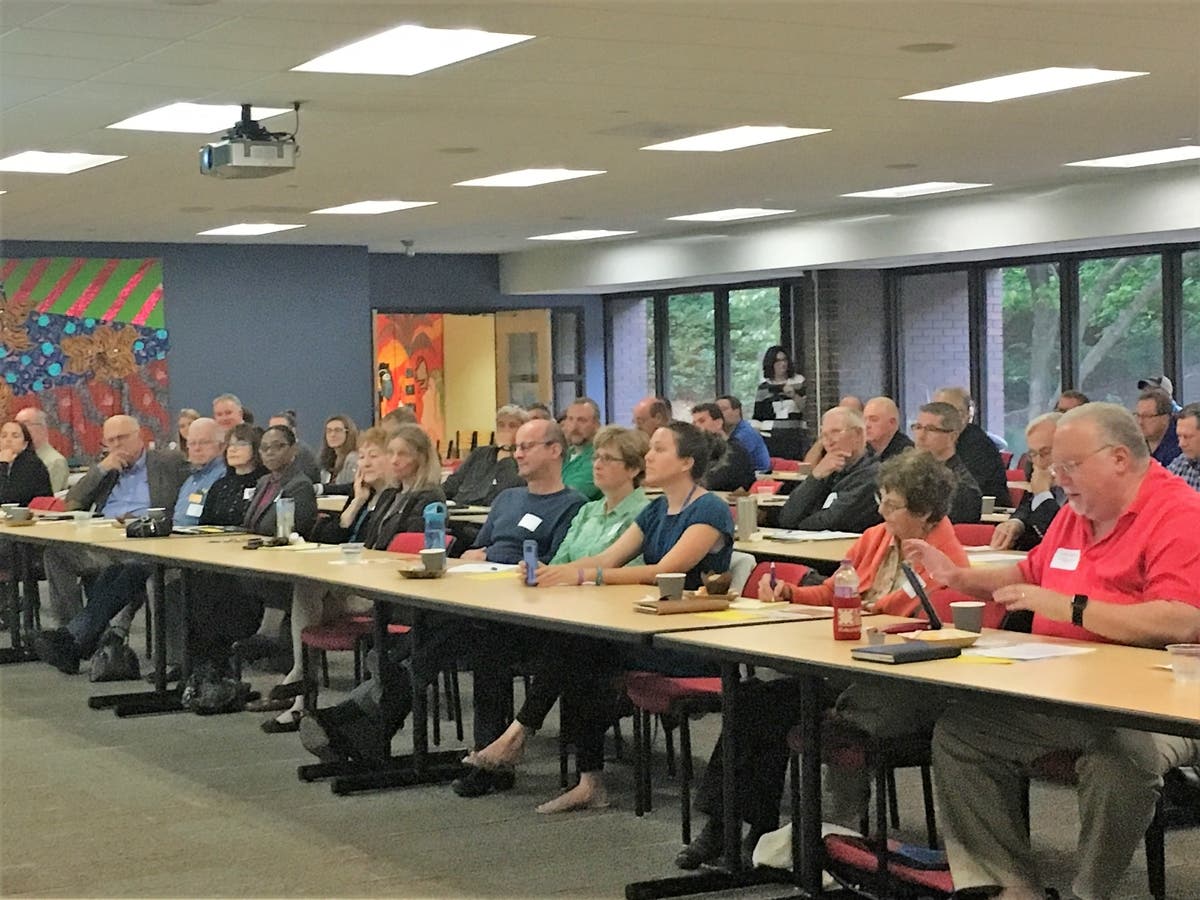

Waukesha County Green Team (WCGT), working together with Waukesha County and Gilbane Development Company, hosted “Sharing the Waukesha County Sustainability Plan” on September 28.
Waukesha, Wis. (October 23, 2018) – Emily Dethloff, a veteran biology and environmental science teacher at New Berlin Eisenhower Middle/High School, found her own renewable energy after attending an interactive sustainability forum organized by the Waukesha County Green Team (WCGT) last month at Carroll University Center for Graduate Studies. Dethloff, one of about 80 people who attended, said her superintendent encouraged her to go since she leads the green initiative on campus. “I’m just blown away,” said Dethloff. “I had no idea Waukesha County has a Sustainability Plan. This meeting opened a lot of doors. I work closely with the New Berlin West environmental teacher and will get her connected (to WCGT) as well.”
The Eisenhower science teacher also serves as student advisor to a new, 25-member environmental group that is part of Ike Care Club (IC2). IC2 is a student-led organization that strives to decrease poverty and hunger and improve the environment, both locally and nationally. Dethloff said, based on the information she shared from the forum, the environmental group just last week decided to research eco-friendly alternatives to Styrofoam trays and plastic straws currently provided by the school kitchen. When students are available during lunchtime, they compost kitchen waste. There are also 15 compost piles on campus. Dethloff said WCGT would have resources and contacts that could help her students with their waste management efforts.
Find out what's happening in Waukeshafor free with the latest updates from Patch.
Stacey Balsley, president of WCGT, sees value in groups like IC2. One of the main roles of WCGT is to act as a catalyst to help various groups and organizations—including school groups—to collaborate on sustainability efforts, she said. “I think smaller groups working at their own pace are important. In fact, we are trying to establish community-based green teams that we can support,” said Balsley. “We help these smaller groups advance by being a mentor and a resource of information and tools.”
Case in point, Balsley recalled a high school group that wanted to participate in more physically demanding projects. WCGT put the high school in touch with the Ice Age Trail Waukesha/Milwaukee County Chapter. As a result, students hauled 300 pounds of decking material through the woods in the Southern Unit of the Kettle Moraine State Forest as part of a volunteer initiative. Their willingness and determination helped the next group who later assembled it all into a 1/3-mile of boardwalk on the Ice Age National Scenic Trail.
Find out what's happening in Waukeshafor free with the latest updates from Patch.
“WCGT helps connect students to community missions—what’s happening here,” said Dethloff. That community connection can attract students and be more of a magnet than say, rain forest projects. Dethloff experienced that pull during the forum when Shane Waeghe, the county facilities manager, started talking about sustainability efforts being implemented in the local ice arenas. “I used to be a competitive figure skater. I recognized the arenas,” Dethloff said, which heightened her interest. By installing a dehumidification system that uses “waste” heat from the chiller system, the county saves 60 percent in natural gas with a six-year return on investment.
Dethloff said it is not uncommon for her students to question if they are really making a difference. They say things like, “If I shut off my lights, that’s not really going to impact climate change.” My students need to know “we have a huge team of people in Waukesha County who want this area to be a sustainable, healthy place to live.”
The WCGT president agrees this issue can be overwhelming. “The topic of sustainability can be daunting because it is so huge, so we try to break it into manageable, doable parts to help it become mainstream,” Balsley said. That’s the idea behind the One Simple Act Cards, developed by WCTC, is to encourage individuals to consider making small changes to create sustainable habits. An example of a simple act is washing clothes in cold water for two weeks and seeing if it becomes a habit. Detergents nowadays are designed to do just as well in cold water. Most of the energy is used in heating the water. “Research has shown if you can develop good habits early in life, they are hard to break with age,” said Balsley. (One Simple Act cards can be purchased online at www.waukeshacountygreenteam.org/osa-shop.)
The first forum Dethloff attended in September left the science teacher wanting more. She said she was ready for a full-day seminar after listening to speakers Al Skodowski, principal of Rivion; Paul Farrow, county executive; and Waeghe. Unfortunately, her schedule did not allow her to stay for the breakout sessions, but Dethloff said she was awed by the speakers she did hear— their level of commitment and the high importance they place on sustainability is inspiring. “I came away from that meeting flabbergasted and excited to get our kids connected (to WCGT).”
To view the Waukesha County Sustainability Plan, go to: www.waukeshacounty.gov/landand...
About Waukesha County Green Team: Established in May 2009, the Waukesha County Green Team is a volunteer-based, nonprofit 501(c)(3) organization focused on promoting environmental and economic sustainability in Waukesha County Wisconsin communities through education, communication, and local action. For more information, visit www.waukeshacountygreenteam.org.