Community Corner
5 Things I Learned About My Hometown On T-Town Civil Rights Trail
Here's a quick look at some takeaways and little-known facts about Tuscaloosa as it debuts its new Civil Rights History Trail.


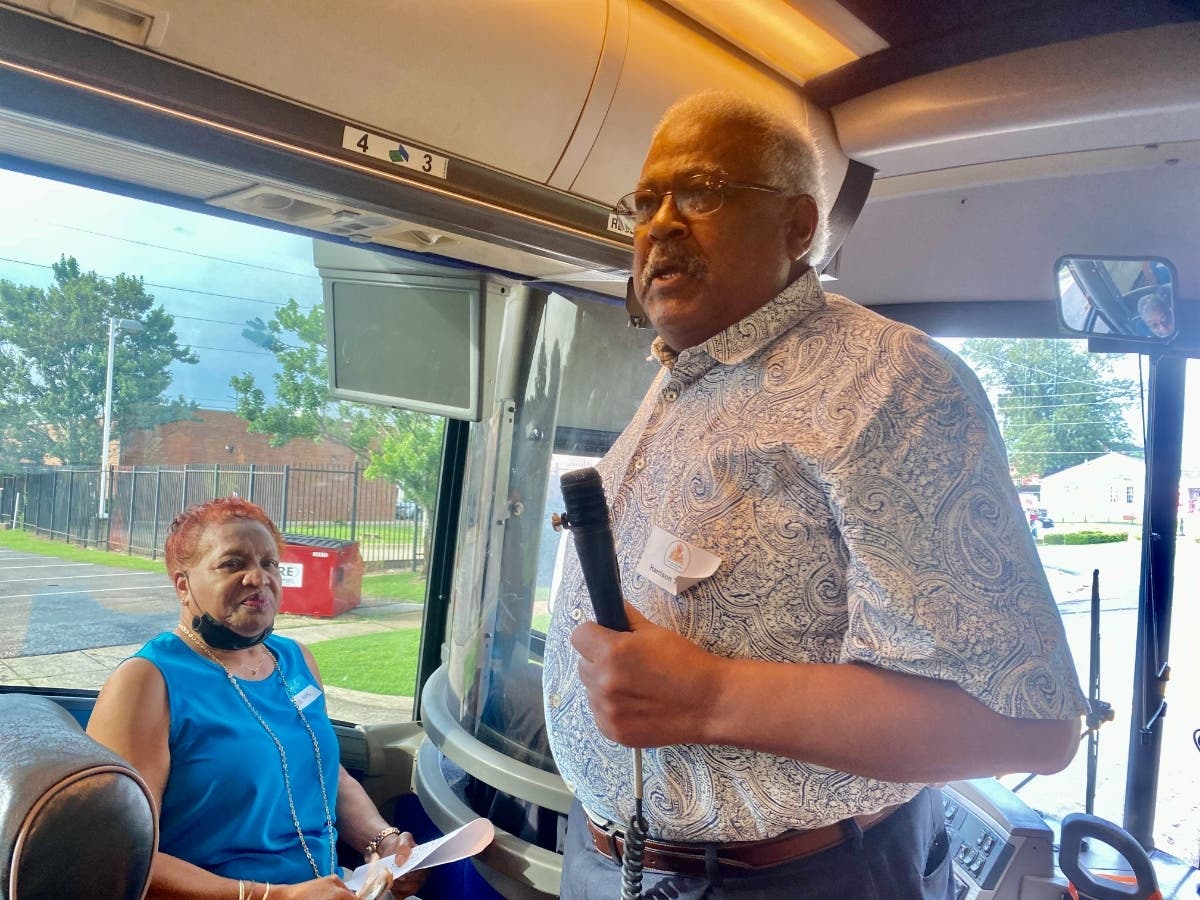
TUSCALOOSA, AL — Tuscaloosa Tourism & Sports debuted the new Tuscaloosa Civil Rights History Trail to a wide audience on Monday, as two buses full of attendees and dignitaries made multiple stops to take in stories of each location.
Patch previously reported on the Civil Rights History Trail in February, as TTS hopes to boost cultural tourism in Tuscaloosa by drawing attention to pivotal locations with respect to Tuscaloosa history. Places like Birmingham have capitalized in promoting its history, providing a blueprint that Tuscaloosa officials hope to emulate.
Click here to view a map and brochure for the Tuscaloosa Civil Rights Trail.
Find out what's happening in Tuscaloosafor free with the latest updates from Patch.
I grew up in Tuscaloosa and have always considered myself a bit of a local history buff. But sitting on one of those buses Monday evening, just a few feet away from a couple of Civil Rights foot soldiers — Harrison Taylor and Willie Wells — I was reminded that there are so many stories I've never heard in my own hometown.
Instead of running through the brochure and rehashing the more famous stories you've likely already heard, I thought I would pick a few of the more interesting factoids I gathered about Tuscaloosa during Monday's tour that I was completely unaware of.
Find out what's happening in Tuscaloosafor free with the latest updates from Patch.
1. Laws passed in Alabama Legislature when the state capitol was in Tuscaloosa
I would venture to bet that more than half of Tuscaloosa's native-born population, me included, had their prom photos and senior portraits taken at Capitol Park. But few have probably heard much about the business of the legislators who used to roam its halls when Tuscaloosa was Alabama's capitol city from 1826 to 1846. Our knowledgeable tour guide, Scott Bridges, explained that slave codes were enacted in 1833 by the Legislature that once called the popular photo destination home, along with enacting a ban on abolitionist literature. By law, Bridges said the punishment was death for violating Alabama's prohibition of anti-slavery literature.
2. A slave auction site in Tuscaloosa
Of all of the topics mentioned on the tour, this one was the most striking to me, because it shows that we are still learning so much about our own history. The site currently occupied by Side by Side Kitchen & Cocktails in downtown Tuscaloosa was once owned by the Drish family and a newspaper advertisement unearthed from September 1846 mentioned the horrible practice as a simple matter of business taking place at a new brick building on the property. The advertisement, Bridges said, confirms longstanding suspicions that slaves were indeed still bought and sold in the busy West Alabama river town even after Congress outlawed international importation of slaves in 1808. The Drish family was one of the wealthiest of the Tuscaloosa planter elite in the days before and after the Civil War, and their ownership of hundreds of slaves has been well-documented in census records.
3. Francis Scott Key visits Tuscaloosa
In the hopes of settling a land dispute in 1832 as Alabamians forced themselves onto land previously occupied by the Creek people, President Andrew Jackson sent the author of "The Star-Spangled Banner" to Tuscaloosa in an effort to convince Governor John Gayle to work toward a dispute to the land grabbing. The attempt failed and the practice was allowed to continue, despite a reportedly warm reception for the lyricist and writer, who Bridges said connected with Gayle's wife Sarah, writing poetry together during his stay.
4. The lynching of Henry Burke
Just down the street from Capitol Park on 6th Street is the Old Tuscaloosa City Jail. While it is well-known in Tuscaloosa that the jail served as a launching point for the career of reformer Julia Tutwiler, I have to say our schoolbooks and field trips never got around to mentioning the brutal murder of Henry Burke in 1884. Bridges explained that Burke, a Black man, was arrested and later dragged out of the jail under the cover of night by a mob. Reports from the time said Burke was shot multiple times, scalped and disemboweled. His body was found hanging from a tree the next morning in front of First Presbyterian Church in downtown Tuscaloosa, which Bridges said was likely a warning to the church to cease its practice of helping young Black men become ordained ministers.
5. The significance of the Tuscaloosa County Courthouse
It's become relatively routine twice a month for me to visit the courthouse for County Commission meetings, but it was apparently easy for me to overlook the history I walk over every time I step inside. Taylor and Wells were both front and center for Bloody Tuesday and the violence of that day is often the topic that gets talked about concerning that impactful day in 1964. But hearing him tell the story, I was reminded what was at stake — equal accommodations. Both of the foot soldiers told stories about the protests leading up to Bloody Tuesday, which were organized by the legendary Rev. T.Y. Rogers in opposition to drinking fountains and restrooms in the courthouse being segregated by an order from Governor George Wallace. What's striking to me, though, is that this was barely a generation ago, and we should be thankful that survivors like Taylor and Wells are still around to remember such a divisive time and how they fought to a prompt a change for the better.
Have a news tip or suggestion on how I can improve Tuscaloosa Patch? Maybe you're interested in having your business become one of the latest sponsors for Tuscaloosa Patch? Email all inquiries to me at ryan.phillips@patch.com
Get more local news delivered straight to your inbox. Sign up for free Patch newsletters and alerts.