Community Corner
COLUMN: A Ballad For Bryce Hospital
Tuscaloosa Patch Community Publisher Ryan Phillips shares memories and gives thoughts about Bryce Hospital as renovations move forward.


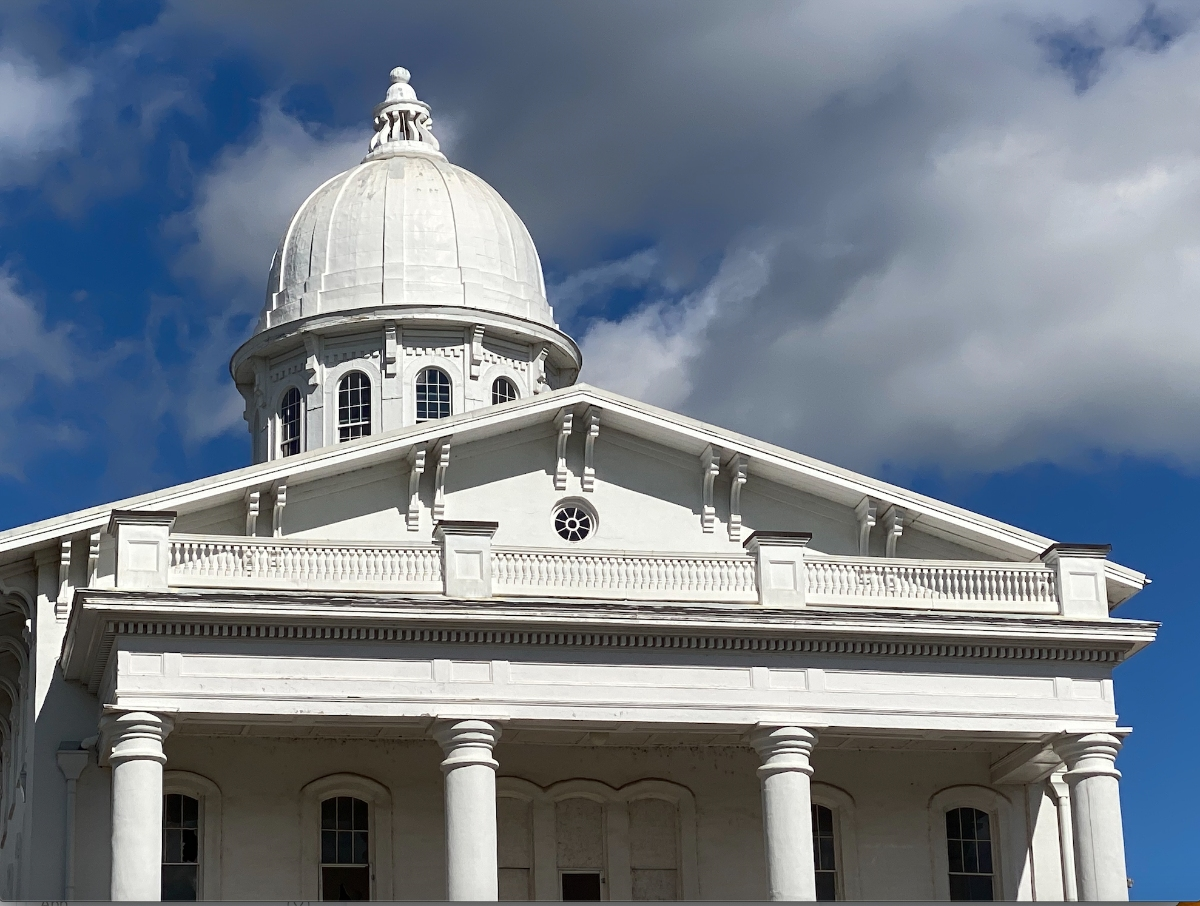
TUSCALOOSA, AL. — There's a hand drawn picture hanging in my home office that's worth more to me than all the bourbon in Kentucky.
It doesn't look like much and probably wouldn't be anything special to anyone else, but those subjective hangups don't matter much when you start talking about lowbrow concepts like having a sense of place.
Click here to subscribe to our daily email newsletters and breaking news alerts delivered to your inbox and mobile devices for free. You can also support local journalism by donating as little as $5 a month to become a supporting member or by downloading our free Patch mobile app.
Find out what's happening in Tuscaloosafor free with the latest updates from Patch.
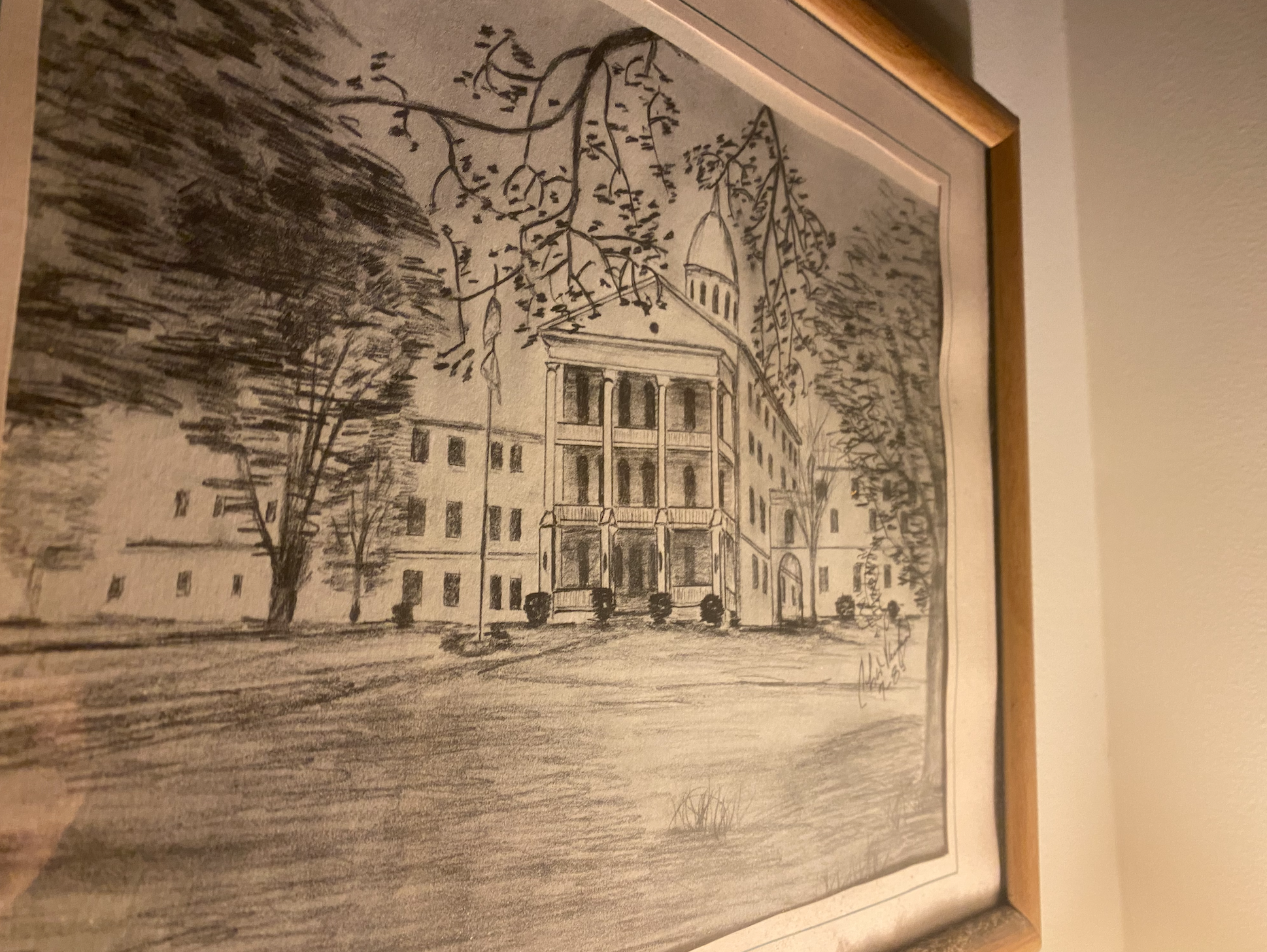
It's a fairly simple pencil or possibly charcoal sketch of the imposing, Italianate facade of Bryce Hospital in Tuscaloosa that was given to my grandmother, Dot Phillips, in 1989 — the year I was born.
Held together by a cheap wooden frame, it hung on her bedroom wall for nearly 30 years. In a small way, at least to me, it represented the pride she had in her work and community.
Find out what's happening in Tuscaloosafor free with the latest updates from Patch.
The picture was drawn and gifted to her by a man I've never met named Chad Vaughn, which is really where the backstory ends as far as the picture is concerned. When she died almost two years ago, the picture was the first thing I snatched off the wall and one of the only artifacts owned by my Grandmother — other than her glass ashtray from Memphis — that I knew was willed to me, even if it wasn't on paper.
Few topics have held my interest over the years like Bryce and maybe it's because of my raising and my Grandmother working there. Not only have I spent countless hours researching and reporting on the history of the famous mental hospital, but my own family's story can be told through its halls.
My area of limited historical expertise, albeit quite narrow and defined, focuses on the hospital's patient-run newspaper published in the 1870s and early 1880s. Dubbed "The Meteor" and edited by a Marion County man named Joseph Alexander Goree, the newspaper provides breathtaking insight into hospital life during that time and is written in a longwinded, romantic style I often compare to Nathaniel Hawthorne. I was the first journalist or researcher to publish any kind of work identifying Goree as the man responsible for the paper, which added just another unshakeable connection to the institution by telling the story of a man more than a century after he was buried in a numbered grave that has since been discarded by progress.
Even just this last week, I corresponded with a high school student in Illinois who was researching The Meteor for a project to present at the Chicago Metro History Fair. Of the thousands of stories and topics I've researched over my career in journalism, none keep coming back to the front of my mind like Bryce Hospital and I respond with haste to every single inquiry, solely for the sake of keeping the history alive.
But my connection to the state's first mental asylum goes much deeper than academic work for a grade or degree. Before I researched the newspaper as a graduate student at UA, under the direction of Dr. Dianne Bragg, I grew up around the hospital. My Grandmother retired as a captain on the hospital's police force and spent most of her working adult life there. I've had ancestors committed to its halls and relatives to die there. I also went to college and became the man I am today in its shadow.
Suffice it to say, it's been an important talking point at dinner tables in my life for as long as I can remember and I guarantee I'm not the only Tuscaloosa native to be able to say that.
My Grandmother has been a consistent source of inspiration in my writing over the years and she can be cited as the catalyst in seeing my research on Bryce go as far as to be featured in The Atlantic, the goal of which has always been to preserve the fascinating and complex legacy of the hospital as the building seemed to rot away.
This column has a purpose past my rambling, though, the point being to highlight UA's Herculean effort to preserve what it can of the main building. Work is currently underway on the large-scale renovations that will soon feature UA's new Welcome Center and Performing Arts Academic Center (PAAC). The architecture will still feature the dome as its centerpiece, ensuring we will be able to tell the next generation about the myriad stories that took place in its halls.
UA also recently announced it had closed in on its $15 million fundraising goal to construct the new PAAC and it seems we will have a finished product sooner rather than later. All but one of the older buildings dotting the property, especially out of view behind the main building, have been torn down. Scaffolding now skirts what's left of the hospital and work is moving forward as I write this column.
Even in the face of a crippling pandemic, progress marches on at its own pace.

The ramshackle buildings razed were ghosts of a forgotten time not only for Alabama and the hospital, but for mental health as a field of medicine. Even during my Grandmother's time working at Bryce, she told tales of how the hospital raised its own hogs on the property, grew their own vegetables, and were a nearly self-sustaining operation. She also worked there at a time when the conditions were so abhorrent and overcrowded that an ensuing class action lawsuit, Wyatt v. Stickney, which was finally dismissed after three decades in 2003, forever changed mental health standards in America.
This duality has always fascinated me and at the same time made it difficult to write about as a local, because doing so requires objectively confronting some hard truths. In talking to area residents you will be hard-pressed to find someone from those years who will badmouth the hospital if they worked there, because it provided a livelihood for so many and was one of the biggest employers in the state. Conversely, you'll find similar difficulty prying out a positive word from many who saw the negative effects on the community after so many patients were turned out.
This is an institution that, at one point in 1967, brought tears of the eyes of Gov. Lurleen Wallace when she viewed the conditions, but that also employed a then-large segment of the county's population and it's my hope that contrast is not lost on the new museum being planned.
But to me, I've always viewed the truth about Bryce by what I can personally verify, while assuming the rest of the story splits the gulf dividing how our community views the hospital's past and legacy — plenty of good to embrace if you have the right set of eyes, but plenty of bad that has been swept under the rug instead of being reckoned with.
For those unfamiliar with its history, the main building that would become Bryce Hospital saw its construction begin in 1853, with the state-of-the-art facility opening in 1861 as the Alabama Insane Hospital under the direction of renowned psychiatric pioneer Dr. Peter Bryce. As another fun fact, the Bryce family's former home, a modest two-story red brick abode, is still preserved just a short walk from the entrance of the main building.
Numerous accounts of the hospital put it on the cutting-edge with respect to its methods, as early patients were reportedly not given medications or put in restraints, such as straitjackets. While some of these concepts have proven, even through my own research, to have been heavily romanticized, looking past more questionable methods, the Alabama Insane Hospital did stand out at the time as a beacon of innovation to the entire world — even if that was just the result of a good public relations campaign, in part due to The Meteor, along with the overall nuance of the concept of mental asylums.
According to the university, the hospital was also purportedly the biggest building in the world under one roof line until the construction of the Pentagon. It achieved so much just by being built in the first place, but the history that would occur there over the next century and a half is the reason it should be saved at all costs.
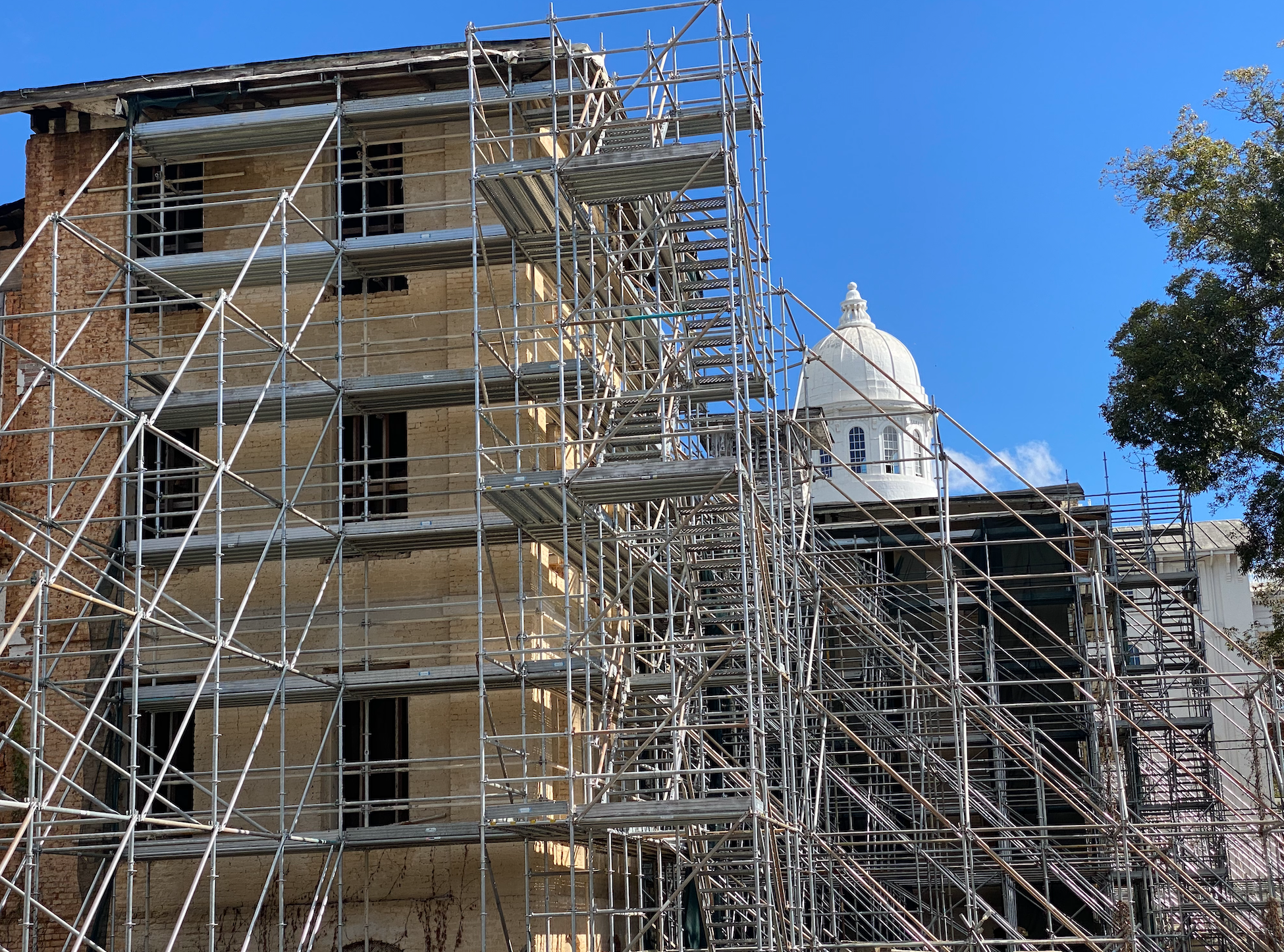
UA bought the 168-acre Bryce campus in May 2010, with part of the purchase agreement requiring the university to restore the Main Central Pavilion of the original hospital building, while dedicating 1800 square feet to the Alabama Department of Mental Health as museum space.
As someone who has researched the history of this hospital inside and out and whose family history is woven into its fabric, it is no small relief to see the efforts undertaken to save it. After witnessing it fall into disrepair over the years prior to renovations beginning, I often worried what would become of such a central piece of Tuscaloosa's history and frankly, my own.
When sitting around writing some days, I look at the aforementioned picture once given to my Grandmother and I'm reminded of where I came from. When looking at the real-time progress at the site depicted in the drawing, though, it does a heart good to see my community and alma mater realizing the importance of preserving its own sense of place.
Ryan Phillips is an award-winning journalist, editor and columnist. He is currently the community publisher of Tuscaloosa Patch and the views expressed in this opinion column are his and not necessarily reflective of the views of our parent company.
Get more local news delivered straight to your inbox. Sign up for free Patch newsletters and alerts.