Crime & Safety
Court Docs Detail Behavior, Mental State Of Man Who Killed DCH Nurse
A Tuscaloosa judge has ordered the man accused of killing DCH nurse Ada Doss to be involuntarily medicated.


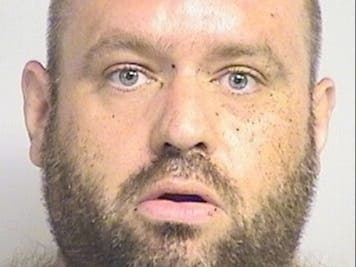
Editor's Note: This story contains graphic details that may not be suitable for all readers.
TUSCALOOSA, AL — A Tuscaloosa County Circuit Court judge has ordered jail officials to involuntarily medicate the man accused of murdering a DCH Health System nurse earlier this month.
Click here to subscribe to our free daily newsletter and breaking news alerts.
Find out what's happening in Tuscaloosafor free with the latest updates from Patch.
The order comes after court records detailed what officials described as increasingly dangerous and erratic behavior inside the Tuscaloosa County Jail.
Matthew James Taylor, 41, has been incarcerated since May 12 for capital murder following the fatal shooting of DCH nurse and case manager Ada Doss in the hospital parking lot.
Find out what's happening in Tuscaloosafor free with the latest updates from Patch.
Patch previously reported when investigators alleged that Taylor approached Doss during a shift change before shooting her in what was described as a random act of violence.
Following the deadly shooting, DCH Health System released a detailed timeline stating Taylor had been dropped off near the hospital campus hours before the attack, never entered the emergency department and was not a patient at the facility.
He is currently being represented by Tuscaloosa defense attorneys Hunter Brown and Elizabeth Glasscox.
"Mrs. Doss' death is a tragedy, there is no other way to put it," Brown told Patch. "No words or actions today by the judicial or mental health system will bring her back to her kids and her family. Mr. Taylor is a severely mentally ill man who was taken to DCH for treatment of an ongoing mental health emergency. Much about his time on the DCH campus remains unknown and is under investigation by law enforcement."
According to court filings, Taylor has remained on suicide watch in a solitary holding cell since his arrest.
In an order signed Friday, Circuit Court Judge Allen W. May Jr. authorized jail medical staff to administer psychiatric medications without Taylor's consent after finding he posed a danger to himself and others.
The order cites a recommendation from a psychiatrist who provides services at the jail, and references multiple documented incidents involving Taylor's behavior over the last 17 days.
According to a letter submitted to the court by the psychiatrist, Taylor has repeatedly refused prescribed medications and food since arriving at the jail.
The psychiatrist wrote that Taylor had been refusing an average of two of his three daily meal, along with displaying agitated and restless behavior while in his cell.
The filing then details a May 24 incident in which jail staff observed Taylor consuming feces, smearing feces on himself and throughout his cell, and refusing repeated commands to leave the cell so it could be cleaned.
The psychiatrist wrote that multiple interventions, including the use of Tasers and OC powder, proved ineffective. She also reported that Taylor sustained cuts from a metal bed frame while thrashing around inside the cell.
A Tuscaloosa County Jail incident report attached to the filing states that officers were forced to enter Taylor's cell and physically restrain him after less-lethal measures failed.
The report goes on to note that Taylor appeared unaffected by OC powder and that jail staff encountered hazardous conditions inside the cell due to the presence of feces and standing water.
The psychiatrist told the court that Taylor suffers from a serious mental illness and a severe personality disorder, before concluding that his dangerous behavior was the result of those conditions. She urged the court to authorize involuntary medication, writing that structured and sustained treatment was necessary.
"[The psychiatrist's] letter to the court and attached Tuscaloosa County Jail incident report are hard to read," Brown said. "[The] letter clearly states his mental illness has continued to deteriorate to the point of requiring forced medication. This is an extraordinary step to temporarily treat Mr. Taylor and avoid any harm to himself or jail staff."
In his order, Judge May cited U.S. Supreme Court precedent allowing involuntary administration of psychiatric medications to incarcerated individuals who suffer from serious mental illness and pose a danger to themselves or others.
Judge May determined that Taylor's condition created risks for jail employees and inmates and directed jail medical staff to begin administering medications deemed medically necessary.
The order also requires mental health staff to notify the court of the medication regimen being used and provide updates every seven days regarding Taylor's response to treatment.
"Mr. Taylor's mental health will continue to be addressed as his case proceeds," Brown said. "I hope that lessons can be learned from this incident so that in the future a similar situation can be prevented before a severely mentally ill person becomes a danger to the public."
A review hearing is scheduled within 30 days to determine whether continued involuntary medication remains necessary.
Taylor's preliminary hearing is set for June 15 in the Tuscaloosa County Jail.
Have a news tip or suggestion on how I can improve Tuscaloosa Patch? Maybe you're interested in having your business become one of the latest sponsors for Tuscaloosa Patch? Email all inquiries to me at ryan.phillips@patch.com
Get more local news delivered straight to your inbox. Sign up for free Patch newsletters and alerts.