Crime & Safety
COLUMN: Lessons Learned Closing The Book On The Murder Of TPD Investigator Dornell Cousette
Tuscaloosa Patch founder shares his takeaways from the high-profile murder trial of the man convicted of murdering a TPD officer.


*This is an opinion column*
TUSCALOOSA, AL — Audible gasps of what could only be described as relief were heard from behind the defense table Thursday afternoon when a Tuscaloosa County jury spared the life of the man convicted of killing Tuscaloosa Police Investigator Dornell Cousette as it returned a sentence of life in prison without the possibility of parole.
Click here to subscribe to our free daily newsletter and breaking news alerts.
Find out what's happening in Tuscaloosafor free with the latest updates from Patch.
The same jury that convicted Watkins last week voted 7-5 Thursday after a few hours of deliberation in favor of a life sentence as opposed to giving him the death penalty — a decision that came as an affront to some in the community and viewed as fair by others, depending on who you talk to.
Patch reported extensively on the trial and sentencing of 26-year-old Luther Bernard Watkins, Jr. over the last two weeks, with jurors and the courtroom hearing emotional testimony from both sides that illuminated the high-profile case more than any news story ever could.
Find out what's happening in Tuscaloosafor free with the latest updates from Patch.
While I'm just a nerdy scorekeeper literally sitting in the stands with a notebook, the people depicted in the coverage lived it, for the most part.
Emotions were justifiably thick Thursday, as one person sitting amongst numerous police officers on the prosecution side of the courtroom uttered "enjoy prison" to Watkins loud enough for most of the room to hear as those in attendance began to file out.
It wasn't a tasteful gesture, no, but an understandably cathartic one for those still grieving the loss of a friend, colleague and loved one.
But as Marcus Collins, an uncle of Watkins' who has served as a kind of spokesperson for his nephew, said on the witness stand this week, "everyone loses" in a case like this.
And he's right.
Indeed, the negative ripple effect into our community from a deadly altercation that took no more than 8-10 seconds to develop is incalculable — something that's often lost in a true crime-obsessed American pop-culture saturated with TV shows where heinous fictional crimes are neatly wrapped up with a bow and a guilty verdict in an hour or less.
This was not one of those cases.
Instead, the long and winding road that led us to Circuit Judge Brad Almond's courtroom developed over the course of more than six years, with countless hearings, delays and plenty of radio silence that drove people in my profession looney.
It seems like a lifetime ago I was watching Cousette's funeral service at Shelton State Community College via live stream as I sat at my executive editor's desk in Starkville, Mississippi, trying to make sense of what had happened over in my hometown.
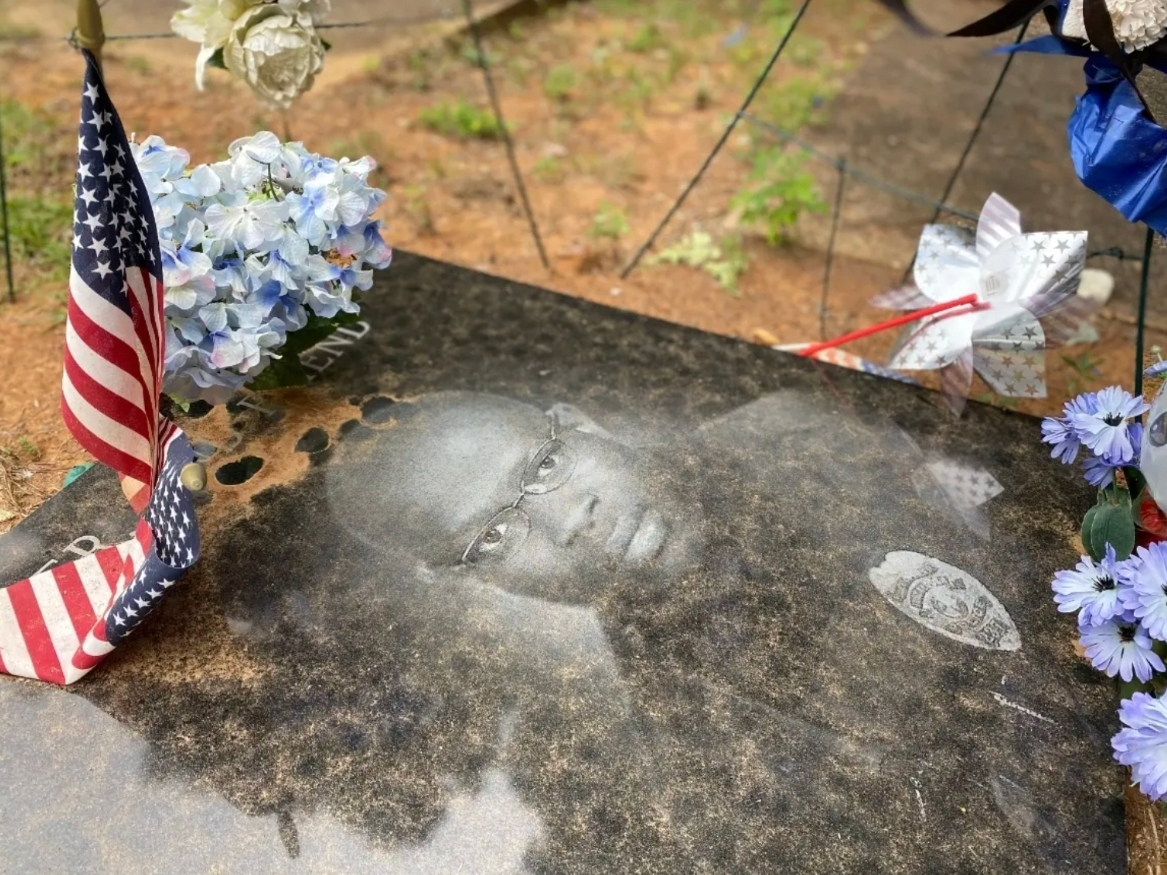
A year later, I was standing alone on a cloudy September day in Cousette's family's small corner of Unity Cemetery near Aliceville, looking over his beautiful marble headstone on the one-year anniversary of his death and still trying to answer those same lingering questions.
If this op-ed is supposed to focus on lessons learned, this would be as good a place as any to start by taking stock of how my own reporting on this tragedy slowly changed over the last several turbulent years.
Cousette was a good and dedicated man, I have no doubt, especially after years of interviews with those who knew him best and writing updates on the case, all of which painted, in my mind, a decisively positive view of the officer slain on Sept. 16, 2019 in the living room of a small house on 33rd Avenue by a 20-year-old kid with a mile-long rap sheet.
From the jump, I viewed Watkins as guilty and my heart ached for Cousette's loved ones and friends, while turning cold when first considering the man responsible.
But, dear reader, this is where I must acknowledge my implicit bias, so let's get it out of the way.
I'm the child of a career lawman here in Tuscaloosa County who was also the child of a police officer.
If not for the prospect of living in their illustrious shadows, I'd have likely chosen a career in law enforcement.
Growing up, though, I was that skinny little boy who lived in agonizing fear that my gun-toting, badge-wearing Daddy may not make it home from work on any given day because of the sacrifices he made to protect our community.
It was as much a point of pride at the time as it was a source of heart-pounding fear.
Still, I was raised by that same man and everyone else around me to question absolutely everything — probably one of the reasons I chose a career in the glamorous world of print journalism.
And after sitting through a weeklong trial and another week of character testimony at sentencing for Watkins, new questions began to roll around in my mind as the story came into sharper focus.
This made me think back to the mixed feelings ginned up in my gut when details potentially showing Watkins acted in self-defense made headlines in the spring of 2023.
For my records, at least, this was the first time the public learned that Cousette likely fired the first shot into Watkins' back before the now-convicted man turned and shot the investigator in the face.
It also raised questions about Cousette working with a bail bondsman to serve an arrest warrant on Watkins after being told no backup was available.
As I sat on those hard wooden church pews in Judge Almond's courtroom for the last two weeks, I kept trying to list out in my notebook the decisions made that could have prevented Cousette's death, regardless of who was at fault.
And to quote defense attorney Christopher Daniel during his closing arguments to the jury: "You can't just believe somebody because they are a police officer."
This has nothing to do with Cousette's work ethic, commitment to duty or even as a criticism of Tuscaloosa Police Department policy. Instead, this saw my perspective of the story go from crystal clear to a shade of gray I'm not sure I've ever encountered in nearly two decades of covering such things.
Why did Cousette go after an allegedly violent offender without backup?
Why the urgency to take Watkins into custody that second?
What did Cousette see that prompted him to presumably take the first shot?
Why did Cousette make the decision to run into the house on 33rd Avenue without backup and into a possible ambush?
What was going through both of those men's heads in those 8-10 seconds?
As these complicated questions have a way of doing, though, we'll likely never have an answer.
We're only left to speculate about the dearth of evidence presented over the years and make our peace with the outcome.
While I do think the jury got its verdict right after taking in the evidence and watching District Attorney Hays Webb's closing arguments — honestly the best courtroom lawyering this reporter has seen in person across three states — the complicated nature of this entire saga presents a fascinating case study when looking for lessons that can be applied to future high-profile cases.
Let's start with Judge Almond.
The longtime judge has a tough, yet fair, reputation. It was big news when it was announced he would preside over this trial as his final case from the bench after an illustrious legal career, one where he is still the last Tuscaloosa County Circuit Court judge to impose the death penalty on a man convicted of capital murder.
No one can say the man is soft on crime.
And as one of the true bright spots in such a somber case, Judge Almond maintained an orderly courtroom and seemed to go to extensive lengths to make sure the jury and courtroom operated by the book.
This included his order to limit the number of visible police officers sitting behind the prosecution table so as to not have any perception that the jury was being influenced by a physical show of force from the local law enforcement officials who knew Cousette best. There were plenty of cops in the courtroom, sure, but the order placing a cap on their attendance spoke to how sensitive this case was viewed by a longtime judge wanting to get every last detail right.
The capital murder trial of Luther Watkins was also the most restricted courtroom I've ever had to navigate, which I've since learned through extensive reporting was crafted as such out a need for safety and professionalism as the trial moved forward.
To this reporter, it served as a model for how future judges can and should handle high-profile cases, not just because of the lingering news media haunting the courthouse, but to protect the sanctity of this space and the objectivity of what is suppose to be a fair trial.
But other questions continue to nag at this reporter that others could learn from, namely assigning honor and recognition to an officer killed in the line of duty before the justice system has a chance to do its duty.
If you'll remember, both Cousette's hometown of Aliceville in Pickens County and the City of Tuscaloosa named streets after the fallen officer years before the case was ever brought to trial.
I couldn't help but think how many, if any, of the jurors had to drive along the renamed of stretch of 35th Street between Greensboro Avenue and Martin Luther King Jr. Boulevard on their way to sit in that box or during jury selection over the last three weeks.
This isn't to say Cousette's memory shouldn't have been honored — quite the contrary.
Instead, I'm left pondering a strictly hypothetical situation where that jury rules Cousette was the aggressor acting out of line and Watkins is freed for acting in self-defense, only for Watkins to have to travel along a street named after a man whose decisions threw his young life into chaos.
It's not a fun alternate reality to reckon with but it's certainly worth considering.
While the jury ruled in favor of what this reporter believes the evidence supported, the decision to rename streets before a verdict was handed down is pretty questionable when considering potential lessons to be learned on the back end. This is just a hypothetical, though, and solely for the sake of offering up lessons we can all grow from, this reporter included.
But I use all of those words to reiterate that I do believe prosecutors built a solid case and the jury got it right on both the verdict and sentence.
One of my biggest takeaways, as previously mentioned, was that from the time Cousette pulled up in front of the house on 33rd Avenue to when the shot was fired that ended his life, all of it happened in the matter of 8-10 seconds, as was testified by several witnesses.
While most are taught to never shoot at somebody unless you intend to kill them, the defense painted a compelling portrait of Watkins that showed he was likely not raised on such lessons and it's hard for this reporter to not view him as a 20-year-old kid making a stupid decision that he had no clue would reverberate out to impact so many innocent people.
I'm not a big Code of Hammurabi guy because the whole "eye for an eye" approach to justice purposely makes itself ignorant of one of my favorite words in the English dictionary: Context.
Who were you when you were 20 years old? I certainly wasn't a saint and made plenty of impulsive decisions I should have been knocked over the head for, so it's difficult for me to cheer for a man to be condemned to death for a dumb decision that was mulled over mid-flight and in the matter of seconds.
Had Watkins bolted from that yard and crouched in wait inside that house to ambush a police officer he had it out for, I'm sure I'd change my tone if the evidence supported it. But that's not what happened.
When discussing the sentencing, there are plenty of people I view as such heinous offenders that they just deserve killing.
Still, despite testimony as to Watkins' jailhouse conduct in the last six years presented on Thursday, at no point could I find it in my heart to view this case on the same footing.
While I know the District Attorney's Office sought the death penalty and made a strong case that the law supported it being the proper sentence, I also can't help but be fixed on defense attorney Justin Forrester's words.
"The law allows two options and you must consider both," he told the jury on Tuesday. "Life without the possibility of parole is not some kind of lenient option."
And he's right. No notes.
This reporter's hope moving forward, though, is for closure and peace for the families and loved ones still reeling years later.
At the same time, I hope this offers fresh perspective to the masses looking to feed their lurid curiosity for pop-culture, true crime drama when the next high-profile murder case comes along.
Ryan Phillips is an award-winning journalist, editor and opinion columnist. He is also the founder and field editor of Tuscaloosa Patch. The views expressed in this column are his own and in no way reflective of any views held by our parent company or sponsors.
Get more local news delivered straight to your inbox. Sign up for free Patch newsletters and alerts.