Politics & Government
COLUMN: Takeaways After University Beach Developer Gives His Side Of The Story
Tuscaloosa Patch founder and Northport resident Ryan Phillips shares his thoughts and takeaways from a recent town hall event.


*This is an opinion column*
'It's like Lenin said, you look for the person who will benefit, and, uh, you know ...'
- The Dude, "The Big Lebowski" (1998)
Find out what's happening in Tuscaloosafor free with the latest updates from Patch.
NORTHPORT, AL — Cowboy boots and blue jeans were a poor choice Saturday morning as I walked what felt like two miles to get into the one open entrance of Northport's sprawling River Run Park after navigating its massive parking lot.
Click here to subscribe to our free daily newsletter and breaking news alerts.
Find out what's happening in Tuscaloosafor free with the latest updates from Patch.
The ballpark is a gem for our city, don't get me wrong. Still, poor management on such a concept can quickly sully even the best of intentions. It's a theme we'll explore throughout this column.
So, maybe the unseasonable heat and my sore feet made me a little more cranky than usual as I watched a high school baseball game and confronted Northport's honorable mayor with my concerns about his recent town hall event with University Beach developer Kent Donahue.
I'm a free-thinking, involved Northport citizen, after all, and the mayor just so happens to be my Dad, so it should come as little surprise that I'm quick to offer up my own unfiltered opinions on issues when we're together, whether he agrees with them or not ... most often, not.
We regularly laugh about how if folks saw us debating without context or knowing us, they might worry things are about to come to blows, so my apologies to anyone standing nearby who may have gotten the wrong impression.
Nevertheless, I say all that to qualify myself as being anything but a rubber stamp for the Old Man and he will gladly tell you I'm generally the first voice to offer criticism.
As far as issues, though, University Beach is a bit of an exception, especially after the numerous reader requests I've gotten in recent days asking for my own independent, journalistic takeaways from the town hall event last week.
While readers will notice I've taken a drastic step back from covering Northport City Hall ever since the Old Man got elected, my investigative coverage of University Beach far pre-dates his most-recent political ambitions and I made promises to you early on that I would take a surgical approach to covering the controversial resort development moving forward.
At any rate, this seems like a great place to pick back up because the venerable mayor mostly acted as a facilitator for the dialogue at the town hall last week, where he read off questions submitted by members of the community for Donahue to answer.
The Old Man threw in his own editorializing here and there during the town hall, which I've left out of this op-ed. Instead, I'll focus on new revelations and nagging questions that resulted from the long list of submitted questions.
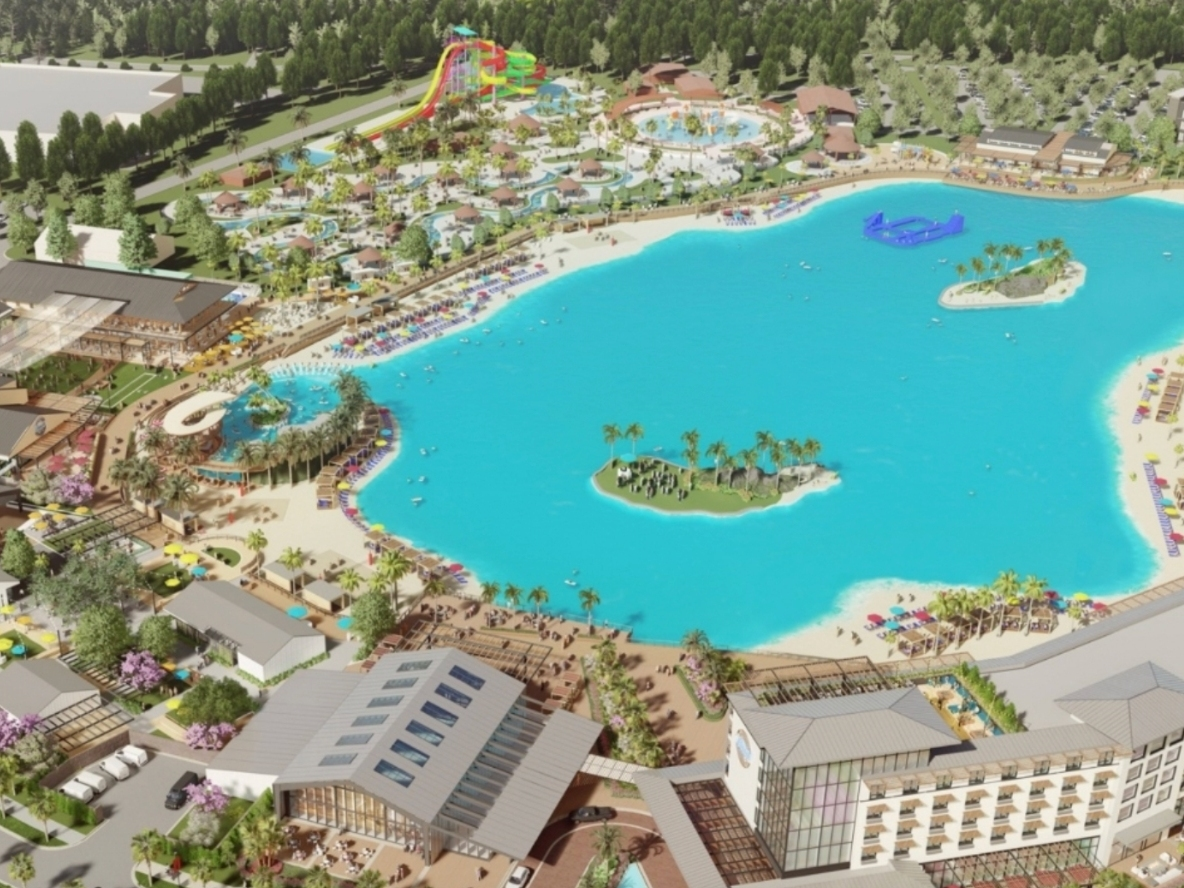
Indeed, the event provided Donahue the chance to tell his side of the story for the first time after seeming to blow into town on the wind two years ago. Much like the monorail salesman on "The Simpsons," Donahue was introduced to our community when making lavish promises of a $350 million luxury resort development with an 11-acre lagoon, a concert venue, a high-end hotel and more amenities than you could shake a stick at.
So let's start with Donahue's origin story for the project.
For the most part, Donahue's version of events tracks pretty close with what I've extensively reported over the last couple of years and also seems to underscore the developer's early frustrations with city leaders that lead to the project becoming one of the most controversial in the entire state.
To that end, readers may remember my conversation with developer John Hughes, who will be running the facilities if and when University Beach opens, on the eve of the City Council voting to enter an ironclad partnership agreement with the Texas developers and their investors.
"There will be something for everybody," Hughes told me in February 2024. "Again, it's not a water park."
Hughes was adamant about that last part and took specific issue with University Beach being characterized as such by certain officials in City Hall.
I came away from that meeting halfway satisfied with the developer's intentions, despite my own misgivings about the project, and began to shift my attention to how these interlopers from Texas found themselves hawking a $350 million resort in a cow pasture.
As I've written before, you can't fault a developer for doing what developers do.
However, the folks in power who make it easy for them at the expense of transparency and accountability are a different story.
A municipal water park was discussed for years in Northport but historically the idea has been met with skepticism on the part of the taxpayers who would fund it.
Concepts like the municipal water park in nearby Fayette, for example, are enjoyed by the community but struggle to turn a profit and mostly sit empty during cold months, while still requiring costly maintenance.
As Patch reported in July 2024, staffing issues at the Fayette water park and the lack of patrons prompted city officials to close it before the school year started in August. While present attendance figures are unavailable, Fayette officials said at the time that the aquatic center was open only 72 days in each of the last two seasons.
Meanwhile, over in Northport, Hughes and Donahue made their introductions.
Donahue explained last week that when Hughes met with city officials after being informed of the city's desire to build a municipal water park, he was quick to convince them that the original desired concept of a small-scale operation would likely end up as a financial albatross — one that the city would have to subsidize or, at best, hope to break even with, much like Fayette.
And after wining and dining Northport city officials during a trip to Houston on your taxpayer dime, like former City Council President Jeff Hogg and current City Administrator Tera Tubbs, who was city engineer at the time, the decision was made out of view from the public eye to pivot strategies in favor of a much more expansive and multifaceted concept.
"I'll say what intrigued me about Northport and what got us excited about the deal: One, obviously, the iconic University of Alabama right down the street," Donahue explained during the town hall. "We thought that was really neat and were excited about that. That'll be a big supplier of heads and beds and visitors to our project. The other thing that you guys did that was really progressive was the athletic fields, the River Run Park. And it felt to me when we first got here that you had issued some [General Obligation] bonds for a water park and River Run Park."
Donahue told citizens it was the view of the developers that Northport wanted to grow by increasing hospitality offerings, restaurants and other tourism drivers. This is actually a pretty fair assessment but one that ignores how the execution of this particular deal, and not so much the proposed amenities, resulted in the public opposition we see today.
He also mentioned how he had been in talks with the City of Northport for six months before he left the controversial Sapphire Bay project in Rowlett, Texas, in November 2023, which gives us a little bit better of an idea about the timeline for how this came to pass.
While Donahue reiterated last week he was not the managing partner on the Rowlett project and that he has cut all ties with Sapphire Bay, his name is still listed on the website's contact page.
It should also be noted that in addition to the Texas development being the subject of a federal investigation following a large fire destroying an on-site apartment complex that never opened to tenants, Patch reported last October when the Rowlett City Council voted unanimously to issue a default notice to Sapphire Bay Land Holdings.
This notice saw Rowlett officials accuse the present developer and Donahue's former partner of failing to pursue the project as required under its agreement with the city.
Donahue has insisted multiple times over the last several months that he is no longer involved in the Sapphire Bay development. And this is probably true.
Still, I can't help but reflect on a quote from one of my favorite characters in literature, the faithful Sancho Panza in “Don Quixote," who is translated into English as saying "Tell me your company and I will tell you what you are."
You are the company you keep.
Donahue also lamented attitudes in the Northport community regarding the failed project in Texas as being irrelevant to University Beach and seemed to be somewhat frustrated when he cited it as the reason he believes he was so heavily vetted by a curious and concerned public when his name first appeared on the local scene.
With that in mind, though, I'm tempted to ask the developer what he expected after working to preemptively quash any avenue for public input by lobbying City Hall to shove this project down our throats as fast as possible.
When asked about Sapphire Bay, Donahue predictably took the long way around the true concerns at the heart of the question and instead waxed nostalgically about how great and wonderful the project was shaping up to be before he cut bait.
To a seasoned public speaker, his response sounded like a speech he had given a thousand times and at no point did he address the recent default notice from the City of Rowlett, the federal arson investigation or any of the other myriad substantive shortcomings associated with Sapphire Bay.
Nevertheless, talk eventually turned to the controversial practices leading up to and immediately following the Northport City Council voting to enter the partnership agreement in February 2024 — a decision that would ultimately prompt the resignation of the city council president and an inspired show of opposition at the ballot box that resulted in two other incumbent council members who supported the project being voted out of office by wide margins.
One of the more frustrating aspects of this early chapter, however, came when city leaders, who were on fire for the project at first, suddenly stopped commenting on it altogether after all of the players involved signed Non-Disclosure Agreements (NDAs).
The NDAs became a convenient public shield for the city's elected officials who used it as their primary recourse when confronted with questions from local media and members of the public.
These leaders might not have had anything to hide but the radio silence gave a different impression and did nothing to assuage concerns from their constituents. To reiterate: the issue for countless Northport residents isn't the merits of the project but how its approval was executed by City Hall.
"I hate to throw Jeff [Hogg] under the bus," Donahue said. "But apparently before we came along, and [City Administrator Glenda Webb] didn't say this by name, but she said 'we have a particular councilperson that likes to get on social media and talk about things before they're ready to be talked about.' So she suggested we do the NDAs."
Donahue elaborated that he wanted to "make it easy" on city leaders and said he was open to the idea of city officials and developers signing NDAs — an equally convenient position for the developers that ultimately muzzled discussions about their plans while the project was fast-tracked for approval by the council without public input or oversight.
In nearly two decades of journalism across three states, I'd never seen anything like it.
"I think that was to prevent any early social media things before a transaction was done or a deal was cut," he said. "And that was the reason that the NDA was presented."
At this early stage, it still came as a kind of shock to many when the City Council subsequently voted to suspend the rules of order and vote 4-1 to enter into the partnership agreement on the night of its first reading to the public. It would prove to be one of the biggest public relations missteps in selling a wary public on the massive development.
Ahead of the vote, the only notice the public received was a classified advertisement buried deep in the Tuscaloosa News. It was never once promoted or marketed by the city leaders supporting it before they voted, despite being touted after the fact as the single-largest economic development project since Mercedes-Benz U.S. International brought its manufacturing operations to Vance.
It could have been cause for celebration had it been handled properly but we were off on the wrong foot almost from the jump.
District 4 Councilwoman Jamie Dykes, who is now in her first term as council president, was the lone vote in opposition to entering the agreement on that fateful February evening. At first, she was a believer that the project could be successful until becoming disillusioned with how it was being forced on a concerned citizenry by City Hall.
Dykes was also the focus of online criticism when photos began circulating of her meeting with Hughes in the months before the University Beach news broke but she has maintained a hard line of opposition to the project after it stoked so much outrage in the city.
"Over the past few years, there’s been a lot of reflection on this project," she told Patch roughly two years after casting the one vote against the partnership agreement. "When I first saw the rendering of the lagoon, I was intrigued. It’s an impressive concept and anyone who says otherwise isn’t being honest. However, as I delved deeper, I realized it’s not a good fit for this location. My responsibility is to consider long-term impacts on our city and neighborhoods, not be dazzled by renderings."
She went on to say that while she still respects Hughes and believes him to be a "good person," the two haven't spoken since the night before the vote.
"However, my position remains the same: University Beach, in this location, isn’t the right project for Northport," she said. "This process has been challenging, but I’ve stayed true to my vote and responsibility to the community. I believe this project isn’t in the best interest of our city."
Indeed, many Northport citizens viewed the decision to suspend the rules of order and vote that night as a major red flag and even more took issue with how little effort was made to solicit input from those in the community before signing the deal in blood.
"That one is a little bit more of a legal question that I was unfamiliar with on the suspension of rules, but I think it was a way to expedite it so that everything would be done in one meeting and not have to come back to a series of meetings," Donahue said during the town hall.
Donahue even went so far as to say that the developers requested that "everything be resolved in one meeting" because they were closing on the property within a few days. This was the moment that many, including this reporter, couldn't help but think the city leaders calling the shots were more concerned with appeasing out-of-town developers than listening to the concerns of the people who elected them.
"I guess in a way, technically, we wanted it all done in one meeting but I didn't really know that that was a part of the process in Alabama to have that suspension of rules," he said.
While this Northport citizen purposely did not submit questions or even have prep conversations with the town hall's host prior to the meeting, I was glad to see that one of my long-standing concerns was somewhat illuminated when a citizen inquired about the makeup of the two improvement district boards that will work in tandem to manage University Beach and the flow of tax revenue between the development and City Hall.
As Patch previously reported, the University Beach Cooperative Improvement District Board consists of three Northport residents appointed by the city and the project's developers, while the University Beach Improvement District consists of Donahue, Hughes and outside investor Katie Li of San Mateo, California.
Donahue described Li as a "passive investor" with University Beach who has visited Northport as work on the project has moved forward.
The Cooperative Improvement District Board of Directors consists of Northport residents Steven Fikes, Shaferris Porter and Allison Rush. Supported by Patch's previous reporting and Donahue's response to the question during the town hall, it was confirmed that District 2 Councilman Woodrow Washington III recommended Porter as the Council's lone appointee, while Hogg recommended Fikes and Rush to the developers.
"I asked everybody I could think of," Donahue said about the process of finding appointees for the Cooperative Improvement District Board. "I wanted some council members on it but they felt it was a conflict, so they didn't want to be on it. We needed to have informed citizens and I'm not an informed citizen, so I asked everybody I could think of. I invited some folks at TTL to be on it but they were anxious about the controversy, so they declined to be on it. I was thinking about asking some waitresses at restaurants."
Despite Donahue's attempt at humor, there was no laughter in the audience as he insisted that it was difficult to find anyone interested in serving on the Cooperative Improvement District Board.
As should have been anticipated by those in power, these candidates and their associations with elected officials resulted in immediate public accusations of cronyism as the appointed Cooperative Improvement District Board members were viewed by many as little more than hand-picked political loyalists being rewarded for their support.
I'll concede that these board seats are unpaid volunteer positions but questions abound as to what their role will be if and when University Beach opens, so the possibilities are worth considering.
Donahue also admitted that while he personally interviewed the board nominees when they were first suggested by the two aforementioned city councilmen, he didn't know what the process of removing or replacing board members would entail in the event such a scenario presents itself.
It should also be underscored here that the positions on the Cooperative Improvement District Board were never advertised to the public and there was no application process. Instead, it sparked even more community ire when the board's members were decided upon far from the public view and only revealed after the fact.
In this reporter's view, it's not that any of the three Northport residents appointed to the board are corrupt or even potentially dubious people. But considering the blatant lack of a formal and transparent application process, Donahue's tale of desperately looking for any warm body willing to serve on the board seems unlikely.
When asked about the qualifications to serve on the board, Donahue said the three individuals he selected were "just smart, intelligent people."
"[They're] obviously in favor of the project, which was good," he said. "But it’s not rocket science what we’re doing in the Cooperative District. It’s just some common sense and they’re very smart people, so we’re confident in their abilities."
With respect to those involved with University Beach, Donahue was also asked about the timing of the developers and Texas-based Higginbotham Insurance showing up to Tuscaloosa County around the same time.
To that end, concerns have openly persisted in Northport that Hogg not only had something to do with this but stood to financially benefit from his new role and the firm's involvement with University Beach.
Resulting directly from the absence of transparency, this instance presents a prime example of how the rumor mill can begin to influence the "facts" people throw around on social media when no other information is made available by those pulling the strings.
Hogg's LinkedIn account states he has worked as executive vice president for Higginbotham since November 2024.
And for someone who told citizens he was bowing out of politics due to threats made against him amid the initial fallout from University Beach, he remains as cheeky as ever on social media in his ongoing support for the project. Hogg certainly has the right to publicly support University Beach after his premature exit from office but his online behavior, in this reporter's opinion, works only to undercut his expressed reasons for stepping down before the end of his second term.
"So that has nothing to do with one another," Donahue explained. "Higginbotham is a huge national insurance company and Jeff Strahan out of Dallas is my insurance guy, and he's worked with Higginbotham. It just so happens that I think Jeff Hogg’s company got bought by Higginbotham recently. I’ve got no affiliation with Higginbotham and Jeff’s not part of our insurance at all. That’s just purely a coincidence."
At another point in the town hall, the conversation briefly shifted to Donahue's previous remark that the developers likely would've looked elsewhere had they known the backlash they would receive from the public in Northport.
"I don't enjoy this process, to be honest with you," he said. "I didn't enjoy the City Council meeting and it blindsided us. We feel like what we're doing is a tremendous benefit to the community, and most people, most cities would roll out the red carpet for us."
Boy, did they whiff on that one.
And with that in mind, I can't help but wonder that if these developers got it so wrong anticipating the public's reaction, what else could they miss on such a complicated and ambitious business venture?
"To be honest, I’m gonna be real candid: I have no idea why people wouldn’t think this is the coolest thing to ever happen in Northport," Donahue said.
Indeed.
This inability or unwillingness to read the room was also on display at other points during the town hall as a chorus of laughs could be heard from the crowd throughout the event following Donahue's assertions about the development, namely when it came to parking and noise from the proposed 2,000-seat concert venue.
Residents have been vocal over the last two years about this specific amenity, insisting it will present nothing more than a nuisance to those living nearby — a venue many worry is much too small to book any marquee acts but one just big enough to annoy nearby neighborhoods.
"I think we’re far enough away that it’s not going to be a noise issue," Donahue said, before being met with laughter from the crowd. "We do have 47 units of three-story beach homes that will provide a natural noise buffer. We’re going to be sensitive to how late the concerts go and the actual concert venue because we have a hotel right next door, and you can’t do it all hours of the night and keep those folks happy. But I think where it’s positioned is the least disruptive to the neighbors."
More laughter followed Donahue's admission that he did not know where nearby Flatwoods Road is located and he was briefly left asking those in attendance about the heavily traveled road on the periphery of the project.
So much for due diligence, right?
Another longstanding concern was addressed regarding labor. If you'll remember, when the project was first announced, local businesses were trying to navigate a noticeable post-pandemic labor shortage that resulted in several local establishments closing their doors for good.
A related sore spot about labor was also raised when developers early on in the process proposed the possibility of recruiting "international" candidates to meet labor needs. Needless to say, this was a non-starter for the deeply conservative majority in Northport.
"It’s really something we’ll have to figure out at the time," Donahue said. "I’m confident we’ll be able to fully staff, but again, we’ll have to do some recruiting if it becomes an issue and make sure it’s fully staffed."
Perhaps the chief concern among Northport citizens opposed to the project can be found in hypothetical scenarios where the project fails, prompting fears that City Hall could be left on the hook as a victim of its short-sighted decision to hop in bed with out-of-town developers.
ALSO READ: University Beach Improvement District Board Manager Has Long History Of Regulatory Violations
Patch previously reported that the city has committed roughly $20 million in General Obligation bond money for infrastructure improvements at University Beach, along with a substantial tax abatement package. City leaders at the time made a convincing case in interviews with Patch that the improvements were long overdue and something the city would have eventually done, regardless of University Beach.
"They get their money back there," Donahue said when presented with possible situations where the project falls through or outright fails. "Now, I think they’ve got that money out of GO bonds that they issued, so that has nothing to do with us."
The $20 million in GO bond money, while certainly not pocket change, is sure to be little more than a drop in the bucket as it relates to the development in its totality and Donahue was clear that he would have never pursued a partnership agreement with the city without the juicy tax abatements approved by the last City Council.
He explained the revenue share on the hotel occupancy tax and sales tax will run for 30 years or until the project's revenues reach the cap of nearly $62 million, whichever comes first. This means that the developers will be given 50% of tax revenues generated by on-site transcations until the benchmark is reached, at which point the City of Northport would retain 100% of the tax revenue moving forward.
"Over the life of our development agreement, the pro forma suggests $250 million [in tax revenue] to the city, with $61 million being in the first 10 years," Donahue said. "So we’re probably looking at about 15 to 20 years where we would be fully paid back on that $62 million and then the balance would stay with the city in perpetuity."
He went on to provide a status update as many in the community continue to jeer at the massive mounds of red dirt visible along Highway 82 — something that's become a kind of running joke on social media as folks make humorous edits to pictures of the dirt piles.
Donahue said the dirt would be used to "balance out" the property as construction moves forward.
"We are doing the underground water, sewer and then the main loop road, as well as putting in those lots," Donahue said. "Hopefully that’s a six-to-nine-month process, and that will be all developed, and we’ll be submitting the vertical construction plans here in May."
While Donahue said inclement weather sometimes impacts construction timelines, he expects the infrastructure improvements and related lots for the posh beach homes to be finished by the end of the summer or into the early fall.
Some readers will remember well how realtors began to immediately start marketing pre-sales for these beach homes the day after the city entered the partnership agreement — yet another wrinkle in this troubling saga that spurred questions about who all was cut in on this deal before the public was made aware.
At any rate, once permits are approved, Donahue said vertical construction would begin and take roughly 18 months to finish building before opening both the water park and the on-site hotel as part of its first phase.
"The idea would be to start the vertical construction on the water park and the lagoon and all that by the end of the year," he said.
At the close of last week's University Beach town hall, I wasn't without at least some small cause for optimism and that's probably my biggest takeaway.
As was pointed out by several Northport residents after the event, the meeting was tense at times, sure, but it represented the best foot forward made by developers to date as Donahue allowed himself to be peppered with questions that should've been addressed two years ago and before the council vote to enter its partnership agreement.
I would say "better late than never," but it doesn't really apply when considering the developers got everything they wanted at the expense of having to weather the public criticism that they've mostly ignored.
Still, citizens feeling ignored is what's been at the core of frustrations around University Beach since the controversial development was first announced and I will tip my hat to Donahue for rolling up the sleeves of his expensive dress shirt and showing a willingness to finally hear from Northport residents.
I wrote in a previous column about the contrasts in how the proposed Sports Illustrated resort in Tuscaloosa has been handled when compared to Northport's University Beach and the differences in the public input sought by the respective developers are a universe apart.
While previous Northport city leaders looked down their noses at citizens and chided the slightest questioning of their infallible wisdom, a lesson learned by all has been that the will of the people will not be denied and is not something to be ignored by those in power.
Does this mean the public's vocal opposition could eventually kill the project?
At this point, I seriously doubt it when considering the ironclad terms of the partnership agreement passed by the last council.
The ball is now in Kent Donahue's court to deliver.
But the groundswell of activism and civic involvement no doubt has sent a resonating message to elected officials, along with any other bigwig hoping to pull a fast one on our community.
Ryan Phillips is an award-winning journalist, editor and opinion columnist. He is also the founder and field editor of Tuscaloosa Patch. The views expressed in this column are his own and in no way a reflection of our parent company or sponsors. Contact him at ryan.phillips@patch.com
Get more local news delivered straight to your inbox. Sign up for free Patch newsletters and alerts.