Health & Fitness
DCH Hits New High With Triple-Digit Inpatient Coronavirus Cases
DCH Health System is reporting 101 inpatient COVID-19 cases at its three hospitals, marking a new high as the system adjusts for needs


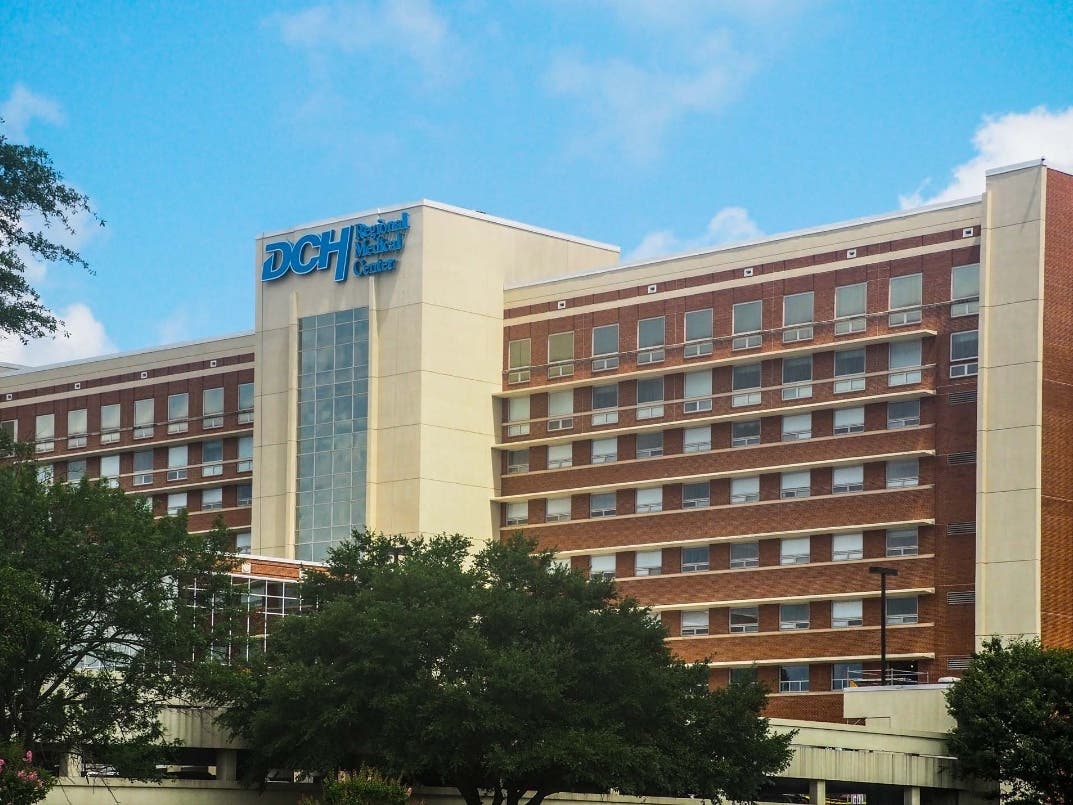
DCH Health System on Friday confirmed that the hospital had topped triple digits for inpatient COVID-19 cases for the first time, marking the highest number of individuals being treated at the system’s three hospitals to date. DCH Vice President of Marketing and Communications Andy North spoke to the Chamber of Commerce of West Alabama via Zoom to give other additional insights regarding hospital operations, testing, community resources and more.
North said as of Friday morning, the system had reported 101 inpatients testing positive for COVID-19. This total comes in addition to 30 coronavirus patients being treated in intensive care units, 11 of whom are on ventilators.
The update came as the Alabama Department of Public Health reported 3,411 confirmed cases for Tuscaloosa County and 57 deaths, with two listed as probable.
Find out what's happening in Tuscaloosafor free with the latest updates from Patch.
“It appears the incubation period is between 5-14 days for this virus,” North said. “So what we’re seeing is, we think the individuals going out on July 4 seems to be having an impact on our inpatient volumes.”
Friday morning’s totals are nearly double the inpatient cases reported for the health system two weeks ago, when DCH reported treating 59 COVID-19 inpatients on Friday, July 6.
Find out what's happening in Tuscaloosafor free with the latest updates from Patch.
In taking a deeper dive into the latest data, North commented that 4% of those receiving inpatient care for the virus at DCH locations have died after testing positive, while roughly 20% of COVID-positive patients have required inpatient care and have been discharged. Conversely, North said about 72% of those who have tested positive at DCH have not required hospitalization, which he said could be viewed as a positive sign as the percentage has gone up from about 70% earlier this month.
“We’ve seen an ever so slight increase in the percentage of people who tested positive, but did not need care,” he said. “Despite the increasing inpatient COVID numbers, that’s a good little result there.”
North also reported that six residents at the system’s longterm care facilities, primarily in Fayette, have tested positive for the virus, which prompted a re-tooled approach to monitoring the facilities.
“The total number [of persons under investigation] has gone up and there are a few blips where it went really high,” North said looking over the data. “That’s mostly due to our longterm care facility in Fayette. We noticed some residents started to show signs of having the virus. Since that’s an older population, we decided to go ahead and have all the residents tested and we’re doing that until we have no more individuals testing positive for two weeks."
TESTING AND OPERATIONAL UPDATES
In understanding totals relating to persons under investigation (PUIs), North said it was important to factor in the hospital’s testing capabilities, which are updated regularly as new technology and testing methods hit the market due to the ongoing pandemic.
“We’re staying in the teens and 20s as far as PUI totals,” North said. “If you look back a month ago, there were days we were in the 60s. A good part, the Hologic Panther is in-house testing that allows for 3,000 tests a month, with a six- to eight-hour turnaround.”
However, North pointed out that over the last week, the DCH system and its current vendor have both been running short on certain supplies, but have been working to secure alternate suppliers.
“We just finished up an agreement for the Quidel Sofia,” he said, alluding to the Sofia — a diagnostic testing device with rapid turnaround times. North then said the device is a smaller unit capable of resulting one test at a time.
He commented further on the faster turnaround time and said hospital staff would be able to result a few tests an hour with the device.
“That’s the same test or same system that the University of Alabama is using, so we were able to work with them to get some supplies in quickly or borrow some of their supplies, essentially as we wait for our stock to come in. We’re very grateful to them for that assist.”
On the operations side, North said with a recent revision to the Safer at Home order, the hospital system opted not to make changes to its visitation policy.
“We were concerned about July 4 weekend coming up, so we made the decision not to loosen our visitation policy instead, so we went ahead and provided further clarification on the items,” North said. “With these increasing numbers, we feel it is unsafe to loosen visitation in the hospital. We really would like to change that. We feel it’s very important to have family members and loved ones with patients to help provide the care and energy they need.”
In answering one attendee’s question concerning visitation, though, he did say the system had “the policy written and ready to go” at the beginning of July, but opted against the decision as case numbers continued to climb.
“As soon as we can, we would like to open that up,” North said.
With the number of non-patients coming into the system’s hospitals limited, North said changes had also been made internally to maximize space for patients while also promoting a safe environment for employees.
Referring to the hospital’s Willard Auditorium, North said up until a month and a half ago it was still serving its intended function. But as patient volumes continued to increase, DCH made the move to turn the event space into an observation unit in an effort to free up beds.
The auditorium now has 12 beds and a nursing station, primarily to accommodate patients who may be waiting on test results, if they need monitoring to determine if they will require acute inpatient care or if they need to be discharged to another facility.
“It’s allowing us to free up other beds in the hospital,” North commented. “We’re putting those who have tested negative or have no symptoms in this area so they can be cared for and watched over by nursing staff and physicians.”
When considering capacity, North noted that it can be difficult to put a number on the total number of beds and other resources because of the multiple contingency plans currently in place for the system.
Patch reported on Thursday that at DCH Regional Medical Center in Tuscaloosa, for example, some of its licensed rooms are double occupancy, but with COVID-19, the hospital system has worked to keep each room as single occupancy. What’s more, there are 72 ICU beds between DCH Regional and Northport, but rooms have been converted to function as ICU rooms when needed, which means the overall capacity total could regularly change.
“For overall hospital capacity, we have air scrubbers on standby, a new observation unit and the ability to stop all elective cases if needed,” North said. “COVID cases are kept in the same place, so this is a constant moving puzzle. It’s not so much an issue of space.”
One concern for the hospital system, though, is the physical, mental and emotional stress placed on staffing. North also alluded to an increasing difficulty in securing travel nurses to help relieve the pressure.
“We are working through issues with space and so far we have been able to manage, but it is a stressful situation for the staff,” he said.
COMMUNITY RESOURCES
One paid service that could prove helpful to area businesses is employer testing through DCH Occupational Medicine, North said.
“The positive rate among those individuals who are primarily asymptomatic, versus what we’re testing in-house, we’re getting about a 10% positive rate, even slightly higher than that,” North said, stressing the need for employer diligence when it comes to testing. “So there are a lot of individuals walking around in the community that have the virus and don’t know it.”
North said the best way for businesses to set up testing for employees would be to call DCH Occupational Medicine at (205) 333-4300.
Additionally, DCH has also launched its new website, which aims to provide increased information and data to the community through an accessible platform.
Click here to see the hospital's latest “Coronavirus Updates.”
This type of reporting from the hospital could also prove a valuable resource for the community as concerns were voiced during Friday’s meeting regarding the change in public reporting from the Centers for Disease Control and Prevention to the U.S. Department of Health and Human Services.
“It shouldn’t change what we’re sharing,” North said of the hospital's local efforts. “We report both to the [Alabama] Department of Public Health and the public … The bigger question is what the state is going to be able to continue to share."
North then said new daily updates can be found on the DCH website at around 3:20 p.m. each weekday and on weekends around 11 a.m.
Get more local news delivered straight to your inbox. Sign up for free Patch newsletters and alerts.