Sports
Five Tuscaloosa Baseball Stories You've Probably Never Heard
Tuscaloosa Patch took a look back at five obscure baseball stories with Tuscaloosa connections as MLB's opening day approaches on Thursday.


TUSCALOOSA, AL — Opening day for Major League Baseball is set for this Thursday, which will see the boys of summer take the field once again for another year in the sun.
Click here to subscribe to our free daily newsletter and breaking news alerts.
Before the celebratory first pitch is thrown, Tuscaloosa Patch took a look back through history in an exhaustive effort to find interesting tales from the big leagues that have connections to Tuscaloosa, with an emphasis on those obscure stories that are nearly lost to history.
Find out what's happening in Tuscaloosafor free with the latest updates from Patch.
Also, as a side note, be on the lookout for our All-Time Tuscaloosa Baseball team, which we'll be publishing on Thursday to kick off the season!
Guy Morton's Moment In The Show![]()
Guy Morton Jr. (Photo courtesy of Ancestry.com)

By all accounts, Guy Morton Jr. was a solid ballplayer at Tuscaloosa High School and the University of Alabama. Good enough, at least, to get the attention of major league scouts — although this was likely due in-part to the local fame of his father, Guy "Moose" Morton.
Find out what's happening in Tuscaloosafor free with the latest updates from Patch.
Moose Morton, born in Vernon in nearby Lamar County, made his major league debut with the Cleveland Indians in 1914 and would pitch for the club for the next decade.
Logging over 800 career strikeouts — in addition to two seasons where he led the league in strikeouts per 9 innings — Moose Morton compiled a 98-88 career record, posting a lifetime earned run average (ERA) of 3.13. Sadly, he died of a heart attack at the age of 41, roughly two decades before his son's call-up to the big leagues.
But the younger Morton showed promise early in his career, making his minor league debut for the Marion (Ohio) Red Sox in 1949. His best year, by far, would come in 1954.
Starting the season with the Greensboro (N.C.) Patriots, he hit for an impressive .348 on the year, with 32 home runs and 120 RBIs. This performance was impressive enough to win him MVP honors with his team, along with earning a call-up to play with Ted Williams and the Red Sox.
All signs seemed to show the 23-year-old's career was just beginning to take off.
His big-league debut came on Sept. 17, 1954 when he was tapped to pinch-hit in the top of the third inning for Red Sox pitcher Frank Sullivan against the Washington Senators in front of 4,500 fans at Griffith Stadium.
With the Red Sox down 4-0, Morton faced Dean Stone — a 6-foot, four-inch lefty who earlier that season earned the distinction of being the winning pitcher in the 1954 MLB All-Star game without retiring a single hitter.
Boston third baseman Ted Lepcio reached second base on a double before Morton stepped into the batter's box with one out. Unfortunately for the rookie, he would unceremoniously strike out in what would be his only appearance in a major league ballgame.
Morton was swiftly sent to Class A Montgomery and never received another call-up. He played five more seasons in the minors, before retiring and going on to coach baseball at Gordo High School, which included the 1962 season that saw the Green Wave post a 19-2 record and win the "county pennant."
He retired following that successful coaching season to become a Baptist minister and later worked as a sports columnist for a newspaper in Vermilion, Ohio.
Guy Morton Jr. died in May 2014 at the age of 83.
Bobby Sprowl's MLB Debut

Future Hall of Fame inductee Harold Baines was a talented product of St. Michaels High School in Maryland and became the first overall selection in the 1977 MLB Draft. Fellow perennial all-star and Hall of Famer Paul Molitor would go with the third pick.
In a draft class packed with talent, the University of Alabama's ace lefty pitcher Bobby Sprowl was taken with the 39th overall selection in the second round by the Boston Red Sox. In his last season for the Tide, he posted an 8-6 record on the mound, accompanied by a 3.13 ERA. However, it would be his blistering 11.54 strikeouts per 9 innings, which led the nation, that likely had scouts ready to fast-track the young pitching prospect to the majors.
As a true strike-out pitcher who developed his game in college, his uncanny ability to go deep into games with effectiveness no doubt resulted in his short time in the minors before getting the call.
It's also worth noting that Sprowl was drafted ahead of the following players: Mookie Wilson (2nd round, 42nd pick); Ozzie Smith (4th round, 86th pick); Tim Raines (5th round, 106th pick) and Chili Davis (11th round, 270th pick).
Sprowl's major league debut for the Red Sox came on Sept. 5, 1978 against the Baltimore Orioles and 15,000 fans in Memorial Stadium. This was roughly half a year after the promising prospect was grazed on his right arm by a bullet fired through the wall of his apartment in Winter Haven, Florida on a Saturday night by a neighbor who thought they were shooting at a burglar, according to an Associated Press wire story in April 1978.
"He wanted to work out today (Saturday), but the doctor advised him to take a little rest," Red Sox Farm System Director Ed Kenney said . "However, we have him pitching in an exhibition game on Sunday."
Opposite Sprowl in his debut would be 20-game winner Jim Palmer, who was polishing off one of the best seasons in a career already bound for Cooperstown.
This was also a golden age for the Red Sox, with a lineup card that boasted names like Carl Yastrzemski, Carlton Fisk, Fred Lynn, Jim Rice and Tuscaloosa-born Butch Hobson.
The first batter Sprowl faced in the bottom of the first would be Kiko Garcia — a lifetime .239 hitter who played a decade with three different teams. Garcia hit a single to left field and subsequently stole second before Sprowl retired the next three hitters, including future Hall of Famer Eddie Murray, who grounded out to end the inning.
Despite walking Orioles designated hitter Lee May to start the second inning, Sprowl settled in, fanning Doug DeCinces and Andres Mora to get out of another inning unblemished.
Dwight Evans knocked in Fisk with a double to right field in the top of the second to log the first run of the ballgame. However, a back-and-forth pitcher's duel ensued as Palmer also showed his composure by slicing up the Red Sox order.
Still 1-0 in the bottom of the seventh inning, Sprowl was on his way to a complete game shutout in his MLB debut when the powerful bat of Lee May stepped back up to the plate.
It's worth noting that the 6-3, 200-pound Birmingham-born May hit 25 of his 354 career home runs in 1978 — with one of them being to deep left field off of Sprowl on that night in Baltimore to tie the game. Andres Mora then reached on an error, before Carlos Lopez singled to right field to give the Orioles a 2-1 lead.
Sprowl managed to get out of the turbulent seventh inning without allowing another run and returned for the bottom of the eighth. After Sprowl walked Ken Singleton, Eddie Murray rapped a single to left, prompting legendary Red Sox manager Don Zimmer to go to the bullpen for Dick Drago — a serviceable reliever in his eighth season in the league.
After Boston surrendered two more runs, Palmer was relieved in the ninth by Don Stanhouse, who slammed the door on the heart on the Red Sox lineup, striking out Fisk and Evans to give the Orioles the 4-1 victory.
"The man pitched well, he did an outstanding job," Zimmer told reporters following Sprowl's debut. "His poise didn't surprise me. He'll pitch Sunday against the Yankees."
His lone season in Boston resulted in appearances in three games, where he tossed 12.1 innings. The following summer, he was the player to be named later when the Red Sox traded Pete Ladd to the Houston Astros in exchange veteran slugger Bob Watson.
In his only season with the Red Sox in 1979, Watson appeared in 84 games and hit .337 before being traded to the New York Yankees the following year.
Sprowl retired after four seasons in the big leagues, appearing in 22 games — primarily in the 1981 season. During that time, he compiled a career mark of 0-3, with a 5.44 ERA over 46.1 innings.
While his short playing career saw him give up a home run to Johnny Bench and become one of 4,256 hits by Pete Rose, there are moments easy to miss when considering the lack of television and media coverage during his playing days.
For instance, Sprowl's 34 career strikeouts might pale in comparison to the numbers of his record-breaking former Astros teammate Nolan Ryan. But it's important to look closer at those numbers.
It's a strikeout list that includes notable names like Dusty Baker, Phil Niekro (twice) Joe Morgan, Lance Parrish, Lou Whitaker (twice) and Tim Raines.
His last appearance in a major league game was on October 3, 1981 in Dodger Stadium, in the next-to-last game of the regular season. He gave up one hit in one inning, walking two and striking out Jerry Grote in the bottom of the seventh.
Ken Landreaux, who would go on to play six more MLB seasons, was the last batter Sprowl faced, forcing him to ground out to first base.
More would be in store for the retired ballplayer, though, as his lifetime calling had yet to present itself. It was then that Sprowl found his passion for coaching and, apart from a stint at his alma mater, Sprowl has made a name for himself as one of the winningest junior college baseball coaches in America.
While he never won a game on the mound in the big leagues, Sprowl has led the Buccaneers to more than 1,000 wins and counting.
The Yankees Come To Town
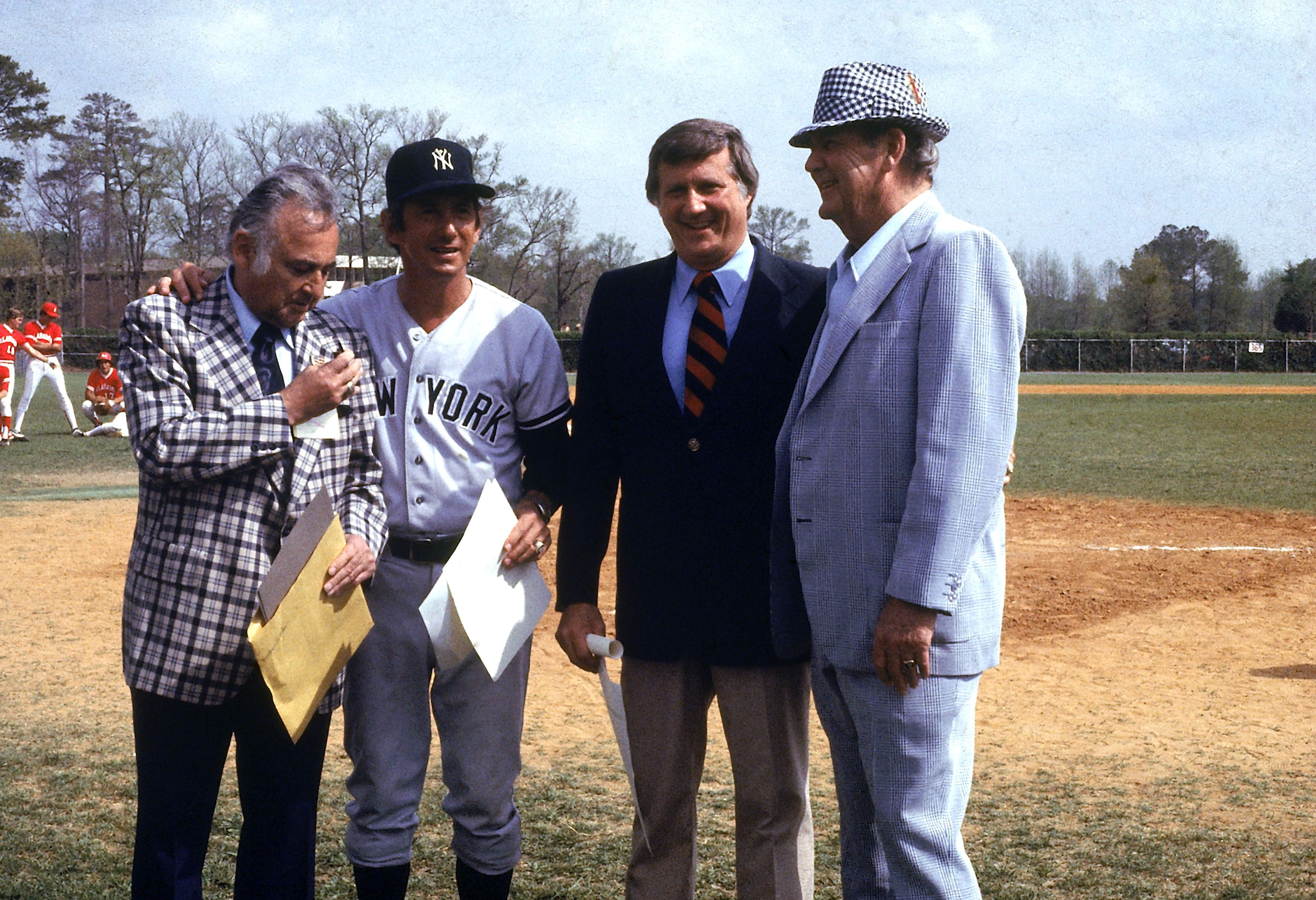
Longtime New York Yankees owner George Steinbrenner loved winning and being in the company of winners. That's why it should come as no surprise that he had an affinity for legendary Alabama football coach Paul W. "Bear" Bryant.
"Bear Bryant became a very good friend during the five years before he passed away," Steinbrenner told Billy Mitchell of the Tuscaloosa News in 1984. "I can say that I know a lot of big, important men all over the world. But I can truthfully say I never met a man a bigger man than Paul 'Bear' Bryant. He was bigger than life itself. At least that was the way I had to look at him."
Steinbrenner first brought the Bronx Bombers, in addition to baseball legends Reggie Jackson and Billy Martin, to Tuscaloosa for an exhibition game with the University of Alabama baseball team in 1978 and forged a connection that would last into the 1980s.
The first meeting of the two icons of sport saw a dominant effort from the Yankees, as future Hall of Famer Catfish Hunter retired the first 21 batters of the game, before being relieved by Cy Young Award winner Sparky Lyle.
Opposite the pinstripes was Alabama pitcher Mike Blount, who described the experience of striking out Yankees star Willie Randolph to the Tuscaloosa News.
"I was lost," he said. "After I'd throw a pitch, I'd almost be in a daze. The home plate umpire told me once, 'If you don't look I'm gonna hit you between the eyes.' I'm just not used to having umpires throw the ball back to me."
The 6-0 win for the Yankees in 1978 saw Reggie Jackson notch a hit in his lone at-bat, while Thurman Munson contributed two hits and two RBIs.
In 1983, roughly two months after Bryant died of a heart attack, the Yankees had been scheduled to return to Tuscaloosa for another exhibition showdown. However, a snowstorm and inclement winter weather ultimately resulted in the game being moved to the following year.
This would have been a particularly fun one to watch had it occurred as scheduled, considering the 1983 Crimson Tide and Golden Spikes winner Dave Magadan finished runner-up in the College World Series to Roger Clemens and the Texas Longhorns.
Tuscaloosa was an easy drive from Fort Lauderdale, Florida, where the Yankees were holding spring training in 1984, so Steinbrenner reportedly bused his 53-man roster to the UA campus for a tune-up game against the Tide. Included on the roster that day were names such as: Willie Randolph, Ken Griffey, Lou Piniella, Don Mattingly, Don Baylor and Dave Winfield.
All but the future MLB manager Piniella would contribute in the 11-hit effort.
The 1984 game, according to an account in the Tuscaloosa News, drew 3,100 fans to Sewell-Thomas Field, with the proceeds going toward the construction of the Paul W. Bryant Alumni/Continuing Education Center and the Bryant Museum.
"We came up here in '78 at Coach Bryant's request and he had asked us to come back again last year," Steinbrenner said. "Of course, we had the snow last year and, I guess, we could have said 'too bad this year.' But not where Bear Bryant is concerned. We were coming this year, regardless ... even if we had to play in the snow, we were coming."
It was a cold Monday in Tuscaloosa with a threat of rain when the two teams met. A picture published in the newspaper shows legendary Yankees catcher Yogi Berra — a manager at the time — meeting at home plate with Alabama baseball coach Barry Shollenberger.
The Tuscaloosa News reported that 26 of Alabama's 29 players saw action in the game, with Shollenberger putting a different pitcher on the mound in each of the game's nine innings.
But argubably the most exciting moment of the game came in the top of the second inning.
Jeff Brewer, who would go on to work as an engineer at NASA, was on the mound for the Crimson Tide when the intimidating presence of power-hitter Dave Winfield entered the box. Winfield, standing 6-foot, 6-inches, slapped 37 homers the year before and was one of the most popular players in the game.
Leading off the second inning, Brewer slipped up on a pitch to the keen-eyed veteran, who crushed a solo home run over the left field fence at Sewell-Thomas Field to give the Yankees a 1-0 lead.
Ray Fotenot was the starting pitcher for the Yankees that day and gave up four runs in the bottom of the fourth after a Fermin Lake single was followed by two runs being walked in. Lake and fellow infielder Craig Shipley each contributed two hits and the game ended in a 7-7 tie.
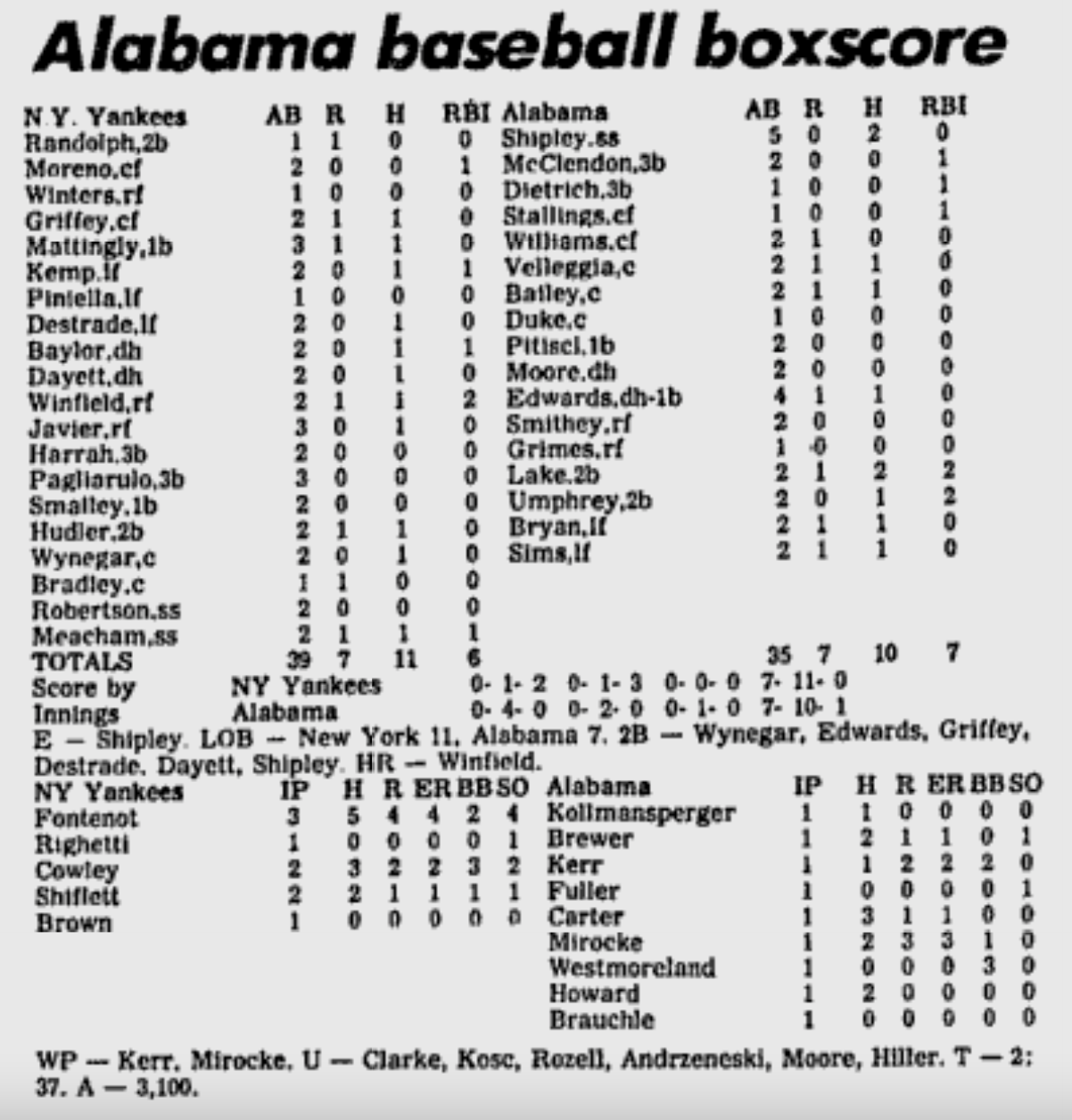
Crimson Tide first baseman Mike Pitisci struck out swinging twice on that gloomy day against the Yankees, before going on to hit six grand slams in 1984 to set the NCAA career and single-season record for grand slams at the time.
"I saw major-league sliders today," he said. "That's why I'm here and they're where they're at. But it was just fun being out there. We weren't really concerned whether we hit the ball or whatever we did. It was just a matter of playing, just being able to be out there."
'The Boone Boys' Of Samantha ![]()

Samantha, Alabama is a small, unincorporated community in the northernmost part of Tuscaloosa County that boasts a rich, if not grossly overlooked, baseball history.
Home to Northside High School, which has a storied tradition of baseball excellence, there has been considerable talent move on to bigger things from the tiny rural community. Of all of the names, though, the most accomplished are arguably the most forgotten.
The story begins with James Albert Boone, who was born in Samantha in 1895 and would go on to be a standout in football and baseball for the Alabama Crimson Tide.
Veteran journalist Delbert Reed, in a fascinating 2017 article published in the Northport Gazette, cited a quote in the UA yearbook that described Boone as “a quiet, lanky Ichabod full of grit and fight.”
Indeed, along with Joe and Luke Sewell and Riggs Stephenson, Boone — a right-handed pitcher — led Alabama's baseball team to three SIAA championships from 1917-1919. This team also included Boone's younger brother, Ike, who played outfield during the waning years of what is now referred to as "The Dead Ball Era." The days of small ball and strategy were becoming a thing of the past as superstars like Babe Ruth began to popularize long and frequent home runs.
James Albert eventually started answering to his nickname, "Dan," and signed his first professional contract with the Atlanta Crackers in 1919. In his first year, he logged a 16-7 record on the mound before joining manager Connie Mack and the Philadelphia Athletics at the end of the season.
Dan pitched six seasons in the minors, before going on to play on four different occasions in the major leagues — including stops with the Detroit Tigers in 1921 and the Cleveland Indians from 1922-23.
The 1921 season would have been an interesting one for the young ballplayer from Samantha, who was teammates with Tigers outfielders Harry Heilmann and Ty Cobb, who finished first and second in the American League batting race, respectively, posting batting averages of .394 and .389.
During his time in the majors, Dan Boone logged a 8-13 record with 25 strikeouts and two shutouts in 162 innings pitched.
Ike Boone, two years younger, also played eight seasons in the league, with stops in New York, Chicago, Boston and Brooklyn.
However, it's the accomplishments of the brothers in the minor leagues that saw their names go down in baseball history.
In 1929, Dan and Ike were both featured on the roster of the San Francisco Missions in the Pacific Coast League. Showing his older brother up, Ike smashed a league-record 55 home runs, while Dan hit 46 — the most for a pair of brothers playing on the same team in organized professional baseball.
Indeed, in a story published in the Anniston Star in 1953, a former baseball player named Frank Coleman recalled Dan's hitting prowess.
"The longest homer ever hit off me was by an old Alabama boy," he said. "Dan always used an extremely big bat, and could really powder that old horsehide. He had a bad leg, and was forced to wear a rubber stocking. I had a habit of pitching at that leg to keep him scared.
"But one day he caught one of those low pitches and sent a line drive screaming past me," Coleman added. "That ball kept rising as it traveled and went over the 407-foot mark in center field. It must have gone at least 500 feet, and possibly more. I never threw at that bad leg again!"
Despite little success on the game's biggest stage, Ike had an exemplary run in the minors, with Reed reporting that he won five batting titles in four different leagues. He would go on to be inducted into the International League Hall of Fame in 1957 and the Pacific Coast League Hall of Fame in 2003.
Both men eventually returned to Tuscaloosa County to live out the rest of their lives when their playing careers concluded, but their legacy would continue through the years, with the Boone family responsible for donating the 10 acres that would become the site of Gorgas High School.
But, to the untrained eye, an easily-overlooked fact mentioned in Reed's feature story is the Boone family lineage, which includes former Northside High and UA baseball standouts — and brothers — Larry and Gary Mims.
Larry Mims returned to his alma mater in Samatha and would go on to coach the Rams for 37 years, winning one 3A state title in 2001 and becoming one of the winningest high school baseball coaches in Alabama.
Frank Lary's 25th Win Against The Yankees ![]()
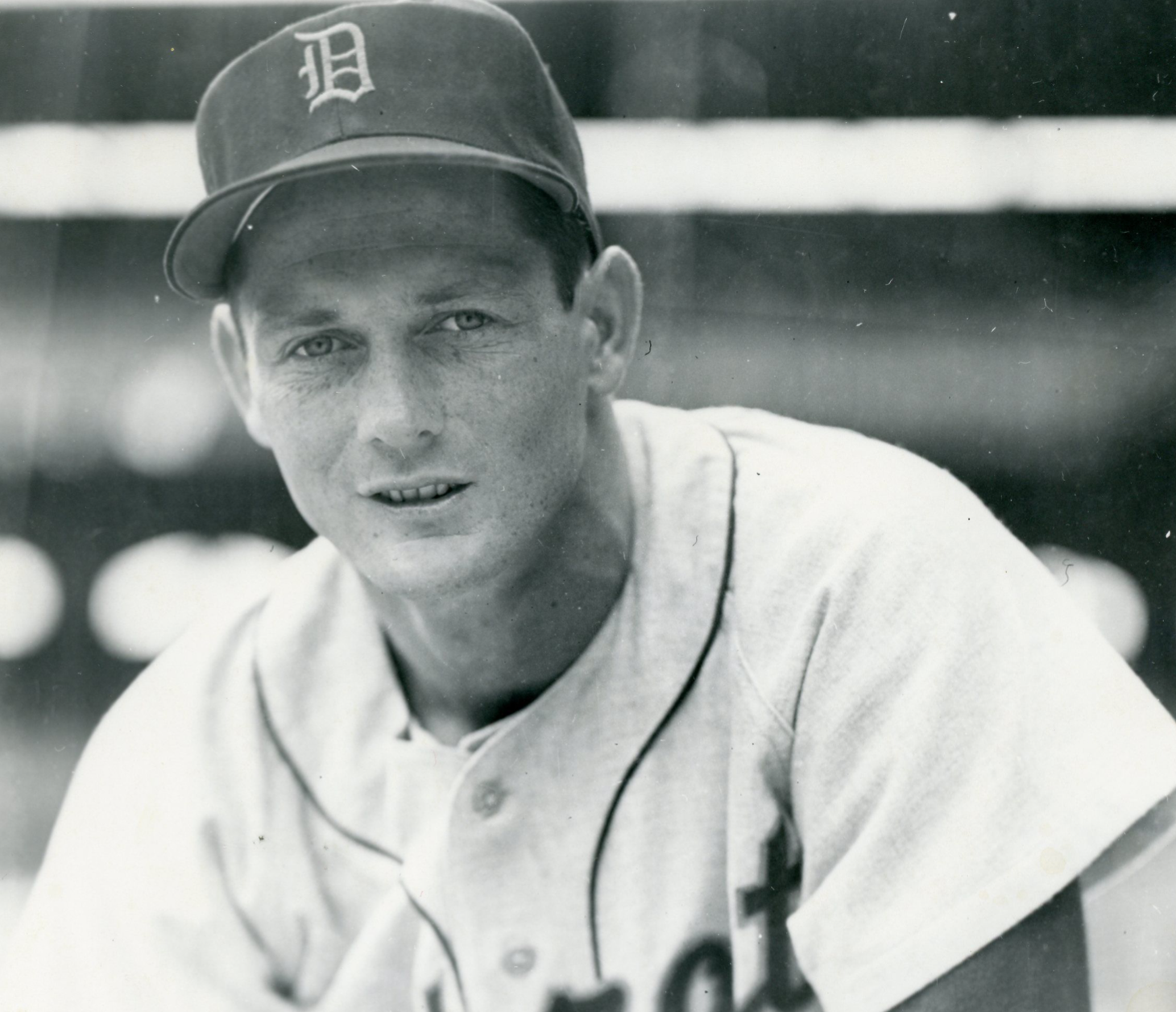
A bust of Frank Lary won't be found in the Baseball Hall of Fame in Cooperstown, New York. But that is likely one of the only hall of fames where the legendary Detroit Tigers pitcher has not been enshrined.
Known as "The Yankee Killer," Lary was from a baseball family in Northport who shined on the mound at Tuscaloosa County High School and the University of Alabama, before making his route to the majors look easy after signing a $6,000 contract with the Tigers.
From 1955 to 1961, Lary posted a 27-10 record against the Yankees, during an era when the Bronx Bombers featured names like Berra, Mantle, Maris, Rizzuto and Slaughter.
Over his 12 years in the league, Lary finished two seasons with more than 20 wins, which included his league-leading 21 victories in 1956. He was also an all-star and a Gold Glove winner.
Lary's career is one of the better-documented among baseball talent to come from Tuscaloosa, but one story in particular stands out when searching for impressive, yet forgotten moments.
On Friday, May 12, 1961 in Yankee Stadium, the hard-throwing right-hander grabbed headlines in the early part of a season that saw him win a stunning 23 games.
The game was a tough one on the bump for the 30-year-old pitcher, who faced down the only lineup in the league as hot as the Tigers. Indeed, this was the historic season that saw teammates Roger Maris and Mickey Mantle capture the imagination of the country in their quest to break Babe Ruth's single-season home run record — a feat Maris would eventually accomplish with 61 home runs.
Despite giving up a double to Tony Kubek in the bottom of the first, Lary would force Maris to strike out looking before then retiring Berra to start the game.
After scoring a run in fourth inning, the Tigers' lead slipped away in an instant during the bottom half of the inning when Hector Lopez — playing for the injury-plagued Mickey Mantle — hit a two-run homer off Lary to give the Yankees a 2-1 lead. More trouble followed in the fifth when Berra roped a double off Lary to drive in another run.
But in this day and age, for pitchers like Lary at least, you finished what you started.
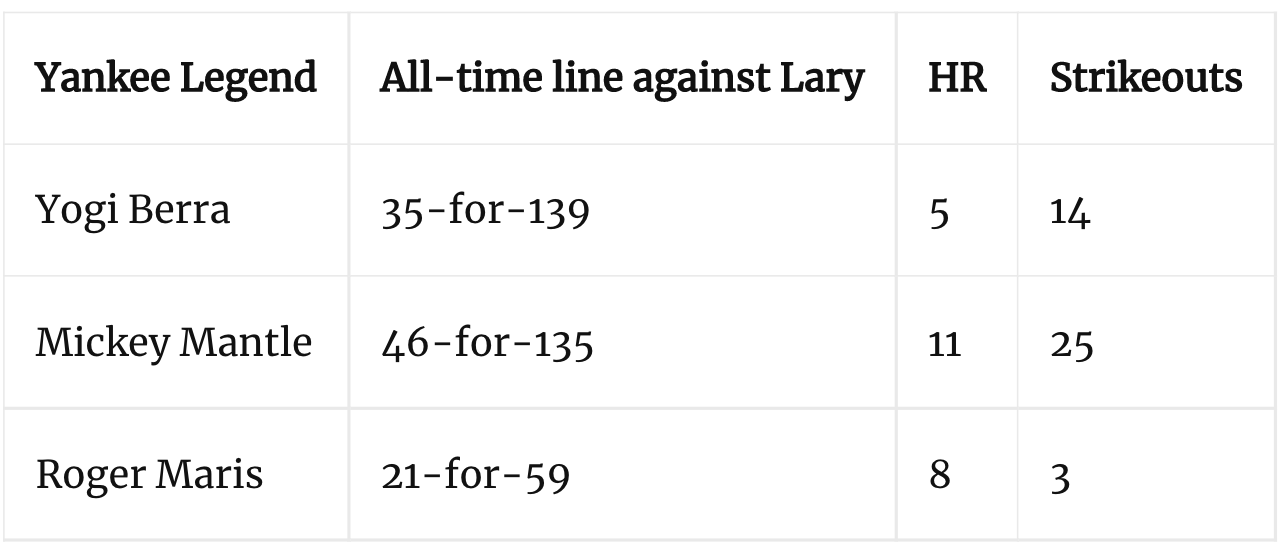
The Tigers clawed back to tie the game at 3 in the seventh — due in part to a double to left field by Lary — and the pitching for both teams locked down batters going into the top of the ninth.
It was an era before two-way players like Shohei Ohtani dazzled on the mound and in the batter's box, and a time before the mandatory designated hitter in the American League. Pitchers like Lary didn't play every day, resulting in pitchers, by and large, being mediocre at the dish.
But Frank Lary was different.
A .231 hitter in 1961, Lary only hit a ball out of the yard one time. And who else would it have been against, if not the New York Yankees?
Jim Coates — a two-time All-Star and member of two World Series-winning teams — was brought on in relief for the Yankees in the top of the ninth, with Lary leading off the inning at the plate for the Tigers.
Batting from the right side of the plate, Lary pulled a towering fly-ball to deep left field that cleared the wall and put Detroit up 4-3. The excitement wasn't quite over, though.
Looking to finish out the game in the bottom of the ninth, Lary found himself in a jam after striking out Berra when Johnny Blanchard singled to put the tying run on first base.
Then stepped up Mickey Mantle, who pinch-hit after missing his first start of the 1961 season that would see him finish with a career-best 54 home runs. Entering the game, Mantle had nine on the season and had not homered in six games.
Whether it was nerves, fatigue or sensing the legendary hitter was due, Lary walked Mantle in their lone meeting that day and would force a ground ball to win the game, thus securing a better record against the Yankees than any other pitcher in baseball.
He would play seven more seasons in the big leagues and notch two additional wins against the Yankees before retiring in 1965. Lary ended his 12-year career with a 128-116 record, 1,099 strikeouts and a 3.49 ERA.
Lary then returned to Northport, where he became a businessman. He lived out his years as Tuscaloosa's favorite baseball son and a legendary ambassador of the game, dying in 2017 at the age of 87.
Have a news tip or suggestion on how I can improve Tuscaloosa Patch? Maybe you're interested in having your business become one of the latest sponsors for Tuscaloosa Patch? Email all inquiries to me at ryan.phillips@patch.com
Get more local news delivered straight to your inbox. Sign up for free Patch newsletters and alerts.