Politics & Government
Former Alabama Governor Talks Coronavirus, Unrest & Politics
Former Alabama Governor Robert Bentley sat down with Patch Friday to discuss the ongoing pandemic and current political climate.


TUSCALOOSA, AL — Tuscaloosa dermatologist and former Republican Alabama governor Dr. Robert Bentley was in Washington D.C. at the winter meeting of the National Governors Association in early February 2020, attending for enjoyment and not business, when he heard about a special meeting called for all of the current governors in attendance. The focus of the meeting centered on a strange new virus reportedly out of China that was raising concerns among public health officials.
While he didn't attend the meeting in person, the information that trickled out of that discussion was as alarming as it was uncertain.
"Right at first, we really didn’t know how bad [the coronavirus] was going to be," Bentley told Patch in an interview Friday at his Tuscaloosa dermatology practice. "We didn't know how rapidly it would spread or if it would even come to the United States. We didn’t know where it came from and you heard all sorts of rumors, even though I do think it actually came out of a laboratory ... I personally do."
Find out what's happening in Tuscaloosafor free with the latest updates from Patch.
Bentley has mostly stayed out of the public eye since an unceremonious resignation in 2017, opting for a quiet return to his work as a physician caring for patients. While it may have seemed like he left the world of politics and social issues for a time, the former governor, along with doctors across the country, saw those issues come to the literal front door at the onset of the coronavirus pandemic.
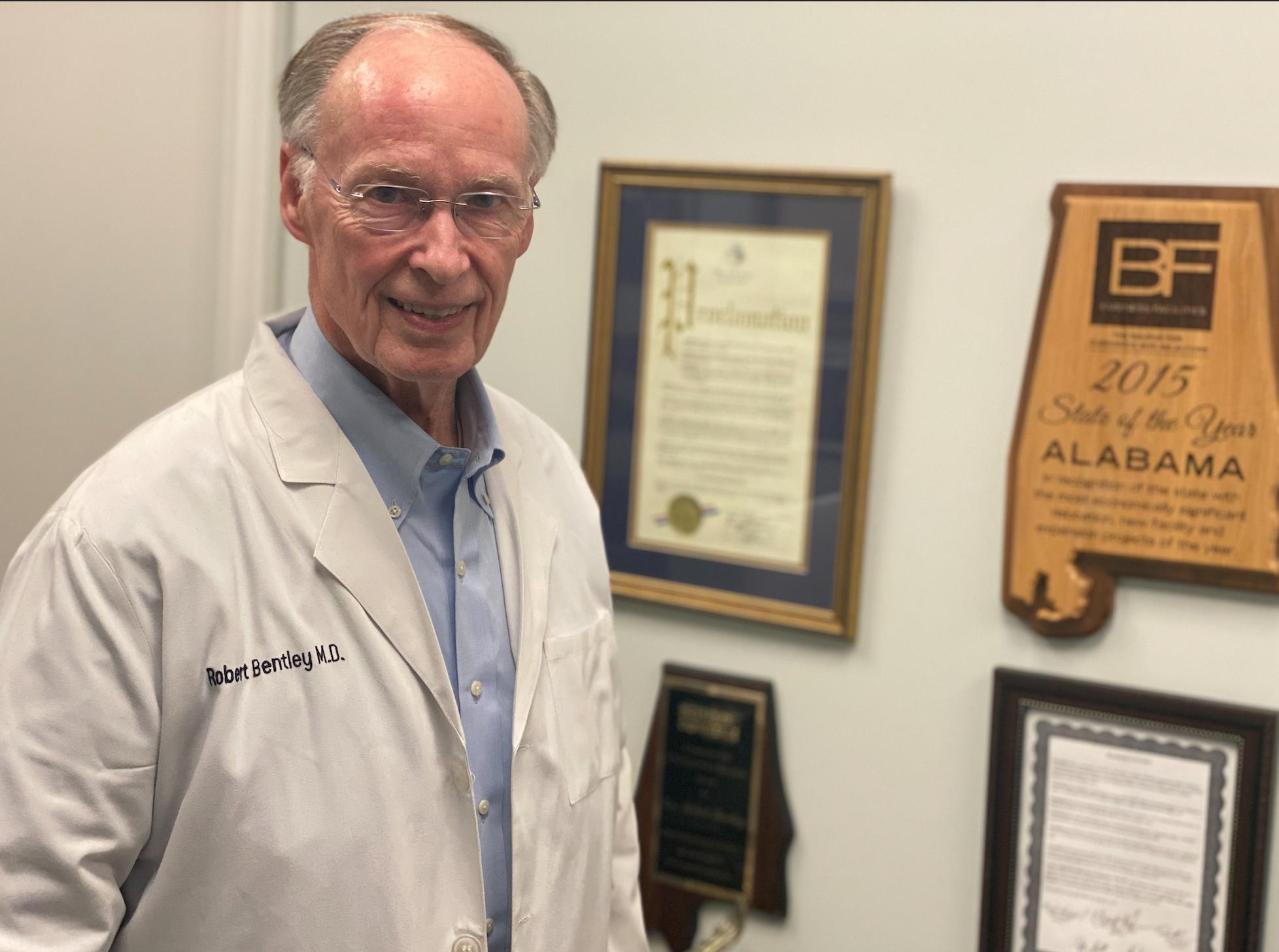
In April, Bentley closed down part of the practice for its aesthetics work, such as Botox and laser treatments, as business was pared-down to about 60% of where it was prior to the pandemic. Like many others, the practice adapted, he said, and did it early.
Find out what's happening in Tuscaloosafor free with the latest updates from Patch.
"We didn’t let anybody sit in the waiting room," he said. "We had the little buzzers like restaurants and they would sit in their car and we would bring them in. But we saw as many patients as we possibly could."
Click here to subscribe to our daily email newsletters and breaking news alerts delivered to your inbox and mobile devices for free. You can also support local journalism by donating as little as $5 a month to become a supporting member or by downloading our free Patch mobile app.
Bentley's practice — Dermatology Care of Alabama — has managed to weather the pandemic without any layoffs, shifting employees from aesthetics to keep them on the payroll. On the larger scale, though, he said worries persisted in the early goings.
"It got really scary because nobody knew how to handle it," he said. "The federal government didn’t know how to handle it and really the federal government couldn't handle it because the states had to individually decide what they were going to do."
The nationwide reaction was calamitous in the first few months of the pandemic, with states, including Alabama, forming their approaches piecemeal while awaiting more uniform directives from a federal government that has since been criticized for its opaque recommendations as the first cases were identified. The ensuing logistical challenges and swift mandates closing businesses resulted in a slow rollout of testing supplies, coupled seemingly overnight with an economy teetering on the brink of collapse.
Despite the uncertainty in the early months of the pandemic, Bentley said he simply couldn't shut down his practice, citing the need for some patients to receive care. He then pointed out that the clinic, which is currently processing about 250 patients a week from all over the state, is one of only three in Alabama that treat cancers and offer radiation on site. Bentley's practice will also soon be able to provide Moderna vaccines to patients.
"We do know more now and the vaccines will really be the thing that will help wipe it out," Bentley said, mentioning earlier that he had just received his second shot as part of the two-step vaccination process. The first doses came to Tuscaloosa in December, with phase one offered to health care workers and first responders.
"If you know someone who’s died from it, that makes you a little bit more leery of catching the virus," he added. "And even with young people, most young people do fine, but people in their 30s can die from it. People in their 40s, 50s can die from it, especially if they have pre-existing conditions."
ON POLITICS
The long-awaited vaccine may have arrived, but fears remain among those of all stripes in the public, as Bentley lamented widespread distrust in institutions and science. This ranged from those vehemently opposed to public health mandates, to the mob of Pro-Trump rioters that briefly sacked Capitol Hill on Wednesday, resulting in unprecedented chaos and the deaths of five people in the first breech of the capitol since the War of 1812.
Bentley speculated that the visceral reactions and ardent skepticism are the results of segments of a society that are, in a way, disconnected from reality, interacting mostly through social media and fed a steady diet of conspiracy theories. The former governor and lifelong Republican said this roughly an hour before Twitter announced a permanent suspension of the personal account of President Donald Trump "due to the risk of further incitement of violence."
As officials try to convince a wary public to put its faith in the two current vaccine options, Bentley said deep-seated doubt predated the pandemic and was only exacerbated by hyper-partisanship, resulting in new and very real threats to public health. He then cited history, mentioning the Tuskegee Syphilis Experiments — a series of highly unethical and immoral studies conducted by federal health officials between 1932 and 1972 that saw Black men in Alabama unknowingly inoculated with the disease and studied under the false pretense of receiving free health care.
"It comes from Facebook, it comes from people putting things out there and expressing their own opinion, not the scientific opinion," he said. "I personally think it's a very safe vaccine. If it's 95% effective, that's more effective than any vaccines I’ve seen. I know part of it, like in the African-American community, comes from the syphilis study ... and I can’t say I blame them."
Bentley went on to speak about what he views as a chasm of anger and bitterness separating political parties, where it has become commonplace to belittle those on the other side with harsh language and openly derogatory rhetoric.
A self-described populist Republican, the 77-year-old son of a saw miller then struck a tone not often heard in the day's political discourse found on network television or in the halls of Congress.
"When you hate Nancy Pelosi — and I’m not saying I agree with Nancy Pelosi politically — but I’ve been around her, spent time with her and she's just a person like the rest of us. I think when we dehumanize people, you say things to that computer and spit all the venom, but if you were talking to them personally, you wouldn’t do it and wouldn’t feel that way."
Turning talk from societal ills to the problems plaguing the country's political infrastructure and democratic process, Bentley said the current body politic is held captive by politicians focused solely on the next campaign and not effective and fair governance. Campaigning is easy, he said, but having to govern can be every bit as rewarding as it is difficult.
Bentley's words come as a Republican Party once unified under Trump is starting to show prominent signs of schism, with some conservative lawmakers beginning to distance themselves or outright rebuke the president's recent behavior. Conversely, a smaller faction of leaders on Capitol Hill continue to show emboldened support for the president while condemning the violence from earlier this week. The most prominent example of this divide within the party came in the early morning hours Thursday when a group of Republican senators, including Alabama's Republican junior Sen. Tommy Tuberville, failed in their formal opposition of election results in contested states during the certification process.
In examining the damage done to the public's eroding trust in its institutions, Bentley said had he been in the position, he likely would have voted to certify the results of an election deemed fair and secure by the states responsible for conducting them.
It was the violence, though, along with the damage to public property and sanctity of the democratic process that stood out to Bentley as a conservative aberration, even in the age of Trump.
"This really does not represent what conservative Republican people believe," he said. "Actually, we truly believe people have value. We believe babies have value. We believe elderly people have value. We don’t believe government is the answer, but we also believe that you need to help each other and love each other. I don’t care who you are or what party you’re in."
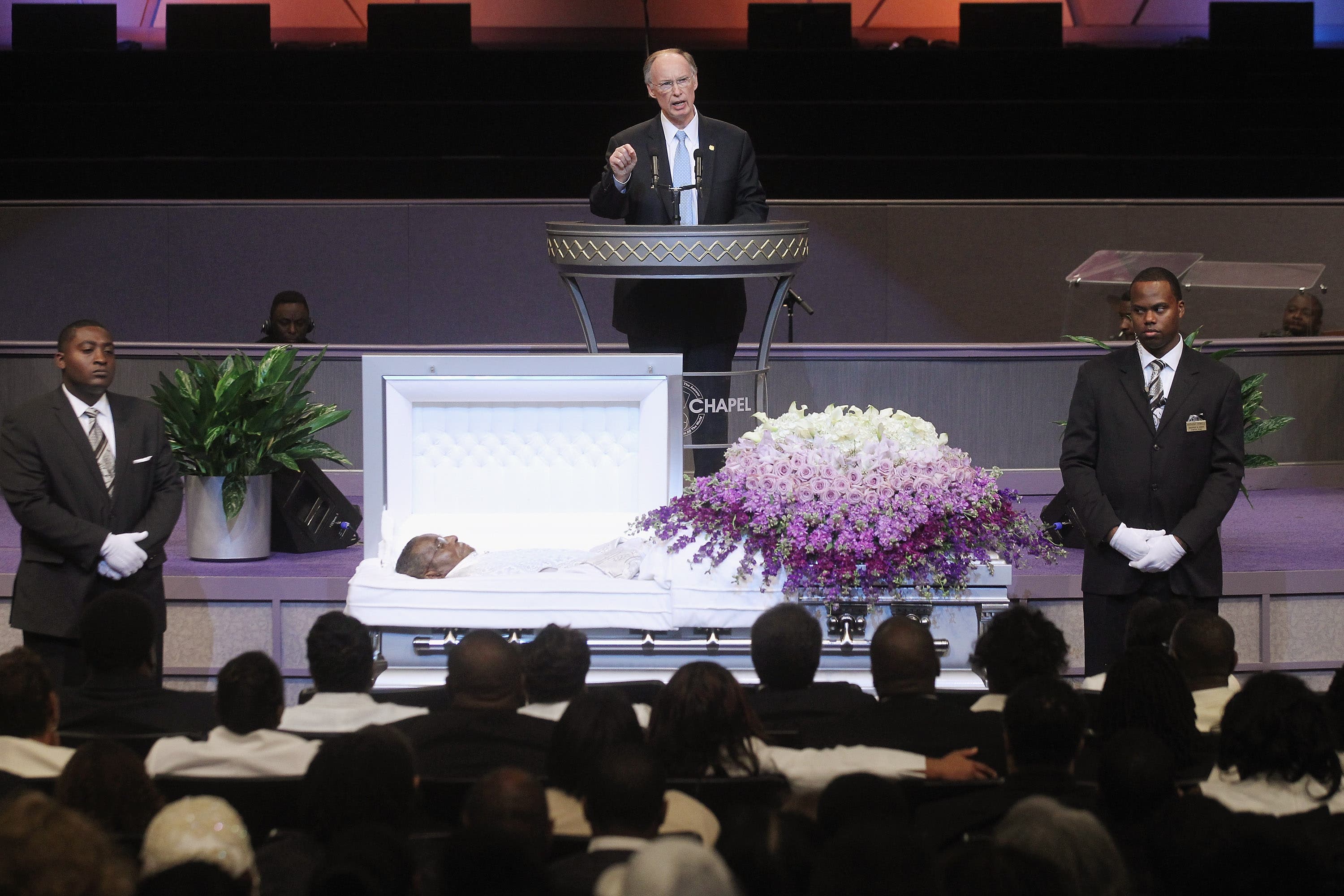
Bentley's belief set does still mirror that of your middle-of-the-road southern conservative, both in his past record and current stance on issues outside of office. However, one noteworthy instance that set him apart from other southern governors in the lead up to the 2016 presidential election was his refusal to endorse Trump in the Republican Primary. He then cited specific instances informing his decision, including the then-Republican candidate for president mocking a person with disabilities, along with Trump receiving a public endorsement from white supremacist David Duke — the former grand wizard of the Ku Klux Klan.
Instead, Bentley supported personal friend and fellow Republican governor John Kasich of Ohio, who showed promise, but fell well-short of challenging Trump for the nomination.
"I didn’t support him at that time," he said. "When he was elected president, I supported my president and I will say he has done some good things and got many good things accomplished. I just hate it's been tainted by his personality."
Reiterating his willingness to give credit where it's due, Bentley's view of the embattled president wasn't all critical. On the contrary, Bentley mentioned numerous instances — including nominations to the Supreme Court and a booming pre-pandemic economy — where he agreed with Trump's policy decisions based on his own knowledge and experience.
"I believe he is right on about China, I truly do believe that," he said. "I dealt with the Chinese when I was governor. I recruited one Chinese company to Alabama and I quit after that because I recognized if 15 were in your office, probably five of them were communist agents, so I quit dealing with the Chinese. I also think he's right about so many illegal immigrants coming into the country, but he should have been softer on that."
With respect to the federal response to the ongoing pandemic, Bentley said no one knew how to handle a crisis on a global scale, but the crucial failure came in the interaction between Washington D.C. and states desperate for guidance. When asked by Patch to comment from the grandstands on how he would have handled the early stages of the pandemic as both president and governor, Bentley said the federal response should have provided a more proactive and tender bedside manner with respect to states.
"[Trump] would get mad at the governors instead of working with them," he said. "I handled the April 27th tornadoes [in 2011] and that tore up half of north Alabama and we handled all that. The federal government can't come into a state unless you invite them in. I would have worked with the states and I would have done it and said "what do y’all need?" We expect you to do your job, but we’re going to work with you and help you any way we can."
As for Alabama's response as a state, Bentley graded it a "C" — saying while he did agree with the statewide mask mandate implemented via emergency order by Republican Gov. Kay Ivey, he would have handled the balance of authority differently. Noting the benefit of hindsight, he also said he would have pushed for a different approach to businesses.
"I can say what I would not have done," he said. "With some restrictions and with some help, I would have tried to keep everything open. I would not have closed down certain industries like barbershops … they could have done it just like we do, let one in at a time. I would have tried to keep everyone open so folks could keep their jobs. I also would not have allowed the state medical officer to basically run the state, because they don’t know anything about industry or keeping jobs."
After a lengthy discussion about his past political life and current professional pursuits, Bentley did admit that he missed politics. While he was more than fine to part ways with the cut-throat nature of the political rat race, the former Alabama governor and state representative said his favorite part of the job was having the chance to effect real change in the lives of the people he served.
"I miss being able to help people when things like this come up," he said. "I enjoyed being governor when I could really help areas and help people, but I’m doing that now."
Follow Patch here for updates or on Facebook and Twitter. For news tips or questions, email ryan.phillips@patch.com.
Get more local news delivered straight to your inbox. Sign up for free Patch newsletters and alerts.