Politics & Government
Officials Tout Potential Of West Alabama's First Mental Health Crisis Center
Hope Pointe, west Alabama's first mental health crisis center, is set to open next week in downtown Tuscaloosa.


TUSCALOOSA, AL — Standing in the middle of one of the sitting rooms, the first thing that stands out apart from the heavy blue chairs and partially obscured windows is the word "Hope" written in an ornate font on the wall.
Click here to subscribe to our free daily newsletter and breaking news alerts.
"Hope" is garnished with painted images of bright yellow sunflowers — flora even a tortured soul like Vincent van Gogh found so much beauty and optimism in.
Find out what's happening in Tuscaloosafor free with the latest updates from Patch.
Starting next week, this quiet and unassuming room is likely to be abuzz around the clock with professionals offering care suffering from mental health crises. And despite the concept of mental health crisis centers being a relatively new one, officials say the services that will soon be offered by Hope Pointe in downtown Tuscaloosa have been sorely needed across the region for some time.

As Patch reported in May 2022, Alabama Gov. Kay Ivey announced $7 million for the state to expand its Alabama Crisis System of Care by funding a new center for Indian Rivers Behavioral Health in Tuscaloosa County.
Find out what's happening in Tuscaloosafor free with the latest updates from Patch.
Operating as a nonprofit with Indian Rivers Behavioral Health Center as its parent company, Hope Pointe will be the region's only such facility, with the next closest being JBS Mental Health Authority in Birmingham. This means that Hope Pointe will not only serve Tuscaloosa County, but also Bibb, Pickens, Sumter, Choctaw, Hale, Perry, Dallas, Wilcox, Marengo, and Greene counties.
Hope Pointe Director Jaime Garza told Patch that the primary mission of the facility is to offer short-term, voluntary care as a way to help those in need who want to be helped, while also alleviating some of the pressure placed in the past on hospital emergency rooms and the county jail.
"We want to expand our services," Garza told Patch. "We want this place to not be hidden. We're right in the middle of downtown Tuscaloosa and the facility is going to look gorgeous in my opinion. Again, that's just to let people know that it's ok to go get help."
A ribbon-cutting for the new facility, located in the former DCH Home Health building at 1401 Greensboro Avenue, is scheduled for next Tuesday, with the facility then accepting clients the following Wednesday.
Ahead of the highly anticipated opening, Indian Rivers and Hope Pointe leaders provided an up-close look at the facility and Tuscaloosa Patch caught up with a wide range of community leaders to gain their perspective on what the new offering will mean for the region.
Breaking Stigmas & Saving Lives
According to the most recent data published by the Alabama Department of Mental Health, suicide was among the top nine leading causes of death for Alabama residents ages 10-64 in 2021.
In that year, the suicide rate in Alabama was 15.8 per 100,000 people. This, like car wreck data, underscores the blind, indiscriminate nature of mental health issues that can often lead to self-harm or violence against others.
Garza was quick to explain that the majority of clients served by Hope Pointe, roughly 90% to 95%, will be those voluntarily walking in to seek short-term help. This, he said, is the reason to make the facility as comforting as possible, so as to provide a feeling of confidentiality and dignity.
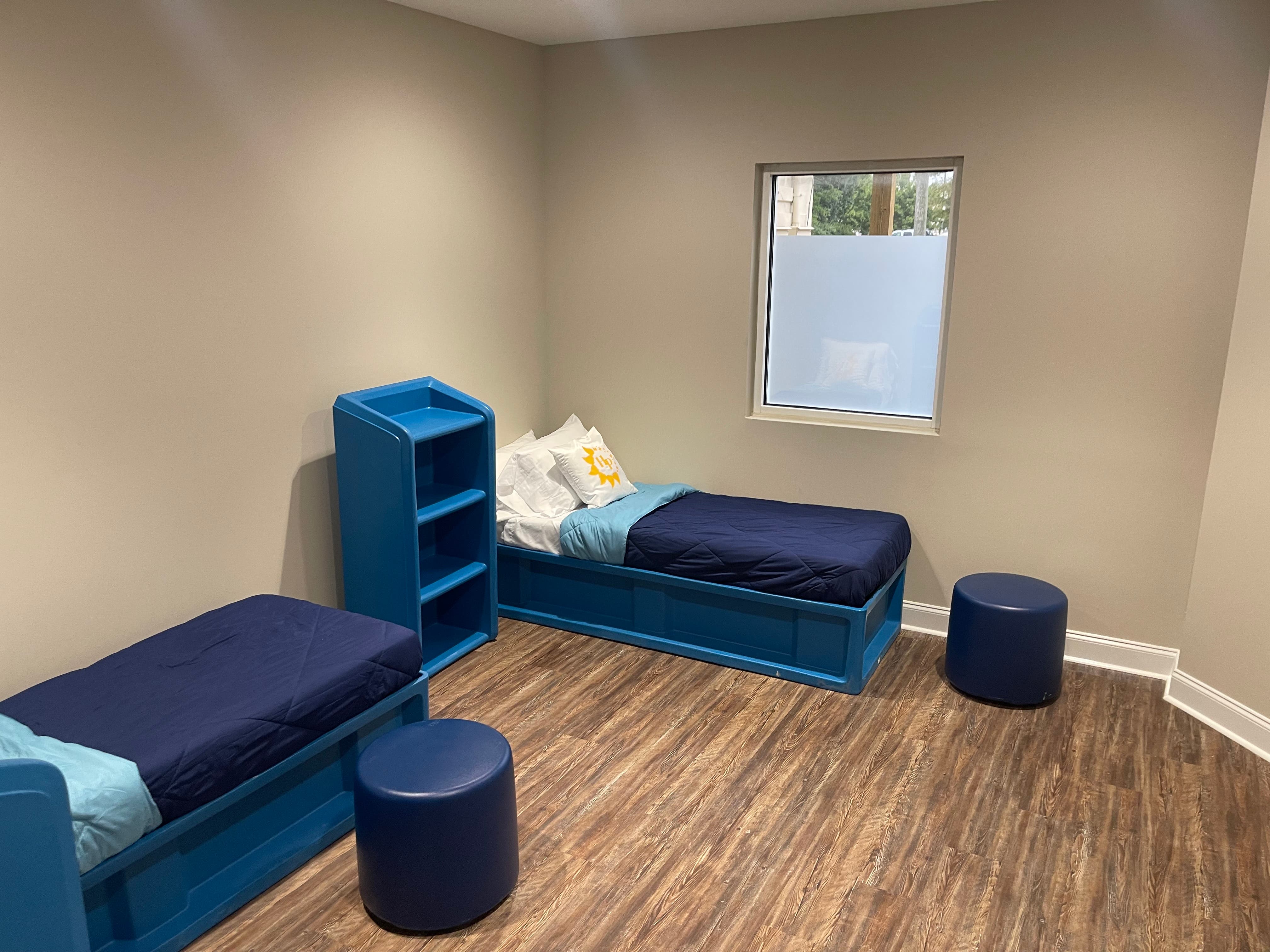
Every amenity and piece of furniture in the facility is deliberate and ligature-resistant — from shower fixtures to shatter-proof coverings for televisions.
In the sitting rooms, windows are blurred just enough for those inside to have natural light and see outside while obscuring the view from the outside to provide a sense of privacy.
Hope Pointe even offers a smoking area not unlike a bar patio, complete with string lights and wooden rocking chairs with built-in ashtrays. This, Garza said, provides a sense of normalcy for those seeking help, along with offering a space for relaxed discussion during someone's toughest moments.
"A lot of [the stigma] has to do with how a facility looks," he said. "You always think of psych wards and a lockdown unit. We all have those images in our head, so the way we designed the building was in line with a lot of the visual art on the walls, the way it looks, the way it feels. It should feel very natural that someone can go seek help and doesn't feel like something is wrong with them, but that they are going to do something."
Hope Pointe focuses on short-term care, with 16 medical chairs available in the aforementioned sitting rooms for temporary observation and four beds for extended observation.
Construction on the next phase of the facility is set to begin in the next 30-45 days, Garza said, which will see Hope Pointe expand from four beds to 12 beds. While temporary or extended on-site care is limited to those 18 and older, Garza stressed that no one, regardless of age or ability to pay, will ever be denied services — even if it is as simple as triage and connecting them with the appropriate resources.
"Anybody in crisis can walk through that door," he said. "They may not meet the criteria by our admission, but they're still going to get loved on a little bit. ... Our job is to buy them some time to create a treatment plan ... We do accept insurance, but if they don't have insurance and no way to pay, we have a sliding scale fee and you pay what you can."
Stays can last anywhere from a few hours to a week, but Garza also said a focus is placed on follow-ups with clients after they leave.
Indeed, the central mission of Hope Pointe is to help those in crisis. However, officials are quick to point out that the effects of this type of mental health crisis center extend far past the individual client.
Indian Rivers Behavioral Health CEO Karen Jones explained that Hope Pointe also aims to make a difference for and, along with, a host of community partners in an effort to improve services across the region.
"This is a place that anyone can come at any time, but this is a community project and we want all of our community partners to be a part of this," she said. "It's a community problem, so it needs community-based solutions. We can't solve all these issues alone."
Former Tuscaloosa County Sheriff Ted Sexton now serves as executive director of the Phoenix House — a state-certified drug and alcohol treatment facility in Tuscaloosa that offers a transitional level of care with the goal of stabilizing the individual to reduce the triggers that may result in a relapse.
Sexton said the nonprofit has a valued partnership with Indian Rivers, with Hope Pointe being able to serve as a detox center for those with addiction issues who may require medical care and observation before moving into a long-term treatment program through The Phoenix House.
"We are very fortunate in this region of the state to have a crisis center now," Sexton told Patch. "It's been long needed to address mental health issues for persons in crisis. We have had an outstanding partnership with Indian Rivers and look forward to continuing that and being able to provide treatment services for those who need it. This will take pressure off the jails and hospitals and, in our case, we will be there on the follow-up side and take them from crisis to stable. We're looking forward to it."
Garza then sang the praises and proactive approach of DCH Health System CEO Katrina Keefer, who has reached out to establish a positive working relationship with a facility that promises to alleviate some of the strain placed on emergency rooms for the hospital system.
While much is discussed about the impact on jail populations when mental health crisis resources are unavailable, a comparable strain is placed on emergency rooms that often end up as the last resort for someone in the grips of a crisis.
"The default for individuals in behavioral crisis has always been the emergency room, which for many isn’t medically necessary," Keefer told Patch. "With Hope Pointe, we will have a safe alternative for law enforcement officials or concerned family members to take those in crisis, or for self-identified individuals to seek assistance. By working together, our community will be better served, and we have the potential to be a blueprint for other communities seeking solutions to these complex problems."
Indeed, officials say the positive impacts on law enforcement and the court system can not be understated.
Tuscaloosa County Probate Judge Rob Robertson, whose office handles mental health involuntary commitment cases, has been outspoken about the need for expanded services in the county as a way to properly address those suffering from mental health issues and left with no options apart from a hospital or the county jail.
"We welcome any additional assistance to the mental health needs in this community because we are in a state of desperation," Robertson told Patch. "We're looking forward to seeing what it can do and hopeful this will help meet a big need in the community."
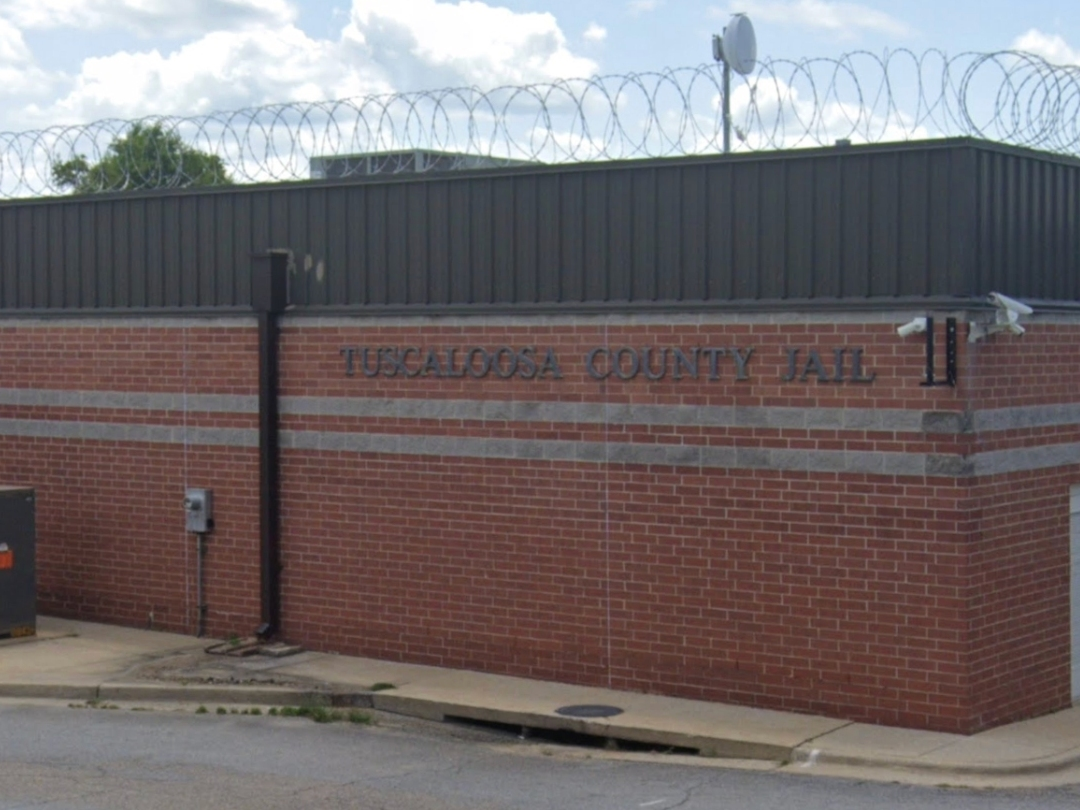
On the law enforcement side, officials intend for Hope Pointe to provide a compassionate alternative for trained mental health officers, while also helping to address an ever-growing population at the Tuscaloosa County Jail — a facility that is currently being expanded to meet demand.
"[The Tuscaloosa County Sheriff's Office] is very pleased with the opening of the Hope Pointe crisis center," Sheriff Ron Abernathy told Patch. "We see this as a great opportunity to address the desperate need for mental health services in the Tuscaloosa County area. I expect this program will help to reduce the number of people in jail who are suffering mental health problems as well as provide our officers with another tool to help our citizens."
While Hope Pointe is sure to be a valuable resource for the sheriff's office, Garza said the facility's location in downtown Tuscaloosa will likely result in a large number of college students coming through the door.
What's more, Garza said Hope Pointe provides a separate entrance for law enforcement, with the goal of completing the transfer and getting the officer back on the street within 15-20 minutes.
Tuscaloosa Police Chief Brent Blankley expressed his gratitude ahead of Hope Pointe's official opening, saying its services are sure to save lives and leave a lasting impact on many who find support and care at the facility.
"The reality is that law enforcement officers often serve as first responders to mental health crises — a role that demands not just their law enforcement expertise but also a deep understanding of mental health issues," Blankley told Patch. "Having this specialized resource staffed by professionals will be highly beneficial to officers."
Looking ahead, Indian Rivers CEO Karen Jones said she has been working in mental health for 25 years and Hope Pointe is the single-biggest new development of her entire career.
She expressed hopes that a ribbon-cutting on the new addition to the facility on Greensboro Avenue will be held by December 2024, with the project going out for bid this week.
Jones went on to say that Hope Pointe in two years plans to apply to become a 988 call center in order to serve as the crisis and suicide hotline for the entire West Alabama region.
But while there may be a bunch of moving parts and lofty ambitions for the future, the mission for Hope Pointe is simple and singular.
"We really believe this is going to be able to save lives," she said.
Have a news tip or suggestion on how I can improve Tuscaloosa Patch? Maybe you're interested in having your business become one of the latest sponsors for Tuscaloosa Patch? Email all inquiries to me at ryan.phillips@patch.com
Get more local news delivered straight to your inbox. Sign up for free Patch newsletters and alerts.