Crime & Safety
Jury Deadlocks On Rape Charge After Acquitting Suspect In Case Involving Mentally Disabled Woman
Here's our extensive coverage of a rape and sodomy trial of a Trussville man accused of sexually assaulting a mentally disabled woman.


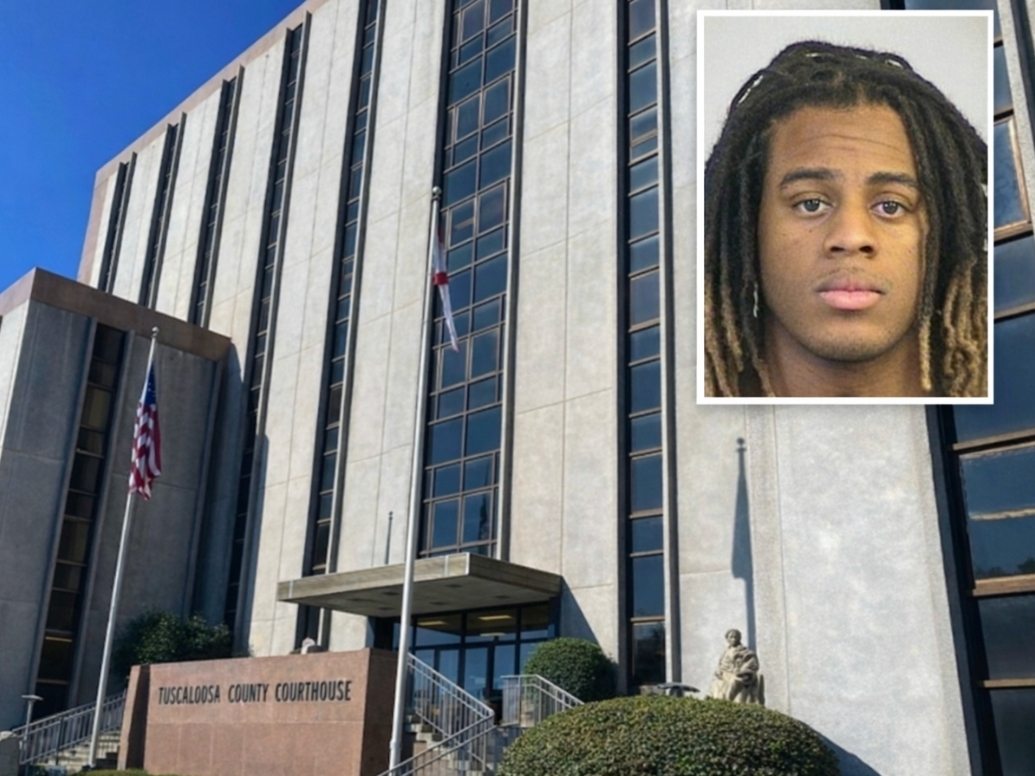
TUSCALOOSA, AL — A Trussville man accused of raping an intellectually disabled woman in Tuscaloosa remains free after a Tuscaloosa County jury on Friday returned three not guilty verdicts and deadlocked on the remaining felony charge.
Click here to subscribe to our free daily newsletter and breaking news alerts.
Jury selection began Monday and the trial lasted through the week for Christopher Derrick Walker, who stood accused of two counts of first-degree rape and two counts of first-degree sodomy following the incident in February 2023.
Find out what's happening in Tuscaloosafor free with the latest updates from Patch.
The jury, which consisted of five White men, four Black men, two Black women and one White woman, began deliberations just after 4 p.m. Thursday, which carried on into Friday morning.
The jury was deadlocked on the count of first-degree rape (consent), resulting in a mistrial, while returning not guilty verdicts on first-degree rape regarding force and two counts of sodomy.
Find out what's happening in Tuscaloosafor free with the latest updates from Patch.
Following the verdicts, jurors gathered to give feedback to attorneys and investigators and said there was only one of the 12 jurors who refused to convict Walker on first-degree rape (consent).
"He pulled out his lunch, pulled out his phone and said he wasn't changing his mind," one juror recalled.
THE TRIAL
Jurors heard from numerous witnesses beginning on Tuesday after the prosecution opened the trial by arguing that Walker forcibly raped the victim, who Tuscaloosa Patch has chosen not to name in this coverage.
Assistant District Attorney Thomas Marshall led the prosecution for the state and pointed out during his opening arguments that the victim's OB-GYN had never seen injuries like those suffered by the victim — injuries she still suffers from today, along with a diagnosis of Post-Traumatic Stress Disorder (PTSD).
Birmingham attorneys Rod Walls and Elizabeth Hunter of Elizabeth Hunter & Associates represented Walker at trial and opened the proceedings by insisting the victim consented to having sex with his client.
Walls declined to comment following the verdicts on Friday, due to the remaining charge that is still pending.
Walker, a resident of Trussville, was a 21-year-old student at UAB at the time of his arrest.
Walls insisted that the victim, now 27 years old, made first contact with Walker on the Hily dating app a few days before the alleged incident occurred at her apartment.
The conversations then moved to private messages on Snapchat from Feb. 19-24, 2023.
According to a copy of the original incident report obtained by Tuscaloosa Patch, the victim's mother reported on Feb. 24, 2023, that her daughter had been sexually assaulted at her apartment on 12th Street near Bryant-Denny Stadium.
The victim's mother told police her daughter had an intellectual disability and she has legal guardianship over her — facts established throughout the trial, particularly with regards to the victim's ability to consent to sex while being under a legal guardianship.
During the trial, the victim's mother said that while her daughter suffers from a myriad of conditions such as anxiety, ADHD and bipolar disorder, she is also diagnosed with Houge-Janssens syndrome, a rare genetic disorder.
Her parents also testified that while she was living alone at the time of the incident, she previously had a roommate who had abruptly moved out when her "panic attacks" had become too much to deal with.
She was described throughout the trial as "childlike" or having "childlike tendencies."
The initial report said both the woman and her mother wanted to press charges against the suspect, who was unknown at the time and who had previously told the victim to not call the police.
Investigators later determined that Walker had driven from Birmingham the evening of Feb. 21, 2023 and met the victim at her apartment.
Walker later admitted to investigators that he had sexual intercourse with the victim after she advised him of her disability. He also said he knew the victim was a virgin but was "okay with having sex" and was into “kinky” things.
Walker also told police that during the encounter at the apartment, the victim slapped him in the face, pulled his hair, bit his shoulder and told him to stop.
However, Walker later testified that he believed the slapping, hair pulling, and biting were part of role play.
Walker later stated during his interview at the Tuscaloosa Violent Crimes Unit that after he left, he realized what he did was wrong and also admitted to asking the victim not to call the police.
When the trial began, Marshall established that the key issues in the case rested on Walker forcing the victim to have sex with him and the victim's intellectual capacity to consent — both facts reflected in the aforementioned charges.
Walls argued from the start that while the victim did have a diagnosed intellectual disability, her IQ was in the 80s and she would have been able to consent.
In fact, during his closing arguments on Thursday, Walls said the prosecution was working to establish a narrative instead of considering facts of the case that he believed showed the victim willingly invited Walker to her apartment and consented to have sex with him.
Walls pointed out specific parts of the conversations on Snapchat between Walker and the victim where the two discussed "making out" and various other related topics.
Jurors giving feedback after handing down the verdict said they did not view the conversations as overtly sexual but also said they wished the conversations and timelines had been made more clear during trial.
But Walls primarily focused on the fact the victim did not tell Walker she was intellectually disabled and another message where Walker asked her if she could consent, to which she said she could.
Conversely, Marshall and the prosecution used this exchange to show that Walker had apprehensions early on and still drove to Tuscaloosa to meet the woman.
The victim's mother testified that a couple of days following the initial encounter, she was called by police after her daughter began to have a "panic attack."
After taking her daughter to DCH's hospital in Northport, the victim then asked her to go to UAB Hospital in Birmingham, where most of her regular doctors are.
"There was something off," the mother testified. "She seemed hopeless and frozen in fear."
Several medical experts testified that the victim was seen by a sexual assault nurse examiner (SANE), who testified during trial that the victim told her Walker made comments like "Who's daddy's little girl who is about to be a big girl?" and "oh look, you're bleeding. You just lost your v-card."
The victim also told the SANE nurse and investigators that she tried to fight off Walker by pulling at his dreads, along with slapping and biting him. Investigators pointed out that she was proud when discussing how she defended herself.
Dr. Taylor Preston, the victim's psychiatrist at UAB, testified under cross-examination by the defense that she did not have the capacity to consent to sexual activity or have a full understanding of the ramifications of doing so.
Walls showed the jury and Dr. Preston a poster depicting the private Snapchat messages between the victim and Walker, before then saying that the victim was prescribed birth control and initially did not want to press charges.
"Just being able to say 'I consent' doesn't mean they understand it," Dr. Preston replied.
This testimony lined up with insight provided on the stand from one of the victim's former teachers at the Capitol School, who said she "mimicked behavior."
The victim's OB-GYN, Dr. Deann M. Green, took the stand after Dr. Preston and testified about conducting a follow-up on the woman after the alleged sexual assault occurred.
Dr. Green told the jury that the victim was not sexually active but was suffering from physical trauma consistent with sexual assault, while also being diagnosed with gonorrhea.
The most harrowing testimony during a week of witnesses taking the stand came on the second day of the trial, beginning with former Tuscaloosa Violent Crimes Unit investigator Grace Adkins — the first investigator to speak with the woman.
Adkins traveled to UAB Hospital after being notified of a possible sexual assault and described the woman as "afraid, intimidated and childlike."
The jury heard the audio of Adkins' interview with the victim, which included her telling the investigator about Walker asking her if she could consent.
"I was like 'yes and no,'" she told Adkins.
The victim then told Adkins that Walker responded by saying "at least you said yes," before expressing fear for her safety and that of her family if she pressed charges.
Adkins maintained a close relationship with the victim throughout the legal process moving forward and told her during the interview that if she ever had to appear in court, Adkins would be on the front row so she wouldn't be scared.
True to her word, Adkins sat on the front row with a smile on her face holding the woman's backpack when she took the stand on Wednesday.
The victim was visibly nervous when she entered the courtroom wearing a light blue Disney jacket and Air Jordan sneakers. A few minutes into her testimony, she also asked that she be allowed to wear her headphones.
She testified that Walker raped her in her bedroom, sensory safe room and the hallway of her apartment. She also told the jury, which was corroborated by evidence obtained by the Tuscaloosa Violent Crimes Unit, that Walker was at her apartment from around 7 p.m. until he left around 11 p.m.
"I wasn't planning to meet to have sex," she said. "I just wanted to hang out, watch TV and maybe play my [Nintendo] Wii."
After saying she forgot to tell Walker that she had an intellectual disability, she became visibly distraught and was briefly excused after bursting into tears.
The victim returned to the stand, however, and told the jury under cross-examination by the defense that Walker had threatened her mother.
"He had a knife to my throat while I was calling her," she said, before mentioning that Walker had pushed her onto her bed and forced her to take her pants off.
The testimony about the knife was the only time it was mentioned and jurors giving post-trial feedback said this raised serious credibility issues.
"I felt like I couldn't trust her after that," one juror said.
As the victim was led out of the courtroom at the conclusion of her testimony, she began to cry aloud, saying "I want my mommy."
Day three of testimony saw lead investigator Nathan McCollum, formerly of the Tuscaloosa Violent Crimes Unit, take the stand, where he discussed interviewing Walker after he was pulled out of a classroom at UAB and taken into custody
McCollum said Walker told him he thought the victim was a schoolteacher, when in reality, she worked as a teacher's aide for Arts n' Autism — an after school program that provides supervised visual and performing arts activities for children who have difficulty utilizing existing after school or recreation programs.
An initial inconsistency during the interview came when Walker told McCollum he had left the victim's apartment around 7 p.m. the night of the incident.
McCollum pointed out, though, that tag-reading cameras pinpointed Walker's movements and showed him arriving in Tuscaloosa around 7:30 p.m. and leaving around 11:30 p.m.
During the interview, as was reflected in the incident report, Walker also told McCollum that he "felt guilty" and like he had "made a mistake" after having sex with the woman.
Walker was also called to the stand by the defense on Thursday and said he began interacting with the victim when she "swipped left" on his profile on the Hily dating app.
He told the jury she commented that she "liked my dreads and my eyes," and after she sent him a picture of herself, he told her she "was beautiful."
Walker also said she told him "I want to give you a hug and play with your dreads."
He then testified that he told her he would "respect her space" if she squirmed or felt uncomfortable during their first interaction.
On the stand, Walker recalled arriving to the victim's apartment, being invited up and being told to duck under the Ring doorbell camera so her mother would not see him.
He testified that they had sex more than once but "things got weird" and "things got too kinky," before mentioning that she offered him snacks in an attempt to get him to stay.
Under cross-examination by the prosecution, Walker was asked about his knowledge of the victim's condition, to which he responded "she told me she was in therapy."
Indeed, the communications shared with the jury showed the victim telling Walker that she suffered from ADHD, bipolar disorder, depression and anxiety.
Walker was caught in a lie by the prosecution at one point, however, when he testified that he never asked her if she was disabled.
Marshall then pointed out a message where Walker told the victim, "Be honest, are [sic] disabled or no, just wondering."
Walker also told the victim, "I don't have a problem with that but that would be considered [rape]."
During closing arguments, Assistant District Attorney Leslie LaTurno told the jury that Walker was questioning the woman's intellectual capacity before he even met her in person for the first time.
"It is insulting that we have been arguing for the last few days if [the victim] is disabled," she said. "The defendant stole a lot of things from [the victim]: He took her virginity, he took her innocence and he took her sense of safety. But he gave her PTSD, a hematoma and gonorrhea."
Walls delivered the closing argument for the defense and insisted that the prosecution had created a narrative that established two different versions of the victim.
Walls also worked to discredit the victim's testimony by focusing on her mentioning being threatened with a knife — an aspect of the case that was never again mentioned during the hours of testimony by anyone other than the victim.
Following the verdict, as previously mentioned, this would be crucial in the jury reaching its decisions on the four felony charges.
Standing around outside of the courtroom, jurors giving feedback said they agreed that the victim was mentally incapacitated and they also agreed that the woman inviting Walker over did not appear to be for a sexual act.
Still, jurors felt like the prosecution "dumbed down" the victim and that her testimony felt "coached."
"We were never gonna get past the knife [comment]," one juror said.
It is unclear at this time if the Tuscaloosa County District Attorney's Office plans to retry the first-degree rape (consent) charge.
Have a news tip or suggestion on how I can improve Tuscaloosa Patch? Maybe you're interested in having your business become one of the latest sponsors for Tuscaloosa Patch? Email all inquiries to me at ryan.phillips@patch.com
Get more local news delivered straight to your inbox. Sign up for free Patch newsletters and alerts.