Crime & Safety
Kai Spears, NYT Defamation Trial Slows Amid Debate Over Admissibility Of Newspaper's Actions
Here's our latest in-depth courtroom coverage from the defamation case brought against the New York Times by a former UA basketball player.


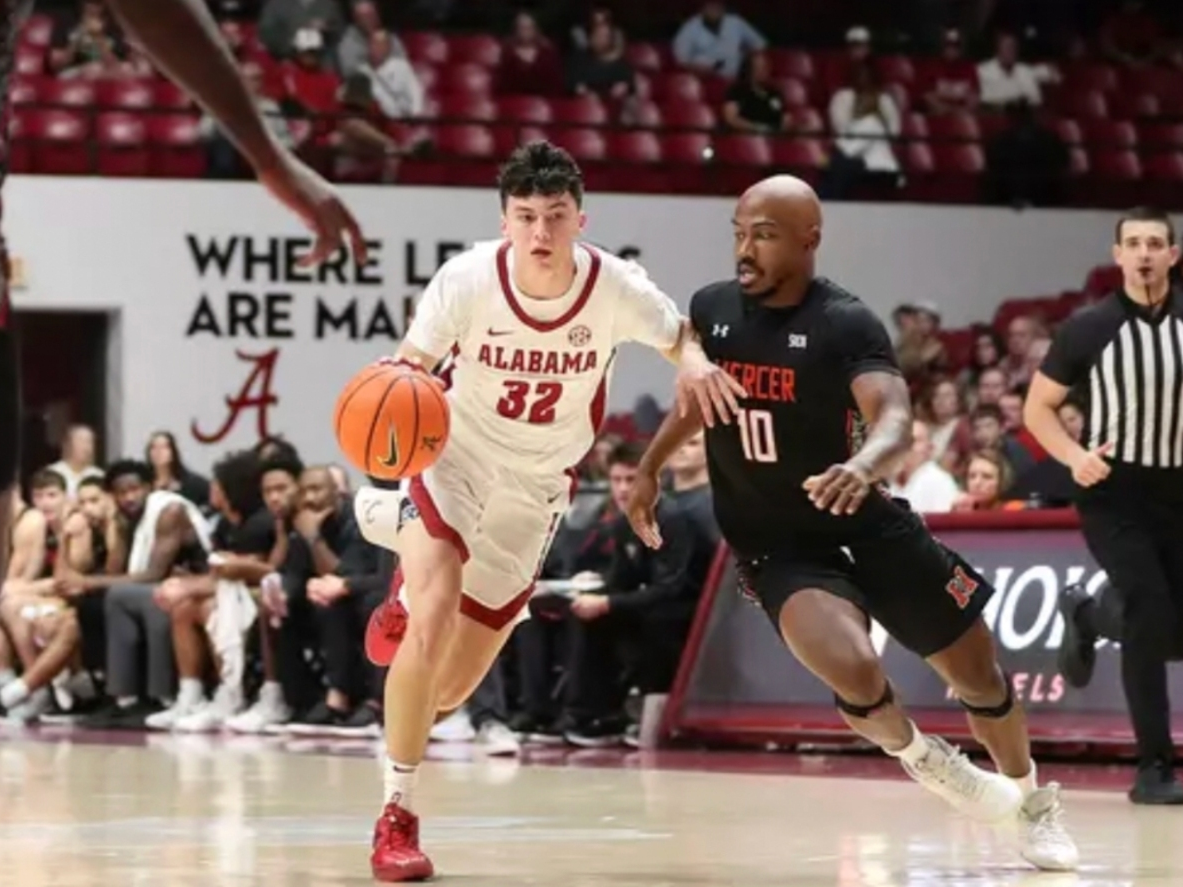
TUSCALOOSA, AL — Testimony briefly resumed Tuesday in the defamation trial against the New York Times brought by a former University of Alabama basketball player, before the pace of proceedings slowed as attorneys debated legal minutia relating to the behavior of the newspaper's staff and its admissibility as evidence for the jury to consider.
Click here to subscribe to our free daily newsletter and breaking news alerts.
Patch reported on Monday when jurors heard opening statements and initial testimony as the defamation case brought against the newspaper by former Crimson Tide basketball player Kai Spears began in federal court.
Find out what's happening in Tuscaloosafor free with the latest updates from Patch.
Find out what's happening in Tuscaloosafor free with the latest updates from Patch.
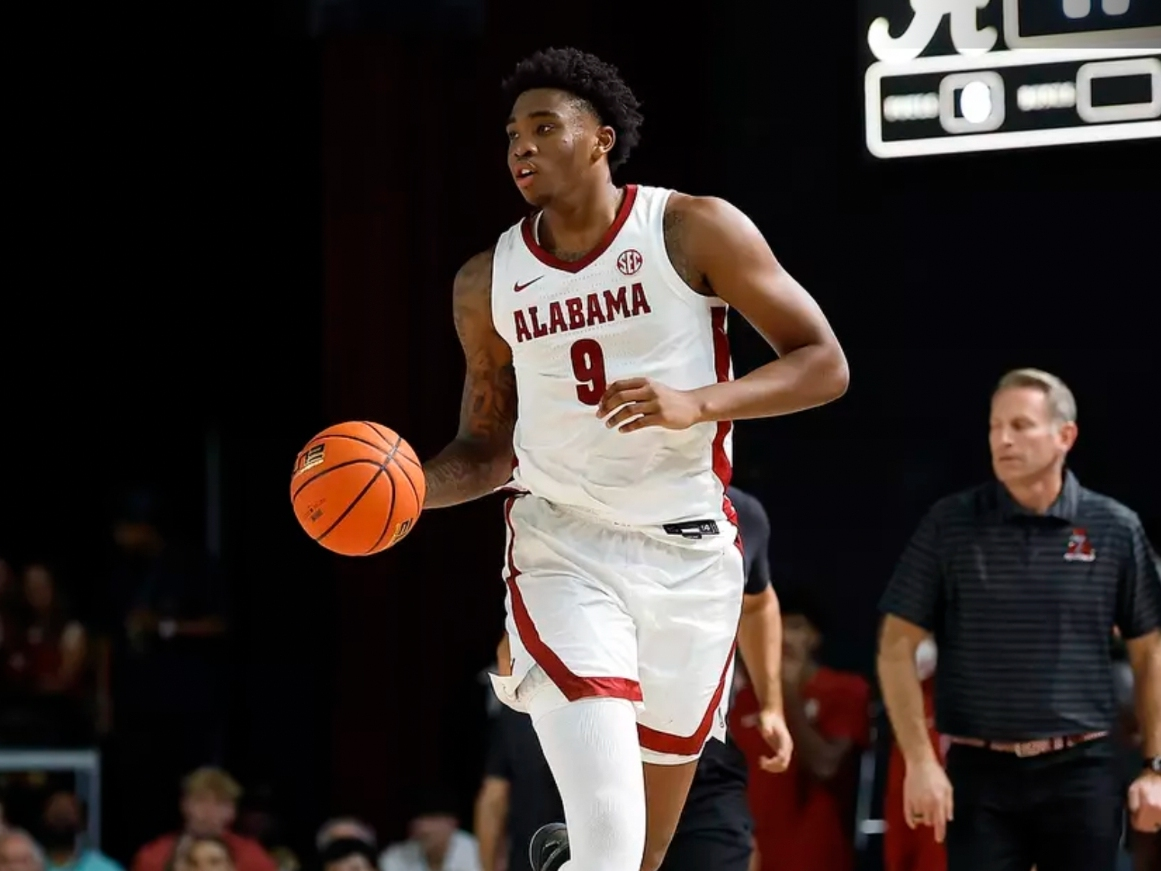
Spears was a walk-on on the basketball team at the time of the shooting and sued the News York Times after the article incorrectly reported that he was in former Alabama basketball standout and eventual No. 2 overall pick in the NBA Draft Brandon Miller's vehicle, and at the scene of a fatal shooting on Grace Street on Jan. 15, 2023.
The title of the initial article refers to the fact that Miller's vehicle, with Crimson Tide basketball manager Cooper Lee in the passenger seat and Miller behind the wheel, was hit several times during the fatal shooting near the Tuscaloosa Strip.
The shootout resulted in the death of 23-year-old Birmingham mother Jamea Harris, before the investigation then saw former Alabama basketball player Darius Miles and his childhood friend Michael Lynn Davis both charged with capital murder.
By all accounts, Spears was several blocks away in another vehicle when the shots rang out.
Slow Goings On Day Two
As Patch previously reported, the first day of the trial concluded with the testimony of Mike Abrams, the deputy editor for Trust at the New York Times.
Abrams took the stand to open Tuesday's proceedings, as talk continued about the use of anonymous sources and the newspaper's policy governing the practice.
Extensive courtroom discussion on Monday and on into Tuesday morning focused on the anonymous sources used by Witz to inform his initial story.
The lone primary source for the story, whom Witz met with at an unspecified Tuscaloosa office, was granted anonymity by the newspaper and has been exclusively referred to as Source A, while there has also been some mention of a second source known only as Source B.
Jurors heard Monday that Source A also had their own source or sources, whose identity or identities were never disclosed to the New York Times prior to the publication of the article on March 15, 2023.
Abrams testified Tuesday that while Source B was not relied upon for the initial story, the source was nonetheless granted anonymity as it related to the newspaper's attempt to verify the claims that Spears was in Miller's car at the time of the shooting.
He also testified that Witz's first conversation with Source B occurred the day before the article in question was printed.
To that end, text messages were discussed that showed Witz attempting to set up a meeting with Source B in downtown Tuscaloosa at potential locations such as Avenue Pub and Session.
Abrams said under oath that Witz also met with Source B at an office in Tuscaloosa for roughly an hour on March 14 and testified that he indeed knew the identity of the anonymous source.
During this conversation, Abrams said Source B never mentioned Spears to Witz. Instead, the first mention of Spears to Witz allegedly came from Source A on the morning of March 15, 2023 — the day the story was published.
Before the article was first posted online and later in print, the jury was told that Witz had submitted an email request to the University of Alabama athletic department on March 12 asking for a personal interview with Crimson Tide basketball coach Nate Oats.
Evidence presented Tuesday showed Witz was informed on March 14 to email any questions to the UA athletic staff.
Abrams testified that Witz never sent over questions before making the drive to Birmingham on March 15 to cover the Crimson Tide's first round NCAA Tournament game.
It was in Legacy Arena later that day that Witz approached both Spears and Miller during an open locker room session to inquire about the "sensitive information" he had gathered, in addition to once again requesting a personal meeting with Oats that was rebuffed by UA athletic staff.
"The way I read the [March 14 email response from UA], is [Witz] could send his questions and might get some answers back," Abrams said, underscoring the perceived uncertainty the newspaper believed it faced when trying to get to the truth about who else was in the vehicle with Miller.
It was around this time on Tuesday that proceedings ground to a halt and the eight-person jury was excused for what would turn out to be the rest of the day.
Actions, Before & After
The remainder of Tuesday's proceedings was dominated by a courtroom debate following a trial brief filed Monday night by attorneys for the New York Times that laid out the legal standards they argue should govern Spears’ defamation case.
The 25-page filing emphasized that Spears bears the burden of proving that the newspaper was, at the very least, negligent when it published the article and the reporting in question was "materially false."
Lawyers for the newspaper argued that under Alabama law, a private-figure plaintiff must show that a false and defamatory statement was communicated to a third party and that the publisher acted negligently when doing so.
The New York Times also argued that any alleged defamatory implication carries a higher burden of proof, requiring evidence that the publisher knew or recklessly disregarded the falsity of published claims, while deliberately communicating the defamatory information or recklessly disregarding the likelihood that readers might believe it.
For damages, the newspaper's attorneys argue Spears may recover actual damages under the lower negligence standard but would have to prove constitutional “actual malice” by clear and convincing evidence to obtain presumed damages — legal awards granted to a plaintiff without requiring proof of actual harm or specific financial loss.
This is where most of the debate focused for the rest of the day Tuesday as Washington, D.C. attorney Emmy Parsons, of K Street's Ballard Spahr LLP, answered questions on behalf of the newspaper from U.S. District Court Judge Annemarie Carney Axon.
During this extensive back-and-forth, Parsons pointed out that the New York Times does not "retract" stories unless they are proven to be wholly inaccurate. In most cases, she said the policy of the newspaper is to correct a story and make note of such to rectify any unintentional inaccuracies.
"It's their version of how they make right on an error," Parsons said.
Patch previously reported that while the New York Times updated its initial story on March 15 following each of the three new denials that Spears had been in Miller's car, an official correction was not issued until the following June.
Parsons also said the newspaper, after confirming that its information was wrong, changed the headline of the story to read "A Shooting That Ensnared Alabama Players Could Have Been Deadlier," while also removing any mention of Spears other than in the correction at the top of the story.
She then said that under Alabama law, interpreted by the New York Times' legal team, the updated article constituted a retraction.
At this point in the proceedings and out of sight of the jury, talk turned to the admissibility of the actions taken by the New York Times staff following the publication of the story.
Judge Axon weighed in when it was mentioned that not admitting the updates into evidence for the jury to consider could likely reduce any damages paid out to Spears if the jury rules in his favor.
"You're not evidentiary Santa Claus," Judge Axon told Parsons. "That benefits [the New York Times]."
Still, attorneys for the New York Times argued that after the last update was posted on March 16, 2023, any other information as to how the staff handled the story was irrelevant as it related to the evidence that would be shown to the jury.
Judge Axon then reminded the newspaper's legal team that if Witz testifies that he "had a good idea of where information was coming from" based on the perceived credibility of Source A, then attorneys for Spears would be able to ask him potentially damning questions for the defense's case.
She went on to explain that if this occurred with Witz on the stand, then attorneys for Spears could then follow up under cross-examination to ask the reporter "Were you right?" and, if he answers "No," could then be asked "How did you find out?"
Debate over the admissibility of the actions of the newspaper after the article was published persisted for the rest of the afternoon and no ruling had been issued as of the publication of this story.
The trial will resume Wednesday morning at the Richard Shelby Federal Building and Courthouse.
Have a news tip or suggestion on how I can improve Tuscaloosa Patch? Maybe you're interested in having your business become one of the latest sponsors for Tuscaloosa Patch? Email all inquiries to me at ryan.phillips@patch.com.
Get more local news delivered straight to your inbox. Sign up for free Patch newsletters and alerts.