Sports
Living Legend: Untold Stories Of A Tuscaloosa Hometown Hero
Ahead of serving as one of the grand marshals in Tuscaloosa's Christmas parade, here's the story of hometown hero Clell Hobson.


"Football doesn't build character, it reveals character"
- Marv Levy, former Buffalo Bills head coach
TUSCUMBIA, ALABAMA — Nov. 12 , 1948

The grass field at Deshler Stadium was marred in fresh cleat divots and reduced to a muddy soup by sheets of November rain.
Find out what's happening in Tuscaloosafor free with the latest updates from Patch.
An admirable contingency of Tuscaloosa High School fans made the two-hour drive to Colbert County and shivered in the bleachers watching their Black Bears take on the Deshler Tigers for the 7-1 team's last game against an Alabama team for the 1948 season before closing out the year in Denny Stadium against another powerhouse school from St. Louis.
It was also a brutish, low-scoring affair. The cold rain was harsh and the Black Bears found themselves down 6-0 as time ticked off the clock in the first half.
Find out what's happening in Tuscaloosafor free with the latest updates from Patch.
Few will recall, but there was indeed a time before $1,000 football helmets and unnecessary roughness penalties, when passing, even on dry nights, was viewed either as a novelty or an act of desperation. In those bygone days, teams relied on their shoulders and grit, not finesse and trick coaching.
Still, the Black Bear Band was documented as being undeterred when it took the field at Deshler to perform one of its memorable halftime shows under the direction of the legendary Colonel Carleton K. Butler — also the band director for the University of Alabama's Million Dollar Band from 1935 until 1969.
There was plenty of Tuscaloosa High school spirit on hand that night, all things considered.
Going into the half, though, the Black Bears star quarterback Clell Hobson was struggling to get a lethargic offense going. Indeed, in the half's final seconds before the 72-piece band took the field, Tuscaloosa High would get its first points of the night, but only after Hobson's pass to teammate Joe Barksdale was picked off by Deshler's Bobby McKinney.
It was a big momentum swing, despite starting as a turnover.
Funny enough, the Deshler defender made the eternally questionable decision to try and run the ball out of the end zone, but was slammed to the mud by Tuscaloosa High's Sam Hay for a safety to end the first half — two points that would ultimately decide the game.
One reporter noted the staunch defensive play of both teams, while also mentioning that fumbles were numerous on both sides as the pair of elite teams struggled to hold on to a soaked football.
But Clell Hobson was good on both sides of the ball, even on a team with several future collegiate stars.
Damn good, in fact.
And as should be expected, it would be the senior quarterback who further solidified his legend as a hometown hero in leading an inspired second-half comeback on the road to get the folks back home in Tuscaloosa excited.
Tom Little of the Tuscaloosa News wrote:
"Hobson, who was playing his last game against Alabama high school competition, again stood out as the difference between the two clubs. His running in the second half was nothing short of sensational, and while the rain hampered the passing, he managed to get off two nice heaves, one leading to a touchdown."
The Black Bears ultimately grabbed a 15-13 lead thanks to Hobson's second-half heroics, but Deshler wasn't about to surrender at home without a fight and drove the field on what the Tigers intended to be a game-winning drive.
After blocking a Tuscaloosa High punt attempt, the waterlogged Deshler Tigers rambled quickly down the field in a desperate push to close out the game.
At this point in the story ... you shouldn't be surprised at what happened next.
Hobson, playing defensive back, intercepted a sloppy Deshler pass in the final seconds to secure the win for the Black Bears and legendary Tuscaloosa High coach Frank "Swede" Kendall.
In a day before TikTok and hordes of cameras on the sidelines, the win was relegated to nothing more than black and white newsprint.
But we're still talking about it three-quarters of a century later, right?
It was a harrowing win — one that no doubt could be considered one of the most exciting of any era for a school from Tuscaloosa if folks cared enough to remember it.
But like so much high school football mythology, it exists as just one of innumerable fleeting moments fading off into history.
On the other hand, it's also just a blip in nearly a century of triumphs for Clell Hobson.
At 91 years old as of the publication of this story, Hobson is doing well according to his son Butch — a former Major League Baseball third baseman and one-time manager of the Boston Red Sox.
He currently resides in a nursing home in Marengo County, with his son living in nearby Demopolis during the baseball off-season. Despite recent health scares, Butch said, his father made a miraculous recovery and still reads the newspaper every day without glasses.
Yes, it's been a full life for Clell Hobson, from his days as a stand-out for the University of Alabama in both baseball and football to his most recent distinction of being named one of four grand marshals for the 2022 West Alabama Christmas Parade.
"It is certainly a fun time each year and for the selection committee to learn about all the people doing good works throughout their lives in our community," parade chair Becky Booker told Patch following the announcement. "The individuals named as Grand Marshals are typically humbled to be honored and it is a joy for them to be recognized in this way."
Butch Hobson concurred, telling Patch that his father was elated to be part of the parade and to be joined by his family during the holidays. While the love of his life, Polly, whom he married on April 26, 1950 and became the mother of his three children, passed away in the 1990s, Butch Hobson said his father would find his soulmate Anne Patton while living at Capstone Village in Tuscaloosa.
Butch Hobson pledged to do all he can to ensure Ms. Anne is with his father when he is serving as the parade's grand marshal.
So, in the spirit of Clell Hobson being celebrated by Tuscaloosa during the holidays, we thought it appropriate to tell the story of this hometown hero in more detail than ever before.
BIRTH OF A LEGACY
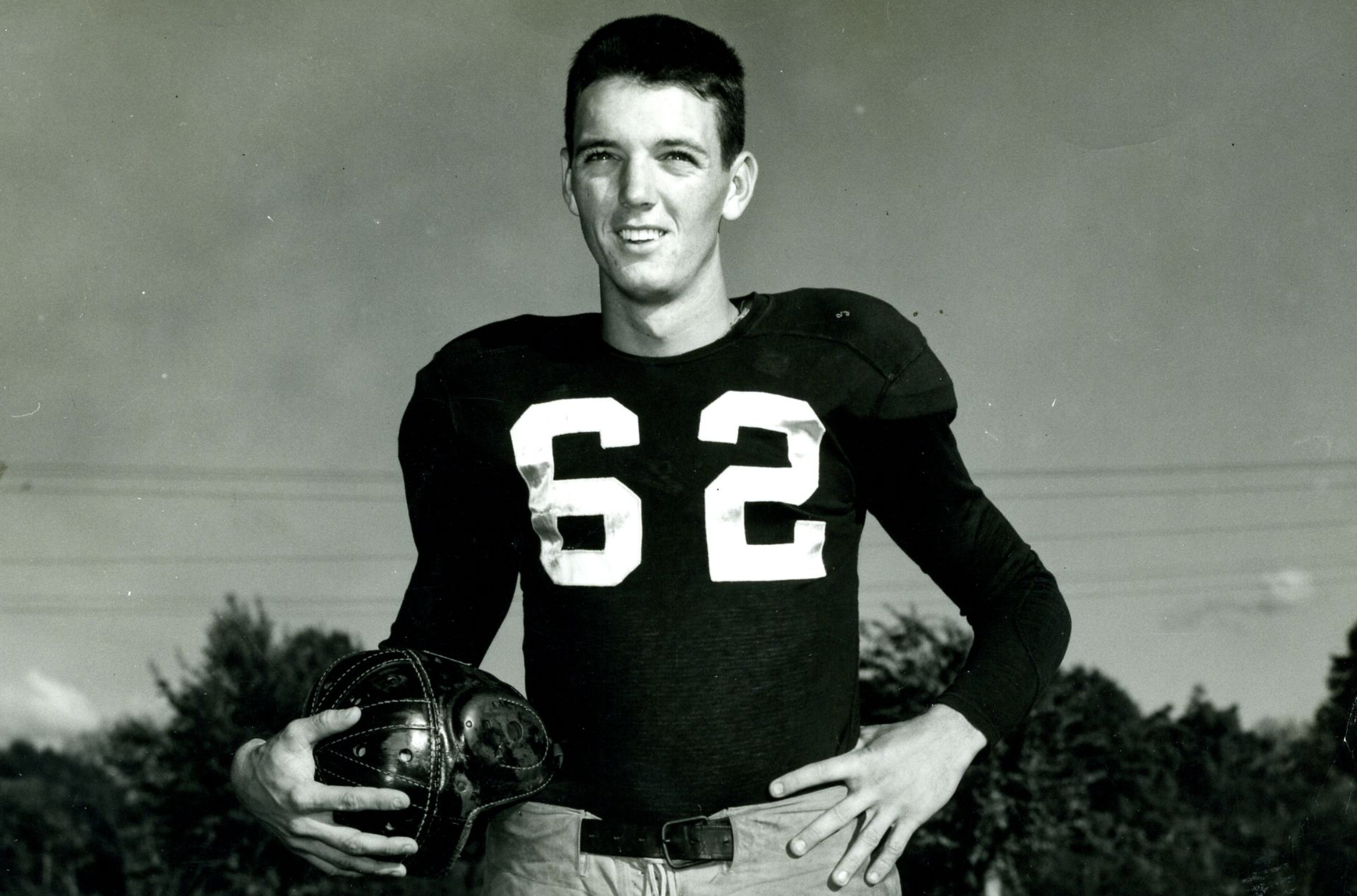
Paul W. Bryant Museum Archives
Clell Lavern "Butch" Hobson, Sr. was born on Nov. 28, 1930 in Tuscaloosa to Vernon and Irene Hobson.
But if you've made it this far in the story, you already know his oldest son simply as Butch.
Butch Hobson was a great athlete, sure, but he's also an under-appreciated witness to history, from playing quarterback under Bear Bryant to managing the Boston Red Sox. What's more, Butch holds the honorable distinction of being the third baseman on the Patch All-Time Tuscaloosa Baseball Team for his Crimson Tide playing days in Sewell-Thomas Stadium.
After his Dad's gridiron days in the final years of the pre-Bryant Era and four years in the Cleveland Indians organization, it would be the elder Hobson pacing the sidelines at Bessemer High School and hollering plays at his star quarterback — a multi-sport athlete who happened to be his oldest son, Butch.
Indeed, while he is remembered for his moments on the baseball diamond and in the dugout, Butch Hobson loved football with a passion. But in a phone interview with Patch, he admitted he wanted to prove himself more as a worthy son than an adequate ballplayer.
"Being the quarterback and Dad being the coach, he was pretty rough on me," Hobson said between laughs. "I used to think of throwing a football and hitting him in the back of the head when he wasn't looking, because everything that went wrong was my fault. But if you were playing for Dad he was a tremendous football coach."
To this day, Butch eats lunch with his Dad multiple times a week during the offseason when he isn't managing the Chicago Dogs — an independent professional baseball team in Rosemont, Illinois.
"People have always asked me about playing football for Alabama and your Dad played there, your Dad is your high school coach ... I tell people when you grow up in Alabama and don't play football, your Mama don't feed you," he said.
Butch was a football player, though, and easily made it to the University of Alabama as a two-sport athlete, also college-ready for baseball. He credits his grandfather Vernon Hobson as being the man who taught him the game of baseball, while his legendary father was the football coach who shepherded his son to follow in his footsteps at Alabama.
But despite Clell having future Green Bay Packers legend Bart Starr sitting on the bench while he starred on the field, Butch's playing time on the gridiron was limited in the 1971 season, playing behind star quarterback Terry Davis. He did, however score his first of two career collegiate touchdowns on a 10-yard run in Denny Stadium as the Tide's last score in a 31-3 blowout of the Miami Hurricanes in front of 57,000 fans.
Clell Hobson, however, played in every football game of his three years of on-field eligibility at the University of Alabama for coach Red Drew, amassing 1,299 career passing yards and 11 touchdowns from 1950-1952 — a time when offensive creativity was considered a gimmick.
"Dad was a hard worker and he was tough ... and tough on the football field," Butch said of the lessons he learned from his Dad. "He followed a lot of Coach Bryant's teachings, especially on preparation. I learned about the work that I needed to do to get to the big leagues and stay in the big leagues [in baseball]. Dad instilled work in us."
In order to understand who Clell Hobson was at the height of his playing days and later in coaching, it's best to go back to the beginning.
HOMETOWN HERO

Folks in the Tuscaloosa High School community knew they had something special going into the 1947 football season.
Coming off a 3-4-1 campaign the previous year, legendary Black Bears coach Frank "Swede" Kendall had a stable of young talent returning for his sixth season. Kendall was no stranger to winning, having been a player on the Black Bears high school national championship team in 1926 and eventually winning a state title in 1949.
Heading into the 1947 season, though, he returned star end Ned Madison and guard Sandy Helms, along with another lineman — Guy Morton, Jr. — who would go on to play baseball and football at the University of Alabama.
As one of this author's favorite Tuscaloosa baseball stories, it's worth noting that Morton holds the rare distinction of having only one career plate appearance in the big leagues for the Boston Red Sox. With arguably the greatest hitter to ever live, Ted Williams, sitting in the dugout, Morton struck out and was promptly sent back to the minors, never to see another game in a big league uniform.
Ahead of the 1947 football season, one newspaper reporter wrote:
"Running in the left-half slot, Clell Hobson, local baseball stand-out this past summer, is displaying speed and lots of 'get up and go' ... Clell has potentialities on the baseball diamond and should be able to 'double in brass' to come out with some classy half-backing for the Black Bears when the season gets underway. Guy Morton, Hobson's teammate during the baseball season, fits pretty well in the left tackle spot. He looks like a hard player with that drive and 'get' that it takes to win."
That "get up and go" — however one chooses to define it — was good enough to produce one of the most dominant high school football seasons on record in Tuscaloosa, with the Black Bears outscoring opponents 197-60. This included a string of four straight shutouts to begin the season, before the Black Bears suffered their only loss of the season in a 6-0 heartbreaker to the rival Wildcats of Tuscaloosa County High and coach Adrian McKinzey.
The Black Bears finished the season 7-1-1, ending the campaign with a bad taste in their mouths following a 28-28 tie against Deshler High in Tuscaloosa.
Still, there was cause for optimism.
Helms and Madison were both selected for the Alabama All-Star Game, while Clell Hobson was picked for the All-State team as a junior by the Montgomery Advertiser.
Going into the 1948 season, with Morton returning on the offensive line, along with future high school All-American tackle and University of Alabama standout Jack Smalley, all eyes would be on the Black Bears' signal-caller.
After starting out the season with a pair of convincing wins over Woodlawn and Aliceville — a football team Hobson would later coach — the Black Bears traveled to Montgomery to take on the Sidney Lanier Poets in front of 15,000 fans at Cramton Bowl.
One newspaper report said approximately 2,000 Tuscaloosa High fans made the trip, along with the school's decorated marching band. It's also worth noting that like his future playing days for the Crimson Tide, Hobson would be on the field that night while the Poets' backup quarterback Bart Starr sat on the bench.
It was a revenge game for the Poets, who were shut out 12-0 in Tuscaloosa the year before and came in with a game plan designed to slow down the swift Hobson.
As it would turn out, that approach by Sidney Lanier proved quite effective.
Tuscaloosa High saw its offense smothered in a 19-2 loss, with its only points coming on a safety when Tuscaloosa High defensive lineman Jack Lynn buried opposing All-State quarterback Sid Coleman in the end zone for a safety.
Despite the lack of any offensive efficiency, Hobson still played with an intensity on the defensive side of the ball that stood out as the performance of the night for either team.
Tom Little of the Tuscaloosa News wrote:
"Clell Hobson, who was able only once to shake clear from the line of scrimmage, turned in an almost unbelievable defensive performance. Hobson saved Poet touchdowns on five different occasions when he brushed aside blockers to tackle ball carriers on the glory road. Twice during the Bears last minute stand deep in their own territory he came from his safety position to nail Lanier ball carriers behind the line for losses."
In a season of big wins and touchdowns for Hobson, the performance in the loss stands as a true testament to Hobson's grit and tenacity.
Hobson's final game wearing the red and black for Tuscaloosa High would be another for the ages, as the Black Bears took on University City High School out of St. Louis, Missouri in front of 12,000 fans at Tuscaloosa's Denny Stadium.
The game was a rout, with Tuscaloosa High scoring 26 points in the first quarter on its way to a 40-20 win over University City.
With Hobson commanding the field he would later take as a college star, the rushing attack spearheaded by Joe Barksdale and Buddy Cranford made easy work of the Indians' defense.
The most memorable play of the night would come as part of that first quarter surge, with Hobson sprinting around the right end and breaking loose for a 51-yard touchdown run.
Still, it would be Hobson's physicality on defense that would be the final note printed about his high school career.
While details of the play are not expounded upon, Tuscaloosa News sportswriter Ben A. Green commented: "Bear Captain Clell Hobson kissed goodbye to his high school football career with a smack heard all the way to St. Louis."
BEFORE THE BEAR
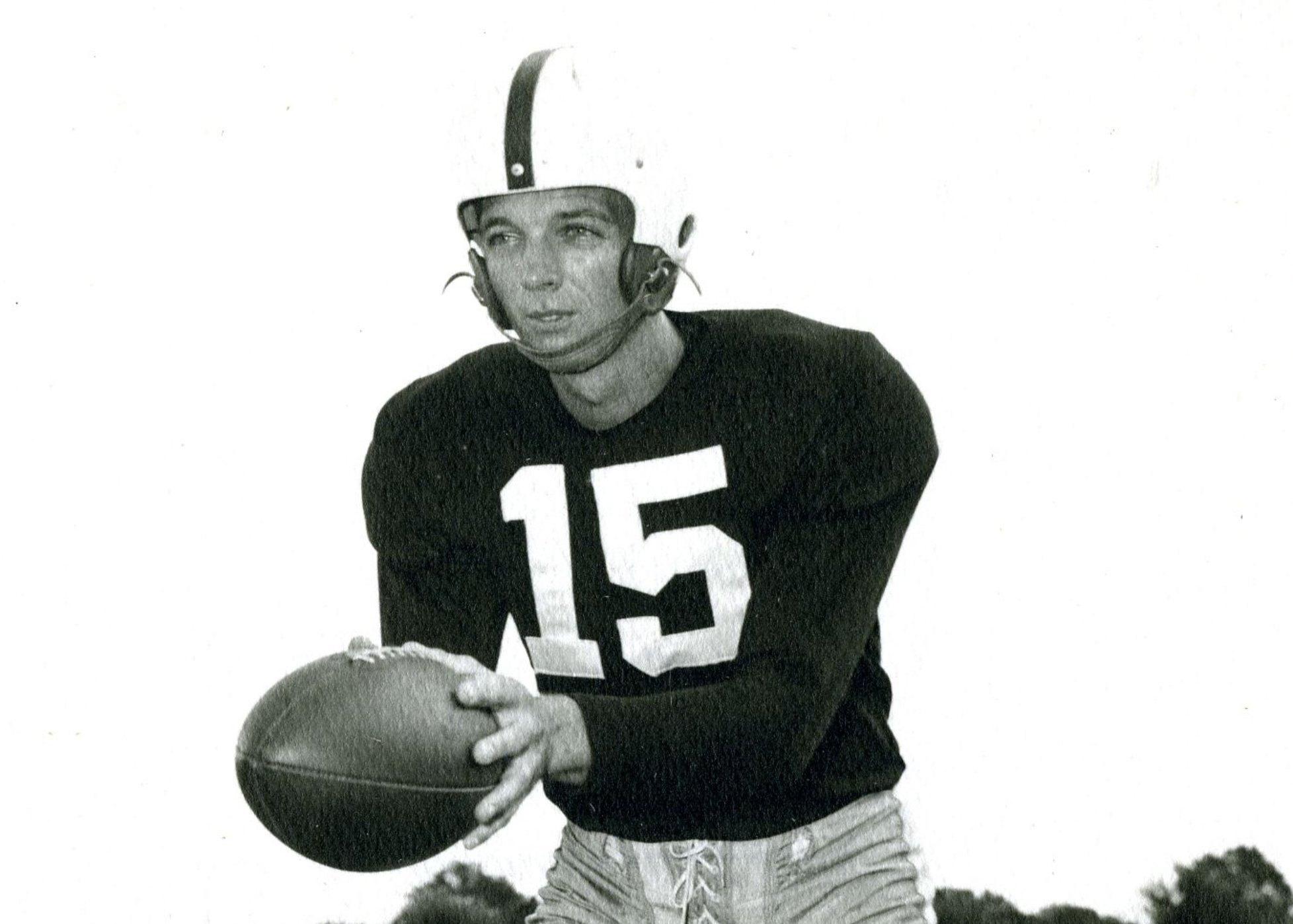
While his days at Tuscaloosa High became the stuff of local football lore, Clell Hobson took to the national stage after suiting up in the crimson and white at Alabama, where he earned scholarships in both baseball and football.
A bonafide standout on the baseball field, Hobson was a freshman on the Crimson Tide's first team to make it to the College World Series in 1950 — a team that featured the Lary brothers, along with future big leaguers Al Worthington and Ed White.
After sitting out varsity action during his freshman season in both sports due to NCAA regulations barring first-year students from playing in games, Hobson would go on to play in 34 consecutive football games for the Tide and coach Red Drew from 1950 through 1953.
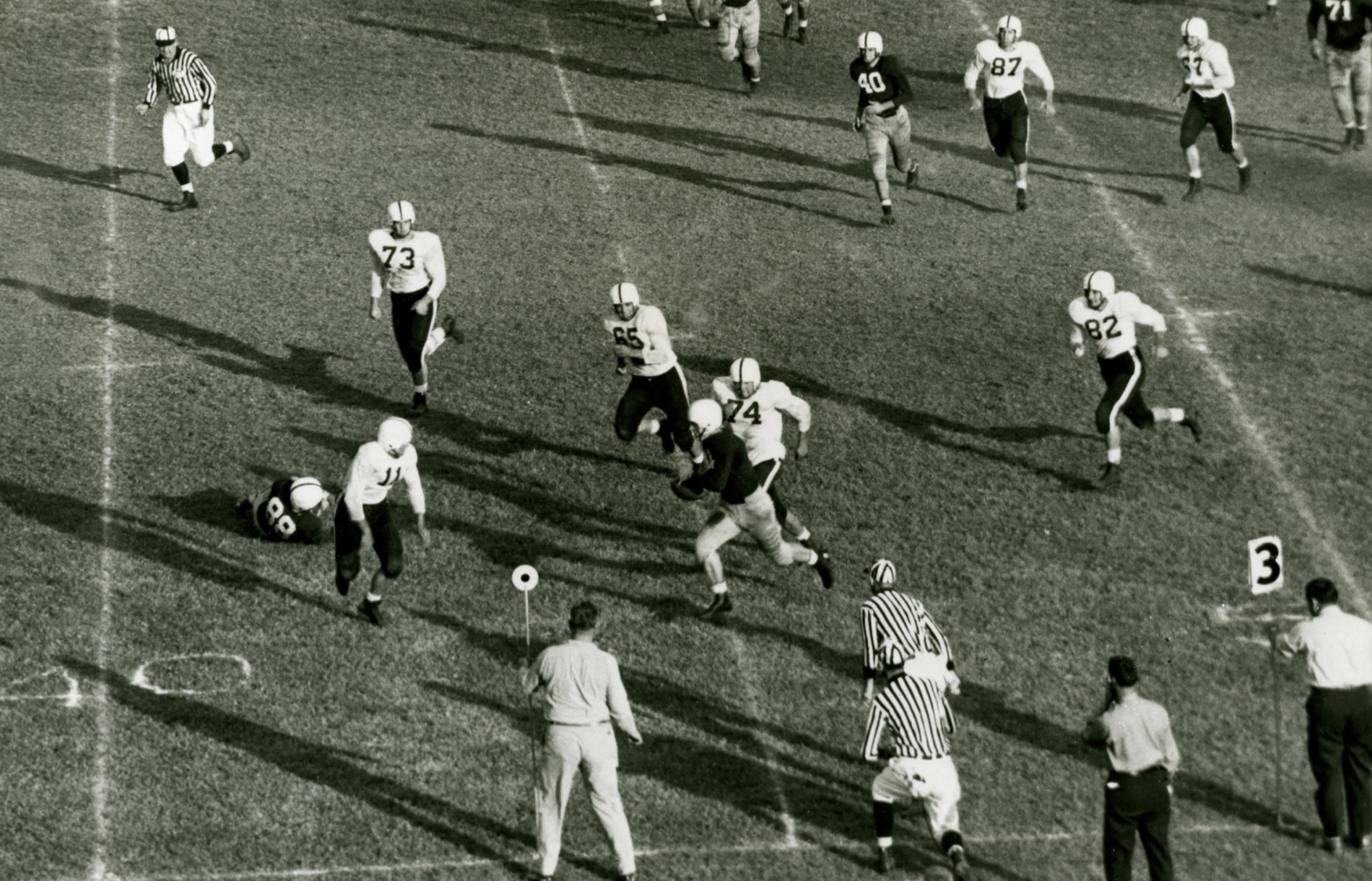
Mind you, this was five years before legendary coach Paul W. Bryant returned to Tuscaloosa to lead his alma mater's football program.
But over those three seasons under Drew, the Tide posted a 24-10 record and became a national competitor.
During the 1951 season, Hobson posted the second-highest passing percentage in the country, before earning national "Back of the Week" honors in 1952 for his performance in a stunning 27-7 upset over No. 8 Maryland in Mobile's Ladd Stadium.
While Hobson's play during the 1952 campaign saw the Tide have its best season of the decade, finishing 10-2, losses to unranked Tennessee and No. 2 Georgia Tech would quash any hopes of a conference title or national championship.
After becoming only the fourth quarterback in school history to top the 1,000-yard passing mark, Hobson capped off his collegiate career with one of the most memorable bowl wins in school history, catapulting the Tuscaloosa native into rarified air among the Crimson Tide elite.
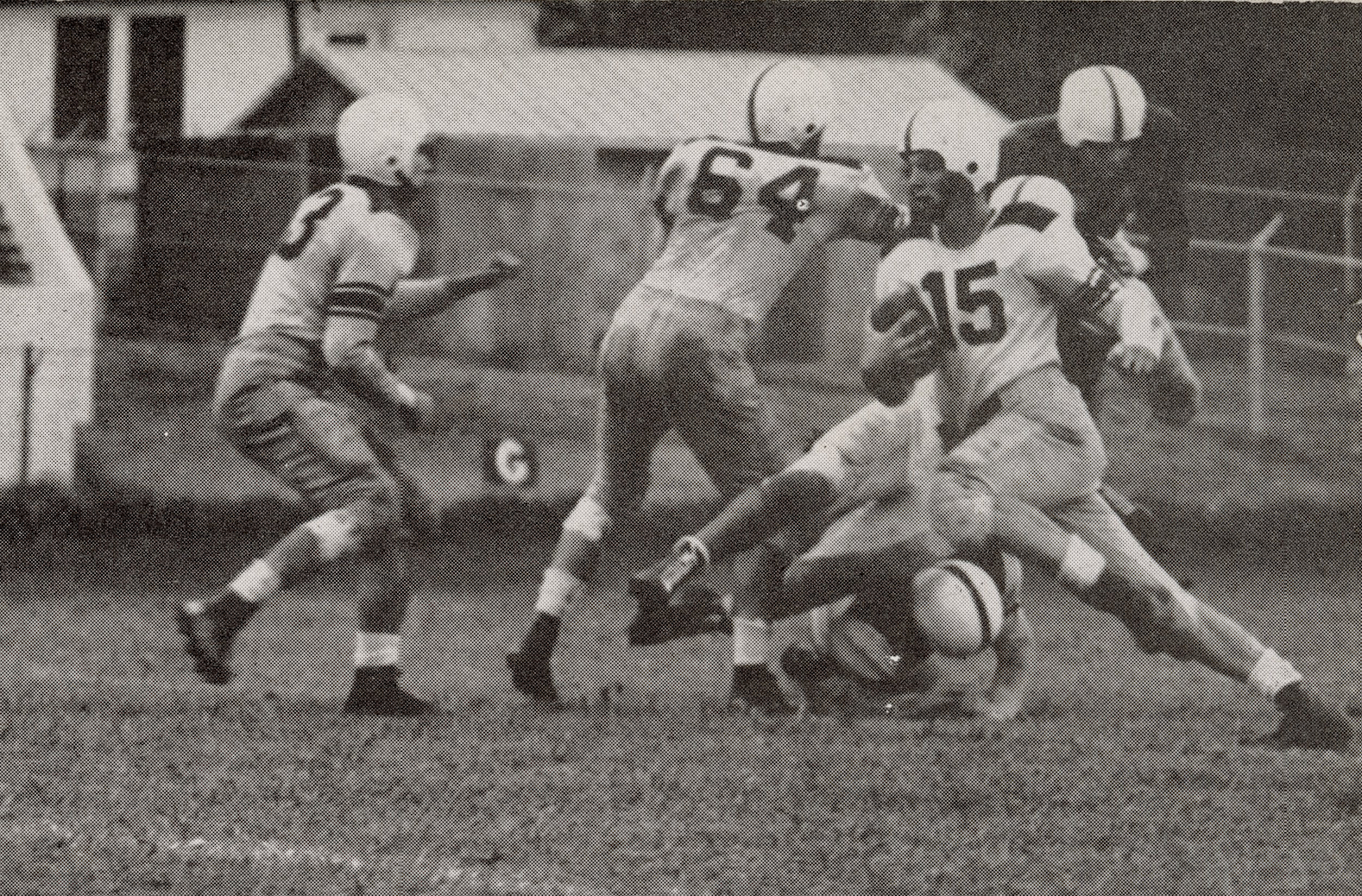
Indeed, 66,280 people flooded into the Orange Bowl in Miami on New Year's Day 1953 to watch No. 8 Alabama take on No. 16 Syracuse to close out the season. In a day when only a handful of postseason bowl games were hosted, it would be the only bowl appearance for Hobson, but ended up being one for the ages.
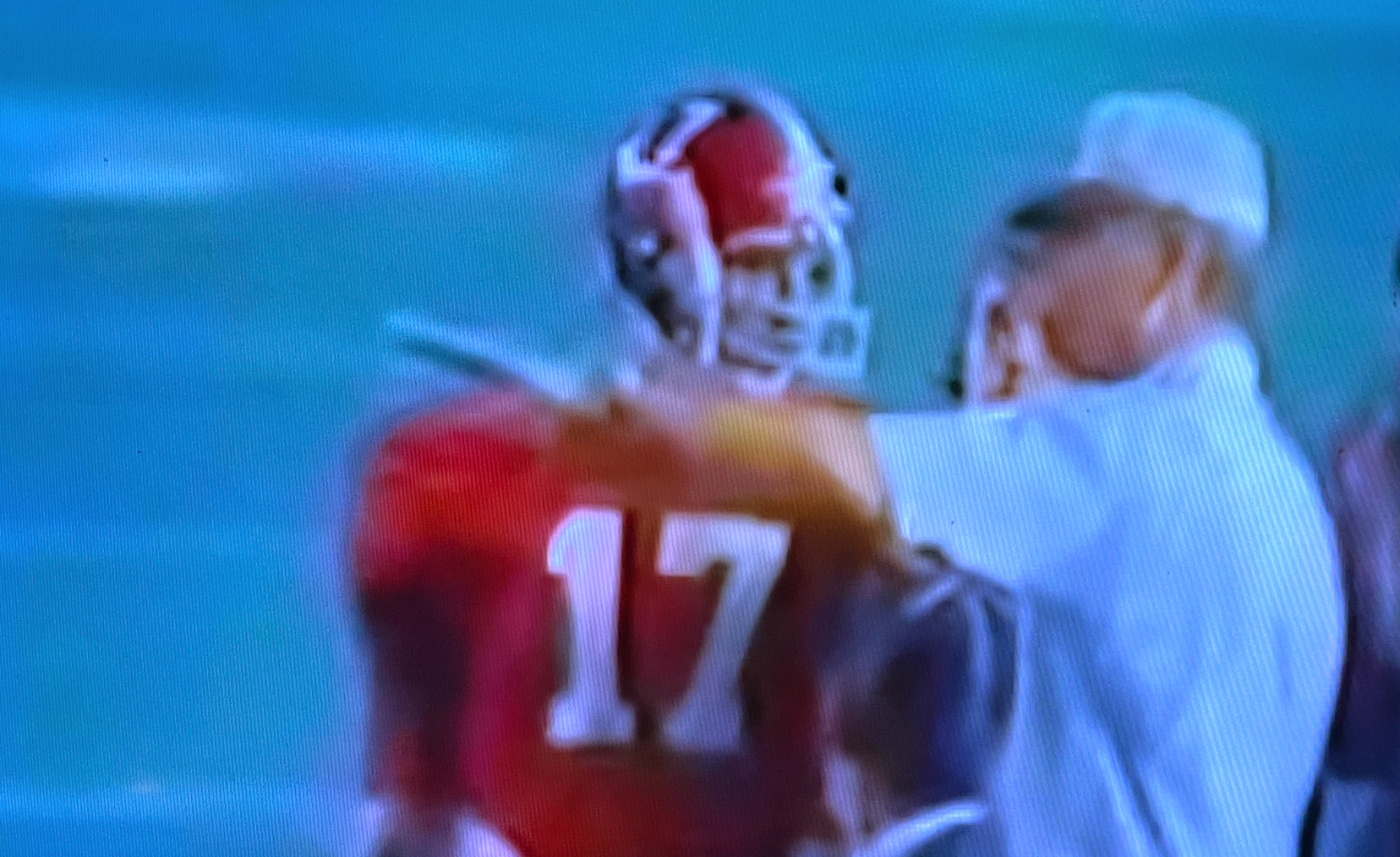
It was a sunny day in Miami for the Orange Bowl, as Alabama came out of the tunnel wearing crimson jerseys and white helmets. It was still the height of the state's fight against racial integration at the University of Alabama and the Million Dollar Band blasted "Dixie" with each Tide touchdown or big defensive stop — an obvious snub at the school from New York.
Click the link below to watch the highlights from the 1953 Orange Bowl.
Bolstered by the strong running of halfbacks Bobby Marlow and Tommy Lewis, it would be the air attack from Hobson that helped the Tide run the score up against the Orange, despite being up only 21-6 at the half.
The Tide would go on to score 40 unanswered points in the second half, with Hobson and backup Bart Starr combining for over 300 passing yards in the 61-6 win — a margin of victory that stood as a bowl record until the 2008 GMAC Bowl. The win saw the Tide set four individual records and eight team records, according to one Associated Press wire report.
The last time he ever wore the crimson and white on the football field, Hobson finished 14-for-22 for 207 yards and two touchdowns.
A NEW CALLING
Despite solidifying himself as one of the true greats of the Pre-Bryant Era, Hobson hung up his football helmet in favor of a baseball bat and glove after that historic Orange Bowl.
A standout for legendary Tide baseball coach Tilden Cambell, Hobson signed a professional contract with the Cleveland Indians and embarked on a brief minor league career from 1953 to 1957.
His first minor league action came for the Sherbooke Indians of the Provincial League, which would prove to be his best statistical season.
Over 500 at-bats during the 1953 season, Hobson hit .310 with 11 home runs and 82 RBIs.
The minor league life is a tough one, though, and arguably the hardest pathway to the highest level in any professional sport. Despite showing promise early on, Hobson bounced around the lower rungs of the organization in towns like Reading, Spartanburg and Allentown.
In fact, during the 1955 season with the Class A Reading Indians, he was a teammate of Roger Maris, who less than a decade later would break Babe Ruth's single-season home run record by launching 61 dingers in one of the most memorable seasons in baseball history. Also on that squad was fellow Tuscaloosa County native and former Crimson Tide standout Gene Lary.
But following a lackluster 1957 season, Hobson seemed to know it was time to give up the children's game and move on to something else.
Like many others who had once shined on the gridiron for the Crimson Tide, Hobson made the decision to return home to west Alabama, where he embarked on a successful high school football coaching career and found his passion in education.
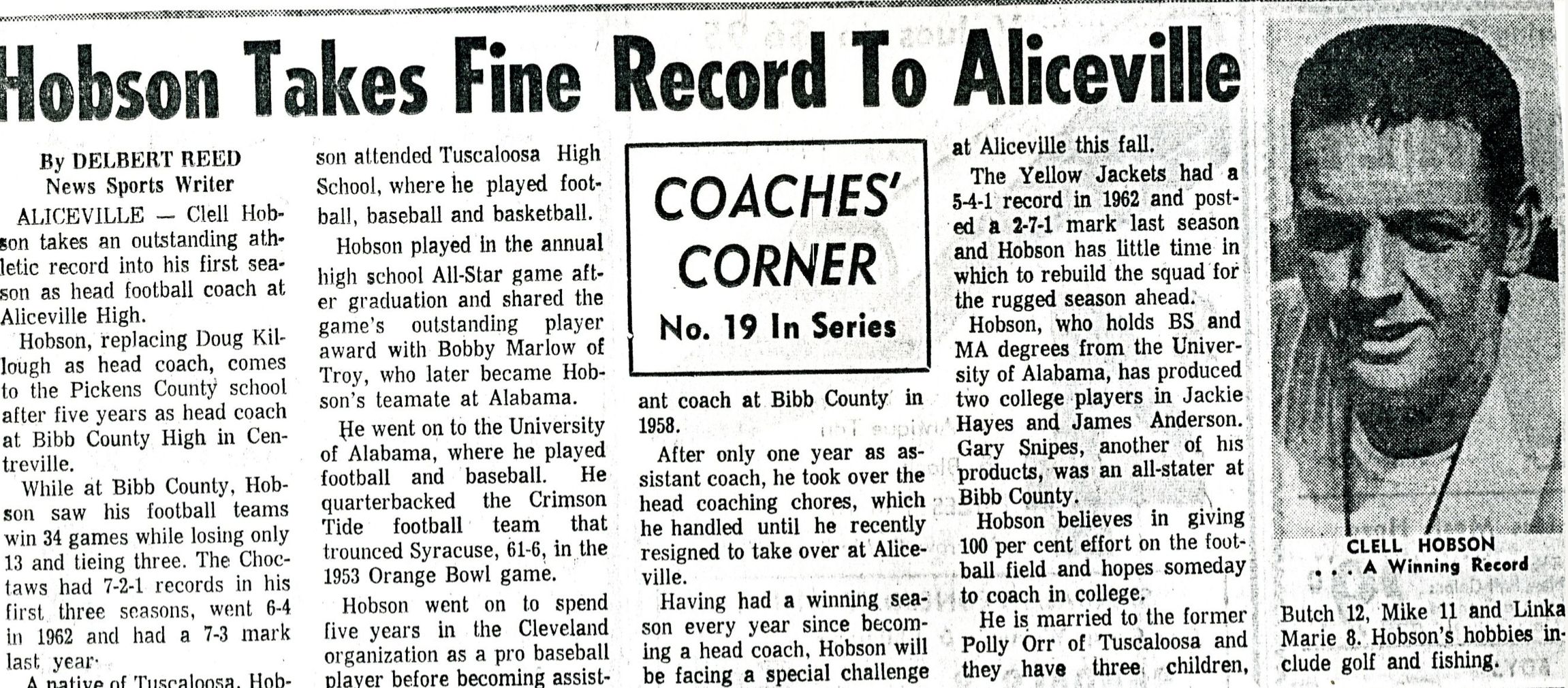
Hobson's first foray into coaching saw him hired as head coach of the Bibb County Choctaws in 1958, where he found immediate success as his squad went 7-2-1 in each of his first three seasons.
Hobson coached numerous All-State selections in his five season in Centreville, including: Oscar Smitherman, John Henry Smitherman, Gary Snipes, Bobby Johnson, Sammy Duke and Joe Dial.
Success always brings opportunity, which came knocking in 1964 and saw Hobson move his wife and three children to Pickens County to take on coaching duties for the Aliceville Yellow Jackets.
This three-year stretch would prove to be arguably the most successful years of his coaching career, posting a 24-4-2 record and a 10-0 regular season in 1965.
During the 1965 season, Hobson had something truly special with Glenn Woodruff — a 6-2, 185-pound quarterback and defensive end who earned All-State honors in 1965 and 1966.
Like his coach, Woodruff earned the chance to play both baseball and football at the University of Alabama. Despite seeing minimal playing time on the gridiron — his only career reception being a 1-yard touchdown catch in a 41-10 blowout of Mississippi State — Woodruff proved a standout catcher and went on to play minor league baseball.
For Hobson, though, there was one more big coaching move left in his career as he took the head coaching job at Bessemer High School in 1967 — a decision that would leave a lasting impact not just on his two star athlete sons Butch and Mike, but the entire Bessemer community.
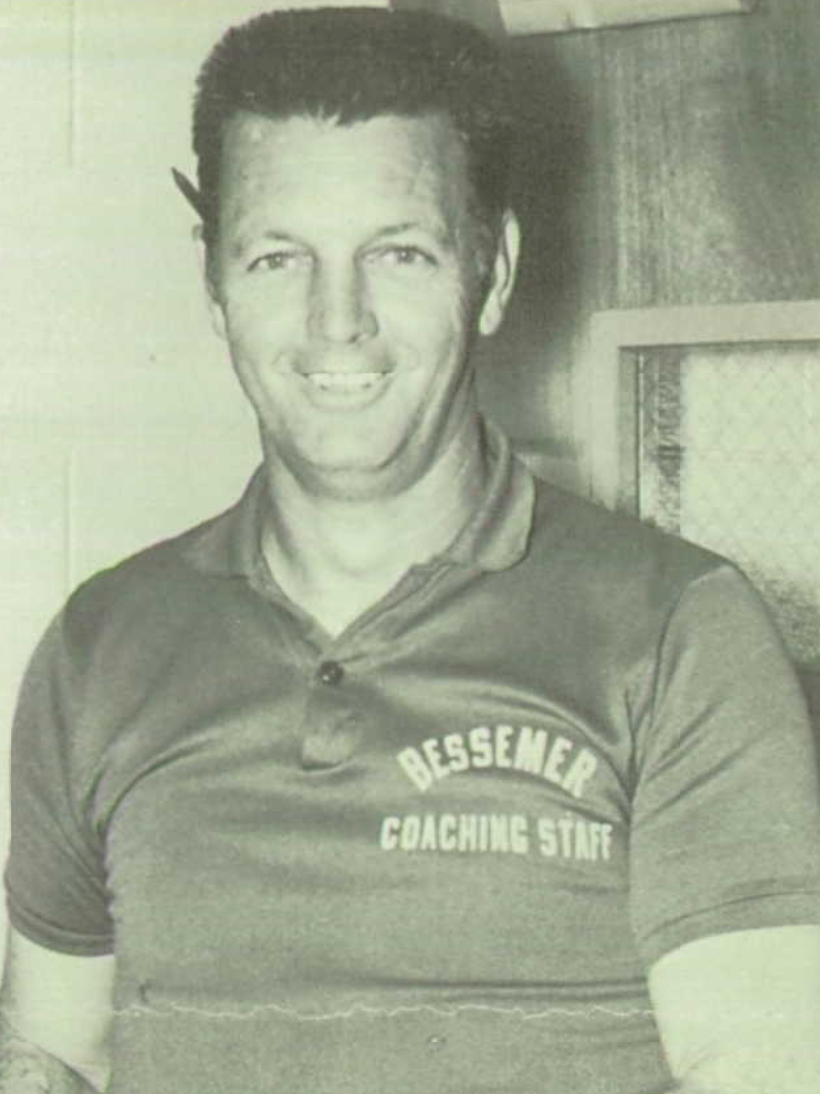
Over six years coaching Bessemer High, which consolidated with Carver High in 1969 to become Jess Lanier High School, he posted a record of 32-26-2. Despite a pair of 5-5 seasons, he would end his 14-year coaching career without ever having a losing season.
However, the 1968 season — one of the 5-5 campaigns — would likely be one of his proudest standing on the sidelines as his son Butch ran the offense and began generating scouting attention for his athletic ability.
With wins over Shades Valley, Hueytown, Ramsay, Anniston and Parrish Selma, Butch Hobson and teammate Bill Stamps both earned All-State honors.
"I didn't like him on the football field but he was and is a great person," Butch Hobson said with a hearty laugh. "People sit around and talk to my Dad and say what a sweet man he is, and I say you should have talked to him on the football field."
Butch Hobson became a Crimson Tide baseball legend and accomplished big league ballplayer after giving up football his senior year at The Capstone to focus on his baseball career.
However, as a safety and backup quarterback for Bear Bryant, Hobson did get to see notable action in the 1972 Orange Bowl game — a 38-6 loss to Nebraska that cost Bryant the chance at claiming the fourth national title of his career.
Following an injury to quarterback Terry Davis after the game was out of reach, Butch Hobson was brought in to run the Wishbone offense and carried the ball 15 times for 84 yards in the losing effort — four more yards than his teammate and legendary Tide running back Johnny Musso if you don't count the sacks that drove his rushing yard total down to the 50s.
After his three kids graduated high school — Butch going to UA, Mike going on to be an All-American linebacker at Jacksonville State and daughter Linka Marie being his loving caretaker in recent years — Clell Hobson didn't hang around coaching, stepping down as head coach at Jess Lanier after the 1969 season to become the school's assistant principal.
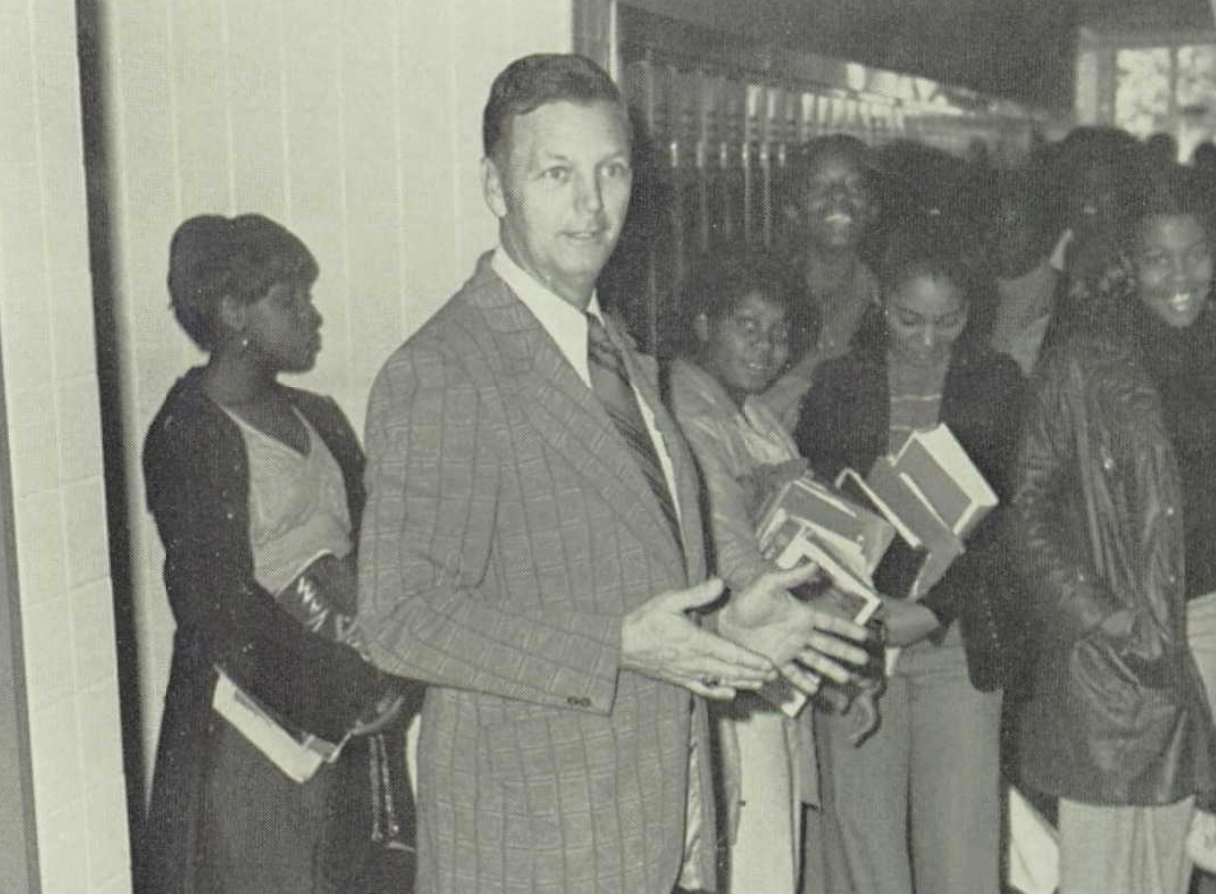
Hobson decided to dedicate his life to education administration, eventually moving back to his hometown of Tuscaloosa to serve as principal at Davis-Emerson Middle School before retiring and serving one term on the Tuscaloosa City Council from 1997-2001.
“Tuscaloosa is proud that we are home to Clell Hobson," Tuscaloosa Mayor Walt Maddox told Patch. "I’ve known him for many years, and honored to call him a friend. He is a gentlemen in every sense of the word.”
UNFINISHED BUSINESS
![]()
Clell Hobson at 91 still reads the newspaper without glasses (Tuscaloosa County Park & Recreation Authority)

Butch Hobson is no doubt proud of his father's myriad accomplishments, but one accolade has been oddly elusive — the Alabama Sports Hall of Fame.
The Alabama Sports Hall of Fame, for all its prestige, is a peculiar fraternity, with inductees ranging from Clell Hobson's high school coach Frank "Swede" Kendall to former segregationist Alabama Governor George Wallace.
But it also features Hobson's Crimson Tide teammate Bobby Marlow — a deserving honor for a former eighth overall pick in the NFL Draft and the Crimson Tide's all-time leading rusher until the mark was broken in 1971 by Butch Hobson's teammate Johnny Musso.
Butch Hobson, despite playing for Bear Bryant and having made it to the highest ranks of Major League Baseball, is also not an inductee. Even though he served as the controversial manager of the Boston Red Sox and touched numerous lives as a mentor, he doesn't seem the least bit concerned with his own legacy.
Rather, much like the tenacious way he played the hot corner in Fenway Park or Yankee Stadium, Butch Hobson has been dogged in his campaign for his father's enshrinement into the Alabama Sports Hall of Fame while he is still alive.
"I really want to get him in the Alabama Sports Hall of Fame, because he deserves to be in it and I'm surprised he's not in it yet," he told Patch.
Still, despite any slights perceived or otherwise, Clell Hobson is sure to get his due credit when he serves as one of four grand marshals in the West Alabama Christmas Parade on Monday, Dec. 5.
"He's so excited to be a grand marshal," Butch Hobson said, before reflecting back on his quest to see his Dad inducted. "Hopefully this will be the year for my Dad. You know, people have been calling me, ex-football players like Glenn Woodruff and PoPo Koch, he played at Alabama, too, and a lot of my ex-teammates are pulling for Dad. I would really like to do that before he passes on, but he will probably outlive us all."
Have a news tip or suggestion on how I can improve Tuscaloosa Patch? Maybe you're interested in having your business become one of the latest sponsors for Tuscaloosa Patch? Email all inquiries to me at ryan.phillips@patch.com
Get more local news delivered straight to your inbox. Sign up for free Patch newsletters and alerts.