Crime & Safety
Murder Trial Begins For Former Security Guard Accused Of Fatal Shooting At Tuscaloosa Hookah Bar
Here's our in-depth coverage from the first day of a murder trial involving a former security guard at a now-closed Tuscaloosa bar.


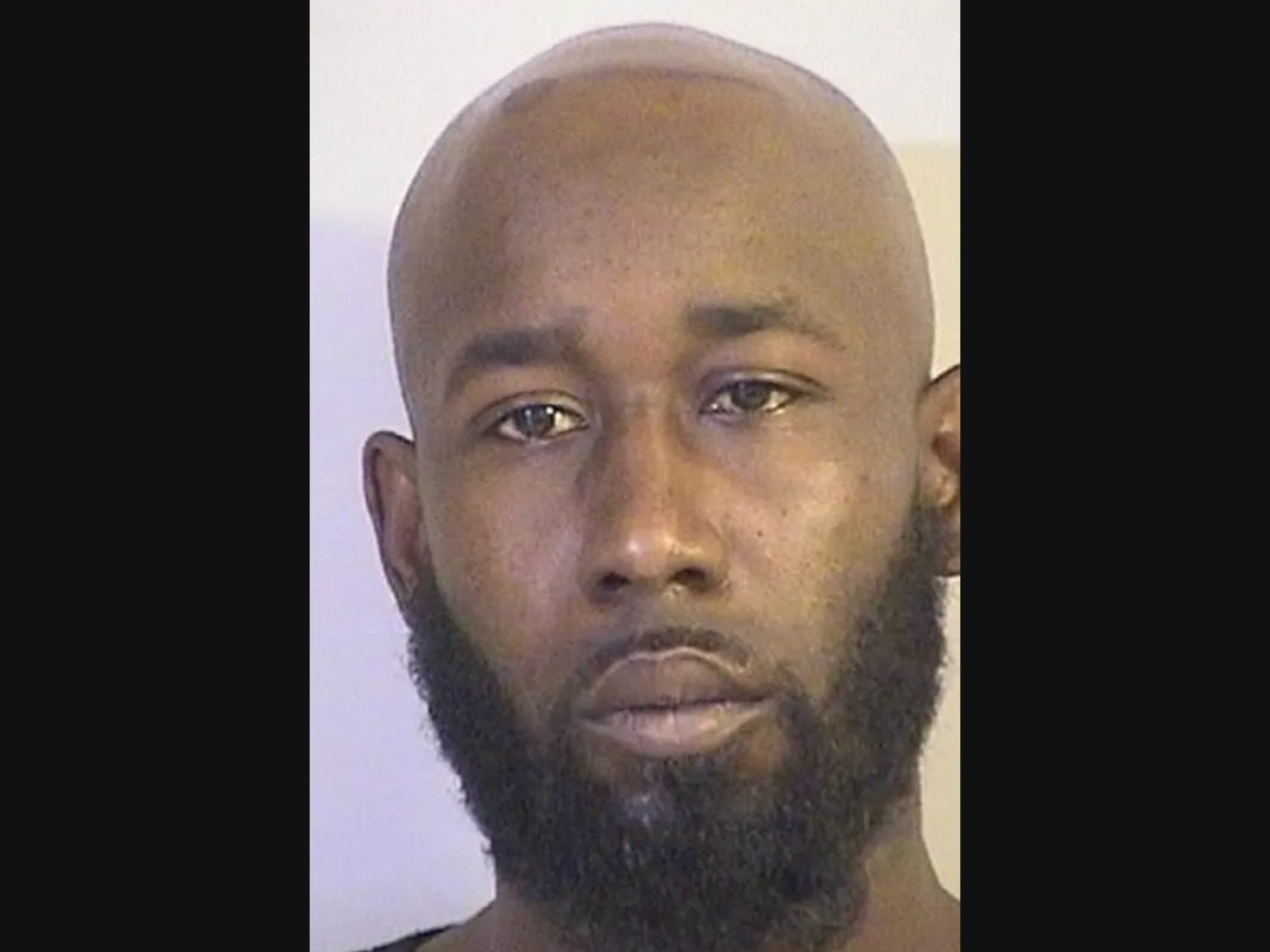
TUSCALOOSA, AL — Jurors heard from six witnesses and saw a wealth of video evidence Tuesday as the trial began for a former unlicensed security guard accused of murder after allegedly killing another man outside of a Tuscaloosa hookah bar in January 2024.
Click here to subscribe to our free daily newsletter and breaking news alerts.
As Patch previously reported, Aaron Dewayne Hill is charged with a single count of murder in the Jan. 21, 2024 shooting death of 28-year-old Rashid Little, who was shot in the chest outside of CRU Lounge following a physical altercation inside the bar.
Find out what's happening in Tuscaloosafor free with the latest updates from Patch.
The now-closed establishment was located off of Highway 69 in south Tuscaloosa near Taylorville and had its business license revoked less than a month after the fatal shooting.
ALSO READ: Unlicensed Security Guard Accused Of Murder Had Extensive Criminal Record Involving Guns
Find out what's happening in Tuscaloosafor free with the latest updates from Patch.
With Tuscaloosa County Circuit Court Judge Allen W. May, Jr. presiding over the trial, the jury first heard opening statements Tuesday from Assistant District Attorney Thomas Marshall and Tuscaloosa defense attorney Travis T. Juneau.
The 14-person jury, which includes two undetermined alternates who will later be excused before deliberations begin, consists of seven White women, five White men, one Black man and one Black woman.
Hill sat silent at the defense table during the first day of the trial, clad in a blue dress shirt and dark slacks. Only a couple of people sat on the defense side of the courtroom while a decent showing of Little's loved ones occupied the other half.
Opening Statements
In his opening statements for the prosecution, Marshall painted a minute-by-minute picture of the state's version of events, saying there was no question that Hill shot Little "dead center" in the chest from about three feet away.
"This isn't a question of the who, what, when, where or how," he told the jury. "It's about the why ... the intent."
Marshall pointed out that around 12:50 a.m. — a little more than 10 minutes before the fatal shot was fired — Little could be seen on the club's security camera dancing.
Little's self-described best friend, Jimmonica Williams, later testified "he was just there having a good time."
"Around 12:50 [a.m.], the defendant throws [Little] to the ground and, pardon my French, but all hell breaks loose," Marshall told the jury.
Marshall went on to say that a couple of minutes after the fight breaks out in CRU Lounge involving several unlicensed security guards, Little and Williams were escorted outside.
"For about seven minutes, Rashid and Jimmonica were outside and not happy," Marshall said.
Then, at 1:01 a.m., video taken by Williams showed the gun about six inches away from the phone when the bar door opened and the fatal shot was fired.
"After the shooting at 1:01 [a.m.], Hill runs out of the back and gives his gun to his girlfriend," Marshall said, before telling the jury that the defense planned to argue Hill accidentally discharged the handgun because someone bumped into him. "When you're looking at this video, no one touches the defendant.
"You're going to see, essentially, Rashid die on video," Marshall added. "It's not easy to watch. [Tuscaloosa County Sheriff's Deputy Michael Hartley] tries to save Rashid and you can immediately see the color drain from his face."
Juneau's opening statement, instead of claiming that his client didn't fire the shot that killed Little, placed the blame on the irresponsibly crafted atmosphere at CRU Lounge, along with the incompetence shown by the security guards contracted from Grizzly Security.
Indeed, Juneau told the jury the bar and hookah lounge was far over its capacity of roughly 68 people the morning of the shooting, which created a "chaotic" environment for the inexperienced security guards tasked with keeping the bar's staff and its patrons safe.
Juneau even went so far as to say the bar was so busy that Kevin Davis, one of its owners, was having to work in the kitchen to keep up with the incessant demand out front.
"The music was loud, the drinks were flowing and the party was on," he said.
The defense attorney also argued that Hill was still adjusting to his job as a security guard and had no license from the Alabama Security Regulatory Board.
Patch has reported extensively on Hill's lack of a license and past criminal record, consisting mostly of drug and firearm offenses in neighboring Bibb County.
Hill's pending charges prior to his arrest included one count of distributing a controlled substance, possession of a controlled substance, possession of paraphernalia and being a convicted felon in possession of a firearm at the time of his arrest on Aug. 16, 2023.
Judge May revoked Hill's bond in this case after he was charged with murder. An immunity hearing later came up empty for his legal counsel as they tried to prove Hill acted in self-defense when he shot Little.
Still, Juneau insisted on the first day of trial that his client was more of a victim of unfortunate circumstances than a cold-blooded killer.
To reinforce this point, he told the jury Little could be seen hitting Hill with what appeared to be a bottle during the fight inside the bar prior to the shooting.
When the altercation and heated words spilled out onto the sidewalk, however, Juneau said Little and Williams became aggressive, with Little even spitting on those inside in the seconds before he was shot.
"Aaron then pulls out his sidearm and before it can reach its natural drop, Rashid spits on people," he said. "Then the gun goes off. Aaron in no way intended for that gun to go off.
"It was a negligent discharge, a reckless act," Juneau added. "But it wasn't intentional."
First Witnesses Take The Stand
Tuscaloosa County Sheriff's Deputy Michael Hartley was the first witness called to the stand Tuesday and recounted how he was the first officer on the scene near Taylorville roughly a minute after Little was shot.
Hartley testified that "the shooter" was not at the scene when he arrived and began rendering aid on Little, who was laying in a pool of blood several steps away from one of the bar's entrances.
It was during his attempt at saving Little's life that video was taken showing Hartley performing chest compressions in an attempt to keep blood flowing to Little's brain while they waited on an ambulance to arrive.
Little was pronounced dead at DCH Regional Medical Center shortly after being transported from the scene.
The jury was shown the video of Hartley performing CPR, which included emotional pleas from those gathered round, including one person who could be heard saying "come on Rashid."
Perhaps the most illuminating testimony on Tuesday came from Williams, who was the next witness called to the stand by the state.
She referred to Little as her best friend and explained under persistent questioning that the two were not romantically involved.
"I like women and Rashid liked guys," she said.
This fact is important because in the immediate aftermath of the shooting, Patch reported that an online petition gathered over 1,000 signatures in a grassroots effort calling for Little's violent death to be prosecuted as a hate crime.
Regardless, Williams testified she and Little arrived at the bar around 10 p.m. or 11 p.m.. She said they sat in the car "pregaming" and listening to music before going into CRU Lounge.
Williams said they'd been in the bar roughly 20-30 minutes before the initial fight broke out involving Little and several security guards, who were outfitted in tactical gear similar to that worn by police officers.
"We got drinks, he greeted a couple of people, started dancing and was attacked from behind," Williams said, before identifying Hill as the assailant and initial aggressor.
Williams then became choked with emotion as she recounted how they were "being stomped and beaten."
Several videos were played for the jury depicting the fight inside the bar, with some coming from internal security cameras and others from cellphone video and Snapchat.
Additional video from cameras outside of CRU Lounge show Little and Williams kicked out of the bar before they could be seen standing outside expressing their outrage at the situation to a manager.
Little is visibly upset in the video taken outside around the same time that the security team spills out onto the sidewalk tussling with an individual who was not involved in the first fight.
In another instance, those same security guards can be seen grappling with one of their own colleagues, who is distinguishable by his tactical vest and bright green shirt.
And during the altercation outside of the bar, Hill is shown at one point wielding a handgun.
Williams testified that off-screen, security guards were jumping on a man who was forced against a car, which further underscores the tense nature of the unfolding scene.
Williams also told the jury that she kept her phone out recording as much as she could in the hopes they would be able to show a manager how the security guards assaulted them inside and kicked them out of the bar without cause.
It's around this time that more than one video depicts Hill slapping the phone out of Williams' hand, while also attempting to cover his face with a gaiter scarf once he realizes he is being recorded.
A female security guard, who Williams said had joined in on the fight inside, came out and attempted to calm Little and Williams.
"We weren't even doing anything," Williams can be heard on video telling the woman, later identified as Vance resident Thyais Walker. "You were pulling my hair, too."
Walker was also charged with being a felon in possession of a firearm following the shooting when investigators believed she took the gun from Hill that had been used to kill Little.
After Walker walks away from Williams and Little, however, the pair's focus returned to one of the bar's entrances. Security camera footage goes on to show Hill come just slightly into the frame.
Then at 1:01 a.m., as Williams recorded and Little appeared to lean in toward the door, a plume of smoke becomes visible and the entire scene descends into chaos.
Immediately after the shot is fired, individuals who had congregated around the door scattered and Little was left virtually alone to stagger a few steps and fall face down just before reaching the parking lot.
Another video taken by Williams on her phone shows the moment the gun was thrust out of the door and fired just inches away from her.
Under questioning by the prosecution, Williams looked over the video and said the shooter's arm "looked straight," which appeared to contradict claims by the defense that Hill flinched or was somehow bumped, causing the gun to go off accidentally.
Williams said she immediately ran inside to get a better look at the shooter's face before security camera footage shows her once again dragged out of CRU Lounge.
She is then shown over her friend's body, slapping him and "trying to wake him up."
Under cross examination by Juneau, the defense attorney initially focused on claims supposedly made by Williams that she didn't want to go to CRU Lounge because "the vibe was off."
Juneau also pressed Williams about "jumping into the fight" inside, to which she responded that she was just trying to get her friend out of the bar after he was jumped.
She went on to acknowledge Little was angry after the initial fight and had berated the female security guard outside, before shouting in the general direction of the bar's entrance to express his frustration — but not really talking to anyone specific.
While the defense for Hill made no argument Tuesday that he didn't fire the shot that killed Little, Juneau made it a point to question Williams about the segment of video that just shows an arm holding a gun and not a distinguishable face behind the weapon.
She was quick to respond that further portions of the video she recorded would show Hill's face.
Williams also testified that she never saw Little spit on anyone, as was alleged by the defense.
Former CRU Lounge bartender Amber King followed Williams on the stand and told the jury she had only seen Little inside the bar one other time before the morning he was killed.
King also testified that Little seemed to be doing nothing more than "having a good time," before security guards jumped on him inside the bar.
King said she was behind the bar serving drinks at the time of the fight and didn't personally know the security guards working that night. She also said she didn't see who fired the lone shot that caused all of the patrons inside to rush for the exits or duck for cover.
What she did testify to seeing, however, was the female security guard and "door lady" Walker holding a handgun in the immediate aftermath.
King said she saw Walker with the pistol in her right hand as the woman and Hill swiftly exited out the back door of the bar — an accusation that was reinforced by video evidence shown to the jury.
"[Walker] was acting calm and like nothing had happened," King testified.
Under Juneau's cross examination, the focus returned to poor management and inept policies by the bar's owners, starting with training for responsible service and procedures for "cutting people off" when they've had too much to drink.
King, an experienced bartender, said she had received plenty of training but later pointed out that she had worked with approximately 10-12 different security guards in less than a year of working at CRU Lounge.
After the jury heard from Tuscaloosa Police Department Sgt. Michael Melendez, who photographed the 9mm shell casing recovered from just outside the door where Little was shot, University of Alabama Police officer and Tuscaloosa Violent Crimes Unit investigator Casey Schmitt was called to the stand.
Schmitt told the jury she was called out the morning of the shooting and initially interviewed two CRU Lounge bartenders in the immediate aftermath. She also said she was familiar with Walker, whom she only knew as "Ty."
She explained that Hill was quickly located at Walker's house in Vance and investigators learned that his girlfriend had helped him get his security guard job at CRU Lounge.
Schmitt then said when they tracked down Hill at his girlfriend's residence, he attempted to quickly exit out the back of the house as investigators knocked on the front door, only to be met face-to-face with Schmitt and another VCU investigator.
"Once he was told to stop, he complied," she testified.
She went on to testify that, once under thumb, Hill was interviewed and gave investigators information about the gun used in the shooting being at his "Uncle Doc's" house in West Blocton in a "lawnmower shed."
When investigators went to check out the shed, Schmitt said they found nothing before Hill told them to look in a weathered old Cadillac car on the property.
Photos shown to the jury showed an old white Cadillac sitting on four flat tires with its paint peeling and full of junk — obvious that it was no longer serviceable and had not been driven in some time.
Investigators eventual found an orange purse containing a Glock 19 pistol and three magazines, including an extended clip. Further investigation would find that two of the three magazines contained live rounds.
Tuscaloosa Police Department firearms and tool marks examiner Stewart Coffee was the final witness to take the stand Tuesday and told the jury that he was given two handguns to investigate: A .40 caliber pistol and a Glock 19.
As his testimony wrapped up, Coffee held up an evidence envelope containing a spent 9mm shell casing fired from a Glock 19 and testified that it was gun used to kill Little.
Juneau had little to ask Coffee during cross examination, other than getting the seasoned investigator to concede that "mishandling a firearm can lead to disaster."
The prosecution is set to resume calling witnesses Wednesday morning at 9 a.m.
Tuscaloosa Patch will have additional coverage from the trial, so follow along with us here or in our newsletter, which you can subscribe to for free at tuscaloosa.patch.com.
Have a news tip or suggestion on how I can improve Tuscaloosa Patch? Maybe you're interested in having your business become one of the latest sponsors for Tuscaloosa Patch? Email all inquiries to me at ryan.phillips@patch.com.
Get more local news delivered straight to your inbox. Sign up for free Patch newsletters and alerts.