Crime & Safety
Tuscaloosa County Circuit Judge Brad Almond Reflects On Career, Legacy After Final Trial
Patch caught up with the retiring judge and those who know him best to tell the story of his illustrious career and legacy on the bench.


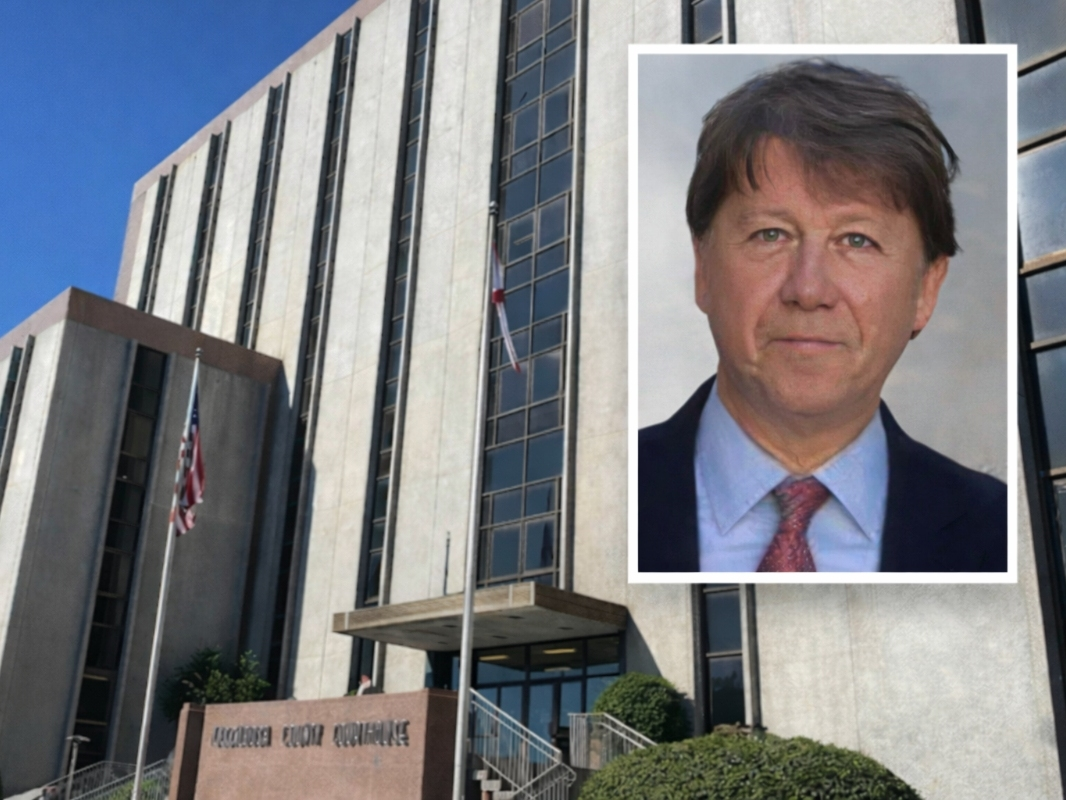
TUSCALOOSA, AL — Longtime Tuscaloosa County Circuit Court Judge Brad Almond's final day on the bench came and went Friday with little fanfare in a mostly empty courtroom.
Click here to subscribe to our free daily newsletter and breaking news alerts.
The number of reporters had significantly dwindled and just a handful of people sat on the hard wooden church pews on both sides of the courtroom.
Find out what's happening in Tuscaloosafor free with the latest updates from Patch.
As Patch previously reported, Judge Almond pronounced a sentence of life without parole for Luther Bernard Watkins, Jr. Friday after a jury earlier this month convicted him of capital murder in the 2019 shooting death of Tuscaloosa Police Department Investigator Dornell Cousette.
For such an illustrious legal career, this final court proceeding was a mostly uneventful and procedural one that closed this chapter of the judge's life after first being appointed to the seat by Alabama Gov. Bob Riley in 2008 to replace Judge Steve Wilson.
Find out what's happening in Tuscaloosafor free with the latest updates from Patch.
Judge Almond spoke at length with Tuscaloosa Patch after taking off the robe for good and insisted he wasn't leaving the bench because he was tired of the demanding job or unhappy.
And he certainly isn't leaving his legal career to ride off into the sunset.
Instead, few may realize Alabama law prohibits anyone from being elected or appointed to a circuit court judicial office after reaching the age of 70.
"I’d reached the age of retirement and it was time for me to try something else," he said. "And it was time for somebody else to come in and take my place and do different and better things."
Circuit Court Judge Corey Seale, who will now sit in the seat formerly occupied by Judge Almond, described her predecessor as a real John Wayne-type in a black robe who was never afraid to do the right thing or offer compassion when needed.
ALSO READ: Corey Seale Sworn In As Tuscaloosa County's Newest Circuit Court Judge
"For almost two decades Judge Almond has worked every day to make Tuscaloosa County a better place," Judge Seale told Patch. "He led his courtroom with fairness and integrity. He cares about people and is respected not because of the robe but because of the person. I will miss him on the bench and am thankful for his service to our county.”
Judge Almond explained his career trajectory after starting out in private practice, then being appointed to the bench and now going back to practicing. This third act of his legal life will see him practice civil litigation with Tuscaloosa's Phelps, Jenkins, Gibson & Fowler, L.L.P.
He cited patience as an important lesson gleaned from nearly two decades on the bench as one he will carry back into private practice.
"Just in terms of my general view of practicing law, I think I will hopefully see it as less stressful than I did before," he said. "There will still be stress involved, of course, as in any job, but I just have a different perspective now. I'm hoping this last part will be a really fruitful and enjoyable experience, and it has been so far."
REFLECTIONS ON FINAL TRIAL
Judge Almond retired in December 2025 but stayed on for one final trial — a case described by many as the most high-profile murder trial held in the Tuscaloosa County Courthouse over the last four decades.
Tuscaloosa Patch published an extensive four-part series about the last case to receive such media coverage and public attention. But it must be underscored here that the circuit court of the late 1980s and early 1990s operated far different than it does today.
While Judge Almond has overseen countless criminal trials, the stakes in his final case were unparalleled, even for the last judge in Tuscaloosa County to impose the death penalty on a case with the 2019 capital murder conviction and sentencing of Michael David Belcher.
"I guess in that case [for Belcher], a lot of cases that are charged under the death penalty statute, technically, are charged correctly," he said. "They’re death penalty cases but not every one of those would justify a death sentence and when you see a case that does, then you know it. But nonetheless, the weight of what’s taking place at the moment of sentencing is kind of hard to describe. I will not miss that at all."
The death penalty was also on the table for Watkins in a case that stirred a wide spectrum of emotions in the community due to it involving the shooting death of a police officer. After finding him guilty, the same jury ultimately voted 7-5 in favor of giving Watkins life without parole.
This is where the trial presents both an interesting legal case study regarding courtroom procedure and an inside look into Judge Almond's approach to maintaining order over a case that dominated the local news cycle for several weeks.
As Patch previously reported, Judge Almond made the decision to close the courtroom to the public and media for jury selection. Additionally, every person who entered the courtroom was checked with a metal detecting wand — a second layer of security despite the fact that anyone entering the Tuscaloosa County Courthouse must first walk through metal detectors.
Judge Almond insisted the courtroom's size made it difficult to hold the entire jury pool even without scores of curious onlookers, family members and reporters.
He then stressed the importance of security and an atmosphere of impartiality for the jury in such a high-profile case. Among his more noticeable decisions was an order issued ahead of the trial that capped the number of visible law enforcement officials allowed to sit in the courtroom in full view of the jury, so as not to give the impression that the jury was being coerced by a show of force from a crowd of people carrying guns and wearing badges.
"I want the courtroom to not only have the appearance of impartiality, it has to be an impartial courtroom," he explained. "The defendant has constitutional rights to have a trial in front of an impartial jury and that can be hurt by what happens or what appearances are in the courtroom.
"This last case we’ve just tried, that was very important, just given the dynamics of the case," Judge Almond added. "So it was more restrictive probably than I’ve ever had but I was also mindful of the job that [the media] have to do, because y’all do a constitutional job, as well, and that’s important. It’s a matter of balancing all of the interests that are involved and there are a lot of different interests involved in the case. We just hope we got it right, because we certainly tried to."
Indeed, this reporter grumbled under his breath each time he had to take off his Apple Watch and leave his phone in the hallway. This is where the aforementioned need for metal detecting wands outside of the courtroom came into play as all possible recording equipment was banned from the courtroom.
This is a fairly standard policy during criminal trials and while some may argue that it undercuts a need for transparency, Judge Almond pointed out the need to protect jurors.
"Part of that is juror sensitivity and anxiousness about that," he said. "In terms of general recording devices, that has changed drastically over the years. I’ve had hearings where people are recording the proceedings with their sunglasses or with their phones or with their watches. A lot can be done with that that is not accurate of what’s actually happening in the courtroom as a whole. So, that is why our policy in Tuscaloosa has been to do that."
With respect to his final trial, Judge Almond also mentioned the need to lean hard on the longstanding policy.
"I think it is a policy that is fair but in the case that we just finished, I thought it was very important due to the amount of publicity that preceded the trial and the amount that could have taken place during the trial if that type of recording had been allowed," he said.
Online chatter about the murder trial of Luther Watkins and other recent cases focused on how slow it takes the legal process to make its way to the courtroom. Some blame the system itself, while others might take aim at the agenda of prosecutors or the competence of defense attorneys.
To that end, officials drew sharp criticism from some online for Watkins having to wait more than six years after the offense that landed him behind bars.
"A speedy trial depends on what kind of case you’re talking about," Judge Almond said. "Not speaking about any case in particular, but if it’s a capital case, then it’s not the defendant — it’s not the defense lawyers — that are chomping at the bit to get to trial. They’ve got lots of work to do. The state is most always ready to proceed before the defendant is, particularly in those types of cases. The last thing that I would ever do is force the defendant or a capital defendant to trial before they’re ready."
Judge Almond also said the reason capital murder cases are so slow to go to trial are more simple than people may realize but at the same time, their circumstances are also difficult for a judge or any one person to control.
"We have four circuit judges that do this and I would say all of us have about five or six capital murder cases, so multiply that times four," he said. "A capital murder case is kind of set aside and it’s not in the mix with all of the other felony cases. It doesn’t appear on dockets as frequently and whenever a capital murder case is set for some type of hearing, it’s always specially set."
He then spoke to the work of attorneys during the discovery phase ahead of trial, mentioning the importance of legal counsels having to learn about the case.
"In capital cases, investigators are hired for the defendant and mitigation specialists are hired for the defendant," Judge Almond said. "And they should be, and constitutionally they are required to be, as they should be, because death [penalty] is different and we do everything that we can do to make sure that it’s done in an appropriate way. That sometimes slows the process down, unfortunately."
District Attorney Hays Webb, who led the prosecution for Judge Almond's final case, referred to the longtime judge as a "truly good and decent man."
"He is honorable and apolitical, and he has long demonstrated a real commitment to the law and to our community," Webb told Patch. "His heart for people and their well-being is demonstrated particularly through his efforts with the mental health and veterans courts which he has run for years to the great benefit of many. Although we will be glad to see him practicing law in the courtroom, we will miss him on the bench."
Legacy Of A Courtroom Titan
Tuscaloosa County Public Defender Joseph P. Van Heest provided one of the more humanizing anecdotes about Judge Almond when he reflected on his 16 years in the position and how he and Judge Almond often disagreed on things.
Still, Van Heest knew they could be candid with one another.
"I remember one instance which was bubbling for awhile," Van Heest recalled. "I was out with my wife at a restaurant. He saw and came over and introduced himself to my wife as 'Brad' not 'Judge Almond.' That gesture instantly cleared any tension between us moving forward. In the courthouse, he never had airs about wearing the robe. After hours, he’s always been very approachable and down to earth. A true professional and gentleman."
Judge Seale, sans black robe, sat near the bench she now occupies during Judge Almond's final murder trial and later spoke to Patch about taking the place of a man who has influenced so many in the local legal community.
When asked about Judge Almond's legacy, she echoed Webb in pointing to the judge's role in establishing courts for both veterans and mental health — an accomplishment Judge Almond himself cites as the accolade he is the proudest of.
"As long as I’ve been here, he’s been the judge over those two programs," Judge Seale said. "And every now and then I would get the opportunity and I would be down here while he was doing mental health court or veterans court. He may have been the only person in those people’s lives that knew them, recognized when something was different about them."
She then remembered one individual who had changed hair colors in between court appearances and how Judge Almond immediately made note of it.
"Maybe the month before, she’d had purple hair and that month she had pink hair, and he recognized the difference, acknowledged it," Judge Seale said. "He just really cared about them and maybe was the only person that they came into contact with that really cared about them and gave them the floor to talk about how they were feeling and things that were going on in their lives right then."
Judge Seale is just one of many younger legal minds to look up to Judge Almond but, at one time, there was a newly minted Tuscaloosa County Circuit Court judge in 2008 who looked up to his highly respected colleagues.
"When I got on the bench, there were other circuit judges who were on the bench at that time as well, like Judge Scott Donaldson, Judge Chuck Malone and Judge Philip Lisenby," Judge Almond recalled. "We would go to lunch together most every day of the week and we would just kind of talk about the cases that we had and the lawyers that we were dealing with. Just hearing them talk and bouncing ideas off them was invaluable to me, because it just reinforced all the things that I just said: 'You do the best you can with the information that you have.'"
Judge Almond also reflected on how his colleagues during those formative lunch meetings early in his tenure never once told him what he should or shouldn't do on the bench.
"It was never that," he said. "It was just, 'OK, think about these issues,' and 'What about this issue?' 'Make your own decision,' but just giving guidance and experience. So that experience for me was very, very important."
Time marches on, though, and like his heroes, Judge Almond now occupies the role of mentor and laughed when presented with such an outlandish prospect.
"It kind of makes me shudder because I don’t feel like I should be that guy," he said. "But the judges we have now are just as wonderful as the ones we’ve had. We’ve been blessed with a good bench and that’s continued. The judges we have also have kind of a promise to each other that if I need you and I text you, you will respond. There have been times that I’ve come off the bench to answer a call from another judge.
"I know other judges have done that for me — just to say, 'Here’s my situation, give me some different thoughts about it,'" he added. "So we still lean on each other and now that I was a graybeard and now that I’m gone, I told them, 'You can still do that. You just call me anytime and I’ll give you my two cents’ worth.'”
While Judge Almond had high praise for his colleagues, it should come as little surprise what they and others who have worked in his courtroom had to say when they each spoke to Patch about his legacy.
Here are just a few snippets:
"Brad Almond defined what it means to be a public servant. He worked hard, did not shy away from difficult cases, tried to find the correct answer to every question he encountered, and he always treated people fairly. He faithfully served Tuscaloosa County for many years and he left the Court better than he found it. He will be greatly missed."
- Circuit Court Judge Daniel Pruet
"Judge Almond was what we wanted in a judge. He’s even-tempered, analytical, honest, always neutral and courageous when making the tough decisions. But he was also compassionate. I’d also say he was an active listener. He made sure that everybody who came before him felt like they were treated fairly."
- Circuit Court Judge James H. Roberts Jr.
"To me, he was a steady mentor, not just to me but to all the judges. He provided a great example. He was devoted to justice, really cared about justice and seeing that everybody got a fair shake on each side. And he was really dedicated to the mental health court and veterans court."
- Circuit Court Judge Allen W. May, Jr
"After one jury trial, I went back to his chambers to talk to him. He seemed irritated with me during the trial and when I asked him about it he remarked that the out of town lawyer on the other side was making him mad. If he was going to be mad at one lawyer during a jury trial, he was going to be mad at the other, whether they deserved it or not. That’s how even-handed he was. He’ll be tremendously missed on the bench."
- Tuscaloosa City Attorney Scott Holmes
"He was a fair judge. His last day on the bench he asked me to represent someone badly in need of counsel who had an emergency hearing later that day. For him, I was proud to do it.
- Tuscaloosa County Public Defender Joseph P. Van Heest
"Judge Almond was, in the truest sense, a 'lawyer's judge.' He was always committed to fairness and let lawyers try their cases. He knows the law and I'm glad he will continue serving the community from this side of the bench."
- Tuscaloosa defense attorney Stuart Albea
Indeed, Judge Almond's work establishing specialty courts for veterans and mental health stood out in extensive conversations with sources as this reporter tried to paint a portrait of his legacy.
"He will be fondly remembered in the Public Defender’s Office for establishing and presiding over mental health court and veteran’s court," Tuscaloosa County Public Defender Joseph P. Van Heest told Patch. "He ran both courts for more than a decade and was both admired and respected by attorneys and participants alike."
To that end, the now-retired judge recalled working with Indian Rivers Behavioral Health and the Alabama Department of Mental Health around 2011-12 to lay the groundwork for courts that would end up being celebrated for their efficacy years later.
Judge Almond explained that if someone is charged with a crime in Tuscaloosa County, even a non-violent felony, and are diagnosed with a serious mental illness, they are given the opportunity to go into mental health court.
"The purpose of that program, in a lot of the cases, is for the person to go into the program and they receive medication, they receive treatment, they get therapy, they come to court once a month, and that generally would last for about 12 months," he said. "Then, if they successfully complete all of that, their case is dismissed and they have no conviction on their record. That’s been going on for over a dozen years now."
The success of outcomes from mental health court then prompted Judge Almond to take further action when he began to see veterans with mental illnesses in his courtroom.
"That started about a year or so after that and the veterans program is the same as mental health court," he said. "Primarily, it’s the opportunity to get your case dismissed but having done mental health court and then adding the veterans court, I thought, “OK, you know, this is going to be pretty much the same thing.'"
As it would turn out, the two courts presented vast contrasts as Judge Almond reflected on how nearly all of the veterans brought before him had seen combat during their service.
"That was a different type of court for me," he said. "Both of the courts, I loved. At the same time, I hated doing them because it was emotional. You go from one person to another, and you go up and you go down depending on how they’re doing. But those are the things that I’m really proud of."
Judge May's courtroom is on the second floor of the courthouse on the other side of the hall from Judge Almond's.
Judge May counts himself as a close friend and running buddy of Judge Almond's, and also spoke at length about the merits of the specialty courts and the need for such an approach due to the prevalence of mental illness and substance abuse in the legal system.
"So many people are in the system that have mental health problems and then, by extension, there are a lot of veterans because of what they had endured during their service," Judge May told Patch. "They have mental health problems or drug addiction problems. They get caught up in the system and a lot of times they’re brought into the system because of their frailties, because of the weaknesses that they may have, because of what they’ve had to endure in life or something maybe they were even born with."
Judge May then elaborated by explaining the courts allow judges to craft dispositions for them to take such issues into closer consideration.
"Judge Almond did this very well and it allows us to help the community," he said. "They not only help that individual defendant — by extension, and maybe most importantly — it helps the community. When those people are leaving the court system, and if they get through the program, we’re very tolerant to an extent to allow them to get through the programs. But if they get through the programs, they’re better for themselves, for their families, but also better when they go out into the community. That’s why it’s really important. And Judge Almond did a great job with that."
Judge Roberts also spoke to the need for mental health and veterans courts as it relates to diverting individuals with mental illness away from jails and into treatment so the root causes of their behavior can be addressed.
It's something Judge Roberts believes reduces recidivism.
"It’s so overwhelmingly needed, especially in Tuscaloosa County," he said. "[Judge Almond] really led the charge on that, took it, said, 'I want to do this, I want to set this up, I’ll run it for the entire circuit,' because he recognized it was the kind of thing that was needed and it makes a difference."
When Judge Almond's successor on the bench was asked about the impact of the specialty courts, Judge Seale said she saw a man at work who wanted to use any resources at his disposal to make life better for the people coming through his courtroom.
"He did make life better for so many of them," Judge Seale said. "But to see him in that element — and not just the leader he was in the courtroom, the judge up there keeping everybody in line and doing what he needed to do in that role — but to see him in more of that humanity role with those people who were going through those struggles was an amazing thing to see. He changed people’s lives for years through those programs.
When asked about last thoughts or what people may misunderstand about the difficult job of occupying the bench, Judge Almond underscored that the courtroom isn't how many understand it to be from watching television crime dramas.
"For each type of case, we have rules to follow and we do our best to follow those rules," he said. "It’s not that we’re reinventing the wheel. We are presented with a very specific question and we do our best to answer that question with what the law tells us to do. I understand that unless you’re involved in a civil or a criminal case, or unless you’re involved in jury duty, you don’t know what we do."
Judge Almond closed by encouraging the public to become better acquainted with courtroom proceedings if they have the time and willingness to do so.
"I would love for folks to be aware of what we do every day," he said, "Over the years as a judge, when I would go speak to civic groups and whatnot, I would always invite people to come to court because 99% of all the things that we do are completely open to the public. Just come watch, come listen and just come just see what we do."
Have a news tip or suggestion on how I can improve Tuscaloosa Patch? Maybe you're interested in having your business become one of the latest sponsors for Tuscaloosa Patch? Email all inquiries to me at ryan.phillips@patch.com.
Get more local news delivered straight to your inbox. Sign up for free Patch newsletters and alerts.