Schools
UA, Faculty Respond To Atlantic Story On Student Debt, Tuition
The University of Alabama responded following a controversial story in The Atlantic that detailed tuition and recruitment practices


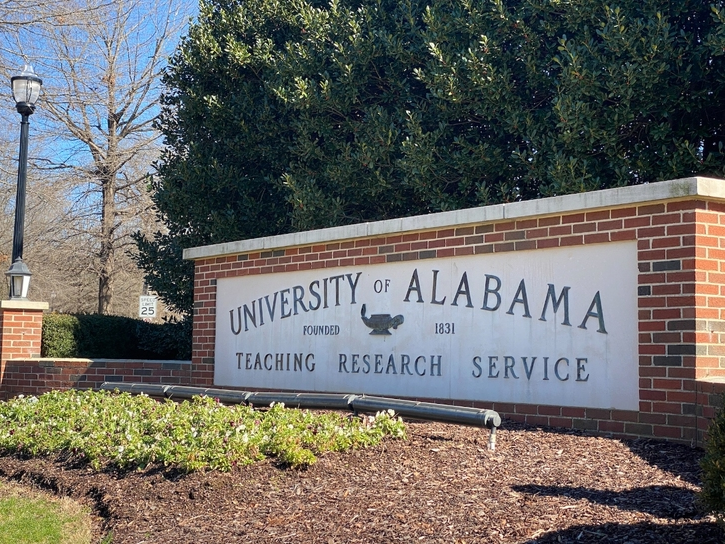
TUSCALOOSA, AL — The University of Alabama is defending its longstanding tuition practices and approach to student recruiting following a widely-read story published online Sunday by The Atlantic.
The story, written by Josh Mitchell of the Wall Street Journal, is bookended by a narrative providing anecdotes from the point of view of a transfer student from Marion. At the conclusion of the article, the student at the center of the story, along with his mother and brother, are facing $153,000 in student debt from his time at the Capstone.
Mitchell wrote of the origins of the crippling debt, saying: "It resulted from a strategy the university’s leaders had embarked on a decade earlier—one that relied on families’ getting into deep student debt, without any assessment of the borrowers’ ability to ever repay. It was working just as planned."
Find out what's happening in Tuscaloosafor free with the latest updates from Patch.
In a statement to Patch, the University of Alabama asserted that student debt and federal student loan programs are national concerns that are not unique to any institution.
"The University of Alabama works diligently to support student success, with graduation rates well above the national average, strong scholarship programs to reduce student costs, career readiness programs, student employment opportunities, financial literacy training, and student assistance to manage debt," the university said in response.
Find out what's happening in Tuscaloosafor free with the latest updates from Patch.
But what drew the most chatter on social media from academics and locals alike could be seen with former UA President Robert Witt's approach to luring students — and their money — to campus.
"[Witt] used Disney World as a model," Mitchell writes. "Research indicated that many families decided whether to apply to a school within 20 minutes of arriving on its campus. First impressions were everything. Witt concluded that the grounds had to be pristine. He hired a retired Air Force colonel whom he sent to Disney World to study how the theme park managed its grounds."
The author of the article goes on to highlight the efficacy of this tactic, as the spike in University of Alabama enrollment was matched only by the parallel rise in tuition, which hits out-of-state students particularly hard.
"Witt and [UA Provost Judy Bonner] came up with a strategy. Alabama didn’t have enough college-eligible in-state students, so they’d expand the pool of applicants by recruiting from outside the state. The university at the time had about 19,500 students, three-quarters of them from the state. Not only would Witt and Bonner expand the number of applicants; they’d recruit students who would pay far more than those who had come from Alabama. The school, like most state flagships, charges much higher tuition—up to three times higher—for out-of-state students. Many of those students would pay that tuition through student loans. And because the federal government had capped how much undergraduate students could borrow, many parents had to take out loans too."
- Josh Mitchell, "A Crimson Tide of Debt"
As years have worn on and the approach fine-tuned, the University of Alabama has become the student debt leader for state institutions, even topping student debt for the state's expensive private colleges such as Samford and Birmingham-Southern College.
According to the latest annual statistics published last September by LendEDU, the average student loan debt per borrower for UA in 2020 was $34,975 — topping Auburn's $29,331.
Indeed, data from ZipRecruiter shows recent college graduates in Alabama falling well below the national average for salaries after graduation, which no doubt places added financial strain on a graduate's burgeoning career due to staggering student loan debt. As it stands, Alabama ranks 48th out of 50 states nationwide for recent college graduate job salaries.
ZipRecruiter reports that as of July 27, the average annual pay for its Recent College Graduate jobs category in Alabama is $27,062 a year or roughly $13 an hour. That is compared to the current national average of $34,329.
It's also worth noting that the university reported that its student loan default rate during the last school year was 5.1% — a number that will no doubt be higher once updated data reflects the economic downturn of the coronavirus pandemic.
When asked about rise in tuition over the years working in concert with other factors to compound the student debt problem, the University of Alabama's Assistant Director of Communications Shane Dorrill explained to Patch that the university has not increased base tuition for in-state students in five years and out-of-state students in three years.
He then pointed out that UA’s tuition rates are comparable to other flagships and peers, before attempting to dispel notions that the University's recruiting tactics are financially predatory in actively seeking out students who would have to pay substantially higher out-of-state tuition rates.
"Our enrollment strategies have provided opportunities to students from our state and around the globe to become a part of The University of Alabama," Dorrill said. "As a public institution supported by the State of Alabama and its taxpayers, state law requires the University to charge nonresident student tuition at a rate at least twice as high as resident student tuition. The University is committed to providing an exceptional educational experience at an affordable cost to both resident and nonresident students."
While few current UA students could be seen speaking out in the wake of the lengthy Atlantic piece, numerous UA faculty members took to social media upon the revelation that the university allegedly raised tuition in an effort to provide higher salaries for faculty.
"I don't want to be salty at an article critiquing predatory student loan debt because I agree that it's predatory," one faculty member said on Twitter. "However, it's easy to feel salty when the article claims faculty at my university make an average of $152K a year when I make $41K a year."
The author of that tweet, UA instructor Tasha Coryell, told Patch on Tuesday that she views student loan practices as predatory, before going on to call for reform in how higher education is funded and who is asked to foot the bill.
"What the article doesn’t take into account are the instructors with advanced degrees who are asked to teach the ever-increasing number of students at UA and are paid well under the $150k number cited," she said. "I’m a full-time instructor, which means that the majority of my job is to teach. I love my job, but I make under $50k a year. I’m in a good position compared to part-time instructors who get paid per course that they teach and are often living under the poverty line. There are a lot of places to direct blame in the student loan crisis, but to direct the blame at faculty, some of whom are fighting to get a living wage, is misguided."
Mitchell does report in the story that Witt and Bonner’s plan to boost faculty pay through higher tuition resulted in professors in 2020 earning an average annual salary of $152,000.
Following the article's publication, the university reported to Patch that its average faculty salary — which includes all ranks, not separated by tenure — is $95,557, which is $8,297 higher than the average in 2011.
When contacted by Patch for a follow-up on his story after UA responded on Monday, Mitchell cited his employer's guidelines when he respectfully declined an opportunity for comment, saying he preferred for the story to stand on its own.
Conversely, UA did not refute any of the details published in Mitchell's long-form piece. Rather, university officials reiterated how the looming student debt crisis and high tuition prices are not storylines isolated to Tuscaloosa.
"The relationship between faculty and students is a critical facet of higher education, and our faculty and staff do an incredible job serving our students," Dorrill said. "We provide faculty salaries commensurate with qualifications and peer institutions ... Salaries, wages and benefits are the University’s largest expense, as is the case for most organizations."
Have a news tip or suggestion on how I can improve Tuscaloosa Patch? Maybe you're interested in having your business become one of the latest sponsors for Tuscaloosa Patch? Email all inquiries to me at ryan.phillips@patch.com.
Get more local news delivered straight to your inbox. Sign up for free Patch newsletters and alerts.