Schools
UA Gives COVID-19 Update Before New Totals Released Friday
Dr. Ricky Friend held a media availability via Zoom Wednesday to discuss UA's testing and field questions on a range of topics


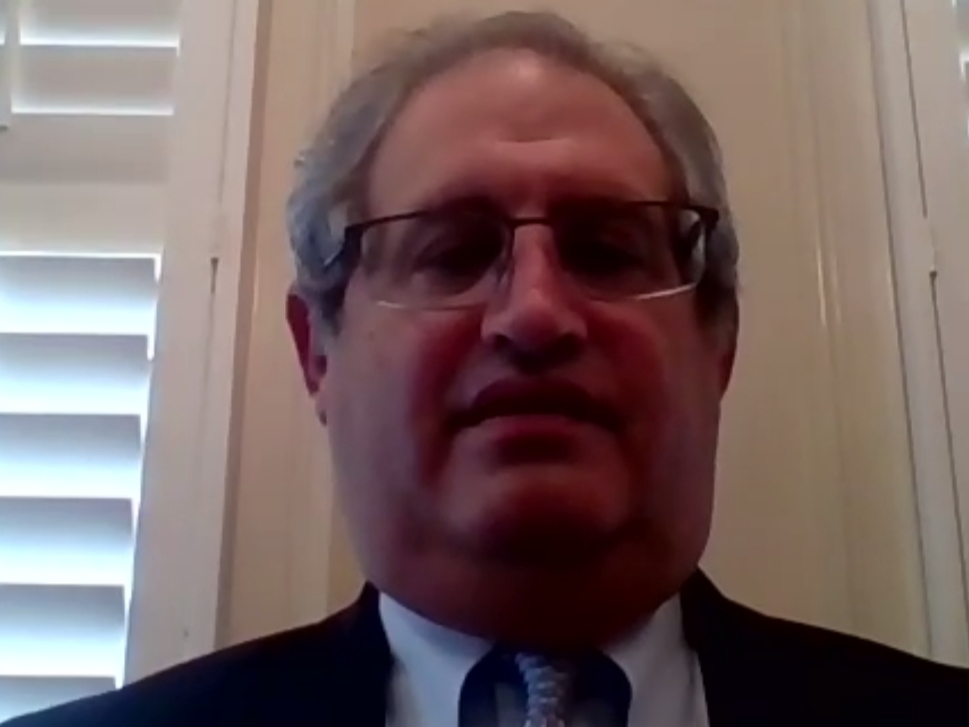
TUSCALOOSA, AL. — The University of Alabama provided a range of updates during a media availability Wednesday, which primarily focused on the UA System's coronavirus testing efforts and protocols to maintain safe in-person instruction.
Dr. Ricky Friend, dean of the UA College of Community Health Sciences (CCHS) and member of the UA Situational Response Team, fielded questions and stressed the university's engagement with respect to proactive planning and testing.
"We know of no other university or university system with a more comprehensive testing plan or one that has devoted more resources since our students arrived on campus," he said.
Find out what's happening in Tuscaloosafor free with the latest updates from Patch.
The UA System will not release updated testing totals on its COVID-19 Dashboard until Friday, Friend confirmed, before saying there had been no evidence thus far of viral transmission occurring in the classrooms and no reports of students being hospitalized.
"These are among the safest [facilities] in our community as a result of our planning, preparation and enforcement measures," he commented.
Find out what's happening in Tuscaloosafor free with the latest updates from Patch.
Friend also said the university is devoting significant resources to quarantine and isolation space, while current facilities are at less than 50% occupancy.
Since classes began on Aug. 19, the UA System has confirmed 1,043 new COVID-19 cases and nine new cases among faculty and staff, according to the latest UA System COVID-19 Dashboard data published earlier this week.
UA students in isolation are provided numerous resources, Friend said, including 24-hour security, an on-call medical liaison and direct access to mental health professionals.
"We're working very hard to provide comfortable living arrangements for campus students as well as those who need a place to stay in quarantine if they test positive," he said.
In terms of efforts to follow and further understand the local spread of the virus, Friend said the university currently has 34 employees dedicated to contact tracing. This is how the UA System has been able to monitor classroom transmission, which Friend said gives administrators confidence that the protocols in place are working and in-person instruction can continue.
"We have taken many important steps this week and I believe we have a real opportunity to reverse these trends," he said. "But it will take the full commitment of our students, as I know they want to remain on campus and that is a goal I believe we all share."
Talk eventually turned to a 14-day executive order issued by Mayor Walt Maddox on Aug. 24 that closed all Tuscaloosa bars and prohibited bar service in restaurants. The sudden move to issue an emergency directive came after UA provided data to the mayor's office showing more than 500 new COVID-19 cases had been identified on the Tuscaloosa campus.
Friend said the quick pivot to close the bars was ultimately not his decision, but one that could prove crucial in protecting the health of the community while saving in-person instruction at UA.
"What I know to be true, from global data and data across the country, large gatherings, large crowds, close proximity within six-feet of distance, not wearing face coverings, will cause the virus to spread and we know that," he said. "That’s the mayor and his decision. We meet with the mayor’s team regularly and provide him with daily medical advice and that’s really up to him."
Much will hinge on Friday's numbers, which will come as Maddox continues talks with local bar owners on possible compromises for reopening. The directive is set to expire on Monday.
An easily-overlooked subject going into fall during an ongoing pandemic is flu season. Friend said, fortunately, the UA System has a plan in place.
"[Flu season] is the next worst concern on my mind and we’re already planning for it," he said. "The university has purchased over 10,000 doses of flu vaccine. What I'm seeing across the globe, these are historic times and these are the lowest flu numbers on record in Australia and the social distancing and masks are no doubt playing a part in that. But as a clinician and staff member, I certainly worry about the impact of flu and COVID together.”
Friend recommended getting a flu shot in mid-September.
For now, though, Friend pointed to improving hospitalization totals at DCH Regional Medical Center, which reported 53 total inpatient cases Wednesday, compared to 64 inpatients a week ago. The current number of COVID-19 patients is also roughly half of the total seen during a surge in July when the three-hospital system topped triple digits for virus inpatients.
"Right now, the hospital is in really good shape from a capacity standpoint," Friend said.
Before looking ahead to the uncertainty the next few weeks will bring, Friend said he has seen "tremendous effort" on the parts of those in the community and on the Tuscaloosa campus to mitigate the initial positive cases identified since classes began.
"I remain cautiously optimistic that we’re headed in the right direction but truly we’re not going to see the result of these efforts until after Labor Day and possibly the week after that," he said. "Historically, that’s how this works."
Friend, in closing, was posed a recurring question that has been asked at news conferences since it was announced the university system would attempt in-person instruction: What will be the trigger for canceling classes?
"I think we have said we’re not looking at one number," he said. "We’re looking at a lot of different metrics. Science is evolving every day."
Tuscaloosa Patch will publish the UA System's COVID-19 Dashboard update on Friday or you can view the current dashboard totals here.
Get more local news delivered straight to your inbox. Sign up for free Patch newsletters and alerts.