Schools
UA Student Volunteers Add Needed Manpower For Local Groups
Ripple Effect, a day of performing service projects by the University of Alabama, began Monday with students volunteering around the city


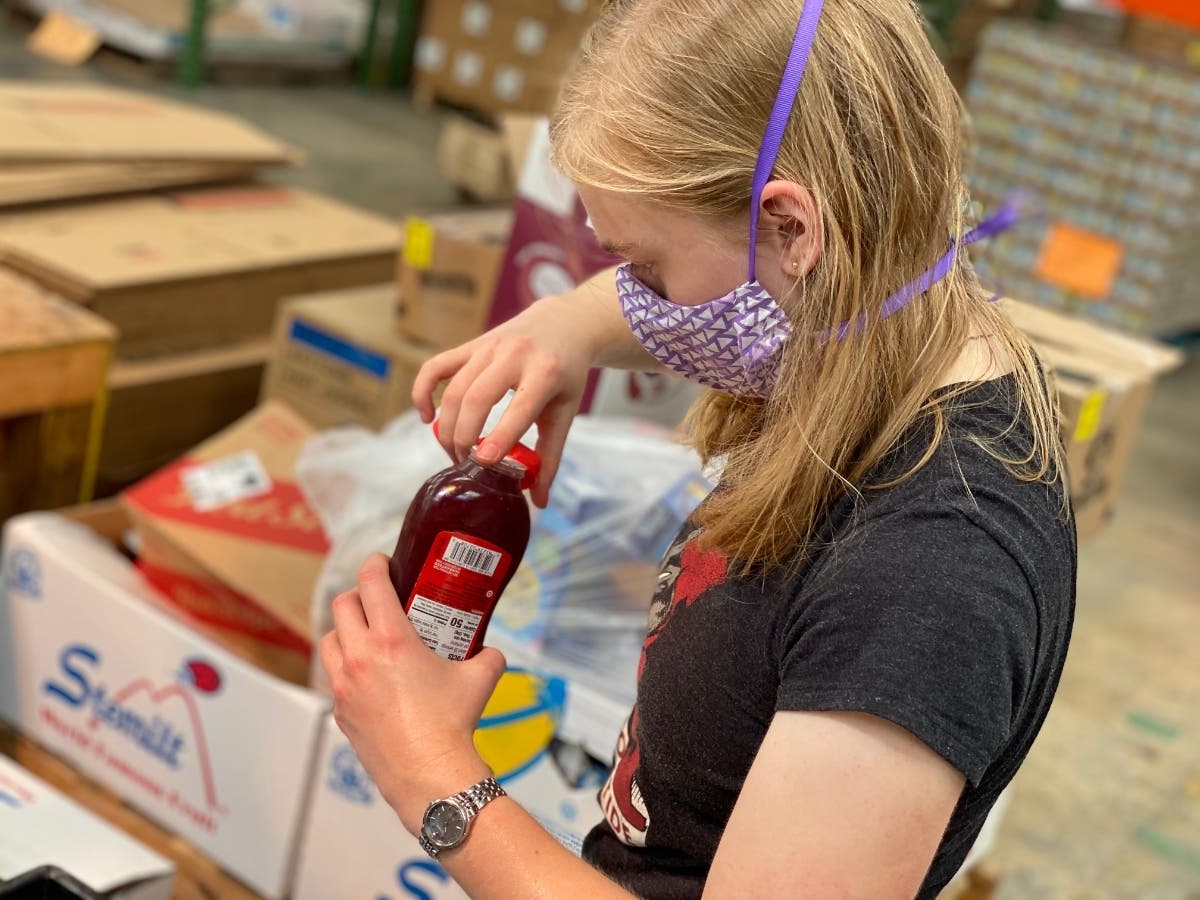
TUSCALOOSA, AL. — Local volunteer opportunities have been scarce due to the ongoing COVID-19 pandemic, but the University of Alabama for the 27th consecutive year found a way to get willing students involved in their community to kick off the school year. Ripple Effect, a day of performing service projects, saw UA student volunteers lend their time to six different groups and organizations across the area Monday.
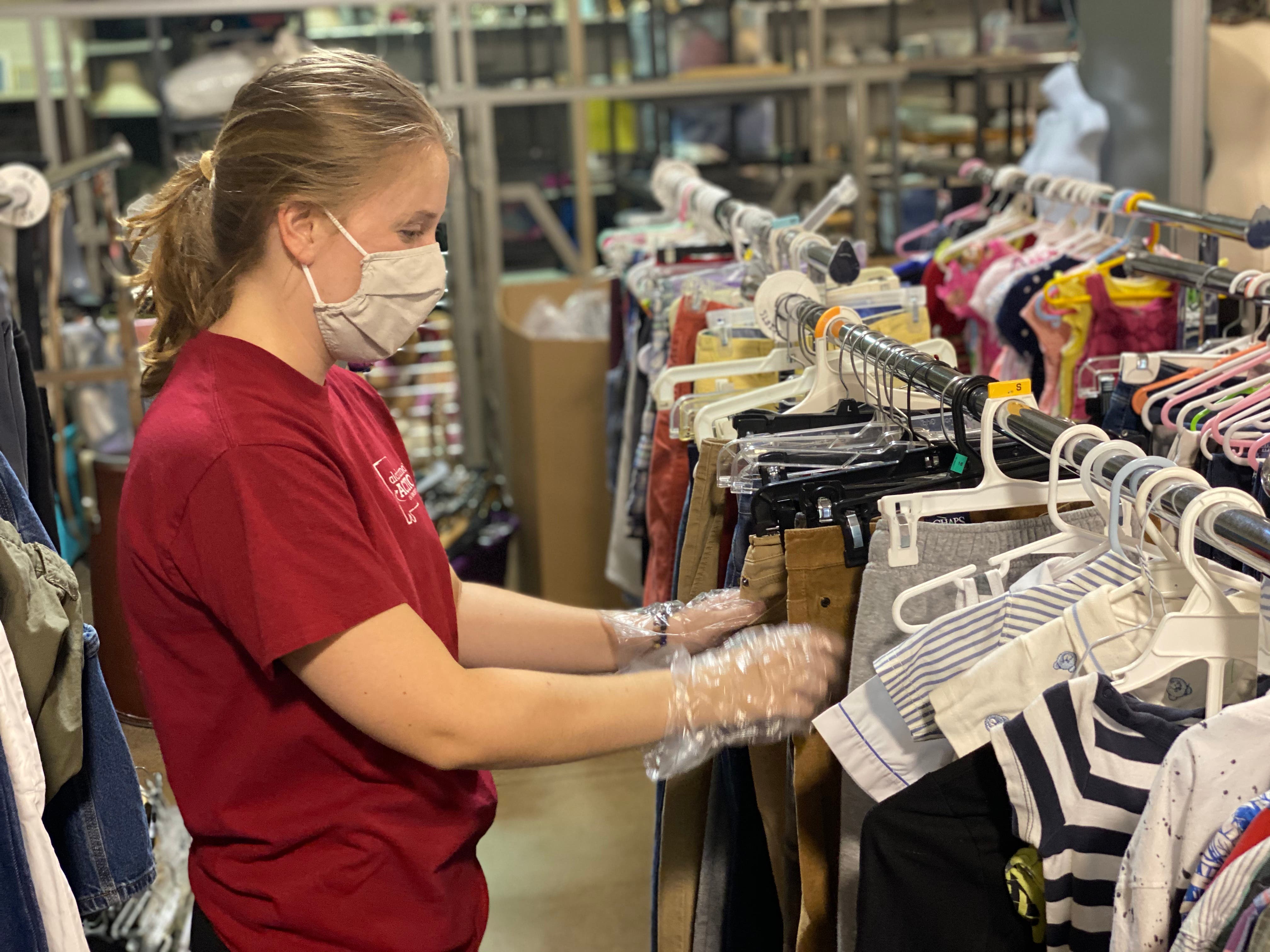
Karen Thompson-Jackson, executive director of Temporary Emergency Services, welcomed several students to help clean out the group's older merchandise in its thrift store to make room for new donations as the school year begins. In total, she gained the help of 10 students Monday and expressed gratitude for each individual that gave their time for those in need.
Founded in 1945 to serve clients unable to receive assistance from local social services agencies, Temporary Emergency Services has a central mission of helping out individuals and families facing moments of unexpected crisis. During the current social climate, Thompson-Jackson says that need has never been greater.
Find out what's happening in Tuscaloosafor free with the latest updates from Patch.
"The manpower due to COVID is just not here right now and [the volunteers] are giving us the ability to refresh and restock the store," she said. "Our sales are slacking because of COVID, so you want to keep your merchandise fresh. We’re totally dependent on the thrift store to help individuals in the community."
Throughout the store, students could be seen arranging clothes on racks and moving merchandise around. On one table, a wide array of jewelry was for sale and displayed to customers.
Find out what's happening in Tuscaloosafor free with the latest updates from Patch.
Bridget McMullin, a UA sophomore from Loda, Illinois who is studying psychology and political science, took a break from organizing a rack of donated pants and told Patch she felt the need to volunteer, even during the rippling uncertainty of a pandemic.
"I came out to volunteer before school started to get immersed in the community," she said. "I feel back at home. I think our community partners, some of them have definitely been struggling as a result of the pandemic."
Temporary Emergency Services seeks to help the less fortunate in the community through a range of offerings, including showers, groceries, hot meals and help paying certain bills. Prior to the pandemic, the nonprofit played an active role in recovery efforts from the tornado that devastated Tuscaloosa on April 27, 2011 and still offers hot meals on Sundays for those who would otherwise go hungry.
What makes the current situation vastly different from the challenges posed by the tornado, she reiterated, comes in the absence of volunteers, with many exercising caution and limiting interactions outside their home to avoid catching or spreading the virus. The situation is a far-cry from the outpouring of support and abundance of volunteer labor in the 2011 tornado's aftermath.
"It's the lack of manpower, you just don’t have the resources that you had, so you tend to take a hit financially," she said. "If you’re in a fire or something, we can give these items to you, but people can sell those items to us so we can afford to do the services. So in not having the manpower to do what we needed to do, I never realized how much we’re dependent on our community."
Thompson-Jackson acknowledged the severity of the pandemic, but also said the work being done at Temporary Emergency Services is essential. This dichotomy vastly increases the need for observing the proper precautions while also not losing sight of the overall mission.
"It's important work trying to navigate and continue to be responsible to the community while being responsible to the staff," she said. "We're still providing food, clothing and hot showers. People are coming every day who have been depending on our shower facility. It's interesting to be in this position. Probably, like everybody else, you weren’t expecting a pandemic, but we knew about natural disasters."
Courtney Chapman Thomas, director of service and leadership at UA, was also at the thrift store and told Patch that Ripple Effect — an initiative than generally brings in about 1,000 student volunteers each fall — had been pared down to only 70 this year due to the pandemic. However, apart from limited volunteer numbers, requiring masks and social distancing, little has changed as it relates to the overall approach for the initiative.
"It looks different, but we’re also very vital in our community," she said. "Folks like Temporary Emergency Services rely on us. They haven’t had volunteers since March, so we’re flipping inventory, getting it all out and restocked. With school starting there is a different set of needs for the community."
On the other side of the Black Warrior River in Northport, volunteers also worked at the West Alabama Food Bank as part of Ripple Effect. The sprawling warehouse off of Highway 82 saw some students sort and empty boxes, while others stocked the food bank's market.
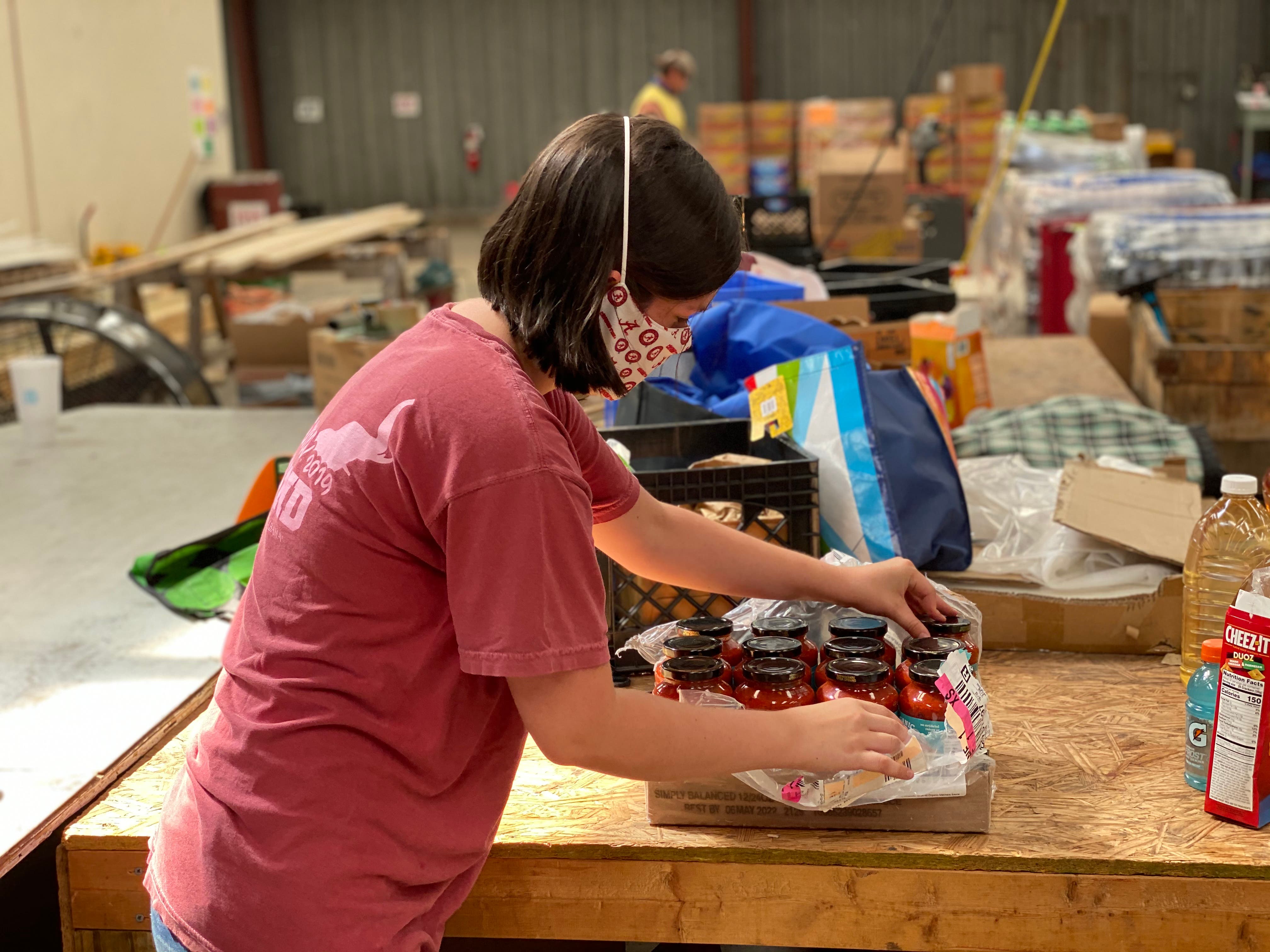
Tucker Brown, volunteer and development coordinator for the food bank, told Patch the volunteers added much-needed hands at a time when the West Alabama Food Bank is being utilized more than ever before. Facing a widespread economic downturn due to COVID-19, Brown said the food bank had been seeing an increase in those seeking access to its services for the first time.
"Last March, when a lot of our students went home and we weren’t able to take them, it was a huge hit for us," she said. "It changed the way we have to work. We have 13 employees, half of those are gone every day to stores and food pantries, so not having these volunteers and now having them back is a huge blessing."
The food bank has a sizable footprint, including providing regular meal boxes for 1,600 senior citizens and offering backpack meals to local students. Brown said from March 16 through May 31, the West Alabama Food Bank served 1.8 million pounds of food.
UA sophomore Katherine Ward could be seen sorting through a box of products ranging from noodles to condiments and said she chose the food bank specifically due to a personal connection back home.
"I’m from a really rural area and the food pantry there was a big thing," she said. "So I would volunteer there with my mom and wanted to get back to that."
Ward was joined in her sorting by UA junior Chloe Flack, an electrical engineering major from Detroit who started her morning checking the seal on pull-tabs for condiment bottles.
"I had the time and figured why not," she said. "I haven’t been able to in the past and it was always something I wanted to do."
Get more local news delivered straight to your inbox. Sign up for free Patch newsletters and alerts.