Politics & Government
Arizona Joins Coalition To Preserve Indian Child Welfare Act
Attorney General Brnovich joins bipartisan coalition to defend the adoption rights of Native American children, families, and tribes.

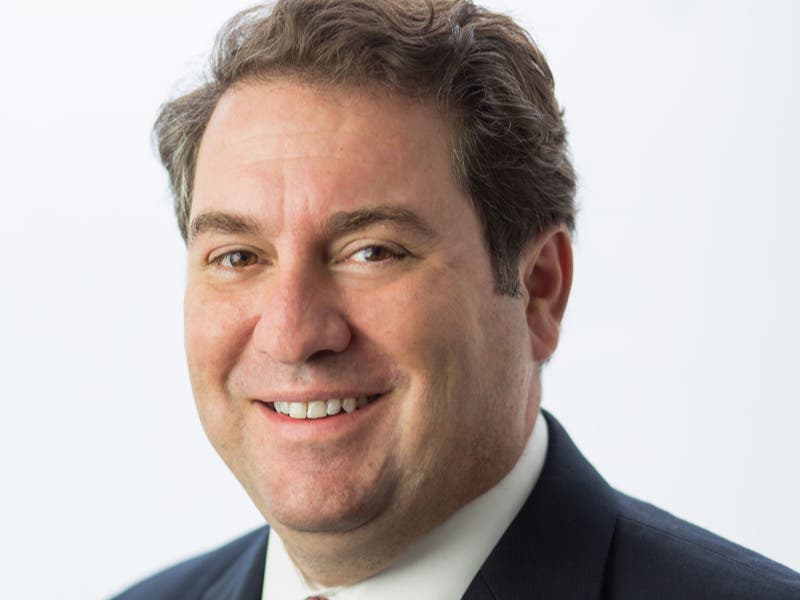
PHOENIX - Attorney General Brnovich has joined a bipartisan coalition of 27 attorneys general in an amicus brief to defend the Indian Child Welfare Act (ICWA). The case of Brackeen v. Bernhardt is being heard before the full U.S. Fifth Circuit Court of Appeals in New Orleans. The coalition is urging the court to uphold ICWA by affirming the prior decision of the Fifth Circuit’s three-judge appellate panel.
ICWA is a 41-year-old federal law that furthers the best interests of Native American children and protects the sovereignty of tribes by preserving children’s connections to their heritage during child placement proceedings.
First enacted in 1978, ICWA was a response to a history of culturally insensitive and ignorant removal of Native American children from their birth families. This resulted in the separation of Native American children from not only their families, but their tribes and heritage as well. ICWA’s purpose is to “protect the best interests of Indian children and promote the stability and security of Indian tribes and families by the establishment of minimum Federal standards” used in child welfare proceedings involving Native American children.
Find out what's happening in Phoenixfor free with the latest updates from Patch.
The brief argues that ICWA is an appropriate exercise of Congress’s broad authority to legislate in the field of Native American affairs and that it is consistent with the Tenth Amendment and equal protection principles. The brief also highlights ICWA’s important role in reducing disparities in child removal rates and improving the collaboration between states and tribes relating to their shared interest in improving the health and welfare of Native American children. The states that make up the bipartisan coalition defending ICWA are home to more than 90 percent of federally recognized tribes in the United States and nearly 70 percent of the overall American Indian and Alaska Native population.
This case arose in 2017 when individual plaintiffs — along with the states of Texas, Louisiana, and Indiana — sued the U.S. Department of the Interior and its now-former Secretary Ryan Zinke, challenging the law and implementation of regulations as unconstitutional. In October 2018, the district court for the Northern District of Texas agreed with the plaintiffs and struck down much of ICWA.
Find out what's happening in Phoenixfor free with the latest updates from Patch.
In August 2019, a three-judge appellate panel of the Fifth Circuit reversed the district court’s ruling and upheld the constitutionality of ICWA and its regulations. That three-judge decision was then set aside in order for the full court to review the case instead.
Last year, Attorney General Brnovich prevailed in another defense of ICWA, that time at the 9th Circuit Court of Appeals. In that case the court ruled that a legal challenge to ICWA by the Goldwater Institute of Arizona was moot, dismissing the case without comment.
At the time the Goldwater Institute challenge was met with some skepticism. Bertram Hirsh, the lawyer who had helped draft the original ICWA statute. According to Hirsh the Goldwater claim stood in opposition to years of legal precedent that has affirmed that tribes are self-governing.
“If you are a tribal member then you stand in a political relationship with the U.S., not a racial relationship,” Hirsh told the Chronicle of Social Change at the time.
Writing last year in The Establishment, Rebecca Nagle, an indigenous scholar and citizen of the Cherokee nation, thought that the forces seeking to overturn ICWA had other than the interests of children in mind. “Goldwater’s attack on ICWA is a back door route to undoing the legal structure that currently protects tribal sovereignty,” Nagle wrote.
Attorney General Brnovich joined the attorneys general of California, Alaska, Colorado, Connecticut, Idaho, Illinois, Iowa, Maine, Massachusetts, Michigan, Minnesota, Mississippi, Montana, Nevada, New Jersey, New Mexico, New York, Oklahoma, Oregon, Pennsylvania, Rhode Island, Utah, Virginia, Washington, Wisconsin, and the District of Columbia in filing the brief.
A full copy of the brief can be viewed at: https://www.azag.gov/sites/default/files/docs/office/internship/00515236001_State_Amicus_Brief_Motion_20191213.pdf