Politics & Government
Newsom, Padilla Races Called: CA General Election 2022
During the first few hours of election night, early victories were called for some propositions and candidates. See live results here.




Scroll down to view live results for statewide races and propositions.
CALIFORNIA — Californians who didn't vote early ventured out under gloomy skies Tuesday to cast their final votes for the 2022 General Election. Some in Southern California braved rainy lines to get into vote centers.
Some of the earliest races called by the Associated Press were the victories of Gavin Newsom and Alex Padilla.
Find out what's happening in Across Californiafor free with the latest updates from Patch.
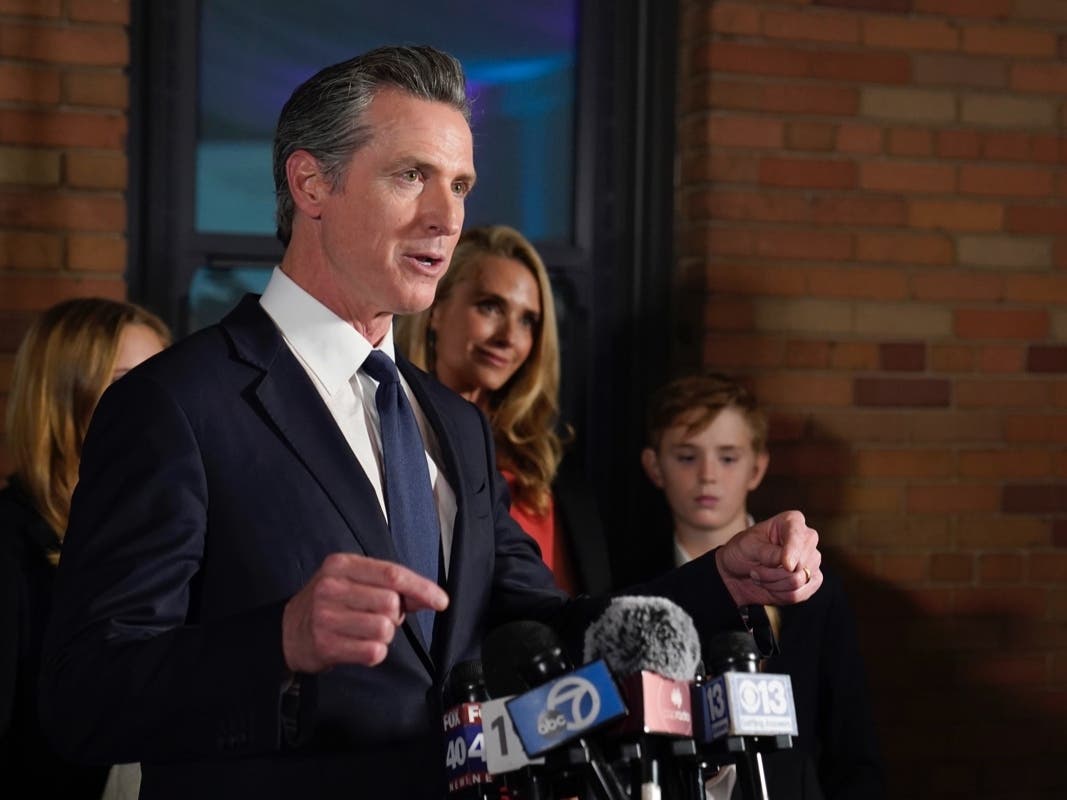
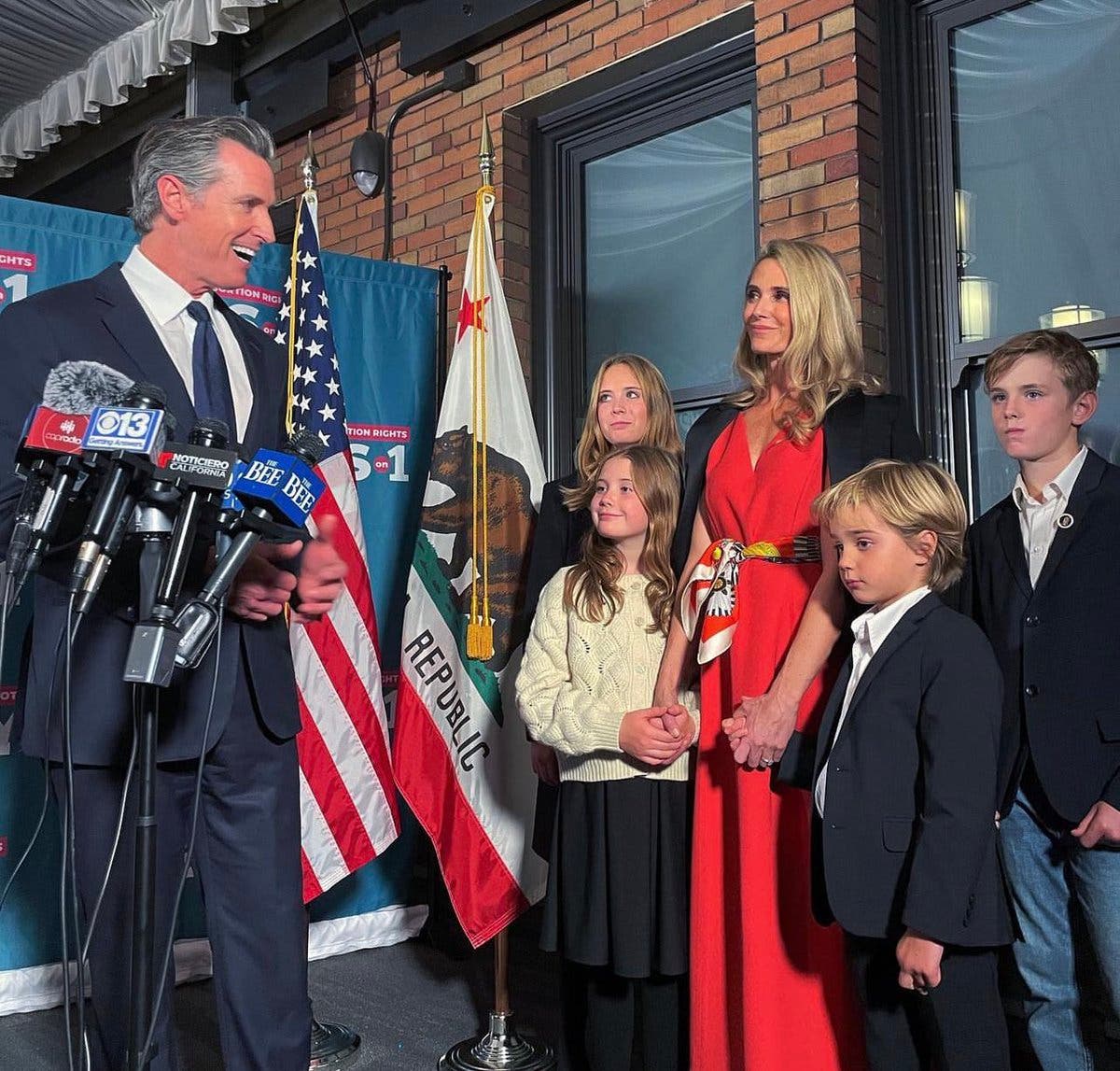
Newsom won another term as governor of the Golden State, according to the AP.
"Thank you, California!!" Newsom tweeted just before 10:30 p.m.
Find out what's happening in Across Californiafor free with the latest updates from Patch.
Newsom has continued to firmly seal his position as California's governor after surviving a recall election in August of last year, which helped him sail to success again in June's primary, when he beat lesser known Republican opponent, Sen. Brian Dahle (R-Bieber) by more than 40 points. In the General Election, Newsom beat Dahle yet again, the AP reported.
Meanwhile, Sen. Padilla, 49, made history yet again on Tuesday evening, becoming the first Latino to be elected to represent California in the U.S. Senate.
“We have a hell of a fight ahead of us, and I’m heading back to the Senate ready to help lead that fight,” Padilla said, according to the Los Angeles Times.
Padilla's win is a bright spot for Democrats, a party that is predicted to lose power during Tuesday's midterm. More often than not, the president’s party typically faces significant losses in midterm elections.
Since 1934, only Franklin D. Roosevelt in 1934, Bill Clinton in 1998 and George W. Bush in 2002 saw their parties gain seats in the midterms.
Some recent presidents saw big losses in their first midterm races.
Republicans under Donald Trump lost 40 House seats but gained two Senate seats in 2018; Democrats under Barack Obama lost 63 House seats and six Senate seats in 2010, and Democrats under Clinton lost 52 House seats and eight Senate seats in 1994.
As for the propositions, the voting was so lopsided for some, that the Associated Press quickly called them.
Proposition 28, easily passed with 63.4 percent support in early returns. That means California's K-12 schools will receive about $1 billion annually in arts and music class funding.
READ MORE: Real-Time Results: CA Propositions In The 2022 General Election
Similarly, Proposition 31 also passed by a wide margin in early returns. In passing the measure, California voters banned the sale of most flavored tobacco products.
What's more, competing measures to allow sports gambling in California looked like losing bets Tuesday after the most expensive ballot initiative campaign in U.S. history.
Proposition 27, which that would allow online and mobile sports betting was failing by nearly a 3-to-1 margin in early returns and proposition 26, which would allow sports wagering at Native American casinos and horse tracks was trailing by about 30 percentage points.
The gaming industry and Native American tribes raised nearly $600 million to capture a piece of a potential billion dollar market in the nation’s most populous state.
The polls closed at 8 p.m. but voters won't likely know the outcome for many races right away.
Ballots can be processed as early as seven days before Election Day, but they can’t actually be counted until polls close. Meanwhile, mail-in ballots postmarked by Tuesday will be counted through Nov. 15. And more time is needed to process ballots cast by those who register to vote today.
California's final election votes may not be technically certified until mid-December, but the outcome of most races, apart from close calls, should be clear by Tuesday evening, California Secretary of State Shirley Weber said.
As of Sunday, nearly 4.9 million of the 22.2 million ballots mailed had been returned, CalMatters reported.
John Amador, an independent who recently moved to Long Beach but previously lived in Los Angeles for more than 50 years, said he favors Rick Caruso as a candidate for LA Mayor.
“I think he’s a strong candidate. He has more realistic views about what the city needs. I’m tired of all of the inflation,” he told Patch.
Amador felt it was especially important to vote this year amid soaring inflation, high gas prices and beyond.
“We tax like crazy,” he said.
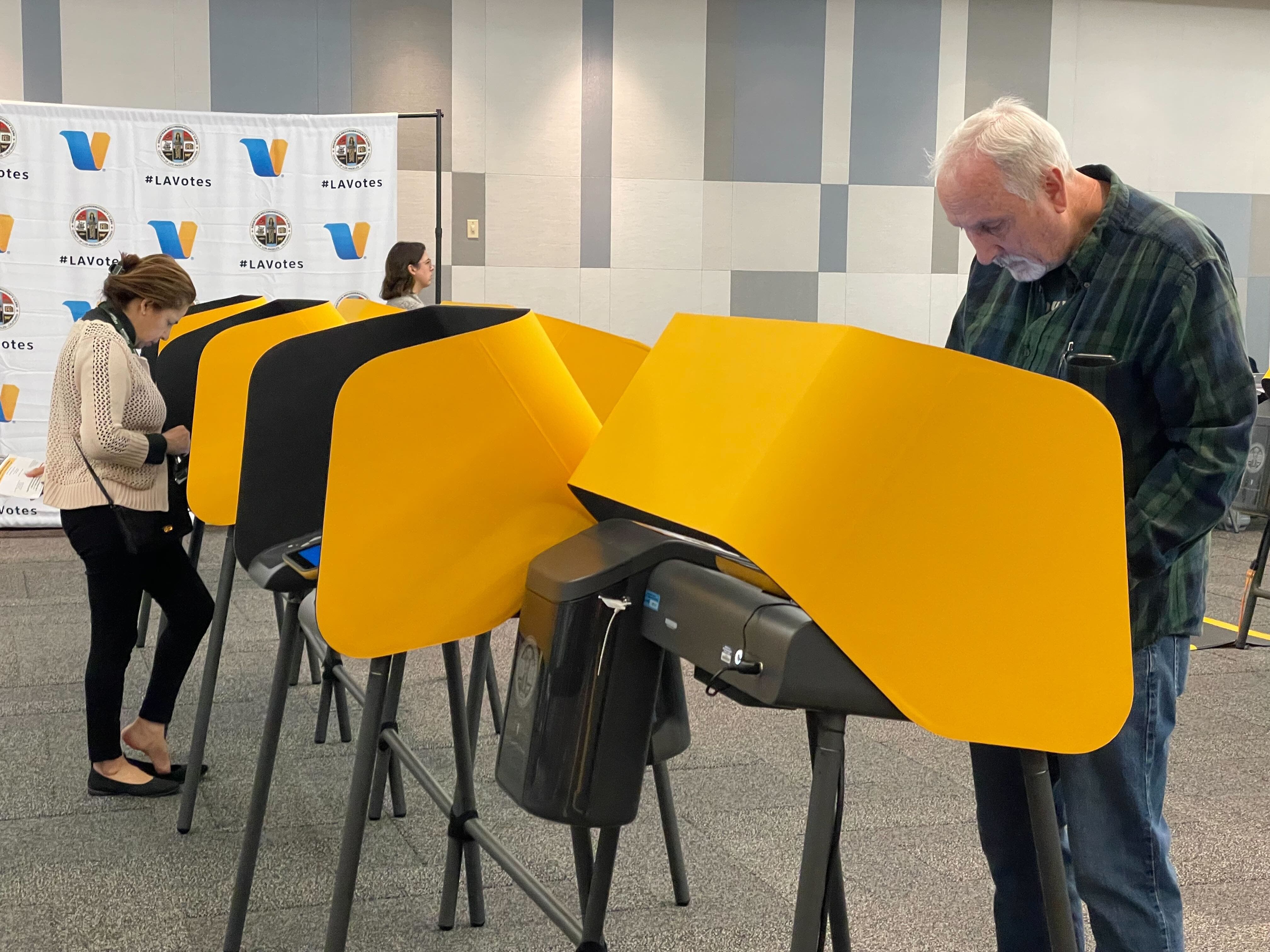
Richard Arbeido braved the Southern California downpour with his young daughter to vote in person on Tuesday. Arbeido said he felt strongly about voting for Democratic Gov. Gavin Newsom.
“It’s important as adults and citizens that we show our youth that we can make a choice to change our future,” he told Patch, gesturing to his daughter.
Ahead of the election, voters fretted about democracy and polarization. California voters were fractured politically and culturally ahead of Election Day, and they are anxious about where their country is heading — on inflation, abortion, immigration, crime and beyond.
"As the November 8th election approaches, we are seeing attempts to undermine our democracy across the country," Weber tweeted in late October. "I urge you to exercise your right to vote, and I promise to keep California’s elections safe and free of interference."
Despite Weber's pleas for Californians to vote early or vote by mail, early vote returns in California lagged. Just 19 percent of California's 22 million registered voters had turned in ballots as of Saturday, the Los Angeles Times reported, using data from consulting firm Political Data Intelligence.
Steeped in division going into the General Election, California voters shared a collective sense of discomfort.
READ MORE:
“This election is hugely consequential,” said Edward Foley, a professor at Ohio State University who directs its election-law program. “It’s a question of where our democracy is and how we are doing with our collective self-governance.”
Republican retiree Ron Flores, the son of a Mexican immigrant, told the Associated Press he always had an interest in history and politics but didn’t act on it until more recently and last year formed the group “BASTA!,” which is aimed at encouraging Latinos to vote and promoting mostly — but not solely — politically conservative candidates.
“Are you honest? Are you going to do what we want you to do?” he asked. “I support good governance candidates and sometimes it’s on the left, but most of the time, it’s on my right.”
Flores, now in his 70s, lives in a surf-friendly California beach community not far from the mostly Latino city of Santa Ana, where he lived as a child.
In California, there are measures on the ballot right now about online gambling and abortion. But Flores said there are bigger issues, like how much it costs to fill his car with gas and the rising price of nearly everything.
Republicans statewide and across the nation predicted a massive red wave as anxious Democrats defended their narrow majorities in Congress while struggling to overcome pervasive concerns about the economy, crime and President Joe Biden’s leadership. Democrats hoped that a backlash against the Supreme Court's reversal of Roe v. Wade will save them.
The political environment led to an unusually large playing field as emboldened Republicans pressed into Democratic strongholds like the Golden State.
While 2018 saw a "blue wave" when some suburban congressional districts flipped Democratic, Republicans attempted to make gains in these districts in the November election.
President Joe Biden was in a neighboring coastal district last month on behalf of another endangered Southern California Democrat, Rep. Katie Porter, a star of the party’s progressive wing. The Levin and Porter contests are among about a dozen congressional races in California considered competitive — a handful are seen a toss-ups and are viewed by both parties as critical to control of the House.
“If Democrats are scratching and clawing to hang on to districts Biden carried by double digits, they have likely already lost the House,” said David Wasserman, an analyst with the Cook Political Report.
READ MORE: On The Ropes, California's House Democrats Turn To Biden For Rescue
As far as statewide races go, there was at least one that excited voters. This year, controller, was a seat that lended a Republican candidate a shot at winning a statewide contest for the first time since 2006.
June’s primary was among the most interesting races statewide since Republican, Lanhee Chen, was able to advance.
Here are the statewide races voters decided on.
Statewide Races
Millions of Californians were called back to the ballot boxes this year to decide who will occupy the governor’s seat as well as a slew of other important statewide positions.
Golden Staters were asked to vote on candidates for:
Governor
Can't see the widget below? Click here for all California election results.
Gov. Gavin Newsom was up for re-election in 2022, and he’s likely to sail to another victory with ease after surviving a recall election last year and managing and dominating in the primary election.
Nonetheless, he faced opponent state Sen. Brian Dahle (R-Bieber), whom he beat by nearly 40 points in the June primary.
Dahle’s campaign has raised just $2 million, while Newsom’s campaign has raised more than $23 million, the Los Angeles Times reported.
Newsom led Dahle by a 27-point margin — 58 to 31 percent — among likely voters, according to a September Public Policy Institute of California survey.
The Democratic governor debated the lesser-known Dahle on Oct. 23, where the two went to the mattresses on issues such as abortion, gas prices, the drought and the favored rumor of Newsom's suspected run for president.
“I want to start out by thanking the governor for taking time out of going forward on his dream of being president of the United States and actually coming to California and having a debate,” Dahle said. “Californians are suffering. They’re fleeing California and they’re going to other states where he’s campaigning nationally.”
Moderators asked Newsom if he planned to serve out the full four years if he were handed another term.
"Yes," Newsom returned. "And I’ve barely been out of state. I was out of state for a few hours to take on his party and [the] leader of his party, Donald Trump, who he is a passionate supporter of."
READ MORE: Rumors Of Presidential Run Swirl As Newsom Seeks Re-election
Attorney General
Can't see the widget below? Click here for all California election results.
Attorney General Rob Bonta was appointed after Xavier Becerra became the first Latino to hold the Secretary of the Department of Health and Human Services seat.
Bonta, a Democrat and former state lawmaker, faced off against Republican Nathan Hochman, a former assistant U.S. attorney general and a criminal attorney. Hochman says the state needs a new attorney general who will combat rising crime.
Hochman got 18 percent of the vote in the June 7 primary, while Bonta won 54.8 percent.
Insurance Commissioner
Can't see the widget below? Click here for all California election results.
Incumbent Democrat Ricardo Lara ran for a second term as insurance commissioner, a seat that is tasked with regulating the state insurance industry. Republican cybersecurity equipment manufacturer Robert Howell will challenge Lara in the general election.
He has described himself as a “Reagan Republican,” who says he’s committed to helping wildfire victims and insurance premiums that are “abusively inflated,” CalMatters reported.
Secretary of State
Can't see the widget below? Click here for all California election results.
Incumbent Secretary of State Shirley Weber, a Democrat, was appointed by Newsom after Alex Padilla ascended to his seat as a senator. She faced Republican Rob Bernosky, who describes himself as a “practical conservative.”
Bernosky, the chief financial officer of a tech company, is a longtime activist and former Hollister school board member. He previously ran for state Assembly in 2010 and in 2012 but was unsuccessful.
Weber said she plans to change the state’s recall system after the attempted recall of Newsom last year. Democrats argue that the recall process was abused.
“Very little conversation occurred about: Does this man need to be recalled? Has he done something so egregious that we want to remove him from office?” Weber told CalMatters.
READ MORE: What Would Shirley Weber Do Next As California Secretary Of State?
Controller
Can't see the widget below? Click here for all California election results.
The race for controller in a California general election doesn't typically generate much interest, but June’s primary was among the most interesting races statewide. That’s because a Republican, Lanhee Chen, was able to advance. Chen opened the door for a Republican to have a shot at their first statewide office since 2006.
The state’s fiscal officer typically facilitates audits and serves on some 70 state boards and commissions.
In November, Chen faced Malia Cohen, a Democrat and member of the state Board of Equalization. Chen is a Stanford instructor and former top Republican adviser.
READ MORE: Chen Advances To Runoff For CA Controller
State Treasurer
Can't see the widget below? Click here for all California election results.
Democratic incumbent Fiona Ma faced Republican Jack Guerrero in November. Guerrero is a certified public accountant serving on the Cudahy City Council in Los Angeles County.
Ma said her priority would be to meet Newsom’s goal of building 3.5 million homes by 2025, she told CalMatters.
Lieutenant Governor
Can't see the widget below? Click here for all California election results.
Incumbent Eleni Kounalakis, a Democrat, was challenged by Republican Angela Underwood Jacobs, a bank manager who has experience serving as a member of the Lancaster City Council.
Kounalakis is the first woman to be elected lieutenant governor of California and said she wants to ensure a woman succeeds to the governor’s seat in 2026, hinting at a run herself.
Superintendent of Public Instruction
Unlike the other statewide races, this competition is a nonpartisan one. In November, Lance Ray Christensen, an education policy executive, tried to unseat incumbent Tony Thurmond.
Propositions
Voters were asked to weigh in on everything from a constitutional amendment enshrining abortion rights to dueling measures that would bring the multi-billion dollar sports betting industry to California.
READ MORE:
Can't see the widget below? Click here for all California election results.
This measure would codify the rights to abortions and birth control within California’s constitution.
Read more about it here.
California does not currently allow sports betting, but since the U.S. Supreme Court opened the door to legalized sports wagering three years ago, California has become the jackpot for the gambling industry since it has the most professional and college teams in the nation in addition to the largest population and concentration of wealth.
Prop. 26 is a constitutional amendment that would allow it in tribal casinos and racetracks. Read more about it here.
Prop. 26 seeks to allow it in tribal casinos only and racetracks while Prop. 27 is a constitutional amendment that would allow some tribes and gambling companies such as FanDuel and DraftKings to operate online or mobile sports betting outside of tribal lands. The dueling propositions present a political cage match between gambling entities battling for control over the future of the billion-dollar sports betting industry in California. Because both propositions are diametrically opposed, the passage of both would likely trigger legal battles. Read more about it here.
Prop. 28 seeks to set aside funding every year for arts and music education in California’s K-12 public schools. Read more about it here.
Prop. 29 would require clinics to have at least one physician, nurse practitioner, or physician assistant on site when patients are being treated and to report infections related to dialysis treatment. Read more about it here.
Prop. 30 would increase the tax on personal income above $2 million by 1.75% and dedicate the revenue to zero-emission vehicle subsidies, building charging stations and zero-emission vehicle infrastructure, reducing greenhouse gasses and hiring and training firefighters to help combat wildfires. Read more about it here.
A California law banning the sale of flavored tobacco products in stores and vending machines passed in 2020 but was placed on hold when a referendum initiated by the tobacco industry qualified for the 2022 ballot. Now, the issue is being put to the voters. Proposition 31 essentially asks voters: should the ban go into effect? A yes vote would uphold the ban. A no-vote would kill it. Read more about it here.
The Associated Press and CalMatters contributed to this report.
Get more local news delivered straight to your inbox. Sign up for free Patch newsletters and alerts.