Politics & Government
CA's Ballot Propositions: The Latest Results
The polls are closed and voters have had their say on seven ballot measures tackling abortion, sports wagering, and green infrastructure.


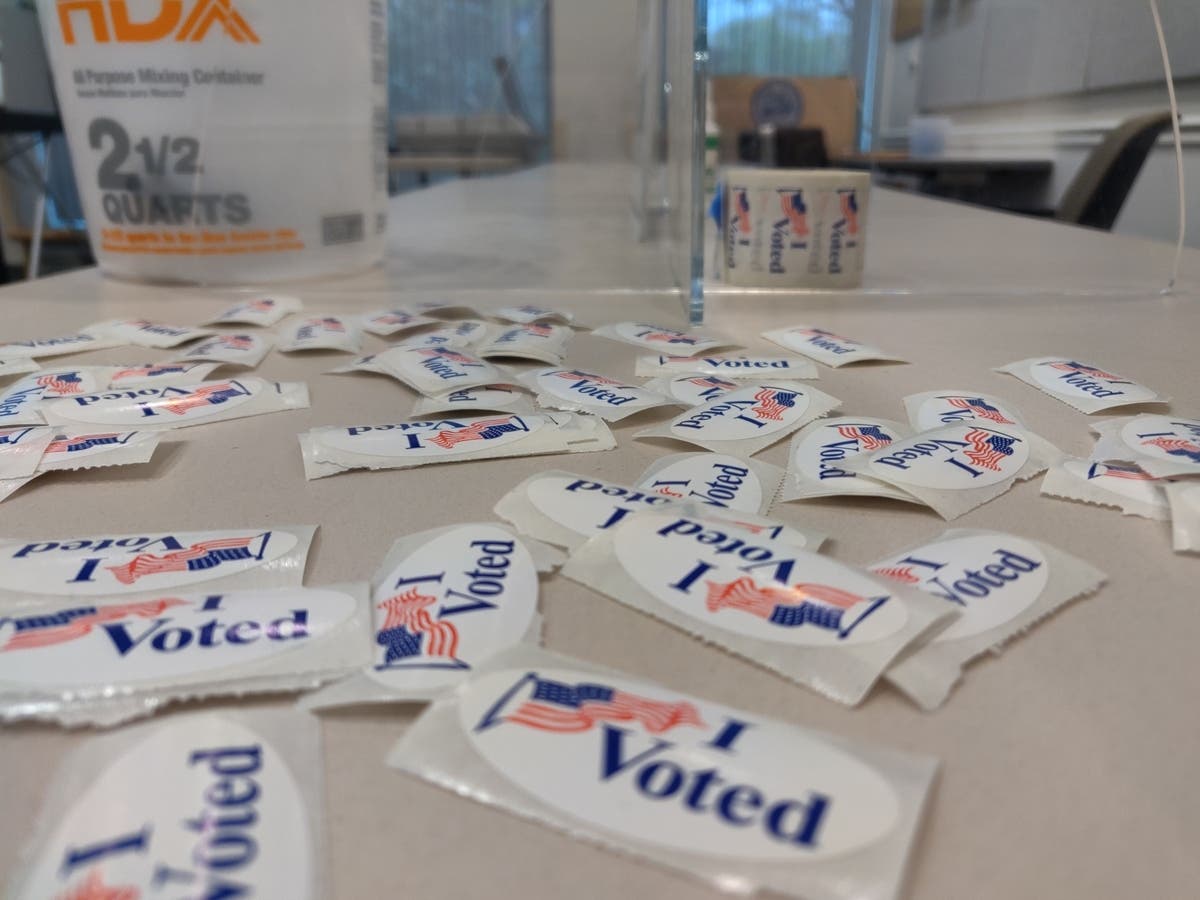
CALIFORNIA — The polls are closed in California, and the fate of the Golden State’s seven ballot measures have been set.
Voters were asked to weigh in on everything from a constitutional amendment enshrining abortion rights to dueling measures that would bring the multi-billion dollar sports betting industry to California.
Early on election night, the voting was so lopsided for some of the propositions, that the Associated Press quickly called them.
Find out what's happening in Across Californiafor free with the latest updates from Patch.
SEE ALSO:
- California Becomes First State With Constitutional Right To Abortion
- Prop. 26, The Sports Wagering Measure, Appears To Be A Losing Bet
- Prop. 31 Passes: California Votes To Ban Sale Of Flavored Tobacco
- Prop. 28 Passes, Shifting $1 Billion To K-12 Arts And Music Education
Let's take a look at some of the propositions that have a strong enough lead to declare victory.
Find out what's happening in Across Californiafor free with the latest updates from Patch.
According to the Associated Press, Proposition 1, the constitutional amendment enshrining the right to abortion and reproductive choice, passed by millions of votes. According to preliminary tallies, it was passing with 65 percent of the vote. Even before the Associated Press had called the outcome for Proposition 1, a spokesperson for the opposition campaign conceded defeat, according to the Los Angeles Times.
Abortion rights supporters won in the four states where access was on the ballot Tuesday, as voters enshrined it into the state constitution in battleground Michigan as well as blue California and Vermont and dealt a defeat to an anti-abortion measure in deep-red Kentucky.
“As we saw in Kansas earlier this year, and in many other states last night, this is not a partisan issue," said Nancy Northup, president the Center for Reproductive Rights, in a statement. "People are energized and they do not want politicians controlling their bodies and futures.”
Measures to allow sports gambling in California looked like losing bets early on Tuesday evening, even after the most expensive ballot initiative campaign in U.S. history. Basically, Californians were asked – in two different ways – if they wanted to legalize sports betting. Their resounding answer was “No.”
Proposition 27, which that would allow online and mobile sports betting was failing by nearly a 3-to-1 margin in early returns and proposition 26, which would allow sports wagering at Native American casinos and horse tracks was trailing by about 30 percentage points.
The gaming industry and Native American tribes raised nearly $600 million to capture a piece of a potential billion-dollar market in the nation’s most populous state.
Californians were inundated with a blast of advertisements — much of it from backers of the two measures attacking the competing one.
The money raised and spent more than doubled the record amount spent in 2020 by Uber, Lyft and other app-based ride-hailing and delivery services to prevent drivers from becoming employees eligible for benefits and job protection.
But the spending wasn’t split equally between the two measures. “The reality is, we didn’t undertake any meaningful advertising for Yes on 26,” said Jacob Mejia, vice president of public affairs for Pechanga Band of Indians, a tribe that supported the in-person betting measure and opposed the online measure. “Our focus was purely on defeating Proposition 27 after that measure came to fruition,” Mejia said, CalMatters reported.
Proposition 28, easily passed with 63.4 percent support in early returns. That means California's K-12 schools will receive about $1 billion annually in arts and music class funding.
Meanwhile, proposition 29 failed.
This measure would have required kidney dialysis clinics to have at least one physician, nurse practitioner or physician assistant with six months of relevant experience available on site or, in some cases, via telehealth. It also would have required that clinics report infection data to the state, as well as publicly list physicians who have ownership interest of 5% or more in a clinic.
The measure also would have prohibited clinics from closing or reducing services without state approval and from refusing treatment to people based on their insurance type.
Proposition 30, a highly contentious measure, failed with about 60 percent of voters saying "no" in early returns.
Prop. 30 would have imposed a 1.75 percent personal income tax increase on the top-earning Californians — for the share of their income above $2 million — per year to fund a suite of climate programs. The goal is to clean up the state’s dirty air and help meet ambitious greenhouse gas reduction targets, CalMatters reported.
Proposition 31 passed by a wide margin in early returns. In passing the measure, California voters banned the sale of most flavored tobacco products.
The seven statewide ballot measures are the fewest California has seen in a single election in more than 100 years, according to CalMatters. However, voters could be forgiven for thinking there are more measures than ever on the ballot, thanks to the campaign ads flooding the airwaves and flyers filling up mailboxes.
Scroll through the propositions below to see the real-time results for every ballot measure as they begin to roll in at 8 p.m. Refresh for the latest.
Can't see the widget below? Click here for all California election results.
SEE ALSO:
With just days left until the election, there were signs that all that campaigning may not be helping the propositions’ proponents, however. The bulk of campaign spending on propositions this election cycle have gone into the campaigns for and against Prop. 26 and Prop. 27. According to the California Secretary of State, more than $556 million have gone into the campaigns — a political cage-match to decide if tribal casinos or online gaming giants control sports wagering in California. According to the polls, both measures were unpopular with voters.
A recent poll by the Public Policy Institute of California, found two propositions well-positioned to pass going into Election Day. Roughly 69 percent of likely voters said they supported Proposition 1, which would make reproductive freedom — including the right to abortion — protected under the state constitution.
The same poll shows majority support for Proposition 30, which would increase the tax on personal income above $2 million by 1.75% and dedicate the revenue to zero-emission vehicle subsidies and infrastructure, reducing greenhouse gasses, and hiring and training firefighters to help combat wildfires.
SEE ALSO: CalMatters 2022 Voter Guide
Click on each measure to find out what it would do, who was for and against it and how much money has gone into the campaigns to support or defeat the propositions.
Prop 1: California's Abortion Rights Amendment Explained
This measure would codify the rights to abortions and birth control within California’s constitution. It took a strong lead in the first few hours after the polls closed in California. The measure, likely to pass, will ban the state from interfering with a person's right to obtain abortion or contraceptives.
Read more about it here.
Prop 26: CA's Tribal Legalized Sports Betting Measure Explained
California does not currently allow sports betting, but since the U.S. Supreme Court opened the door to legalized sports wagering three years ago, California has become the jackpot for the gambling industry since it has the most professional and college teams in the nation in addition to the largest population and concentration of wealth.
Prop. 26 is a constitutional amendment that would allow it in tribal casinos and racetracks.
Read more about it here.
Prop 27: CA's Legalized Online Sports Betting Measure Explained
Prop. 26 seeks to allow it in tribal casinos only and racetracks while Prop. 27 is a constitutional amendment that would allow some tribes and gambling companies such as FanDuel and DraftKings to operate online or mobile sports betting outside of tribal lands. The dueling propositions present a political cage match between gambling entities battling for control over the future of the billion-dollar sports betting industry in California. Because both propositions are diametrically opposed, the passage of both would likely trigger legal battles.
Read more about it here.
Prop 28: CA's K-12 Art and Music Education Initiative Explained
Prop. 28 seeks to set aside funding every year for arts and music education in California’s K-12 public schools.
By 9:30 p.m. on Election Night, the proposition was pulling a strong lead, early election results showed.
If it passed, the measure was expected to inject $1 billion into California schools.
Read more about it here.
Prop 29: CA's Dialysis Clinic Requirements Initiative Explained
Prop. 29 would require clinics to have at least one physician, nurse practitioner, or physician assistant on site when patients are being treated and to report infections related to dialysis treatment.
Read more about it here.
Prop 30: CA's Clean Cars And Clean Air Act Explained
Prop. 30 would increase the tax on personal income above $2 million by 1.75% and dedicate the revenue to zero-emission vehicle subsidies, building charging stations and zero-emission vehicle infrastructure, reducing greenhouse gasses and hiring and training firefighters to help combat wildfires.
Read more about it here.
Prop 31: CA’s Flavored Tobacco Ban Referendum Explained
A California law banning the sale of flavored tobacco products in stores and vending machines passed in 2020 but was placed on hold when a referendum initiated by the tobacco industry qualified for the 2022 ballot. Now, the issue is being put to the voters. Proposition 31 essentially asks voters: should the ban go into effect? A yes vote would uphold the ban. A no-vote would kill it.
Read more about it here.
The Associated Press contributed to this report.
Get more local news delivered straight to your inbox. Sign up for free Patch newsletters and alerts.