Health & Fitness
A Bookseller's Blog: 'The Princess Bride' by William Goldman
The battle of book adaptations rages on
Film adaptations. Christ, what a dilemma.
Especially in my line of work, it’s hard not to have a love-hate relationship with film adaptations of books. Sometimes they can bring disgrace and ruination to a perfectly good novel. Othertimes, they can bring life and vivacity to classics and contemporaries, enhancing (without warping) our love of them. On one hand, they are artistically unnecessary, bringing just about zero positive or new things to the story’s experience. On the other, they create unprecedented amounts of popularity for books, the sales of which are my livelihood. Ideally, they would offer a balance: movies with better sound and vision, novels with richer imagination and more raw information.
At the time of my posting this, the Alameda Theatre & Cineplex is showing a modest selection of adaptations: The Avengers, What To Expect When You’re Expecting, and The Best Exotic Marigold Hotel. And even here, the selection is checkered: a comic book series, a nonfiction pregnancy guide and a 2004 novel whose only release in the US has been its movie tie-in. So in order to fully describe my reading of William Goldman’s The Princess Bride, I must first take you back to January 2012.
Find out what's happening in Alamedafor free with the latest updates from Patch.
Back then, just about everything in theaters was an adaptation: Extremely Loud & Incredibly Close, Tinker Tailor Soldier Spy, the U.S. version of The Girl with the Dragon Tattoo, Hugo, Sherlock Holmes, The Adventures of Tintin, The Descendants, and The Woman in Black. Film adaptations seemed inevitable — the industry was choking on them, gorging itself to death on previous stories in order to crank out mediocre and embarrassing retellings of them. It was at this time that a good friend lent me his old paperback of The Princess Bride, which I dug into eagerly.
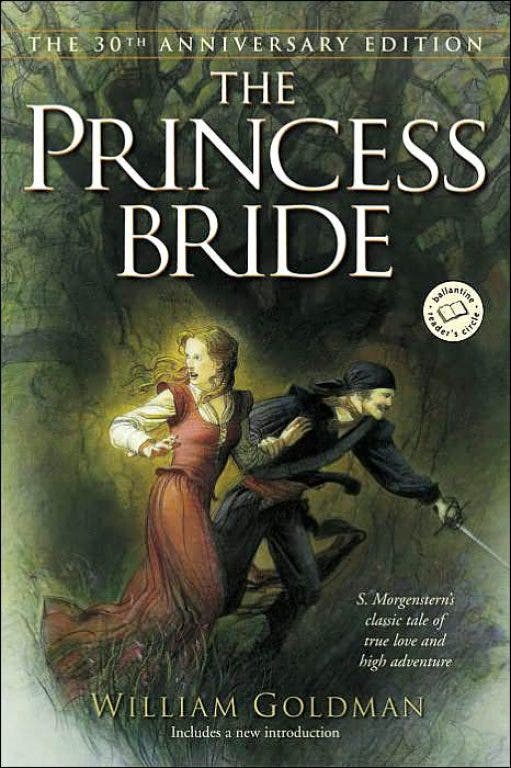
Like many, I had repeatedly seen and already enjoyed The Princess Bride's film adaptation. So I was going into this with famous faces and iconic voices assigned in advance to these characters, and I had to shake them somehow. Fortunately, I already had some experience in this, from when I first read the Lord of the Rings trilogy two years ago. In order to keeps the voices of Sir Ian McKellan and Elijah Wood out of my head, I imagined that John Cale, of all people, was narrating the novels, the way he narrates “The Gift” from White Light/White Heat. For Goldman’s novel, I pictured the characters as animations, done in the cover style of that 1980s paperback, where Buttercup’s sleeves and Wesley’s mustache are a bit more prominent.
Find out what's happening in Alamedafor free with the latest updates from Patch.
As the chapters flew by, this technique became less important than just enjoying the story. The plot is essentially unchanged, the characters remain as distinct and unique and fascinating as ever but are more fleshed out with extra information, and the frame narrative of Billy and his father is still cute without being overly disruptive. With the exception of Prince Humperdink (who, in the novel, is a barrel-shaped death-dealer rather than an eternally nonplussed royal figure), the actual “Princess Bride” part of The Princess Bride is as charming in a book as on a screen.
The problem, really, is Goldman himself. I picked up this book to enjoy a classic tale of romance and high fantasy, not to be dragged through the ongoing nadir of his depressing life. A little metafiction isn’t so bad: the film keeps it to a digestible minimum. But constantly butting in with kvetching and complaints is going too far, and that goes double for the interruptions about metafictitious Morgenstern’s interruptions — the irony stopped being funny fast. Ultimately? It was a good read, but I can’t wait to rewatch the movie.