Health & Fitness
The Webster Street Renaissance?
Wherein I pontificate on the character of Webster Street

I did something today that I do all too infrequently. I strolled down Webster St.
It's been apparent to me for a while that the area has been wanting to break into a real commercial renewal, like starting a car engine on a really cold day, cranking, you know it's just about to catch. (Yeah, it's struggling, but aren't we all?) Café Jolie and About Beauty got much recent attention, but I noticed that many places that were boarded up (or papered up) look like they're in preparation for some construction; indeed, more than one location has a "coming soon" sign on the window.
I live two blocks from Park Street, and I think I've succumbed to a not-entirely-unknown malady one might call "Park St. provincialism." You don't hear it said out loud — much — but sometimes it seems like Webster is thought of as Park Street's not-quite-as-good younger sibling, kind of like Harry to its Will, Fergie to its Di, Ishmael to its Isaac, Jim Belushi to its John, the Rolling Stones to its Beatles.
Find out what's happening in Alamedafor free with the latest updates from Patch.
Not that I'm unfamiliar with the area. I was involved with the base when I was with the NSC, and worked at Lapis when they were in ShipWay 4, but that was all prior to 1995, i.e., B.B.C. — before the base closed. (I continue to argue that when the modern history of Alameda is written, or videoed, or holorecorded, or whatever, it will be divided into "before the base closed" and "after the base closed".)
Indeed, the first home I tried to buy in Alameda was off Fourth Street. But between Park Street and the mall, I don't have much reason to go to Webster, and I tend not to think about it much. (Harbor Bay what? Bay Farm where?) The Togo's on Atlantic closed, I don't go to restaurants so frequently lately, and frankly I'm unimpressed with the farmers' market. (Have they added portable toilets yet?).
Find out what's happening in Alamedafor free with the latest updates from Patch.
But the Webster Street folks are going to need to make some choices. In the discussions around Alameda Landing, you already hear people express concerns about the "character" of the area. Putting aside what effect the Landing, being farther down by the estuary, will have on the Central-to-Atlantic stretch, what do we mean by the character of the area?
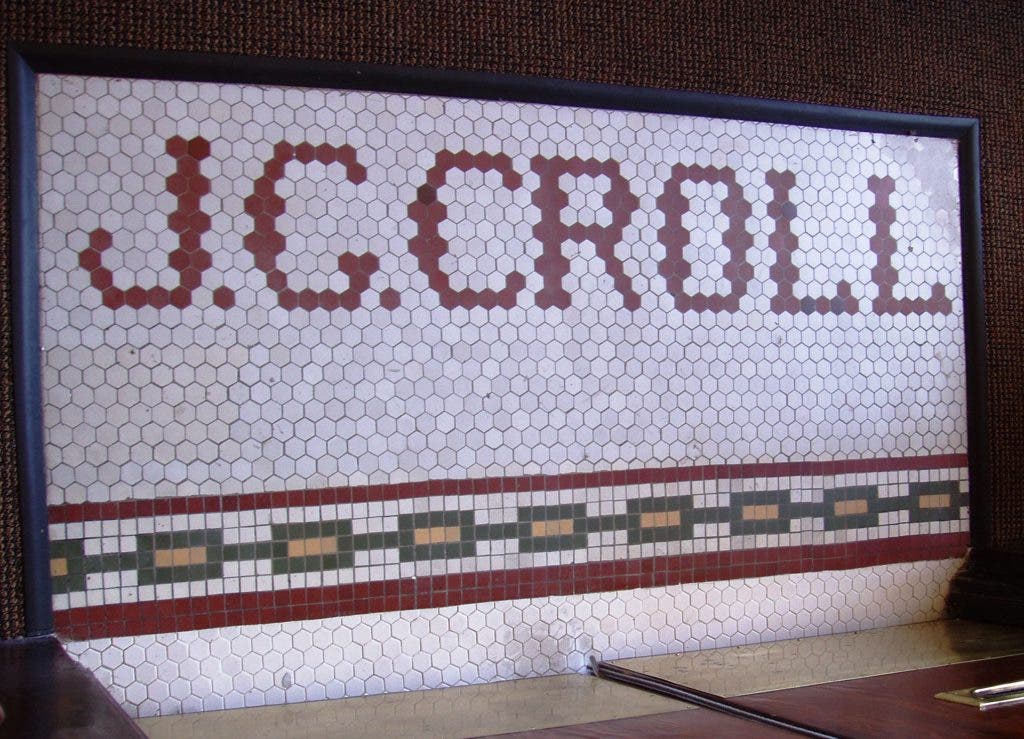
The word "character" connotes some continuity with the past, some bit of tradition; characters are established, presumably over time; thus character is what the area has been, less so what it is right now. The character of Webster Street has been typified by places like Croll's and Wally's and Rickey's and Dick's and Giant, and the Recruiting Office — places that pre-date the base closing. That is, the character of Webster Street is its funkiness.
The fundamental meaning of "funk" is a supreme sense of familiarity and comfort, sometimes so personal that others can't get it. It's that old sweatshirt that you keep even though it's got holes in embarrassing places, the stained, years-old coffee mug, the cat sleeping on your laundry, the smell of a loved one on their clothes. It's also that closet that you haven't cleaned out since the Eisenhower administration, that cushion dent in your favorite chair, yesterday's underwear on the floor. What funk isn't is neat, shiny, orderly, clean, polished. Funk is very yin. But the funkiness of Webster Street also comprises the beat-up facades down toward Atlantic and the liquor stores and the "99¢ Discount" store.
Park Street, especially over the last 7-10 years, has been pretty thoroughly defunkified; some even think it's been overdone (for example). In the above sense, the character of Park St. has indeed changed, and continues to do so, particularly at the bridge end, as the car repair shops get replaced by dojos.
Webster St. needs to decide how much of its "character" to preserve, how much of its funk it wants to keep. Notably, Park Street defunkification led to the relocation to Webster of the Record Gallery and Alameda Sports Cards, two businesses that epitomize funk, in that clutter is an essential facet. Bins, boxes, display cases, shelves only marginally organized — I can't imagine how they keep track of it all. One finds that even though the new Alameda Cards is bigger, better lit, more open than Park Street, it still feels cluttered, but one perceives that's how it's supposed to feel.
A successful direction for Webster might be to take a cue from Croll's or, from another angle, Pacific Pinball (an A.B.C.* establishment), that is, to sculpt the funkiness into nostalgia, or something like it. Croll's keeps the place comfortably clean and friendly, much like a middle-aged madam, but it's decorated like the said madam's establishment; and really, what's funkier than pinball?
What I think we'll see, over the next few years, is some of the older places modernize, a la Croll's. I hope as many businesses as possible take advantage of the city's facade improvement program. What they'll have to do is encase their funkiness in amber, so to speak. Not hide from it, or polish it away, but make it a centerpiece. Not everyone will be able to do that; many of the names above will disappear, I dare say. But Webster Street can thrive, I believe, without giving up what's distinctive and fun.
*A.B.C.: After the Base Closed