Business & Tech
Got 'Raw' Milk? A Curious Woman Journeys to the Source
Sarah Cooke's interest in a growing health trend led her on a journey to the heart of dairy country


What sensations arise when you think about downing a cold, creamy glass of milk? Do you enjoy pairing it with cookies, or warming a glass before bed? There is something unmistakably satisfying about milk.
As someone interested in health and wellness, I made the decision a few months ago to start buying raw, unpasteurized milk because I'd been hearing about its health benefits.
A friend of mine had recommended it, but I was initially skeptical, unsure of the safety of raw milk. In fact, the U.S. FDA recommends against drinking raw milk and eight states have laws against retail sales of raw milk. I did some research of my own, however, and found other sources that are just as adamantly in favor of raw milk, which in California is subject to rigorous safety standards.
Find out what's happening in Alamedafor free with the latest updates from Patch.
I personally became convinced of its safety and made the switch, as have many other residents of my home town, Castro Valley.
Health Unlimited in Castro Village Shopping Center, for example, began carrying raw milk this year and now sells around 40 gallons every two days, a store clerk told me. It's so popular that she takes orders over the phone and reserves gallons of it for specific customers.
Find out what's happening in Alamedafor free with the latest updates from Patch.
, in The Marketplace on Park Street, sells about the same amount of raw milk, according to General Manager Randy Owczarzak. "We can't keep it on the shelves," he said.
The Alameda store store carries two brands of raw milk, Organic Pastures (see below for a visit to the farm) and Claravale Farm, which comes from Paicines in San Benito County and uses only milk from Jersey cows, according to its website. The Claravale Farm brand has an edge among customers because it is packaged in glass bottles rather than plastic, Owczarzak said.
At Alameda Natural Grocery, raw milk is available in half-gallon ($8.49) and quart ($5.19) sizes. The store also sells raw butter in 8 oz. ($8.99) and 16 oz. ($12.49) packages.
Why the growing demand?
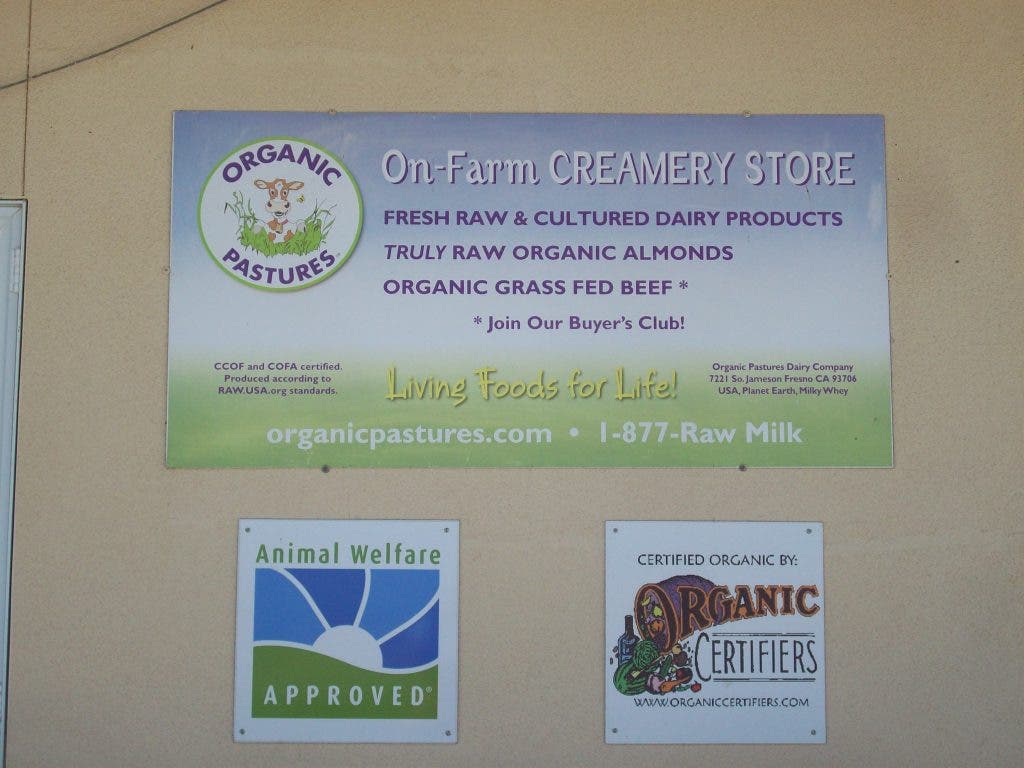
I wanted to know more, so I traveled to Fresno and spoke with Mark McAfee, founder of Organic Pastures Dairy Co. After winding my way through vast, green stretches of farmland, I sat down with McAfee, who was eager to talk.
"Raw milk is growing in popularity across the United States because moms are saying, 'I don't want to make my kids sick any more,'" said McAfee.
He said raw milk helps reduce allergies, eczema and gastrointestinal problems, is suitable for those who are lactose-intolerant and is free of antibiotics and hormones. Producing raw milk is much more labor-intensive, he said, but results in clean, healthy milk and higher pay for farmers.
The care that must be taken to produce high-quality raw milk seems obvious to me when I taste it. I find the flavor fuller and richer than pasteurized milk — similar to the difference between a ripe, juicy tomato you'd find in the summer and the soft, bland one you'd find in the grocery store in winter.
At large-scale, commercial farms, cows are kept in feedlots in which they have little room to move and may be forced to stand in excrement, McAfee said. They're given antibiotics to prevent illness. The milk produced by cows in suboptimal conditions is not clean enough for consumption, so it must be pasteurized, McAfee said.
"Pasteurization is an excuse for filthy milk," said McAfee.
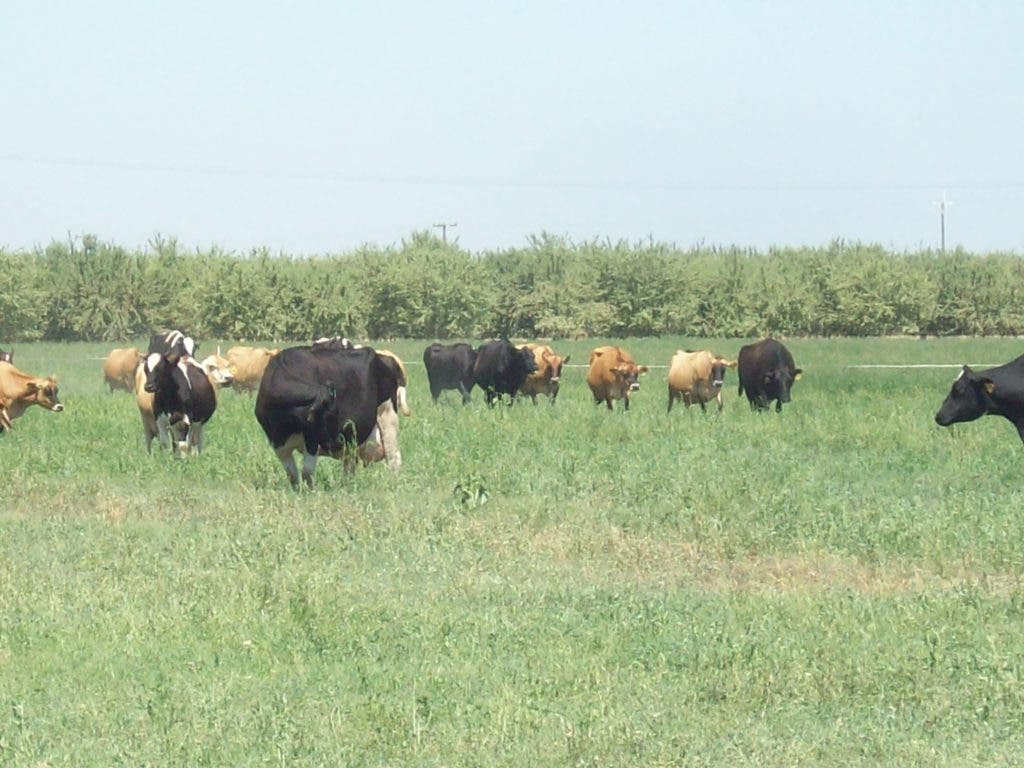
When I visited Organic Pastures, I found cows grazing across a large field, with ample room to move about. One cow was nursing a small calf. Beneath their hooves was clean grass.
But there remains concern among consumers that unpasteurized milk is unsafe. In California, one of 10 states that allows retail sales of raw milk, there is an extensive checklist of standard operating procedures that must be followed to ensure the safety of the milk, McAfee said.
The Centers for Disease Control and Prevention has been keeping a record of deaths and illnesses related to dairy consumption since the 1970s. In that period, there have been nearly half a million illnesses — 422,000 — related to the consumption of pasteurized dairy products, but only 1,100 related to raw milk consumption, McAfee said.
Click here to see more of what the CDC says about raw milk.
In communities around the country, the demand for organic food has been growing for years. This is reflected in the fact that large chains, including Safeway and Wal-Mart, have begun to carry organic products.
McAfee believes that as consumers are returning to the types of foods produced and eaten by their grandparents. This is certainly the case for me. My grandparents had an extensive vegetable garden, and I helped them harvest tomatoes, onions, corn, green beans and lettuce, all grown just feet away from where I played as a child.
McAfee is seeing a "second wave" in the organic movement in which consumers ask for unprocessed as well as organic foods. His farm's sales have increased 20 percent over the last year, without help from a marketing department, McAfee said.
As families search for healthy choices, raw milk might be an option for some. "Moms are like mother lions: They want to protect their pride," McAfee said. He believes raw milk could be one way for parents to protect the health of their children.
As for me, I'm thoroughly enjoying the experience of drinking milk produced by cows that I've seen with my own eyes. It is reassuring to know that the milk I drink was produced with concern for the health of consumers and respect for the animals.