Neighbor News
Scanning the USS Pampanito Submarine drydocked in Alameda for repair
Shipwork has been and continues to be part of the island of Alameda.

I work for Autodesk in San Francisco but live in Alameda. Mitko Vidanovski is a Customer Success Manager who works in our Reality Computing Group. Reality Computing is related to getting reality into the computer (via techniques like laser scanning or photogrammetry) or getting things out of the computer into reality (like 3D printing). With Reality Computing, you can scan something, modify it, and then 3D print it - almost as cool as something you'd see on Star Trek.
Mitko shared an interesting laser scanning project that the Reality Computing team recently completed. Every 7 years for about a 2-week period, a World War II submarine known as the Pampanito gets dry-docked in Alameda, CA for inspection, repaint, and complete repair to her hull. The team seized this opportunity to laser scan this 300-feet long monument.
Some of the project details include:
Find out what's happening in Alamedafor free with the latest updates from Patch.
- Model: USS Pampanito Submarine
- Scanners used: Leica P16 and Topcon GLS-2000
- Scans taken: 44
- Time to acquire: 4 hours
- Size of reality captured data: 6.8GB
- Processing time in reality capture software: 1 hour
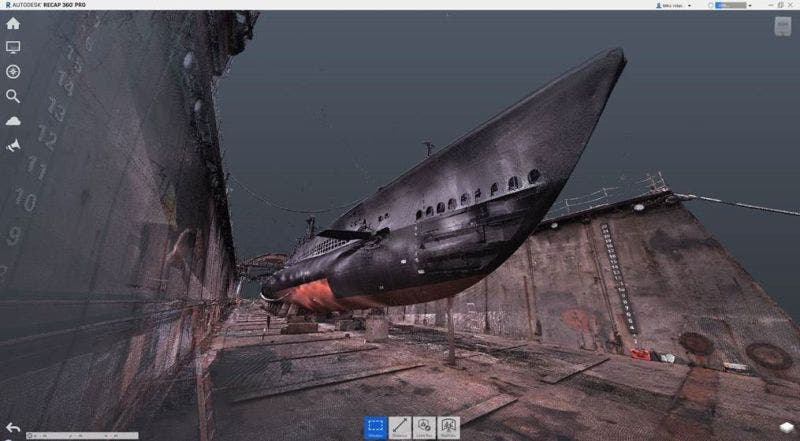


By having a 3D model of the submarine, engineers can use software to analyze the condition of the submarine and identify spots that need repair. This is more more effective than just a visual inspection using the naked eye. For more information, check out the full USS Pampanito story in the Autodesk ReCap 360 gallery.
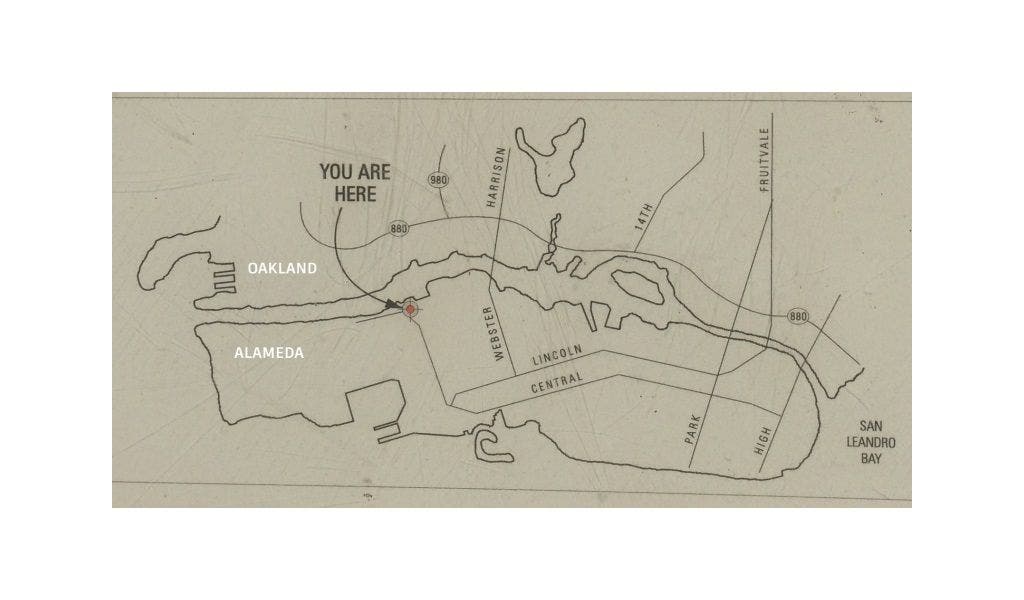
The fact that Mitko and team were in Alameda makes perfect sense to me. The Alameda / Oakland estuary is a human-created, navigable channel. It was originally a small delta where the San Antonio Creek flowed from Oakland. The delta gave way to the tidal marsh that covered the northern portion of the island. Even though the delta was shallow and impassible at low tides, it was used for shipping as early as 1853 at what was known as Hibberd's Wharf where produce was loaded and shipped to various locations around San Francisco Bay.
Find out what's happening in Alamedafor free with the latest updates from Patch.
The delta was used for more intensive shipping beginning around 1869 when the Central Pacific Railroad loaded railroad supplies, produce, and equipment from Alameda facilities. It was at this time that the township of Alameda recognized the important role that a more navigable waterway could play in commerce and began lobbying the federal and state governments for money to improve the delta's navigability. A plan was developed to widen and dredge the mouth of the delta and connect it to the San Leandro Bay by constructing a canal between Alameda and Oakland. Work began on the estuary project in 1875. By the middle of 1902, the final connection to San Leandro Bay was completed, and Alameda became and island.
After the channelization of the Alameda / Oakland Estuary was completed, the shipbuilding industry began to boom along its shores. Shipyards such as Hay and Wright, Campbell, and Stone's moved their operations from the peninsula to the heart of the estuary. Stone's Boatyard, now located just east of the Park Street Bridge, is still operating. As the shipyards flourished, ship-based operations increasingly relocated to the shoreline of the estuary. Large ships, such as 300-foot-long square-riggers became a common sight in the estuary. At the turn of the century, Alameda retained and extensive fleet of whaling vessels as well as the Alaska Packers salmon fleet.
The land near the estuary has a long history related to transportation. The shipyard facility housed a Southern Pacific (SP) engine roundhouse from approximately 1870 until 1910 that was used to service and store SP steam engines. In 1910 the roundhouse was removed, and the main shop building was constructed. The shop building was used to repair SP electric cars on the Alameda and Berkeley lines until 1941. In 1941 the yard was purchased by United Engineering Co. and turned into a shipyard. Most of the buildings on the site were constructed between 1941 and 1944. During this time, the main shop building was used as a machine shop. During World War II, Union Engineering Company purchased the land from Southern Pacific to construct and repair ships for the war effort. Todd Shipyard purchased the land in 1958 and operated one of its eight shipyards here until closing in 1984. In 1992, Bay Ship and Yacht leased the property and proudly continues the long tradition of ship construction and repair in the estuary. Bay Ship and Yacht began as a mobile ship construction and repair team created by present day owner Bill Elliot. Using customized shipping containers as mobile work sheds and tool cribs, Bill and his team of shipwrights, riggers, caulkers and carpenters would travel from job site to job site around the country repairing historic ships and constructing new vessels. One such vessel was the replica of the 300-ton brig Niagara, flagship of the United States Navy during the War of 1812.
There is a large concrete wall at the end of the main pier. That wall is part of a 33,000-square-foot, floating dry dock.
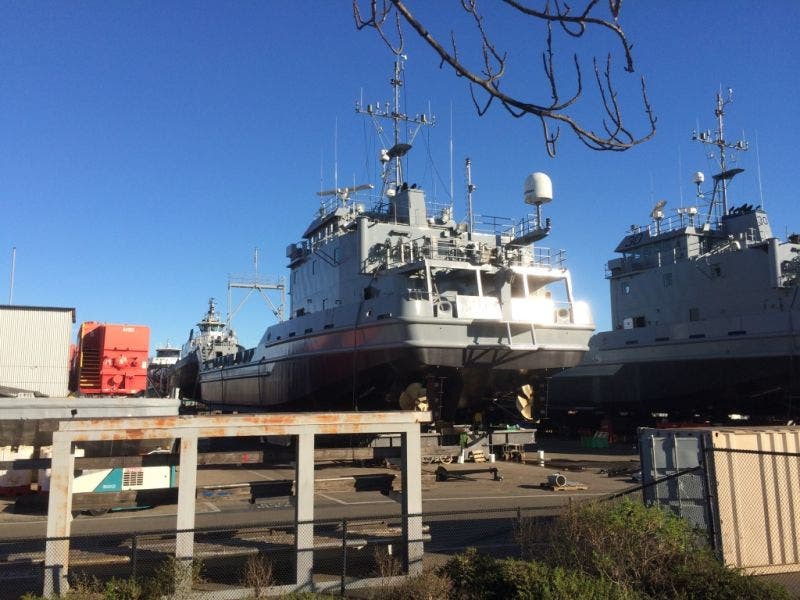
The dry dock is used to raise large boats (up to 350 feet long) out of the water and then hold them while they are repaired. The floating platform and wing walls contain machinery and ballast tanks that control the process of raising a boat from the water. First, the ballast tanks are flooded and the deck of the dry dock is submerged to approximately 18 feet below the surface. Then a ship can be pulled above the platform and between the walls when the ballast tanks are drained, and the dock rises to the surface carrying the ship along with it. At this point, repairs can begin on the vessel.
The information about the scan comes from Mitko. Thanks, Mitko. I copied the Alameda historical information from a placard that is next to the estuary. Actually, I took a picture of the placard with my phone and used image to text software so I wouldn't have to do all of that typing. Now imagine doing the same thing with real-world 3D objects. That's Reality Computing.