Politics & Government
Reche Canyon Burros Need Protecting, County Says
Supervisors are taking steps to prohibit the feeding of the wild animals, which have become too used to humans.

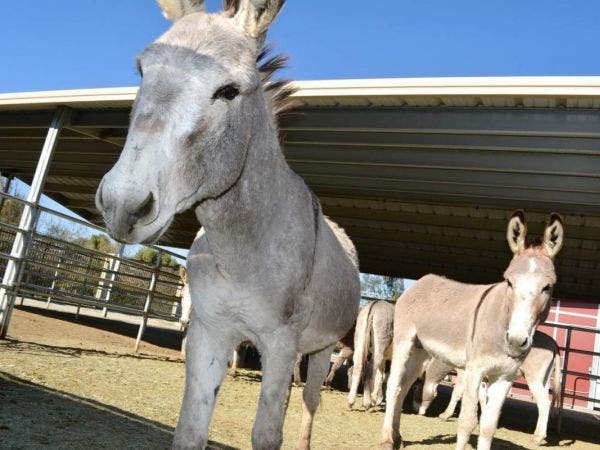
RIVERSIDE COUNTY, CA - Riverside County supervisors Tuesday authorized the Department of Animal Services to draw up an ordinance to impose penalties for feeding and otherwise enticing wild burros to come into populated areas, increasing the chances of an accident.
The "Prohibiting the Harassment and Feeding of Undomesticated Burros" proposal was approved in a 4-0 vote, led by Supervisor Marion Ashley, who represents the district where the burros are generally found.
The supervisor pointed out that the untamed donkeys are so numerous that a nonprofit rescue organization established by television personality Bob Barker operates exclusively to provide emergency treatment and rehabilitative care for the creatures when they're injured.
Find out what's happening in Banning-Beaumontfor free with the latest updates from Patch.
According to Department of Animal Services Director Rob Miller, the ordinance has become necessary for the safety of the animals and general public.
"Burros generally inhabit the Reche Canyon and Pigeon Pass area (near Moreno Valley), but are now using roadways and railroad tracks to enter populated areas," Miller said in his proposal. "The burros are enticed to move further into more urbanized neighborhoods by increased contact with humans by way of food left on the side of the road, or handed out vehicle windows directly to the animals."
Find out what's happening in Banning-Beaumontfor free with the latest updates from Patch.
The Riverside County Transportation Commission highlighted the growing problem of burro encounters in December 2015 while running speed tests on the Perris Valley Line, which expanded commuter rail service from Riverside to the north edge of Menifee.
Burros were wandering over or extremely close to the tracks as Metrolink and RCTC initiated trial runs, requiring authorities to scare the animals away.
Burros have also been crossing or crowding along the shoulders of roads, waiting for handouts in recent months, according to the Department of Animal Services.
"In the wild, burros eat mostly grass or vegetation and fear people and vehicles," Miller stated. "However, due to easy access to foods not generally found in the wild, burros' behavior has adapted. Instead of normal grazing, the burros now seek out populated areas, roadways and people in order to obtain the treats provided."
The U.S. government enacted the Wild Free Roaming Horses & Burros Act in 1971 in an effort to control where undomesticated horses and mules go, but that only applies to federal lands, according to county officials.
Miller said the proposed county ordinance would replicate a California Department of Fish & Game regulation that "expressly prohibits the harassment and feeding of undomesticated burros."
"Reducing contact between burros and the public results in several positive outcomes, including reducing accidents on roadways and rail lines and encouraging the herds to return to their natural behaviors," he said.
PHOTO: Wild burros impounded by the Riverside County Department of Animal Services in Dec. 2015 / CREDIT: Riverside County Department of Animal Services
— By City New Service