Schools
Expanding Environment Education by Attracting Fundraisers and Policy Makers
Environment Lessons in the Classroom (4-part series)




By Ann Krueger Spivack
In Kim Beeson’s classroom at Rosa Parks School, Susan Silber shows kindergartners what she calls the ABCs of environmental awareness: Abiotic were natural materials that had never been alive – sun, soil, water and air; Biotic were natural items who are alive or once alive – animals, plants, and the acorn that Silber was holding; and Cultural were those items made by humans. The class is talking about how bright, shiny plastic toys can appeal to birds and marine life, often with fatal results.
When Silber begins talking about animals, the children sit up straighter. “Kindergarteners and fourth graders alike are concerned about wildlife,” Silber said, after the class. “They very much want to help any efforts that benefit animals.”
Find out what's happening in Berkeleyfor free with the latest updates from Patch.
Colleen Mahoney, the founder of A Kid By Nature, the nonprofit sponsoring this lesson, agrees. “When kids learn that plastic can harm a seal or a heron, they want to know how they can keep wild creatures safe,” she said.
Mahoney and Silber are working together to bring lessons like this one to the classroom. Silber, who’s been an environmental educator for more than twenty years, clearly enjoys this work. “Kindergartners have never thought about objects as manmade versus natural. You can see them absorb this idea,” she said, smiling.
Find out what's happening in Berkeleyfor free with the latest updates from Patch.
Mahoney has brought in A.J. Wacaser to talk to the class about the impact plastic waste has on animals. Wacaser, a biomimicry expert as well as a docent with the California Academy of Sciences, passes around a 2-liter bottle, and demonstrates how sea birds or marine mammals might see it as a jellyfish. As student Nicolas Anxolabehere considers the bottle, Mahoney said, “You can see the light go on when A.J. talks to the kids. Suddenly they realize that the bottle they buy in the grocery store can end up in the ocean where it can harm a pelican or another bird or animal.”
Silber is determined to assist programs such as A Kid By Nature with her Nature’s Voices Project. In 2013, after three years of working as a consultant with the Green Schools Initiative, Silber started Nature’s Voices, a program of the Green Schools Initiative, to bring attention and funding to youth-oriented environmental awareness programs.
Previous: Eco-Art at Rosa Parks and Jefferson Schools
“I have worked with thousands of children and youth over the years. I’ve backpacked in the snow and gone mountain biking with urban youth in the wilderness. I saw how these programs save lives, how they truly represent education at its best. Yet the environmental education and Green Schools movements consistently struggle for funding and support. With Nature’s Voices, I want to feature groups such as A Kid By Nature and bring them to the attention of policy makers and fundraisers as much as I can.”
Environmental education, although introduced forty years ago, is still relatively rare in schools today. Because the California state government constantly shifts in its budget for schools, Silber feels it’s critical to highlight the need for more environmental education programs. “Environmental education can really help to address some of the greatest challenges of the 21stCentury, from the worsening climate crisis, obesity epidemic and Nature Deficit Disorder – the growing disconnect that many technology-centered youth have from nature,” said Silber. “We really need to shift both public and private funding to these programs, which promote best practices in education.”
What do students think about these lessons? Sydney James, a fourth-grader in Sean Keller’s class at Jefferson School, is ready to take action with what she’s learned. “We need to do everything we can to save the environment now, because if we don’t, when we get older and we look out the window, all we’ll see is mountains of plastic,” Sydney said.
Related: Rosa Parks Elementary Students Look at Plastic Waste
Teachers interested in learning more about eco-art projects like this one can contact Mahoney at A Kid By Nature or email her at colleen@akidbynature.com. For more information about Nature’s Voices, visit NaturesVoices.org or email Silber at susansilber07@gmail.com.
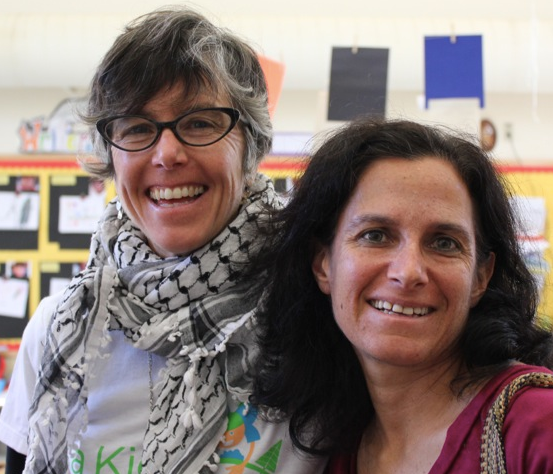
Photos: Rosa Parks kindergarten teacher Kim Beeson with Susan Silber, founder of Nature’s Voices.
Student Nicolas Anxolabehere considers how a jellyfish might view a plastic bottle
Fourth-grader Sydney James works on an eco-art panel
Get more local news delivered straight to your inbox. Sign up for free Patch newsletters and alerts.