Community Corner
Pandemic Hits LA Economy Hard, Leaving Nearly 1 In 3 Hungry
As the nation struggles with job losses and hunger during the pandemic, the problems are even more stark across Los Angeles County.


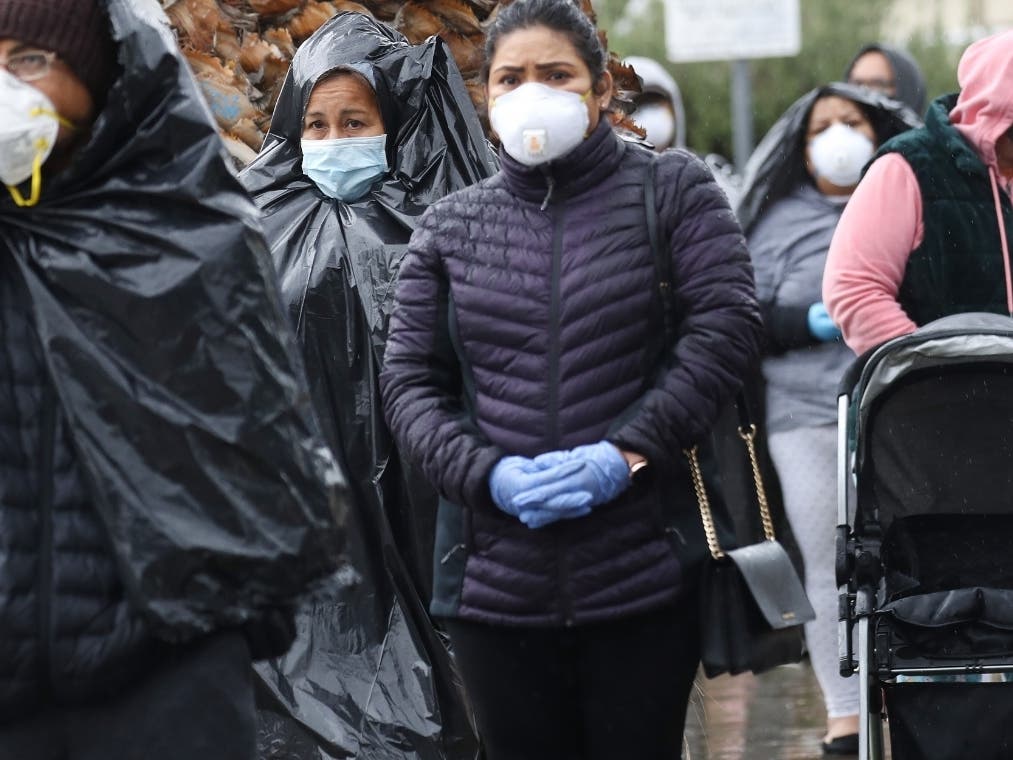
LOS ANGELES, CA — Los Angeles residents are being hit harder by the financial toll of the pandemic than the rest of the nation, according to research released Thursday by USC.
More than 1 in 4 residents are experiencing food insecurity and the always-pronounced divide between the haves and have-nots in Los Angeles has been exacerbated by the pandemic, according to USC Dornsife's study "Understanding Coronavirus in America Study." The economic toll in Los Angeles far surpasses the grim national statistics. That's because many Angelenos were already living in poverty before the pandemic, and job losses have hit the service industry more than other sectors.
"Among the newly unemployed, 29% of Angelenos are currently experiencing mild to severe food insecurity -- eight points higher than the national average. And only 58% of Angelenos say they could handle a surprise $2,000 expense, compared to the national average of 68%," researchers found.
Find out what's happening in Beverly Hillsfor free with the latest updates from Patch.
The problem in Los Angeles predates the pandemic.
"Prior to the pandemic the economy was booming, but economic inequality was also peaking -- particularly in Los Angeles," said Francisco Perez-Arce, an economist with the USC Dornsife Center for Economic and Social Research. "Many people had jobs, but a large percentage had low-earnings and little savings. These workers were the most likely to lose their jobs in the pandemic and the impact of job loss has been greatest for those who have no safety net."
Find out what's happening in Beverly Hillsfor free with the latest updates from Patch.
Specifically for those out of work, USC researchers said people who received unemployment benefits were significantly more economically secure than those who weren't receiving benefits.
Newly out-of-work Americans receiving unemployment insurance payments put their chances of running out of money in the next three months at 20%, compared to 37% of those who did not. Roughly 80% of those with unemployment benefits said they could handle a surprise expense of $2,000, compared to 60% of those weren't receiving payments.
Stimulus checks, however, were found to "have done relatively little to improve the personal financial security of the newly unemployed," researchers said.
By the end of April, an estimated 34% of Americans who lost work during the pandemic were receiving unemployment assistance, and another 14% applied and were waiting for their first check, the study found. Roughly one- fifth of those without work reported that they were ineligible for benefits; the remainder were waiting to find out, had been rejected or had not applied.
"Although any financial support is helpful, the steady income stream provided by unemployment benefits trumps a one-time check because it takes away uncertainty, which is a major source of stress," said Arie Kapteyn, director of the USC Dornsife Center for Economic and Social Research, which conducted the ongoing study using online panel surveys.
Among the one in five Americans who've lost jobs during the pandemic, researchers also found that those hit hardest financially were the least educated and lowest paid.
Job losses for workers without college degrees were twice that of workers with degrees. And, three out of 10 Americans earning a household income of less than $40,000 a year lost work, compared to one out of 10 with household incomes greater than $100,000; for those whose income fell between $40,000 and $100,000, the jobless rate was less than two out of 10.
Workers in the hospitality, dining and leisure industries were the most likely to become unemployed, with four of out 10 employees in those sectors losing work. The next hardest hit industry, retail, reflected job losses for three out of 10 workers. The transportation industry also shed a quarter of its jobs.
Graphic data from the study, supported by the Bill & Melinda Gates Foundation, is available at covid19pulse.usc.edu.
City News Service and Patch Staffer Paige Austin contributed to this report.
Get more local news delivered straight to your inbox. Sign up for free Patch newsletters and alerts.