Health & Fitness
The Hole in Our Gospel — Part 1
Follow one woman's journey reading and responding to the 2010 Christian Book of the Year "The Hole in Our Gospel," by Rich Stearns.
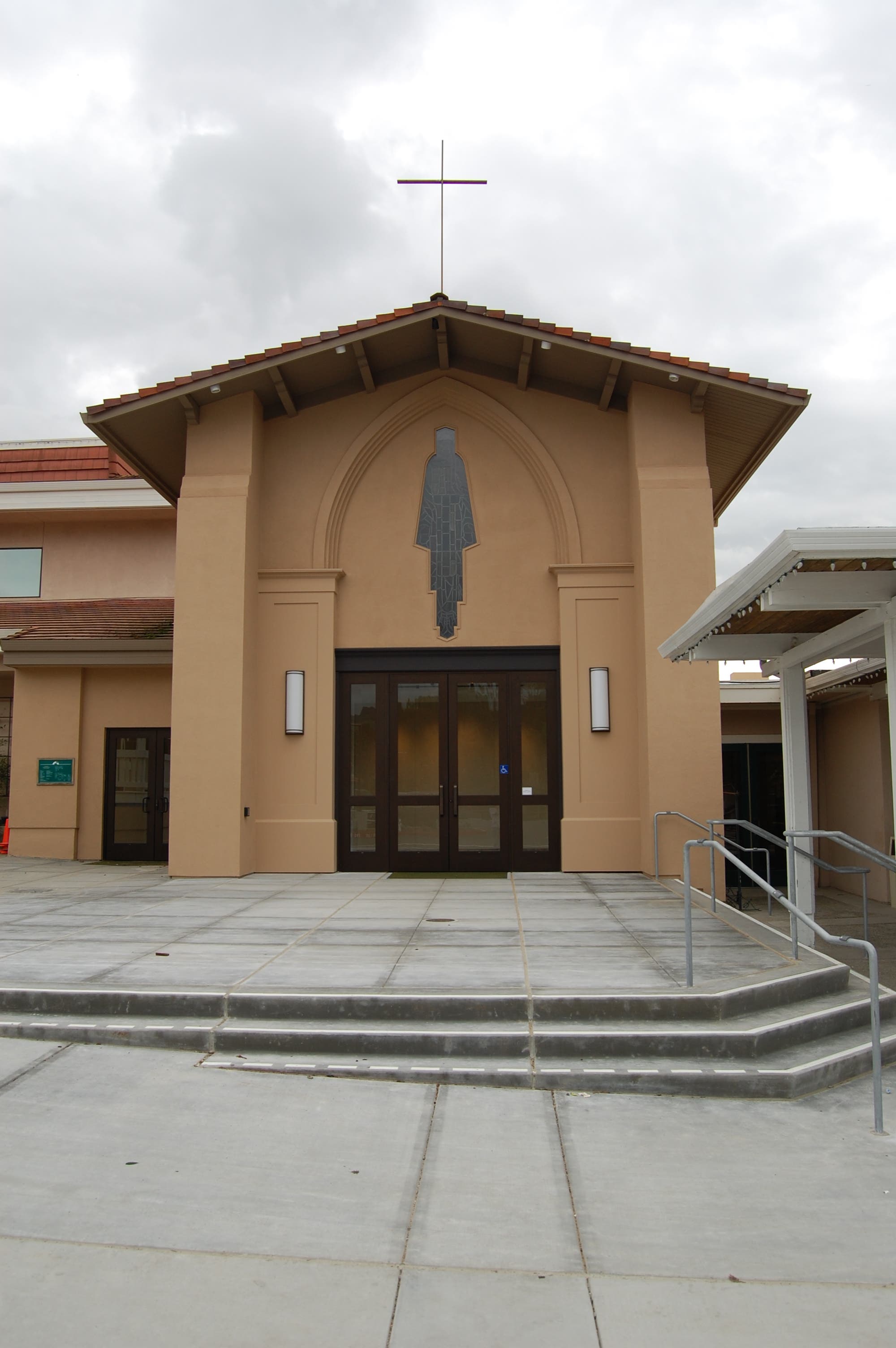
In the spring and early summer of this year the staff at in Danville began laying the groundwork for a new journey for the congregation.
It all centered around a series we began this fall based on a book called The Hole in Our Gospel by World Vision President Rich Stearns.
We were warned repeatedly that the book was a challenging one and would likely lead to some discomfort emotionally and spiritually. The congregation was encouraged to join a small group to meet weekly to grapple with the different concepts in the book.
Find out what's happening in Danvillefor free with the latest updates from Patch.
My husband and I had not participated in a small group in several years and decided to join one so we could fully engage in the study. It has been both unsettling and rewarding to hear a sermon each Sunday and to be issued a different challenge to carry out each week. Participating in a small group, reading the book, and just talking about the ideas as a family has been fairly engrossing and eye-opening.
In the book’s introduction, Stearns talks about the fact that being a follower of Jesus is not only “a personal and transforming relationship with God” but also “a public and transforming relationship with the world.” He points out that “those who choose to follow Christ have struggled ... to live differently in a world that often rejects their values and mocks their beliefs.” He suggests that many are tempted
to withdraw and to keep their faith private. He says “The world’s problems just seem too big and too hard for most of us; it’s so much easier to retreat from them than to take them on.
Find out what's happening in Danvillefor free with the latest updates from Patch.
On Sunday morning, safe in our church pews and surrounded by friends, it can be all too easy to leave the world’s violence, suffering, and turmoil outside — out of sight and out of mind.” Stearns points out that many Christians can be so focused on what comes after life on earth that they forget that God expects us to make the world a better place here and now for His sake. He points out that the good news of the gospel is not only salvation that we find through Christ, but “tangible compassion for the sick and the poor...biblical justice, efforts to right the wrongs that are so prevalent in our world.”
Stearns says “When we are living out our faith with integrity and compassion in the world, God can use us to give others a glimpse of His love and character. It is God — not us —who works in the hearts of men and women to forgive and redeem.” We are called to make a difference in the lives of others, not to keep our heads down, stay out of trouble and mind our own business! We are urged to live out our faith daily by responding to God’s love, not just by checking boxes on a “to do” list. Being caring and compassionate is our response to God’s love for us, not an obligation.
The entire premise of The Hole in Our Gospel centers on the question “What does God expect of us?”
He lavishes His love upon us and we are called to respond by lavishing His love on others. Stearns challenges American Christians to recognize their tendency to skip over the parts of the Bible that they find uncomfortable or difficult to live out- specifically in regard to caring for the poor and those Jesus describes as “the least of these.”
This is a little unsettling for a mom living in Danville who is doing her best to juggle the many responsibilities that come with having kids and just living life. I agree with Stearns’ assertions, but it’s not always easy to know how to go out and help the poor and to share God’s love with them in tangible ways.
Sure our family has “adopted” a child who we support monthly through another Christian aid organization. We send and receive letters from Edyson, our adoptee in Colombia, who was born in the year between our two boys.
We donate items to food drives when the opportunity arises. We “adopt” a needy family every Christmas and buy gifts for them. We do feel a sense of compassion towards the poor, but we rarely interact with them on a personal level. Some of this is just because of the busyness of our lives, some of it is because we haven’t structured our time to make reaching out in this way a priority. Part of it is not knowing where or how to reach out. And then part of it is being overwhelmed because there is just so much need in the world.
Danville is a fairly insulated community and it’s pretty rare to see an impoverished person on the street asking for money.
Last winter I was shocked to see a young Latino woman holding a cardboard sign in front of Trader Joe’s in Danville that said “Lost my job. Please help”.
She had a toddler in a stroller and made attempts to ask for help from those walking into the store. I felt disheartened as I watched people walk by, completely ignoring her and agonized over how to respond to her. I ended up taking her inside and buying her a few groceries, but I felt awkward and unsure of how to handle myself. I don’t know that I particularly “lavished “God’s love on her, but I did make a feeble attempt.
I responded to her because she was directly in my path, which is not often the case in a place like Danville. However, a short drive in almost any direction affords a multitude of opportunities to interact with and serve the poor.
Although Stearns’ book is focused on the plight of people internationally, there are plenty right here in the Bay Area who need our help and compassion as well.
At CPC, the first Sunday in our series set up the backdrop for the weeks to come.
During the church service, we learned that a significant portion of the world’s population can carry all of their possessions in one small suitcase or bag.
Sixty percent live on less than $2 a day and thirty percent on less than $1 a day.
We were challenged to go home, sift through our belongings and choose 10 items besides the clothes on our backs that we would keep if we had to get rid of everything else.
As I chose what to include, I tried to envision what practical things I would truly need to live life daily without shelter.
One ironic twist was recognizing that I was choosing 10 items from the many things I own. Impoverished people don’t get a choice.
I showed up at small group for our first meeting that Wednesday, dutifully carrying my duffle bag of items.
It was funny to see how everyone interpreted the assignment a little bit differently.
We joked with one couple who packed their camera, iPhones and iPad and asked if they were planning a vacation or trying to walk in the shoes of someone with next to nothing!
Another couple who goes backpacking every summer thought of some practical items that hadn’t crossed my mind like a sleeping bag, a Sierra cup and even a small musical instrument.
Personally, I went for the most practical items that I thought I would need every day. I contemplated including my iPhone, which sometimes seems like it is a part of my body, but realized that an impoverished person would likely not have access to a computer, the money to pay for a data plan or the people to e-mail and call.
I kept my stash simple and mostly technology-free and non-consumable: A warm jacket, an extra pair of shoes, a blanket, a towel, a Swiss Army knife, a toothbrush, a comb, and a flashlight (my one technology “splurge”). I included two more items that might seem illogical to some, but are absolute essentials in keeping me grounded on a daily basis: my journal and my Bible.
It was eye-opening to distinguish between what we truly “need” and what we think we need. It was also a bit appalling to realize how much “stuff” I have just in case I need it. I could have chosen from probably 10 different jackets in my closet. Does one person really need that much?
Our pastors’ prediction about the book being both thought-provoking and unsettling has certainly been true for me.
I am looking forward to continuing to read, listen and accept the challenges offered to us weekly. When Rich Stearns was being pursued for the position at World Vision, his interviewer asked him: “Are you willing to be open to God’s will for your life?”
I think this series is calling each person participating to answer that same question.
My answer to that question is “yes,” but it is not without some measure of fear and trembling. I’m willing to be open; I’ll wait for God to show me how He wants me to respond to what I’m learning on this journey.