Politics & Government
Completion Date for North Torrey Pines Bridge Extended 3 Months
Joe Bride, the city's deputy public works director, said the bridge retrofitting has been collaborative effort among several organizations.
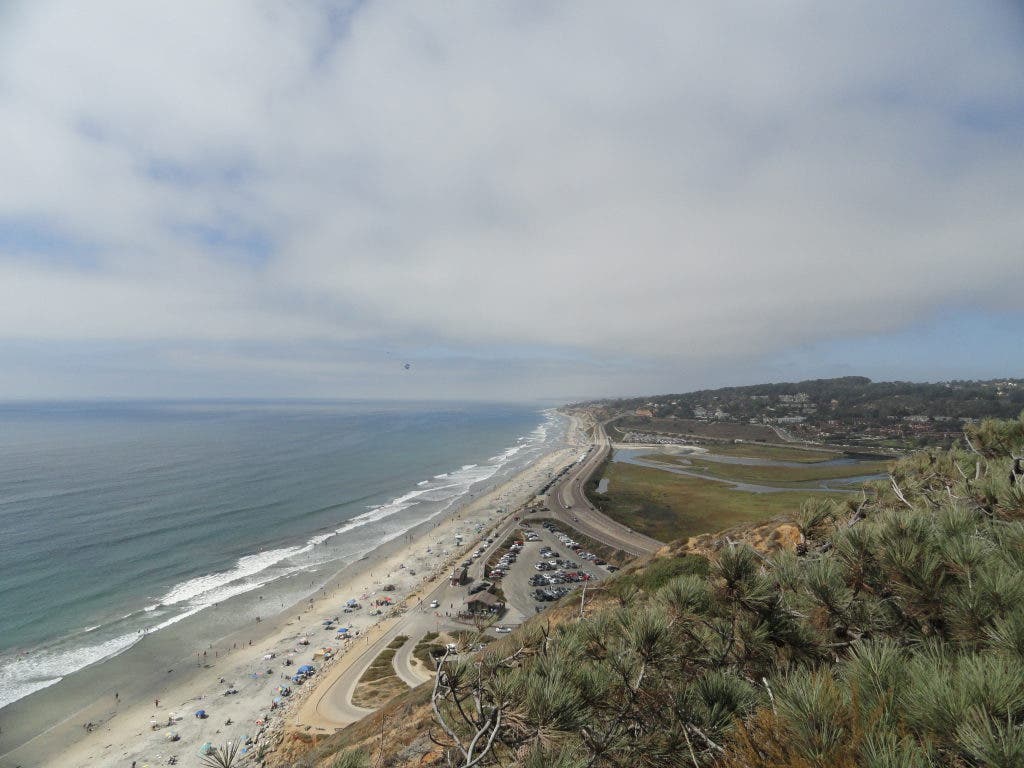
With a year left on the seismic retrofitting of the North Torrey Pines Bridge in Del Mar, a city official announced Saturday that the completion date has been extended by three months.
Originally September 2013, the expected completion date is now Dec. 5, 2013, according to Joe Bride, the Del Mar’s deputy public works director.
Despite the extension, Bride said the retrofitting has been an easy and collaborative effort since Prop 1B funding was passed in 2006.
Find out what's happening in Del Mar-Carmel Valleyfor free with the latest updates from Patch.
“Some of my other projects, we get a lot of different opinions—everyone’s an architect,” said Bride, who held previous positions with the San Diego County Water Authority and the city of Coronado before joining the city of Del Mar one year ago.
He continued: “This one’s been pretty easy as far as that goes. We’ve got a good team.”
Find out what's happening in Del Mar-Carmel Valleyfor free with the latest updates from Patch.
In addition to the city, the team consists of Caltrans; the Federal Highway Association; the Del Mar Historical Society; Simon Wong Engineering, which performed a series of bridge evaluations; Flatiron Construction Corp., a San Marcos-based company serving as the contractor; and T.Y. Lin International Group, the project’s construction manager.
Built in 1933, this is the first time the North Torrey Pines Bridge has been upgraded.
“It wasn’t in compliance with modern-day construction codes, and it was at risk of failure,” Bride said. “It was the risk and safety that made it eligible for funding.”
The project was originally allocated $13,380,283 in federal and state funding, but was later given an additional $355,606. That stipend allowed for additional materials, as well as compensation to the Coaster and Amtrak when they had to stop service and bus people around the site.
Bride said the bridge, which serves as the city’s southern entry point, is currently used by 18,000 vehicles every day, and also gets a healthy amount of traffic from bicyclists.
“There have been some challenges on this project—really just [traffic] congestion in the area,” Bride said. “Access is tough with that congestion. People really do appreciate the notifications we’ve done.”
Bride said they have a good construction plan in place, which helps with the congestion by cutting the job into a series of phases, and allows for continued use of the bridge.
The construction began in December 2010 with ground stabilization—a process whereby grout is injected into holes in the ground. In March 2011, temporary structures were built and placed on the east side of the bridge to divert traffic while the west side was retrofitted.
Slated for completion this month, it’s expected to take until October to move the temporary structures to the newly-restored west side in order to begin retrofitting the east section. The east side should be finished by July 2013 before site cleanup begins.
In addition to traffic issues, measures have also been taken to ensure the surrounding natural habitat remains undisturbed. With the Torrey Pines National State Reserve to the east and the State Beach to the west, Bride said this is extremely important.
“The heat isn’t a problem; the rain is a problem,” said Bride of last year’s wet season. “Flatiron has done a good job at controlling the runoff.”
Not only that, Bride said T.Y. Lin International has a biologist on the team to measure noise levels, making sure the project isn’t impacting sensitive species in the area.
“From April to September is the breeding season for the California Gnat Catcher, so we’ve had a biologist on site every day,” Bride said. “If there’s too much noise, we’d have to mitigate by putting up plywood sound walls.”
He added: “We’ve actually had to do that at the northern site for the homes up there.”
The North Torrey Pines Bridge is one of five in Del Mar, and received its historical designation in 1996.
“The goal of this project is to bring the bridge up to modern-day standards and seismic codes, but to maintain the historical character,” Bride said.
They were able to do that with the girders―concrete horizontal support beams found between the columns―which were manufactured at a facility that pressed the concrete with prefabricated liners with a wood design. The effect is a board-formed concrete finish.
“It’s the fact that we thought of that ahead of time and it looks really good that is rewarding,” Bride said.
For up-to-date traffic and project information, visit the city’s web page devoted to the bridge.