Health & Fitness
Watch Your Pet’s Step This Summer
Look down as the weather heats up to avoid common canine dangers.

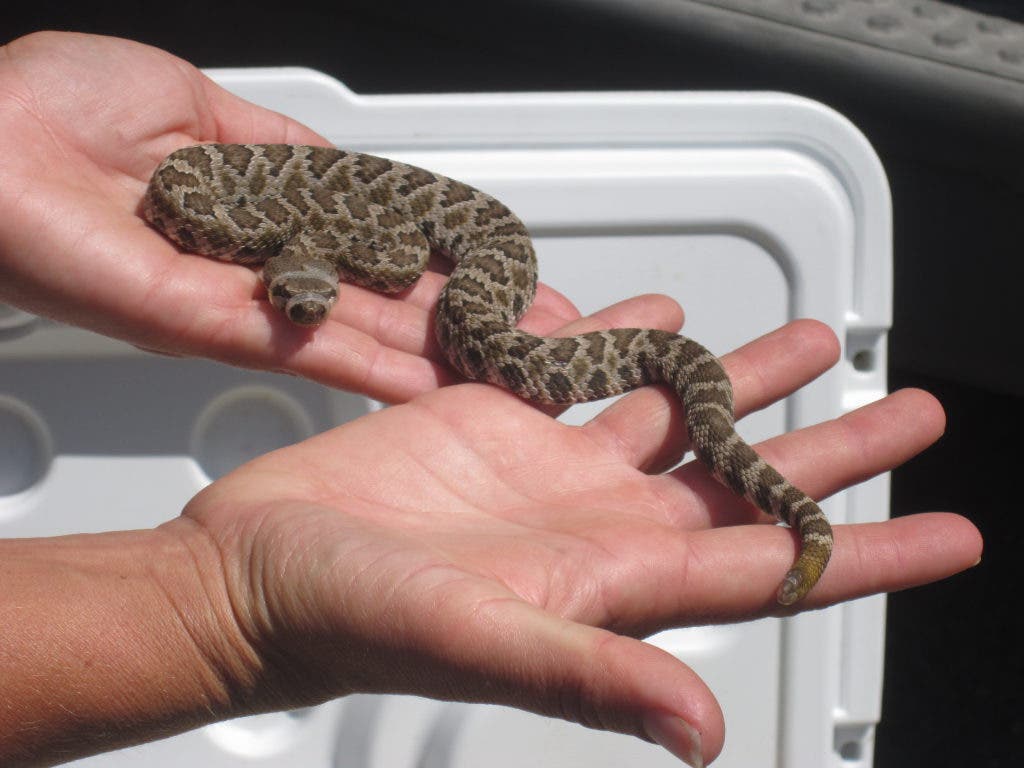
Spring has sprung, summer is coming, the sun is shining and it’s a wonderful time to be outdoors in San Diego. But beware—if rising temperatures have brought you and your dog out of hibernation, you’re not alone. Dangerous foxtails, ticks and snakes like to come out this time of year, too. Whether you’re enjoying a walk near the beach, a desert hike or just a romp in the back yard, you'll need to keep your eye out for these fair-weather foes.
Foxtails:
Foxtails are annual, pointy-tipped grasses that commonly grow in weedy areas around roads, paths and fields. During the summer and fall, dry foxtails become a major problem as they can easily burrow in your pet's nose, ears, eyes, throat and feet. If your dog likes to run through wild fields or trails, know these symptoms.
Find out what's happening in Encinitasfor free with the latest updates from Patch.
Nose foxtails: Signs include pawing at the nose, severe sneezing and possible bleeding from the nose. Symptoms sometimes diminish after several hours, becoming intermittent.
Ear foxtails: Signs include tilting and shaking the head, pawing at the ear, crying and moving stiffly.
Find out what's happening in Encinitasfor free with the latest updates from Patch.
Eye foxtails: Signs include squinting the eye, redness, swelling and mucous discharge.
Throat foxtails: Signs include swallowing repeatedly, stretching the neck, gagging and coughing.
Feet foxtails: Signs include licking excessively, redness of the toe web and possibly a bump or draining tract.
In addition to causing pain, localized abscesses and infection, foxtails can migrate and lodge in the lungs and other internal organs, making major surgery necessary. Even then, foxtails don’t show up on X-rays and are sometimes impossible to surgically locate and remove.
To prevent foxtails, keep your dog out of fields with long grass, keep your yard free of weeds and brush and groom or examine your dog regularly, especially after hikes or other outdoor activities.
Ticks:
Ticks are blood-feeding external parasites that can attach to animals and humans. They are classified as arthropods with a hard shell and six or eight legs, depending on the life stage. If your dog has access to grassy or wooded areas, he/she may be at risk for tick exposure.
Ticks cannot jump like fleas can; instead, many ticks seek hosts through a behavior called “questing.” Questing ticks perch on leaves or blades of grass with their front legs extended, waiting to climb onto a host that brushes past. They can easily grab a hold of your pet’s fur as he/she travels through particularly grassy, bushy or wooded areas. The tick then burrows down through the hair where it attaches to the skin. The tick injects its head and jaw into the skin and usually stays attached for four to five days before falling off into the environment.
Female ticks become engorged with blood and their bodies swell up to more than twice their original size. While feeding, ticks can transmit numerous bacterial diseases to your pet, including Rocky Mountain spotted fever, Lyme disease, anaplasmosis and ehrlichiosis.
There are several products available to prevent ticks from attaching to your pet. The Preventic collar, worn around the dog's neck, aids in detaching existing ticks and prevents ticks for up to three months. Topical products such as Parastar, Vectra 3D, Frontline, Advantix and Revolution are also labeled for tick control.
Be sure to check your pet for ticks after returning from a hike. If the tick does not attach, it cannot transmit disease. When removing a tick from your pet, be sure to use tweezers and grab all the way down toward the head. Pull straight up and do not twist. Ensure that the head and mouth parts are still attached to the body of the tick. If you are unable to remove it, please see your veterinarian for assistance.
Snakes:
Dogs are naturally curious about snakes. Unfortunately, this means that many dogs get bitten by snakes on the face and muzzle.
Here in Southern California, the only poisonous snake is the rattlesnake. If your pet is bitten by a rattlesnake, he/she will need emergency medical attention. Most patients will require hospitalization, an anti-venom injection (antivenin), steroids, antihistamines, antibiotics and supportive care. If not treated early enough, the bite wound will get infected and the pet may need surgery.
When it comes to preventing snake bites, avoidance is key. If you see a snake, walk the other way or pass at a safe distance and keep your dog on a short leash. Other options include vaccination and aversion training courses.
The rattlesnake vaccine, offered at many veterinary clinics, stimulates the immune system to generate protective antibodies against rattlesnake venom. These protective antibodies function by neutralizing rattlesnake venom in the case of a bite. After vaccination, dogs are reported to experience less pain and have a reduced risk of permanent injury from rattlesnake bites. Testing has been performed to show that serum from vaccinated dogs and other animals neutralizes venom from a number of species of large rattlesnakes found in the United States.
At The Drake Center, we are not recommending the rattlesnake vaccine for all dogs, but only for those whose lifestyle may put them at an increased risk.
Unfortunately, the vaccine does not limit the need to seek emergency veterinary care after the pet is bitten. It is important to note that the dog may still go into shock and need lifesaving medical care, including an injection of antivenin to neutralize the toxicity of the venom. The vaccine also does not provide protection against venom from the Water Moccasin (Cottonmouth), Mojave Rattlesnake or Coral Snake.
As an alternative to the vaccine, or in addition to it, your dog may be trained to avoid rattlesnakes through an aversion training course. In these courses, dogs are taught to recognize and avoid the sight, sound and scent of a rattlesnake.
If you suspect a snake bite…
Do:
Identify the snake, if possible. The easiest way to do this is to look at the head or tail. Obviously, the snake’s tail will be adorned with a rattle. The head is distinctly diamond-shaped. Remember that identification is helpful, but it is not necessary for treatment.
Remove the collar if the bite is near the head or neck.
Seek veterinary attention as soon as possible.
Don’t:
Attempt to catch or kill the snake. This is how snake bites in humans occur.
Try to cut the wound, suck out the venom, use a tourniquet or apply ice. First aid efforts may only waste time and increase tissue damage.
Dr. Michele Drake, veterinarian and owner of The Drake Center for Veterinary Care, has been treating pets in Encinitas for over 20 years. For more information on pet health or to schedule an appointment for your pet, please call The Drake Center at (760) 753-9393 or visit www.thedrakecenter.com.