Business & Tech
Animal Keeper for the People
Coastside resident Roger Hoppes, the animal keeper who transformed the San Francisco Children's Zoo over the past three decades, continues his life's work engaging people with nature and wildlife.


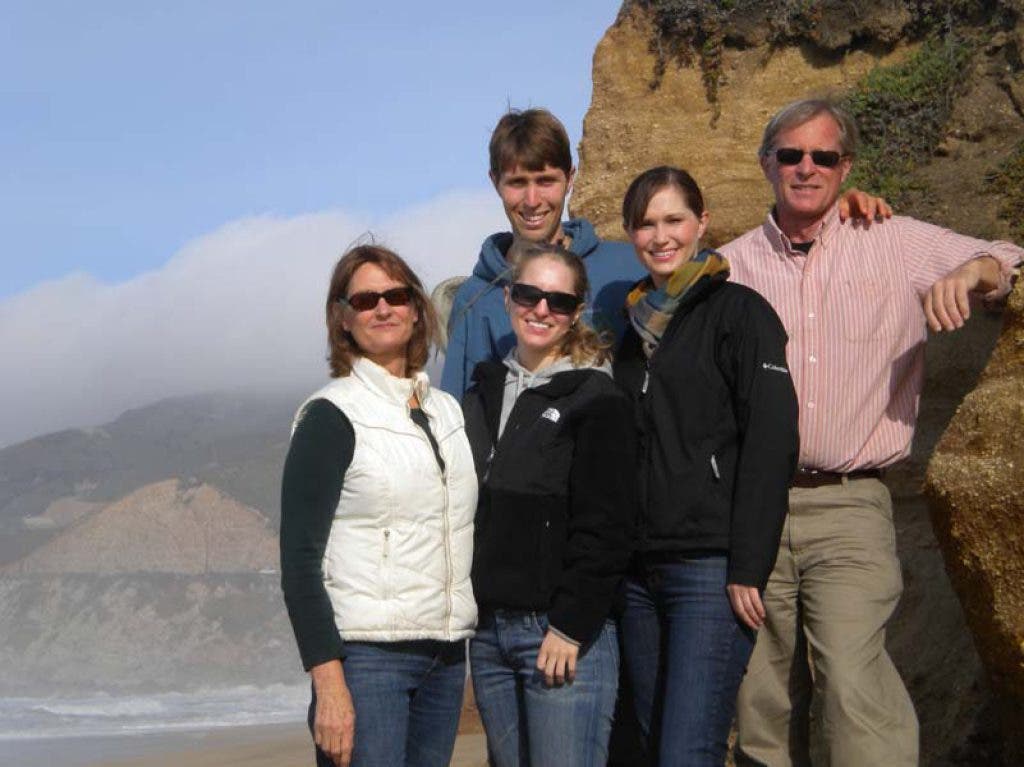


“Animal-centric, staff-centric and guest-centric.”
That’s how El Granada resident and the former director of the San Francisco Children’s Zoo for 27 years, Roger Hoppes, describes his work style.
“The animals come first, we’re best when we work together, and never forget why we are here,” Hoppes says.
Find out what's happening in Half Moon Bayfor free with the latest updates from Patch.
If there’s anyone who knows how to engage animals with people and people with animals, it’s Hoppes, whose dedication and years of experience in the zoological world can be defined by a key objective: To work with others, inspiring a caring for wildlife and conservation of nature. He’s also passionate about environmental education and giving zoo guests “the ability and encouragement to spend the time to observe, rather than just mentally check off the animals they encounter,” he said.
Hoppes recently moved into a greater operational role at the San Francisco Zoo as the Vice President of Operations and Planning, and feels that the Children's Zoo is well prepared for the future.
Find out what's happening in Half Moon Bayfor free with the latest updates from Patch.
“The staff and new leadership in the Children’s Zoo are very committed individuals, and I’m fully confident they will make the facility even more energizing for young guests in the years to come,” said Hoppes, who made many significant changes to the Children’s Zoo during his three-decade stint as director.
“It was more ‘we’ than ‘I,’” he said about the changes. “In the Children’s Zoo, I had the fortunate opportunity to work with many wonderfully devoted staff members. When I started, the concept that zoos had an educational role was just settling in. Prior to this, a zoo visit was primarily a recreational experience. Children’s zoos assumed some of this new role. At San Francisco, it took a number of years to transition the Children’s Zoo’s program, collection and exhibits to address an educational theme.”
In addition, Hoppes grew the Zoo’s paid internship program.
“There is no one career track for work in the zoo field, especially entry-level work. A paid internship created this opening for many who started in the Children’s Zoo. It has been personally satisfying to watch so many continue their careers at San Francisco as well as a number of other facilities around the country,” said Hoppes.
He also updated the facility with an $8 million capital project.
“Environmental education theoretically had shifted from providing educational information to a focus on individual experiences, which engage children and connect them emotionally to the natural world,” said Hoppes. “It was a timely advantage having this theme as a center focus during all of the design effort and interpretive planning for the new facility.”
Hoppes also currently serves on the Advisory Board, as well as on committees for the American Zoo and Aquarium Association (AZA).
“The two most satisfying opportunities from AZA involved almost 10 years on the Conservation Education Committee, including a year as chair and work as an accreditation inspector,” he said.
With Elkus, Hoppes initially got to acquainted with the ranch when his son participated in the study program while at Cunha Intermediate School a number of years ago.
“The common goals between outdoor nature education at Elkus and the work creating kid connections at the Zoo is a natural,” he said.
He also became aware of the plan to sell a portion of the ranch to the Open Space District to create an endowment. Hoppes felt this was an important time for the future of the facility and its oversight by UC Extension.
“I wanted to assist if my background could be useful to those operating the facility,” he said. “My time so far has proven satisfying in this regard as the endowment has now been created and, despite the difficult budgetary times of the last couple of years, the Ranch continues to fulfill its mission for environmental education.”
Hoppes grew up in the South Bay Area. He earned an undergraduate degree in Physical Anthropology with a minor in Economics and a masters degree in Physical Anthropology-Primatology from UC Berkeley. For his graduate work, he focused on Behavioral Physiology, Zoology and Psychology.
A turning point early on in Hoppe’s educational career was when he was an undergraduate student and heard a lecture by famed anthropologist Sherwood Washburn. Washburn, a pioneer in the field of primatology, opened it to the study of primates in their natural habitats, and talked about how animal behavior can be revealing. This work motivated Hoppes to study primate behavior with Washburn as a graduate student.
“He’s the most integrated thinker I have ever known,” said Hoppes of Washburn.
Many years later, when Washburn made a visit to the Zoo after becoming Emeritus at the University of California, “a number of staff gave him a tour and sat at lunch as he described some of his past,” said Hoppes. “After lunch we asked him what else he might want to do to finish his tour. In typical Washburn style, without hesitation, he said he’d like to go back and watch the gorillas again. Watch the animals, not just see the animals.”
It was at this time that Hoppes came to the realization that zoos need to do a better job of helping guests spend more time observing the animals, not just seeing them.
After finishing his studies at Berkeley, Hoppes took a job as an animal keeper with the San Francisco Zoological Society in 1978. A few years later, he became the Director of the Children’s Zoo. In 1991, he was appointed Director of Special Collections. He also managed the Children’s Zoo and Insect Zoo, and worked as an acting curator of Conservation and Science.
It was also in 1991 that Hoppes, his wife Anne -- currently Director of Technology for Cabrillo Unified -- and their three children moved from San Francisco to El Granada. His children attended Farallone View, Cunha Intermediate School and Half Moon Bay High School. His son went on to study at UCLA and now lives in Marin with his wife. One daughter went to Berkeley, the other to University of Oregon and now they live a few blocks from each other in Portland.
It’s true that Hoppes has witnessed firsthand how beneficial and motivating it is for young people to experience nature and wildlife from not only raising his own children on the Coast but also interacting with young guests as the director of the Children’s Zoo.
“Kids deserve the opportunity to experience nature in as many ways as we collectively as a culture can provide,” said Hoppes. “Studies reveal the most powerful positive experiences in this regard involve engagement with nature in the presence of a positive adult role model. We are fortunate in the Bay Area to have so many facilities where this magic can occur.”
Here’s what else Hoppes has to say about his work at the San Francisco Zoo, Elkus Ranch and life in general on the Coast:
What do you love about your job?
We call the Zoo’s mission the three C’s. Conserving, Connecting with Nature, Caring for animals. While we want to be role models, the mission clearly acknowledges the goal that guests need to participate in the three C’s as well as part of their life, and to instill the same in their children — the larger team approach. In my new job, I am involved very directly setting the stage for this overall experience every day. Making sure that guests have the largest opportunity to discover engaging moments every time they visit.
What do you find the most challenging about your job?
It is more of a goal than a challenge. To balance all of the demands so that we aren’t always just putting out fires, but have the opportunity to make progress.
How does your involvement with Elkus Ranch tie in with your professional and personal life?
My motivation working with the team at Elkus is in fact very personal. I had the opportunity while my three kids were growing to watch their engagement with nature and to see through their eyes how it could become a motivating factor for them as well. Each has applied this interest in their own individual way, but it is part of who they have become. In one case, my son not only experienced Elkus during his school time here, but he also grew up volunteering at the Zoo, working later in high school as an intern and even returned after college to work for a while in the Education Department. He now is working as a naturalist locally overseeing outdoor education programs for elementary schools in the North Bay.
What makes you truly happy?
Family time, especially seeing the three kids adjust to the many challenges of being young adults and any opportunity for a family vacation.
You feel at home when?
Maybe not the intent of the question, but every time I drive south over Devil’s Slide. The Coastside is a very special place.
Book that changed your life:
“The Star Thrower” by Loren Eiseley, who related his impression that by good role modeling many others will join the effort to save the natural world. Reading this book early in adult life it impressed me how powerful and necessary a general public awareness can be in creating culture change. While it is important for professionals to devote their unique efforts to environmental preservation, it is only through general public initiative, including governmental regulation, that the positive trends can be sustained. This says a lot about the potential zoos and aquariums have for making a major contribution given their extremely large audience nationwide.
If you could change something professionally, what would it be?
More of everything: time, resources, working with staff, talking with kids.
The cause you are most passionate about?
Alternative energy — the next revolution — without it, preservation of nature will be very difficult.
The household chore you secretly hate doing:
The challenge of getting a car into the garage.
What TV shows or channels do you like to watch?
College sports (especially Pac-10), MSNBC news, anything historical, nature shows with revealing cinematography.
Favorite zoo animal and why:
Whichever one I happen to be watching at the moment. My background in animal behavior continues to stimulate. If an animal is doing something, it always attracts my attention.
What's your most favorite thing to do when not working?
Even though it drives them crazy, finding interesting articles to e-mail to the kids. After that, as time permits, house projects and gardening, beach walks, woodworking, photography, bird watching.
If you could jump on a plane tomorrow, where to and why?
New Zealand. Love the images of the landscape.
Get more local news delivered straight to your inbox. Sign up for free Patch newsletters and alerts.