Business & Tech
A Stroke Of Luck
Healdsburg District Hospital has one of the most advanced stroke units in the area.
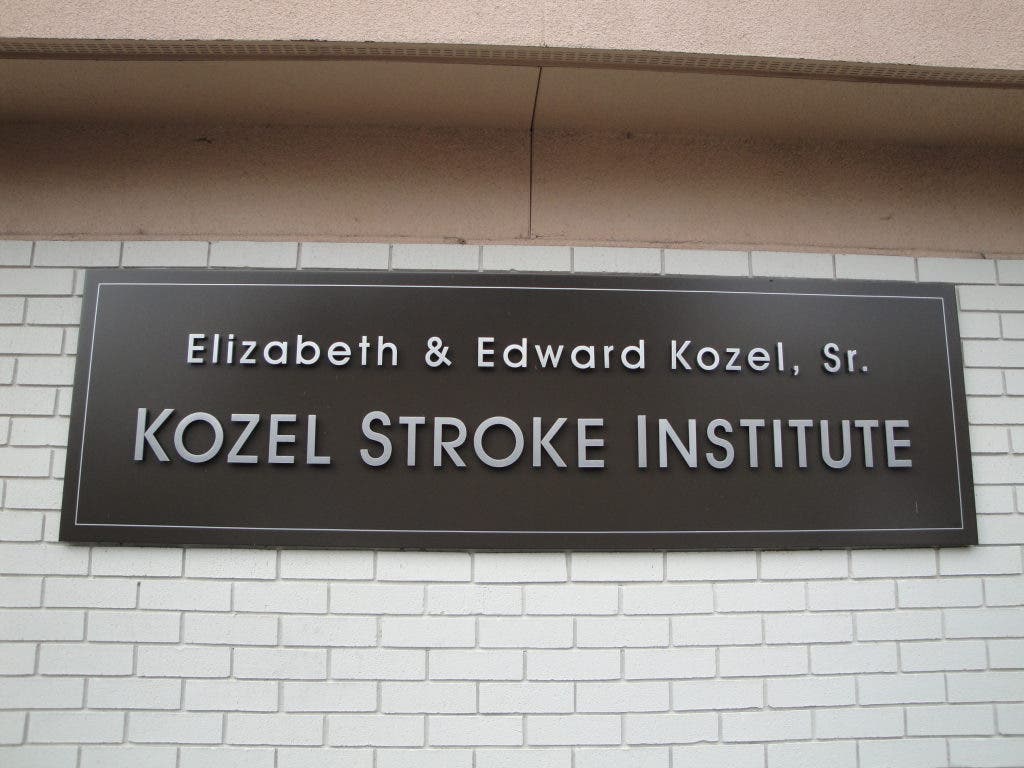


Healdsburg District Hospital has one of the most advanced stroke units in Northern California.
Since November 2008, when the unit was opened, they have treated over 90 patients. Those who arrived within 30 minutes of the event saw virtually no debilitating symptoms.
Best of all, some of these were Kaiser Permanente patients. The extra time that it takes to get to Kaiser in Santa Rosa could kill you and will leave you with residual symptoms. There is a three-hour window in which you need to take action if you have any signs of a stroke.
Find out what's happening in Healdsburgfor free with the latest updates from Patch.
“Healdsburg District Hospital started the stroke program in November 2008, said Jan Kiely of Healdsburg District Hospital. "We treat about 35 stroke patients each year, including Kaiser patients.
"The program is incorporated into the Emergency Department and our special equipment is housed in the ED," Kiely said. "The hospital is working toward stroke certification later in 2011.”
Find out what's happening in Healdsburgfor free with the latest updates from Patch.
If you are experiencing any of the following symptoms or you see these symptoms in anyone around you aware that they may be having a stroke:
Act F.A.S.T.
F – Face – facial droop, uneven smile
A – Arms – arm numbness, arm weakness
S – Speech – slurred speech, difficulty speaking or understanding
T – Time – call 9-1-1 and get to the hospital immediately
Not all the warning signs occur in every stroke. Don't ignore signs of stroke, even if they go away!
Stroke risk factors: High blood pressure, heavy alcohol use, high cholesterol, physical inactivity or obesity, heart disease, atrial fibrillation (irregular heartbeat) diabetes, smoking, family history of stroke.
Here's why it's important to have a stroke-treatment-equipped local hospital:
If you realize that you may be having a stroke, you call 9-1-1 and ask for an ambulance to come. The last thing you need is to have a car accident on the way there.
The ambulance staff picks you up and radios the emergency department that they are coming in. Emergency staff preps for a stroke patient by paging “code stroke” overhead and the stroke team members assemble.
You arrive, and the team goes to work with lab tests, CT scan of your head, overall physical assessment, connecting to staff doctors at California Pacific Medical Center and following their instructions as indicated.
It is very practiced and you are cared for quickly and efficiently.
Syd the robot is also known as remote presence technology. Syd is managed by a company named; Off Site Care Inc. Dr. James Gude is the genius behind Syd with a support team at California Pacific Medical Center.
Gude is a local doctor who has served at Sutter Medical Center in Santa Rosa in the ICU as director for over 35 years.
It is the CT scan that identifies the location of the clot if there is one. And, it is the doctors who direct giving the clot buster medication.
By the way, using the clot buster does not always end the stroke or reverse the symptoms – but it does help prevent the stroke from getting worse.
The robot is critical to link the neurologist to the emergency doctors for consultation and direction of the “code stroke.” A specialty doctor on the robot can see the patient and can direct the care from a remote location.
That robot is connected to a team of physicians at California Pacific Medical Center. The medical director for the team regarding strokes is a neurologist named Dr. Alan Bernstein. That team of physicians is able to pinpoint where the clot is, how big and access any damage.