Politics & Government
CA Laws Targeting Solar, Electric Shock Police Gloves, Insurance, AI And ICE Await Newsom
California lawmakers sent measures targeting detention centers, youth technology harms, offshore drilling, and elder abuse.


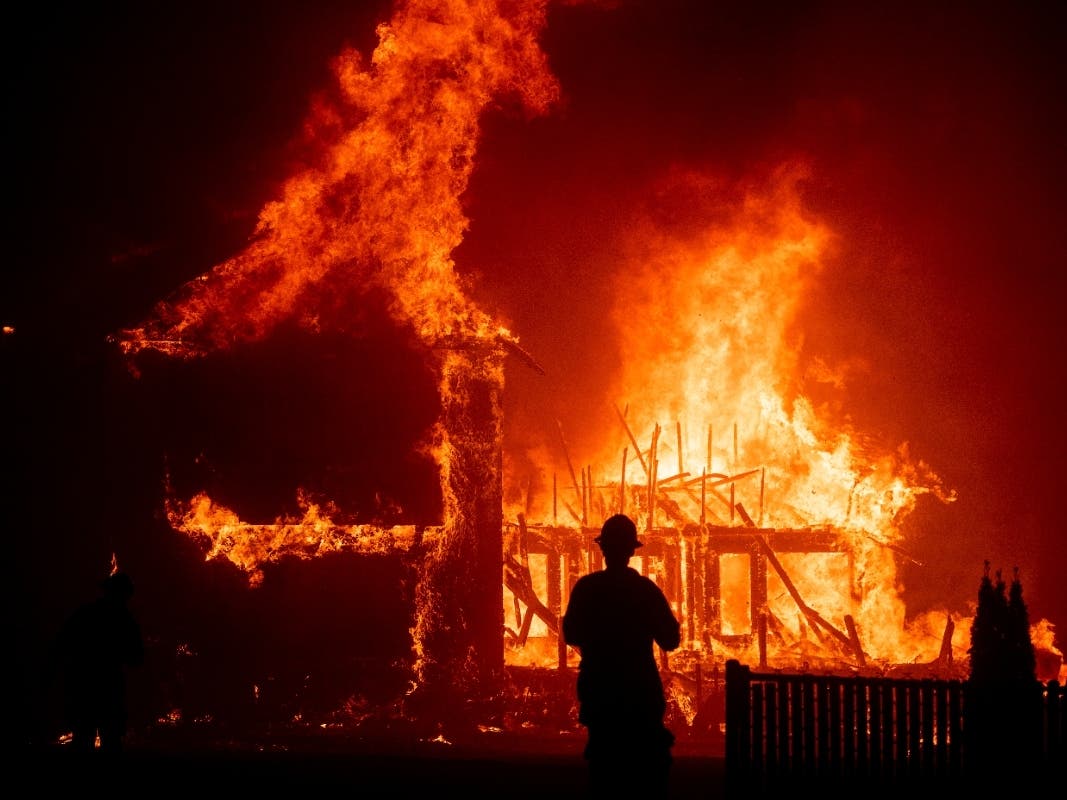
CALIFORNIA — Gov. Gavin Newsom received a flurry of bills from California lawmakers before the legislative session ended Tuesday.
Nearly a dozen that landed on the desk of the outgoing governor's desk address a list of California’s most contentious issues. Their fates remain in limbo as Newsom has never been shy about using his veto power. According to CalMatters, his 2025 veto rate was 13.4 percent when he blocked 123 out of 917 bills.
The closely-watched bills include several that would tax private detention center operators, restrict immigration officers’ employment, regulate children’s interactions with technology, block offshore drilling, and expose abuse at senior care facilities.
Find out what's happening in Healdsburgfor free with the latest updates from Patch.
With enough votes to bypass Republicans in the Legislature, Democrats passed bills designed to slow the Trump administration’s immigration enforcement efforts, prevent expanded offshore oil drilling, and delay an Oakland coal export terminal. Lawmakers also approved protections governing how technology companies target children.
One of the measures that did get to the "enacted" finish line declared Dolly Parton Day to honor the country music icon, who died last month, and her famous working woman’s anthem, “9 to 5.”
Find out what's happening in Healdsburgfor free with the latest updates from Patch.
Newsom has until Sept. 30 to sign or veto the measures as he finishes his final session in Sacramento and lays the groundwork for a likely 2028 presidential run.
Here are some of the major bills awaiting his decision:
Immigration tax: AB 1633
A private detention facility tax, AB 1633 would impose an annual tax equal to 25 percent of a private detention facility operator’s gross income from the previous fiscal year. The California Department of Tax and Fee Administration would begin collecting the tax July 1, 2028, with proceeds supporting immigration-related services through the Due Process for All Fund.
San Francisco Democratic Assemblymember Matt Haney introduced the bill following reports of poor conditions at private immigration detention facilities. The Legislature passed the measure after a federal court challenge undermined a 2019 California law intended to prohibit privately owned detention facilities. Whether the tax would apply to a proposed federal detention center in Gilroy remains unclear because federal officials have not announced whether a private contractor would operate it.
Supporters say the tax would hold private detention companies accountable and help offset the effects on immigrant communities. Opponents, including Republican lawmakers, argue that it could force detention centers to close and return immigrants, including some with criminal backgrounds, to local communities.
Electric shock gloves: AB 2760
California lawmakers passed Assembly Bill 2760 in response to the Trump administration’s plan to spend as much as $20 million on electroshock gloves for federal immigration agents.
AB 2760 would ban all law enforcement agencies, including federal agencies, from using wearable electroshock devices in California.
The bill would also prohibit state and local agencies from using state money to buy the devices and require them to update their use-of-force policies accordingly.
Under AB 2760, the California Department of Justice would study the devices’ safety and effects on communities, recommend standards and safeguards, and report findings to the Legislature by Jan. 1, 2029.
The state would reimburse local agencies for mandated expenses if the Commission on State Mandates determines they qualify.
Milpitas Democratic Assemblymember Alex Lee authored the bill. Republicans opposed it.
Supporters, including immigrant advocates, say the gloves are dangerous and untested. Opponents, including some police agencies, describe the devices as a de-escalation tool. The Department of Homeland Security has said they would not comply with the bill because state lawmakers cannot constitutionally regulate federal law enforcement.
Screening former immigration officers: AB 1896
California would become the first state to require special screening of former federal immigration officers seeking law enforcement jobs if Newsom signs AB 1896, known as the GTFO Act.
The bill would prevent people who previously conducted immigration enforcement as sworn officers or contractors from holding a range of state and local public-sector jobs, according to a Politico analysis.
Former immigration officers applying to become police officers would have to pass a suitability review created by the California Commission on Peace Officer Standards and Training. Hiring agencies would consider news reports, verified social media posts, civil complaints, and other sources. The bill would take effect in 2028.
The bill could face a court challenge. The U.S. Department of Justice has sued California over other legislation enacted during Trump’s second presidency, including one law prohibiting federal officers from concealing their identities with masks and another requiring agents who are not in uniform to display identification.
Los Angeles Democratic Assemblymember Mark Gonzalez, the bill’s principal author, said he was not concerned about possible litigation because “everything is on the table.”
“The Trump administration has done everything illegally since they took office,” Gonzalez said in a Politico interview. “What we told the feds today, the Trump administration, is GTFO.”
Newsom also will consider legislation that would prevent immigration detention operators from using state-owned property and allow Californians to sue government officials for alleged constitutional violations.
Child AI addition: SB 1119
This bill, SB 1119: Responsible artificial intelligence for youth, would require companies offering AI companion chatbots to protect children from unreasonable risks of harm.
Beginning July 1, 2027, companies would have to conduct and document comprehensive child-safety assessments before launching new or substantially modified chatbots in California. Independent auditors would review the companies’ compliance and submit confidential reports to the state attorney general.
Public prosecutors could sue companies that violate the law. Children who suffer actual harm, or their parents or guardians acting on their behalf, also could bring civil lawsuits against chatbot operators.
Consumer advocacy groups supported the bill, while associations representing Silicon Valley technology companies opposed it.
Addictive child social media: AB 1709
Social media companies would be penalized for offering users younger than 16 potentially addictive features, including infinite scrolling, autoplay videos, algorithmic feeds, and engagement-driven notifications.
The bill, authored by Assemblymember Josh Lowenthal, would require platforms to provide non-addictive versions of their services or delete underage accounts if they cannot comply.
The measure would also create an e-Safety Advisory Commission and allow penalties of up to $50,000 for each minor affected by a knowing violation.
Child-safety groups supported the bill, while technology, privacy, and civil-liberties organizations warned about access restrictions and intrusive age verification. Lawmakers completed action on Aug. 31, but the bill had not been signed into law as of Sept. 3.
Solar Systems: SB 868
Authored by San Francisco Sen. Scott Wiener, the balcony solar systems bill would allow residents to plug small, portable balcony solar systems into standard 120-volt household outlets without obtaining utility permits. PG&E and the California Municipal Utilities Association opposed the measure, the Mercury News reported.
Offshore oil infrastructure: AB 1448
Assembly Bill 1448 would counter the Trump administration’s push for new offshore oil drilling along California’s coast by barring companies from using pipelines and other infrastructure in state waters to support new federal drilling. California controls waters extending three miles from the coastline.
Santa Barbara Democratic Assemblymember Gregg Hart authored the measure.
“It’s time to move past this destructive industry and make it clear that California will not stand for new drilling in our waters,” Linda Krop, chief counsel for Santa Barbara’s Environmental Defense Center, said in August after the California Senate passed the measure.
The California Independent Petroleum Association opposes the bill.
Coal fight: SB 40
A maneuver in a long-standing Bay Area battle, SB 40 would require a new, comprehensive environmental impact report before a public agency could approve a large coal facility.
The legislation could slow a long-running proposal to build a coal export terminal at the former Oakland Army Base.
Oakland city attorneys unsuccessfully fought the project, and the Trump administration supported it with a $75 million grant.
Oakland Democratic Assemblymember Mia Bonta authored the bill.
Environmental review waivers: SB 954
Senate Bill 954 would revise a law Newsom signed last year that reduced environmental reviews under the California Environmental Quality Act for urban apartment projects, daycare centers, renewable energy developments, wildfire risk-reduction work, and other projects.
The measure would restrict the types of advanced-manufacturing plants eligible for environmental-review waivers.
Encinitas Democratic Sen. Catherine Blakespear authored the bill. Environmentalists raised concerns that the previous law could allow strip mining and other heavily polluting projects to proceed without sufficient review. Many business groups opposed SB 954.
Residential care abuse records: SB 991
This bill, SB 991, would make it easier for families to learn about abuse at residential care facilities for seniors by changing the way mistreatment is categorized at senior residential care facilities.
The measure would require the California Department of Social Services to categorize substantiated abuse in its public database. Categories would include physical abuse, financial abuse, neglect, abandonment, isolation, and mental suffering.
The current version of the bill had overwhelming support in the assembly and senate. Assemblymember Jeff Gonzalez, a Coachella Republican, supported the bill, saying the existing database categorizes a patient with a bedsore in the same manner as a patient who has been assaulted, the Press Democrat reported.
San Fernando Valley Democratic Sen. Caroline Menjivar authored the bill.
Childhood sex assault claims: SB 577
Representing two years of negotiations over the rights of childhood sexual-assault survivors and the financial condition of schools and other public agencies, SB 577 would impose a $25,000 penalty on attorneys who file cases in bad faith.
Lawmakers began negotiations after public school districts faced claims dating back decades under a 2019 law that extended the statute of limitations for childhood sexual-assault lawsuits.
The bill would also raise the legal standard for filing lawsuits involving assaults that occurred before Jan. 1, 2024, when the person bringing the claim is now 40 or older.
“No county in the state has been more impacted than Los Angeles County, which last year announced a $4 billion settlement for more than 6,800 sexual abuse claims dated back to 1959,” Assemblymember Tina McKinnor, an Inglewood Democrat, said during debate on the bill.
“We shouldn’t have to choose between finding justice for victims and protecting the solvency of our public agencies.”
Dolly Parton Day: SB 931
The Dolly Parton measure required California’s governor to proclaim Sept. 25 — a reference to Parton’s song “9 to 5” — as Dolly Parton Day each year.
Authored by senators Shannon Grove of Bakersfield, and John Laird of Santa Cruz, lawmakers passed the measure without opposition.
The bill now awaits Newsom's signature.
Wildfire liability for utility companies: SB 492
Of the many measures stopped short of the "enacted" stamp, SB 492 — a measure that would reduce utilities’ wildfire liability — may be Newsom's biggest headache.
Newsom failed to secure his final major legislative deal Tuesday when the Assembly killed the bill, a compromise intended to address utility liability for wildfires.
Newsom originally sought to reduce utility costs by preventing insurance companies from suing utilities to recover payments after their equipment sparks fires, but lawmakers removed that provision and other proposed limits on damages paid to victims and local governments, CalMatters reported.
Assembly Speaker Robert Rivas dismissed the remaining bill as a collection of “half measures,” while other lawmakers criticized Newsom for presenting the complicated proposal shortly before the legislative deadline, according to CalMatters.
“Most of the members of this committee didn’t actually get to see what was in it until the final days before it was too late to actually do anything on it,” said Assemblymember Chris Rogers, a Ukiah Democrat, CalMatters reported.
The defeat marked a rare failure of Newsom’s practice of negotiating major proposals behind closed doors near legislative deadlines.
Lawmaker opposition also forced him to abandon plans involving the California Forever shipyard, a Santa Monica housing project, and funding for Phillips 66’s Rodeo refinery. Newsom, who leaves office in January, has not ruled out calling a special session on wildfire liability.
Get more local news delivered straight to your inbox. Sign up for free Patch newsletters and alerts.