Schools
Healdsburg parents group organizes “Special Education 101”
Parents, teachers and administrators discuss special education in Healdsburg.
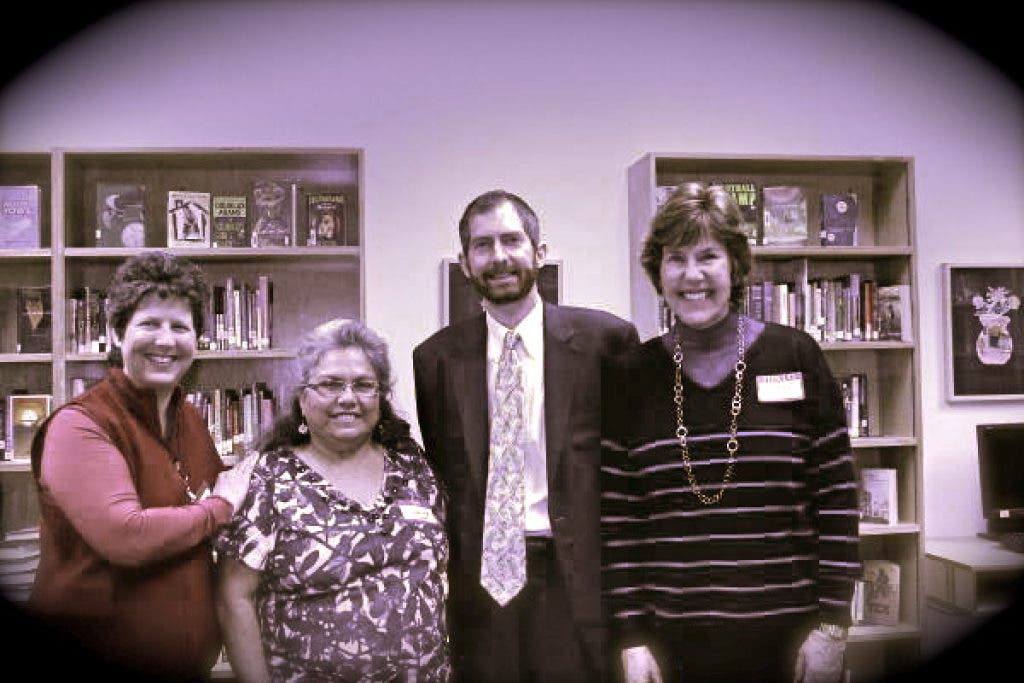
Parents concerned about their children's special education needs should first talk to the teacher, then the school principal -- then, if necessary, consult with the district's special education director.
That was part of the message at Monday's public meeting on special education in Healdsburg.
“Learning more about different parts of the Special Ed process and sharing questions and experiences will help our parents and kids,” parent leaders said in a handout at the meeting, held in the library.
Find out what's happening in Healdsburgfor free with the latest updates from Patch.
Chief speakers included: Diane Ashton, the new Healdsburg Unified School District Special Education Director and Carl Corbin, an attorney who represents public schools.
Attending were member of the (HSEP) and other interested parties.
Find out what's happening in Healdsburgfor free with the latest updates from Patch.
Fifteen adults, including Superintendent Jeff Harding, and a half-dozen children attended the informative meeting.
The focus was understanding Individualized Educational Plans (IEP) and the Full inclusion teacher’s aide Juanita Lepe provided Spanish translation services.
The program was introduced by Barbara Tuscany, parent coordinator of HSEP. She explained that her son, a third-grader, is in a non-district program, Anova, which has been deemed the best school for his specific needs.
“You know your children better than anyone else,” said Harding during introductions, which is also a point on the HSEP handout. “We are bridging home, school and the children’s needs.”
After introductions, Tuscany turned the meeting over to Corbin and Ashton.
Ashton has been with the district for just a few months; however, she noted, “I’ve been in this business a long time.”
A number of parents had questions about specific problems with the District, past and present, ranging from an uncommunicative teacher to a change in a child’s plan without informing the parent to several misunderstandings between the schools and the Extended School Year (ESY) portion of their children’s IEP.
“We have Diane [Ashton]," said special education teacher and 2007 recipient of the "State Educator of the Year"Award Arlie Haun. "We need to move forward.”
One father spoke up and said, “We only want to be sure the [problems] don’t continue to happen.”
“There is a good change coming down the pike," Haun responded. "We cannot change what has happened in the past.”
Corbin responded to the law concerning these issues and Ashton spoke of the process of addressing parental concerns. There are specific steps a parent must take, first talking to the teacher, next the principal of their child’s school, then Ashton herself.
In the IEP process, a school administrator, a special education teacher, the regular education teacher and the parent(s) form a team keeping the best interests of the student in mind.
First a child is identified with a potential special need, then referred to a Student Study Team which holds a meeting. Next a special education assessment is done with the student and an IEP meeting is held. The IEP is a written legal document between the school and the parent.
The process is very formulaic and the State of California has very specific criteria for identifying a child in need of special education. There are 13 eligibility criteria.
Corbin warned of the stressful consequences when challenges cannot be worked out. Hearings must be held and things become confrontational. He said it is always better to try to work things out through talking before getting attorneys involved.
One parent, who wished to remain anonymous, said that the IEP process has been grueling for her and her student and that getting services has not always been easy. They are veterans of the system.
“Maybe now that Diane is in charge, things will get better,” she said,
According to the HSEP handout:
HSEP also provides parent support and the tight-knit group does outreach, as well as a variety of methods of communication from letters to e-mail and phone calls. They have become effective advocates and organizers for parents facing educational challenges with their special needs children.
For more information about HSEP, call Veronica at 707-431-1335.
For more information about the California State Education Code click here.