Community Corner
The Hidden World Behind This Wine Country Town And Recipes That Made It Famous
A new book documents Healdsburg's culture through farmers, chefs, gardens, recipes, and the relationships shaping the town's identity.


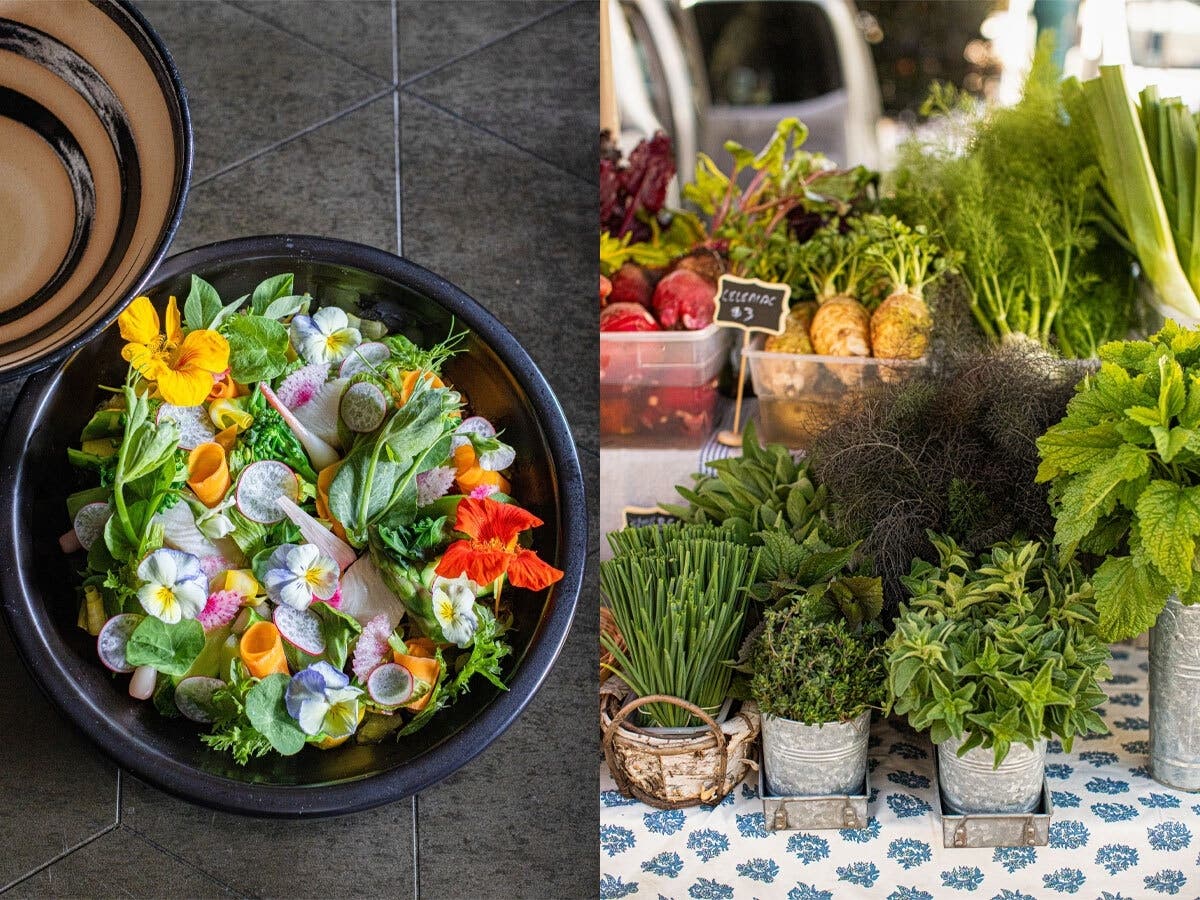
HEALDSBURG, CA — A sprawling new cookbook and visual history documents Healdsburg’s food culture that grew from farmers markets, multigenerational relationships, and a fiercely local approach that residents say now faces mounting pressure from climate change, development, and economic shifts.
The first 100 pages of the book contain no recipes. Instead, Farm + Market: Healdsburg, opens with the history of the land itself — from Pomo communities to immigrant farming families, farmers' markets, Michelin-starred restaurants, and the growers — all who quietly shaped the region long before tourists arrived seeking wine-country luxury.
The 345-page project — now available through HealdsburgBook.com, at the Tuesday and Saturday farmers markets, and in local bookstores including Copperfield's — pulls together the stories of 20 farmers, 40 chefs, dozens of residents, and a town-wide recipe contest that five community members judged.
Find out what's happening in Healdsburgfor free with the latest updates from Patch.
“It all goes back to the farmers,” the author, Liza Gershman, said during a recent pre-launch gathering in Healdsburg.
The book marks her 20th publication, but the first centered on her hometown — a project she described as “deeply personal” after years spent documenting places around the world through photography and narrative storytelling.
Find out what's happening in Healdsburgfor free with the latest updates from Patch.
The project positions Healdsburg’s food culture not simply as tourism branding but as a functioning agricultural ecosystem where sourcing decisions shape flavor, restaurant menus, farming practices, and community identity.
“Food reflects how we live, gather, and sustain community,” Gershman said.
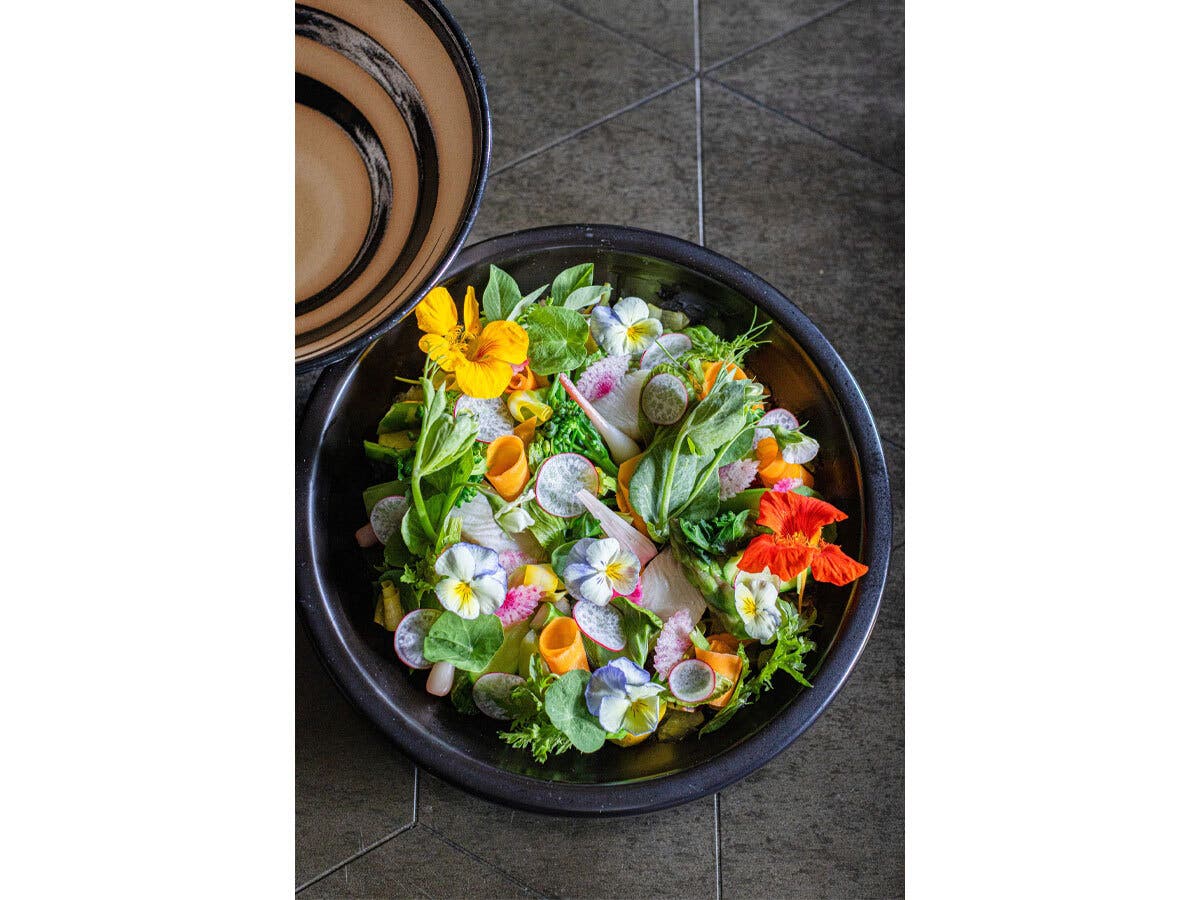
Photo: Farm + Market: Healdsburg, Liza Gershman
In the book and in talks about the work, Gershman repeatedly returns to this theme: interdependence. Farmers supply restaurants. Restaurants elevate growers. Residents support farmers' markets. Home gardeners influence professional chefs. Multi-generational families preserve agricultural knowledge while newcomers bring fresh ideas.
“Our community cannot separate the farm from the chefs,” she said during a May talk at the Sonoma Valley Authors Festival. “It’s an ecosystem that can be a model for a food system that works.”
She said the Healdsburg Farmers Market anchors that ecosystem, describing it less as a shopping venue than a civic gathering place where people form relationships, conduct business deals, and make regional identity visible. "If Healdsburg had a single church, the farmers' market is the epicenter of the community,” she said.
A casual conversation with the farmers' market board sparked the project, leading to a larger collaboration. What began as a cookbook proposal expanded into a narrative history documenting how Healdsburg’s food culture developed — and how quickly it continues to change.
Gershman pairs farmers and chefs, tracing how ingredients move from fields to restaurant kitchens and how local agriculture influences culinary innovation.
Gershman points to the town’s concentration of acclaimed restaurants, local farms, and chefs deeply connected to nearby growers.“Healdsburg is getting recognized for more than just wine,” she said.
In many ways, the restaurants have shaped Healdsburg. Recipes from James Beard-recognized and Michelin-starred chefs appear alongside stories from growers, backyard gardeners, volunteers, and multigenerational families.
.jpg)
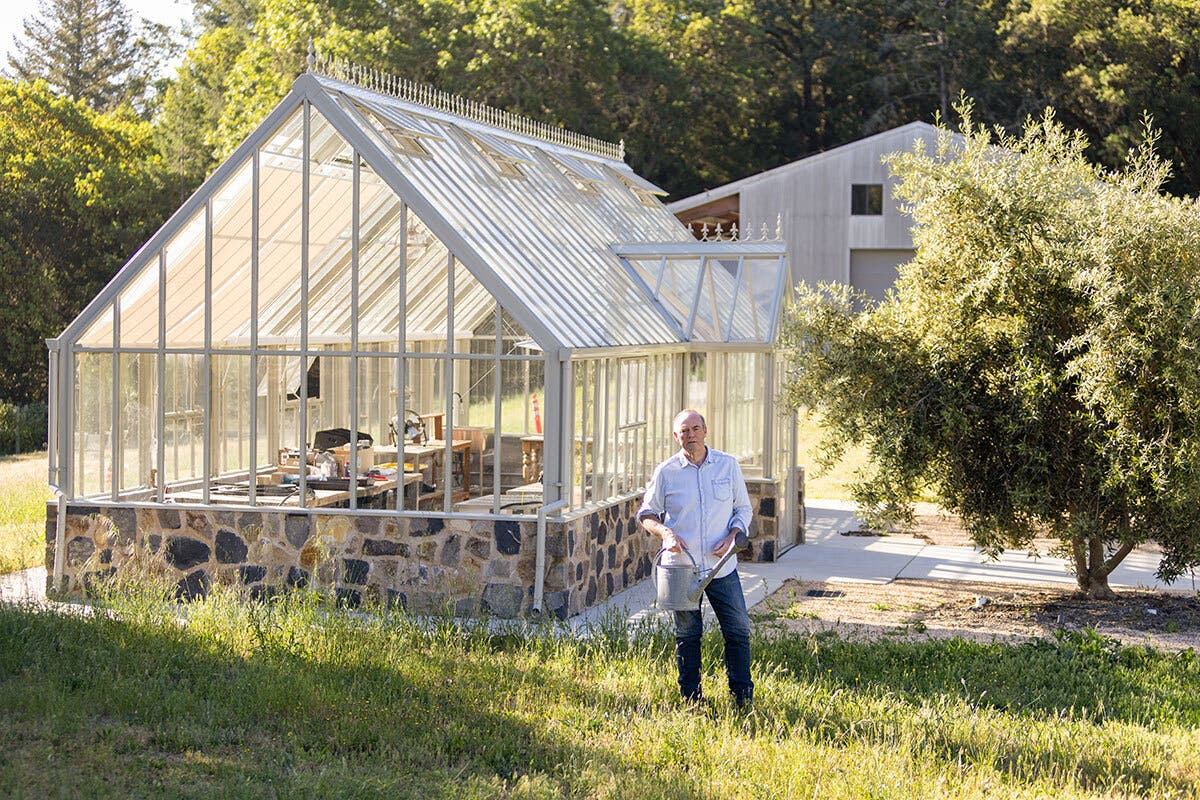
Katina Connaughton is co-owner with her husband, Kyle Connaughton, of the triple Michelin-starred SingleThread restaurant in Healdsburg. The restaurant is known for its farm-to-table tasting menu experience. Many of the ingredients come from their 24-acre Dry Creek property with greenhouses, heirloom orchards, and bee hives. Photo: Farm + Market: Healdsburg, Liza Gershman
“This is a story that is unfolding,” Gershman said. “The work is not to define a place, but to represent it responsibly.”
The timing matters because regional food identity has become more valuable as global food systems grow increasingly standardized. “The more micro-localized we can become, the better,” Gershman said.
The book also reflects Healdsburg’s food culture, which now rivals its wine reputation nationally.
.jpg)
Chef Carlos Mojica is the founder and chef-owner of Guiso Latin Fusion, a small, family-run restaurant in downtown Healdsburg known for its Latin American and Caribbean-inspired cuisine that blends Salvadoran recipes with Sonoma County ingredients. Photo: Farm + Market: Healdsburg, Liza Gershman
The hardcover edition serves as both a working cookbook, a visual archive, and community history — something residents can cook from, preserve, and pass down. Sales proceeds support the Healdsburg Certified Farmers’ Market, founded in 1978.
Barbara Wollner, a longtime volunteer at the Healdsburg Farmers Market, said the book "captures the essence of the market — the color, the heritage, and the history."
“Just magnificent,” Wollner said. "Liza captured the essence."
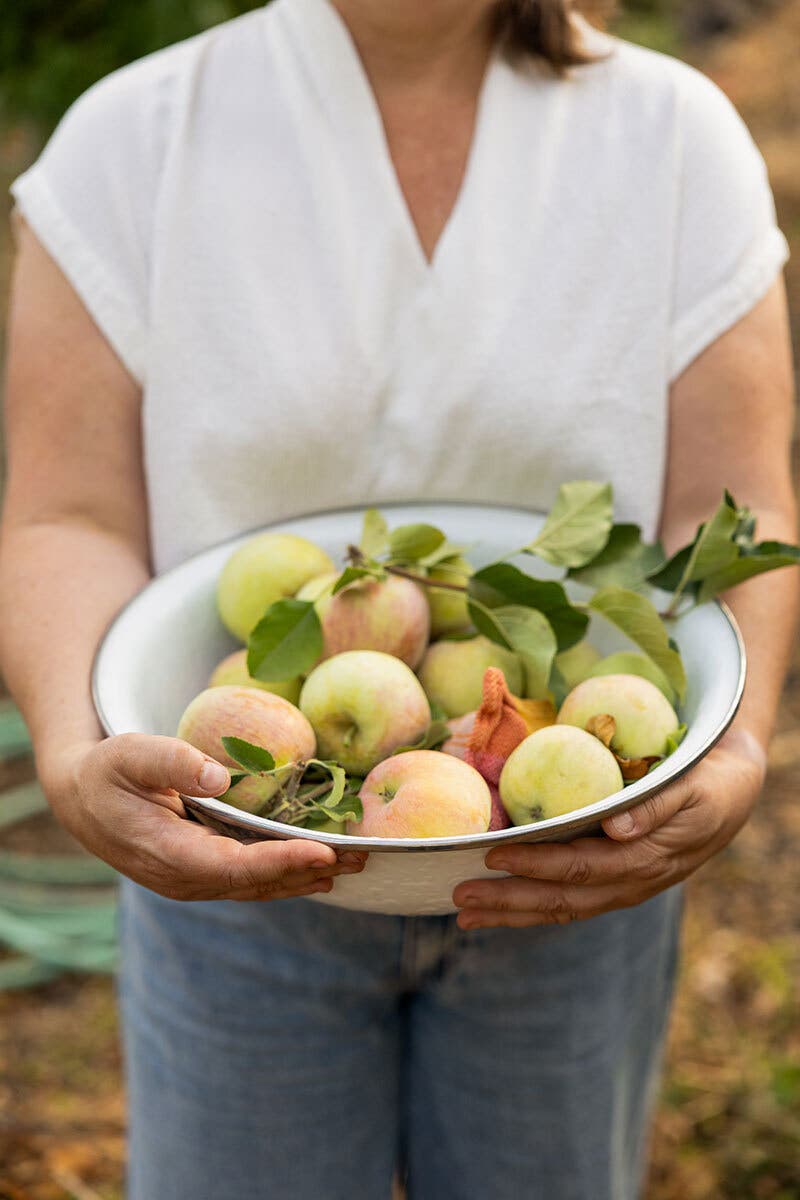
Photo: Farm + Market: Healdsburg, Liza Gershman
The author launched her own publishing company to produce and distribute the book. Community fundraising financed the printing, with sales revenue returning to support the farmers' market.
Board members Katie Murphy, Melinda Dexter, and Wendy Dayton helped coordinate the effort, alongside wineries, volunteers, farmers, chefs, and residents who contributed money, recipes, photographs, and interviews. “Every dollar fundraised went to the printing of the book,” Gershman said.
The book’s imagery drives the storytelling process. Photographs that feature natural light, unstaged environments, and working farms reflect the author's documentary approach focused on "clarity and honesty."
“Food is the medium,” she said, “but the book is more than food.” Farmers + Market zooms in on a hyper-local food culture built around “micro-seasonality,” where menus shift after farmers or chefs discover ingredients growing on local properties or arriving fresh at market.
One story recounts chef Duskie Estes and mixologist Scott Beattie walking a Dry Creek Road property, finding unexpected ingredients, then redesigning menu items around what they encountered.
The book also highlights backyard gardens, home cooks, and amateur growers who influence professional kitchens in surprising ways.“Michelin-starred chefs say they have to be as good as they can be because people here know how to cook,” Gershman said.
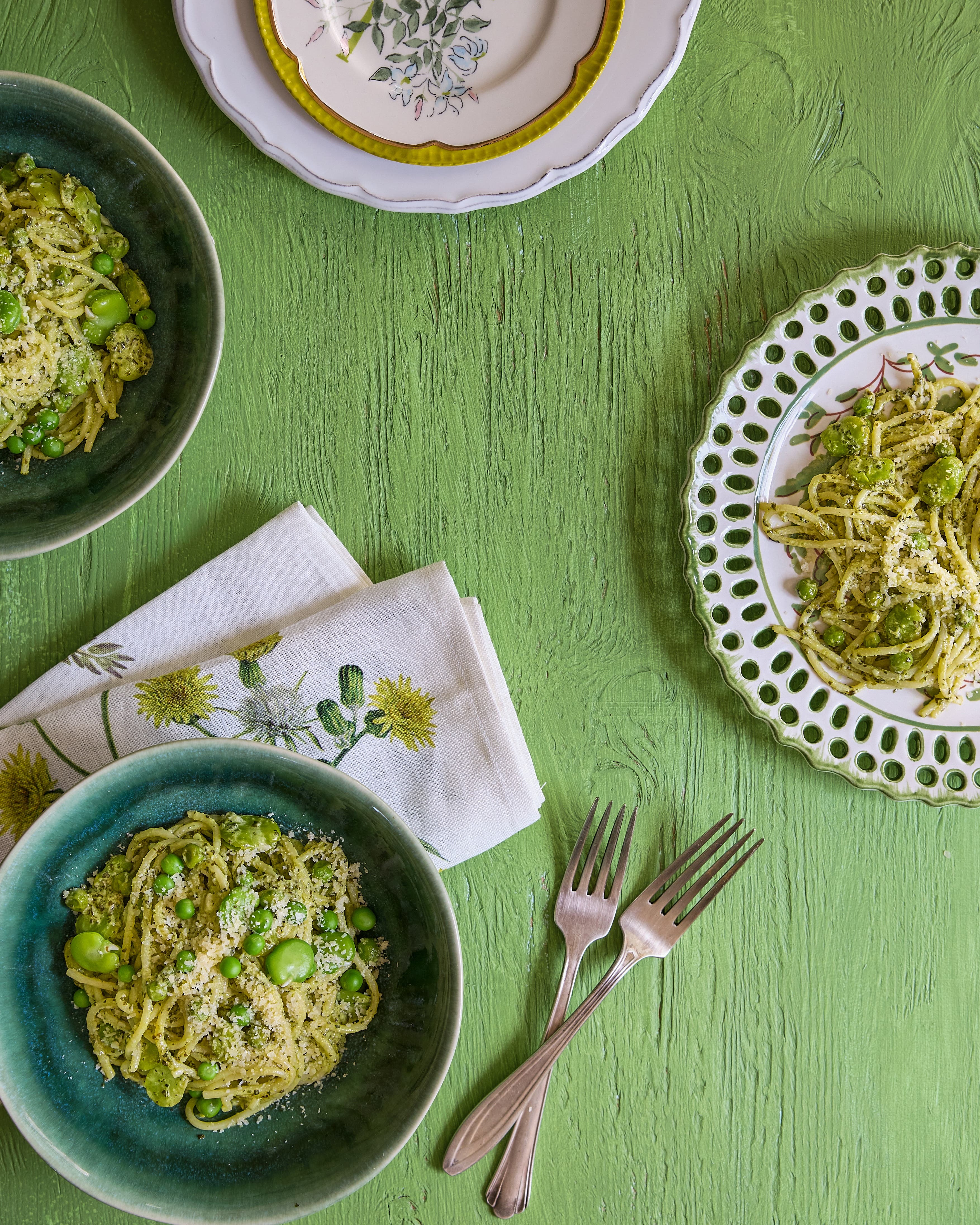
Spaghetti with peas, fava beans, and goat cheese. One of the dishes included in Farm + Market: Healdsburg by Liza Gershman. Photo: Liza Gershman
Contributors framed the project as both a celebration and a warning. Industrial agriculture has put pressure on regional food systems, that are struggling under climate pressure, labor shortages, rising land costs, and economic uncertainty. The book offers an alternative: what participants describe as a working local model built on seasonality, stewardship, and long-term relationships between growers and chefs.
However, the project documents deeper anxieties about the region’s future — wine industry slumps, development pressure, rezoning battles, climate change, and rising land values could threaten the agricultural systems sustaining Sonoma County’s food identity.
“The only thing more valuable than wine and food is housing and tech,”Gershman said. She suggested stronger land protections, including possible UNESCO recognition for agricultural areas such as Dry Creek Valley and Alexander Valley.
Climate change also surfaces repeatedly throughout the book, especially in conversations with farmers who are adapting crops, experimenting with new plants, and reconsidering what “native” or “sustainable” agriculture may mean in a warming region.
Still, Gershman framed the project less as nostalgia than preservation through documentation.
“Healdsburg was a quiet, small town not on the New York Times map,” she said. “Now it has more Michelin-starred restaurants per capita than Manhattan.”
Chef Charlie Palmer of Dry Creek Kitchen. The long-running restaurant inside Hotel Healdsburg on the downtown plaza opened in 2001, and is widely credited with helping elevate Healdsburg into a nationally recognized food destination. Photo: Farm + Market: Healdsburg, Liza Gershman
The farmers' market is put forward as a key to making living and farming in and around Healdsburg feasible. "We really walk the walk," Gershman said, referring to the support of farmers in Healdsburg at a time when agriculture's presence in Sonoma County is still active but not stable. Healdsburg is the edge case for sustainability.
Land values in and around Healdsburg are among the highest in the region. These forces make it difficult for diversified or small-scale farming to survive without subsidy, direct market access, or niche positioning, according to reports. In short, land is valued as a luxury asset and a production site.
Not all residents can manage the lifestyle portrayed in the book. Many still do their everyday shopping at Safeway, Trader Joe's, and Grocery Outlet, and the polished wine country image captured in its pages reflects only part of how people actually live.
The farmers in the book may be the difference between a working farm and vineyards, subdivisions, and luxury resorts. Indeed, the town’s modern food reputation did not begin with celebrity chefs. Instead, the region’s culinary identity can be traced through generations of farmers, market organizers, immigrant families, and agricultural workers whose stories often remained invisible.
“The farmers, who often are invisible, are seen in the book,” Gershman said.
The finished work features recipes from restaurants, nonprofits, community members, and organizations that address food insecurity, including Farm to Pantry, Corazón Healdsburg, and juvenile hall cooking programs.
At its core, she said, the project asks a broader question about place, memory, and survival in rapidly changing communities. “How do you document something that is still changing?” the author said.
The answer, she suggested, lies not in freezing Healdsburg in time, but in recording the relationships still shaping it — one farm stand, recipe, harvest, and shared meal at a time.
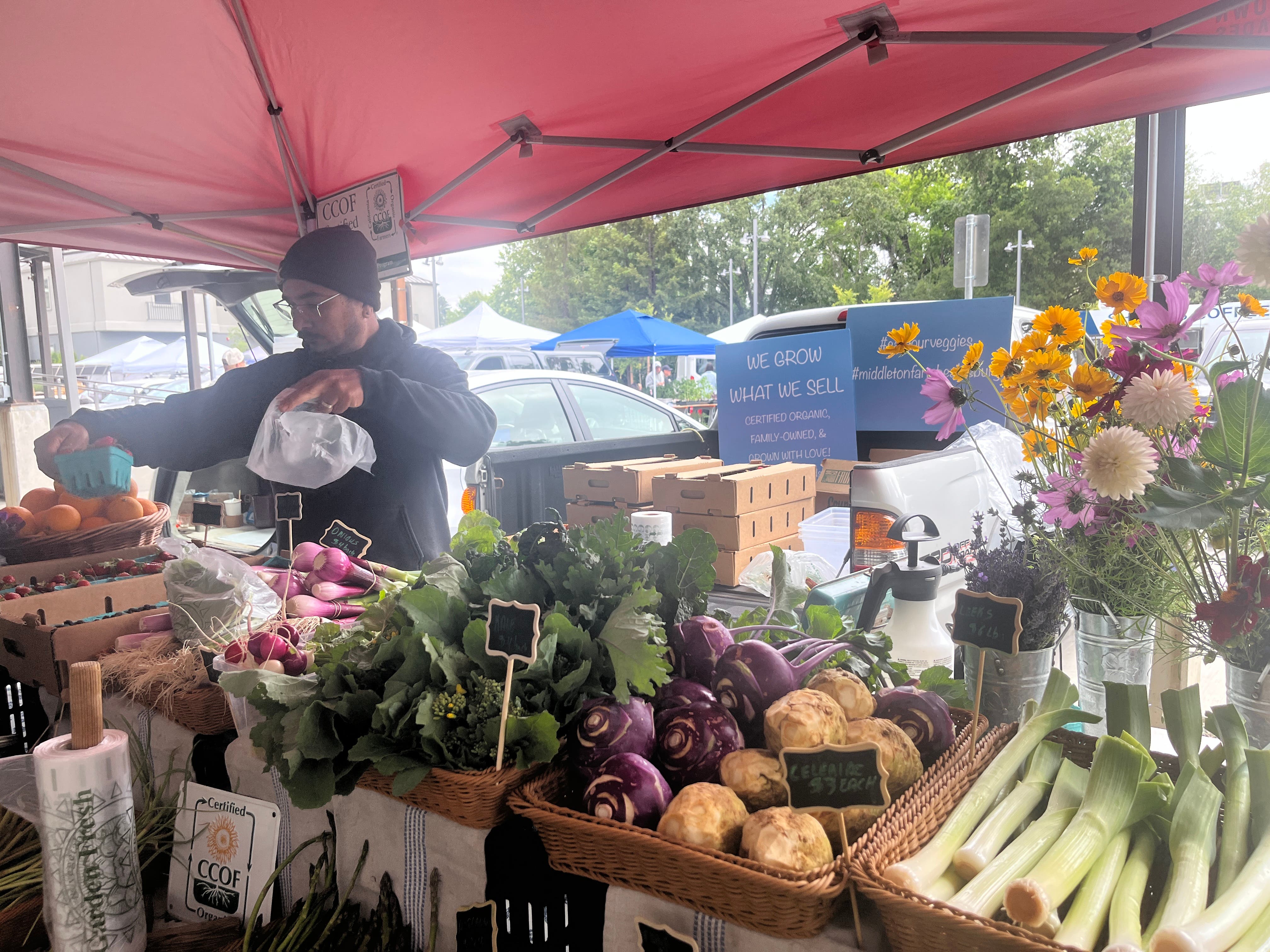
A vendor at the Healdsburg Farmers Market on May 12, 2026, the first day of the Tuesday market's summer season. The market and the restaurants that source from it inspired the book, Farm + Market: Healdsburg.
Get more local news delivered straight to your inbox. Sign up for free Patch newsletters and alerts.