Politics & Government
Don't Think Californians Need Earthquake Insurance? Think Again
With experts banking that the Big One is coming for the state of California, residents wonder if earthquake insurance is right for them.


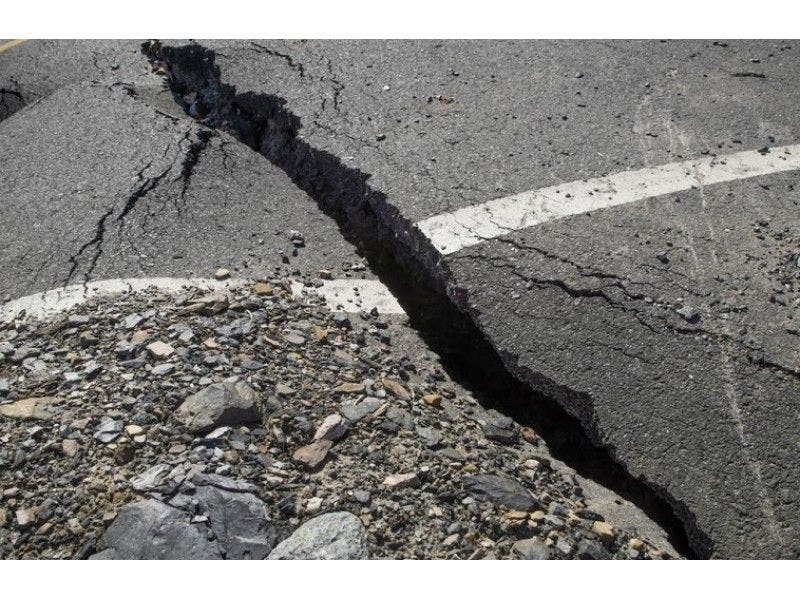
LAGUNA NIGUEL, CA — The big one is coming. It's really just a matter of when, according to a recent Patch report. A new multi-million dollar grant from the United States Geological Survey will hopefully give people of a few more seconds of warning when it does happen.
The $3.7 million grant is going to six universities on the West Coast: University of Oregon, California Institute of Technology, Central Washington University, University of Nevada-Reno and the University of California, Berkley.
The money is going to help improve the ShakeAlert early warning system along the West Coast, a system designed to give people as much of a warning as possible — even a precious few extra seconds.
Read the full report on the ShakeAlert early warning system here.
Find out what's happening in Laguna Niguel-Dana Pointfor free with the latest updates from Patch.
Despite living in an earthquake-prone state, many Californians are woefully unprepared for the next big one, state Insurance Commissioner Dave Jones said.
Twenty-two years ago the Northridge earthquake killed 57 people, destroyed 82,000 residential and commercial units, made more than 125,000 people at least temporarily homeless and caused an estimated $20 billion in damages.
Find out what's happening in Laguna Niguel-Dana Pointfor free with the latest updates from Patch.
The 6.7 temblor shook California’s economy, resulting in $49 billion in economic loss, yet very few homeowners have taken the proper steps to mitigate their risk, according to the California Department of Insurance.
“The reality is that every day we run the risk of a major quake striking California and leaving devastation in its wake,” Jones said. “The Northridge earthquake, the costliest in U.S. history, is just one example. When a large quake hits, as USGS scientists predict, earthquake insurance or a braced and bolted foundation may be all that stands between you and financial ruin.”
What to do in case of Earthquake:
Consider the Risk of Not Insuring Yourself
Orange County mothers in a random poll were split between insuring their primary residence or just earthquake proofing shelves and pictures and hanging on to see what happens.
Resident Janice Helzer is a renter, and earthquake insurance is not for her.
"My stuff is mounted to walls," she said. "I'm a renter so the building is not my responsibility."
Another Orange County mom, Barbara Fernandez, stated, "Earthquake insurance isn't worth it. Before the insurance will pay the deductible is $40,000. How many of us have (that much) set aside? Not many."
"Everything I have ever read about earthquake insurance makes me think it is a waste of money," Christine Mejia said via Facebook.
It's true. Insurance is a gamble. It is up to individual California homeowners to consider the financial risk earthquakes pose and be prepared, Jones said.
Residential insurance policies typically do not cover earthquake damage. A separate earthquake policy is required, and currently, very few homeowners statewide are covered by earthquake insurance.
Without earthquake coverage, homeowners are choosing to be self-insured, which means they are responsible for all costs to repair or rebuild their home, to replace their personal properties and recover financially, according to the insurance commission.
"We were told the following quote by our insurance agent," Fernandez stated. "Quake damage rarely exceeds deductibles. Some argue the insurance is not worth the money for homeowners. Earthquake insurance generally comes with a deductible of 15-percent of the home's value, according to John Rundle, a professor of physics at the University of California, Davis."
Many residents mistakenly think FEMA or other government agency will rebuild their home if it is damaged or destroyed in an earthquake.
If a federal emergency is declared after a major earthquake, however, assistance is only intended to get people back into their homes, not to rebuild them. Moreover, aid from FEMA comes in the form of capped grants or low-interest loans that the homeowner is responsible for paying back.
The state’s insurance commission advises homeowners and renters to take charge to understand their risk and learn about the resources available to help prepare for a major quake.
The department offers the following tips for renters and homeowners:
- Review your insurance policies at least once each year with your agent or broker to ensure you have adequate coverage;
- Brace your water heater to minimize the risks of fire and water damage caused by water heaters that topple during earthquakes;
- Fasten cupboard doors with child-proof latches to prevent them from opening and spilling their contents;
- Secure bookcases, mirrors, televisions and other tall or heavy objects to wall studs;
- Gas appliances should have flexible attachments, and family members should be familiar with gas shutoff techniques.
In 2016, the Earthquake Brace + Bolt program will provide funding to seismically retrofit 1,000 homes in more than 150 ZIP codes in vulnerable areas in Northern and Southern California.
If an unsecured house is damaged during an earthquake, homeowners can face hundreds of thousands of dollars in repair costs, while the cost of bracing and bolting a home averages between $3,000 and $5,000.
Beginning Jan. 20, California homeowners will be able to apply for up to $3,000 to protect their homes from earthquake damage by visiting EarthquakeBraceBolt.com.
See Also:
- Are You Really Ready for the Next Big California Earthquake?
- Another East Bay Earthquake Added to Slowing Swarm of Shakers
- NAPA QUAKE 2014: Click here for Patch’s Full Earthquake Coverage
News release from the Department of Insurance. Photo via Shutterstock
Get more local news delivered straight to your inbox. Sign up for free Patch newsletters and alerts.